




Photo by krakenimages via Unsplash
You’ve just brought a new client on board. Exciting milestone. But here’s the reality: the first few weeks of a client-agency relationship set the tone for everything that follows.
And according to one study, 81% of agency leaders say strong client relationships are the number one factor in retaining accounts, ranking even higher than clear communication (67%) and campaign performance (49%). In other words, the relationship itself is the true driver of long-term success.
Here’s our comprehensive guide to building a thriving client-agency relationship where both parties win.
What is the Client-Agency Relationship in Marketing?
In a nutshell, the client-agency relationship refers to a commercial partnership between a business or a brand (the client) and a marketing agency hired to develop and execute marketing campaigns and strategies.
The relationship is established on a collaborative basis where both parties work together to achieve the client’s goals and objectives, including but not limited to:
- Building brand awareness and online presence
- Improving customer engagement
- Generating leads
- Increasing sales
- Expanding into new markets.
Common Problems in the Client-Agency Relationship
There are many things that can get in the way of building a strong client-agency relationship. These are:
- Unrealistic expectations, such as goals or deliverables that do not match the budget, resources, or timeline available.
- Unclear or shifting priorities that make it difficult for the agency to stay focused on the right work.
- Slow or inconsistent feedback that delays progress and disrupts momentum.
- Scope creep when new requests are added without adjusting deadlines or compensation.
- Lack of transparency around performance, budgets, or key decision-makers.
As an agency, you should always aim to recognize these issues upfront so you can start your relationship with a client on solid ground.
7 Stages of Client-Agency Relationship
Every successful client-agency relationship moves through several key stages. Each stage builds the foundation for the next, and skipping or rushing any of them can lead to misalignment, stalled progress, or campaign underperformance.
Here’s how a healthy partnership typically develops from start to finish.👇
1. Prospecting
Prospecting is the stage where both the client and you assess whether a partnership makes strategic sense. This isn’t just about interest or initial chemistry. It’s about determining whether your agency’s expertise, capacity, and approach align with the client’s goals, expectations, and marketing maturity.
During this stage, both sides should ask the right qualifying questions. You evaluate whether the client has clear objectives, realistic timelines, the necessary budget, and the internal resources needed for successful collaboration. Clients evaluate whether your agency has relevant experience in their industry, the right skill set, and a working style that fits how their team operates.
These early conversations typically center around the client’s marketing goals, challenges, and long-term vision. You outline what you can deliver, how you work, and what results are realistic. The goal isn’t to sell but to determine compatibility and avoid misalignment before any agreements are signed.
2. Onboarding
Once both sides agree to move forward, onboarding begins, and it’s a stage you never want to rush. It starts with locking in the contract. A clear, detailed agreement outlines what your agency will deliver, how it will be delivered, timelines, responsibilities, payment terms, and what happens if expectations shift. Strong contracts protect both sides and prevent scope creep or confusion later on.
After the contract is signed, the practical setup begins. This includes sharing brand assets, login details, style guides, past campaign data, and anything else your agency needs to hit the ground running. It’s also where both teams align on goals, KPIs, workflows, communication preferences, content approval systems, and reporting cadence.
3. Competitor Research
Competitor research helps you understand the client’s market before building any strategy. This stage involves taking a close look at direct and indirect competitors, how they position themselves, the content they produce, the channels they invest in, and where they are gaining or losing traction. It also includes reviewing SEO performance, messaging, social activity, and overall brand presence.
By comparing this data with the client’s goals and current challenges, you can identify real opportunities and gaps in the market. Strong competitor research ensures the strategy that follows is informed, realistic, and built to give the client a competitive edge.
4. Strategy
The strategy stage is where you translate insights gathered into a focused plan built to drive measurable results. This is where you:
- Define the core approach
- Select the right channels
- Outline messaging priorities
- Map out the tactics that will move the client toward their objectives
A well-run strategy phase is one of the strongest indicators of a healthy client-agency relationship. When both sides align on the plan and how success will be measured, it creates trust, reduces friction, and ensures the work that follows is grounded in a shared understanding of what matters most.
5. Implementation
Implementation is where the strategy becomes reality. You begin executing the agreed plan through content creation, campaign launches, channel management, creative production, or paid media activation. This stage requires strong coordination, clear communication, and consistent updates so the client always knows what is in motion.
A smooth implementation process reinforces the client-agency relationship because it shows your agency can deliver on what was promised. Meeting deadlines, staying organized, and being proactive about progress or roadblocks helps build confidence and keeps the partnership aligned.
6. Measurement
Measurement and optimization are where your agency reviews how the work performed against the goals set at the start. By looking closely at the data, you can see what worked well and what needs improvement. These insights help shape practical next steps, whether it is refining messaging, adjusting budgets, or shifting focus to stronger channels.
This stage is essential to a healthy client-agency relationship because it keeps everything transparent and focused on progress. When decisions are guided by data, clients feel confident that the strategy is moving in the right direction.
7. Renewal
Parting ways or continuing? In the renewal stage, you and your client evaluate how things went. If the client is happy with the results, they’ll likely stick around. Meanwhile, you also need to assess whether the collaboration is viable in the long term. Ultimately, renewal hinges on the mutual satisfaction and compatibility of both parties.
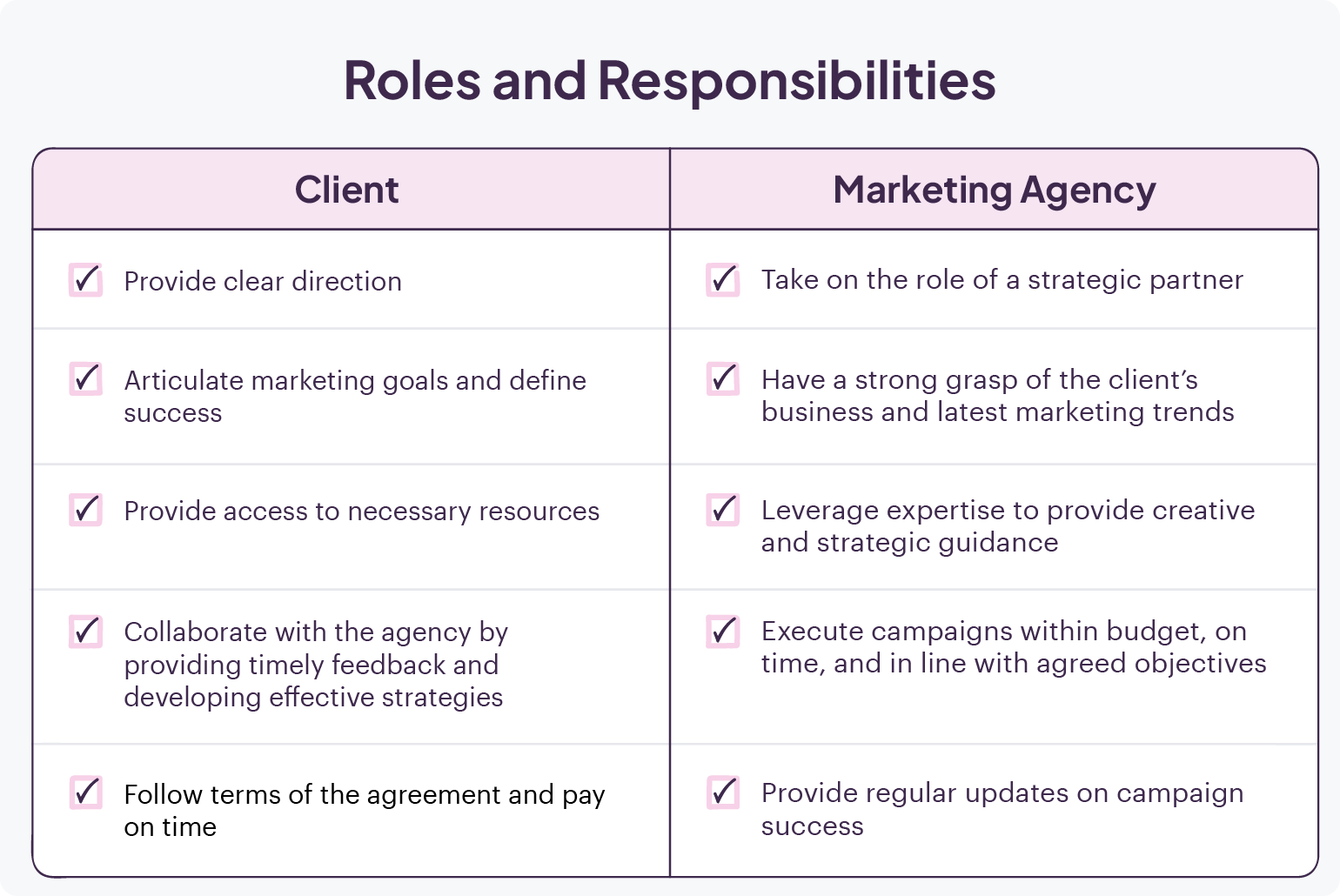
Client vs. Agency Responsibilities & Roles

5 Habits and Behaviors That Help You Build Thriving Relationships with Your Clients
Now that the roles and responsibilities are clear, the real question becomes: what actually makes a client-agency relationship work in the long run? Hint: it takes more than a contract, a kickoff call, and a shared Slack channel. The strongest partnerships are built on habits and behaviors that keep both sides aligned, energized, and moving toward the same goals.
1. Transparency and Honesty
Transparency is the foundation of every strong client-agency relationship. Both sides need to be upfront about how they work, what they expect, and what they can realistically deliver. As an agency, you should clearly explain your processes, timelines, pricing, and any limitations. Clients should be just as open about goals, budgets, internal pressures, and what success looks like.
Honesty also matters once the work begins. If an idea is not realistic or will not support the client’s objectives, you should say so early. Clients should feel equally comfortable sharing when something is not landing or, better yet, when the work exceeds expectations. Clear communication prevents surprises and builds trust on both sides.
2. Regular Communication
Communication is a significant part of the client-agency relationship. It’s crucial to communicate with clients regularly. Nothing makes a client more uneasy than not hearing from their agency.
For instance, keep clients in the loop with the status of their projects or campaigns. Involve them in the process so they have the opportunity to ask questions and request changes early on rather than when you’ve completed most of the work.
Be sure to set expectations at the start regarding how clients can contact you and how frequently you’ll touch base. This might include scheduling weekly calls to discuss projects, answering emails within a set time, or sending monthly campaign reports.
When you enter a new relationship with a client, they must understand what level of contact to expect and what you’ll need from them to keep things moving.
3. Understanding of Each Other’s Business
A thriving client-agency relationship depends on how well both sides understand each other’s world. When your agency knows a client’s industry, audience, competitors, and internal processes, the work becomes sharper, more relevant, and far more effective. That level of understanding does not happen by guessing. It comes from asking smart questions, reviewing past performance, learning the market, and staying curious throughout the partnership.
Clients play a role here, too. When they engage fully during onboarding and share the context your agency needs, it sets everyone up for success. The better both sides understand how the other operates, the stronger the work and the longer the partnership tends to last.
4. Feedback from Both Sides
All trusted relationships require honest and regular feedback, and the client-agency relationship is no different. With feedback, both parties have the opportunity to gain insights and make improvements.
As an agency, you can facilitate the conversation by sending an annual assessment that allows both the client and your agency to give one another feedback. This way, no one is in the dark.
5. A Solid Content Approval Process
Content approvals are a massive part of the client-agency partnership. Before starting any work with a client, setting up an approval process is vital. Otherwise, things can get out of hand fast.
Relying on emails and spreadsheets for client approval and feedback can be time-consuming, ultimately impacting the client-agency relationship negatively. No one wants to spend most of their day sending emails back and forth. Plus, it’s challenging to keep up with who has looked at what and see which content is 100% approved for posting.That is why having a clear, efficient approval process is essential before any work goes live.
A tool like Gain takes the chaos out of content approvals by automating the entire workflow. Content is routed to the right people in the right order, all feedback is captured in one place, and approvers can review or request changes with a single click. Features like annotations, dynamic previews, automatic reminders, and private approval queues make the process easier for clients and smoother for your team.

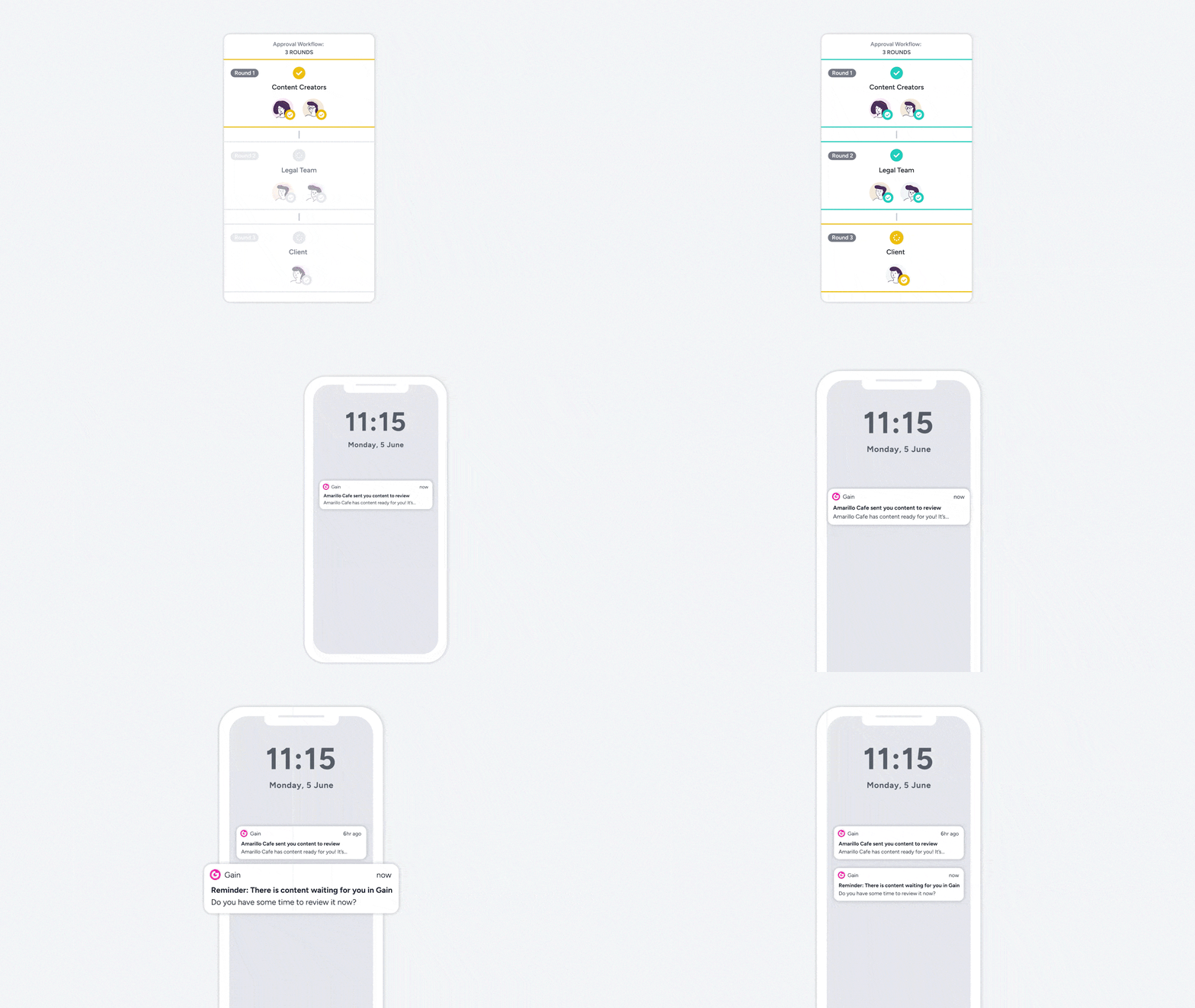
A reliable content approval process prevents clients from forgetting about approvals, ensures deadlines are met, and things run smoothly — all of which contribute to a successful client-agency relationship.
FAQs
Clients want to feel understood. They value agencies that take the time to learn their business, communicate clearly, and follow through on what they promise. Reliability, transparency, and proactive ideas matter just as much as creative work. When clients know they can count on their agency and do not have to chase updates or explanations, the partnership becomes a lot smoother and more enjoyable.
For marketing teams and agencies, the best tool to manage client feedback is Gain. Gain automates content approval workflows, gathers feedback from every stakeholder, and tracks revisions without anyone needing to chase updates. Clients can review content, request changes, or approve with a single click, and features like annotations (on PDFs and image files), pixel-perfect previews, and automatic reminders make the process simple for everyone.
Disagreements can happen between a client and an agency. The important part is staying professional in how you handle them. Depending on the nature of the disagreement, start by making sure everyone is reacting to the same issue, since many conflicts are just crossed wires. Keep the focus on the shared goal, talk through the reasoning behind each point of view, and walk through the options together. Be honest about what each choice means for timelines, results, and effort.
Nurture a Relationship into a Lasting Partnership
Achieving a thriving client-agency relationship requires more than chemistry, effective systems, or a seamless content approval process. Both parties must be committed to making it work for the long haul.
As an agency, you should prioritize mastering the essentials and going the extra mile for your clients. Meanwhile, brands should equip their creative agencies with the necessary resources and information for success.
If content bottlenecks or messy client approval workflows are getting in the way of great work, Gain can help. Try Gain for free and see how streamlined content approvals can strengthen your workflows and support healthier client-agency relationships.


