Photo by Nay Nyo
Whether you’re an agency creating content for clients or part of an in-house marketing team, Valentine’s Day has a habit of creeping up faster than expected. One minute it is January, the next your social calendar needs pink graphics, captions, and content approvals yesterday.
If you’re stuck for ideas, you’re not alone. The good news is that Valentine’s Day content does not need to be complicated to perform well.
Below are 7 Valentine’s Day social media ideas that are simple to execute, flexible across industries, and proven to resonate with audiences. You can mix and match them depending on whether your goal is engagement, reach, or conversions.
Idea #1: Valentine’s Flash Drop
One of the simplest ways to kick off a Valentine’s campaign is by offering a limited-time promotion or a campaign created specifically for Valentine’s Day.
Savage X Fenty used this approach for its 2026 Valentine’s collection, teasing the launch on Instagram with Reels and carousel posts that focused on visuals and anticipation rather than heavy messaging.
How to execute: Plan a series of countdown posts leading up to the drop. Share teaser Reels showing product close-ups and emphasize “limited stock” or “today only.” On launch day, remind your audience of the time limit through Stories, carousel posts, and short Instagram or TikTok clips.
Idea #2: “This or That” Valentine’s Polls (Stories & Threads)
Once you have captured attention with urgency-driven content, it is a good moment to shift toward interaction. Polls and quick-choice formats invite participation with very little effort from your audience.
“This or That” Valentine’s polls work particularly well on Instagram Stories and Threads. You can use them to ask light-hearted questions such as “Romantic dinner or night in?” or “Red or pink?” to encourage taps, replies, and algorithm-friendly engagement signals.
This format works across industries, from food and beauty to B2B products. Jellycat, for example, has used similar polls to let followers choose between teddy bear options like “hugger” or “snuggler,” keeping the tone playful and on-brand.

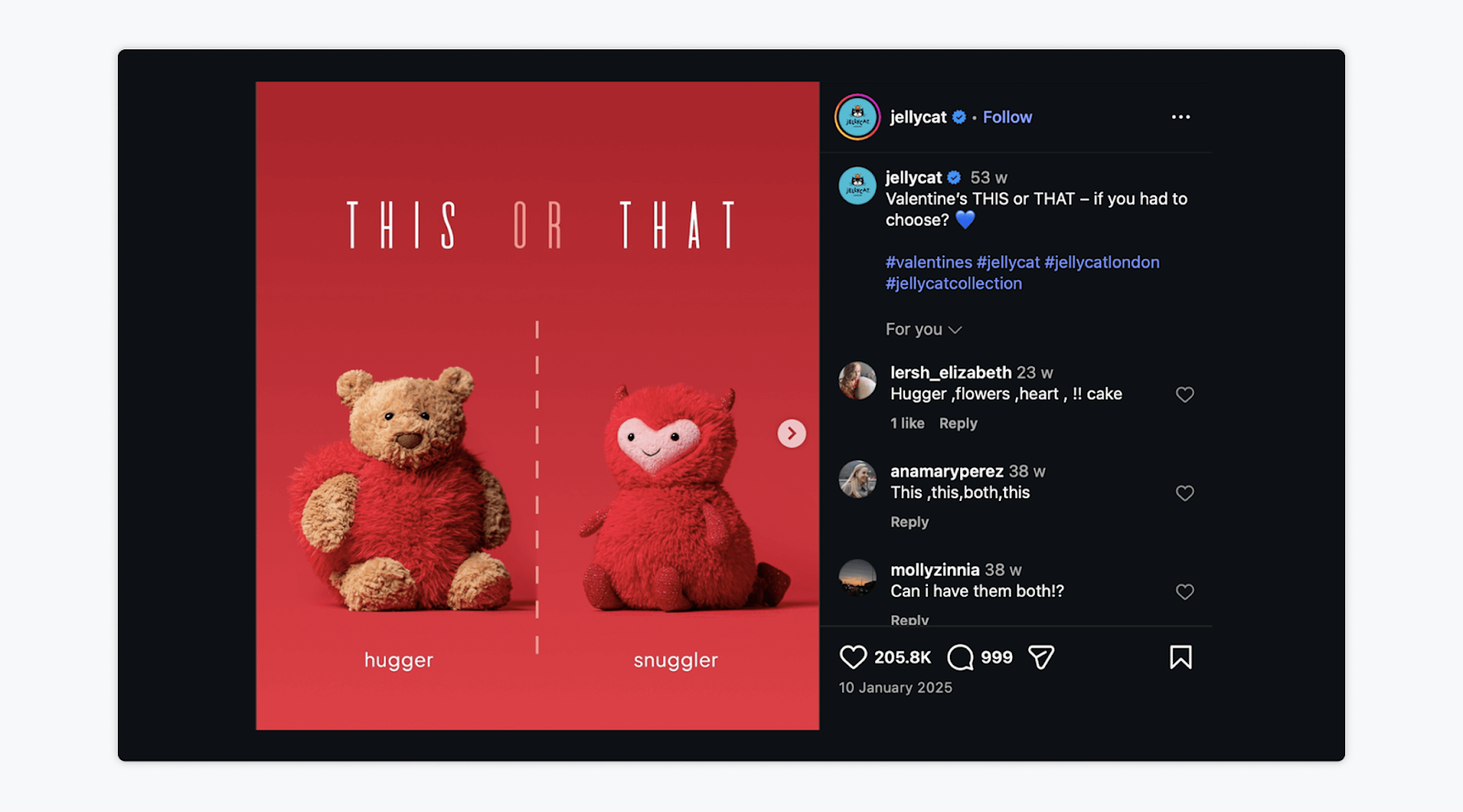
What to do: Create a set of Valentine’s Day polls using Instagram Stories or Threads. Use emoji sliders and poll stickers to boost participation.
Idea #3: Anti-Valentine’s Day Content (Single-friendly and Humor-led)
Not every audience connects with traditional Valentine’s Day messaging. That is why anti-Valentine’s content continues to perform so well, especially on platforms that reward personality and relatability.
An Irish airline, Ryanair, often leans into sarcastic, single-friendly Valentine’s humor on Threads, deliberately poking fun at romantic clichés. Their posts spark strong comment engagement and shares, particularly among users who appreciate brands that do not take themselves too seriously.

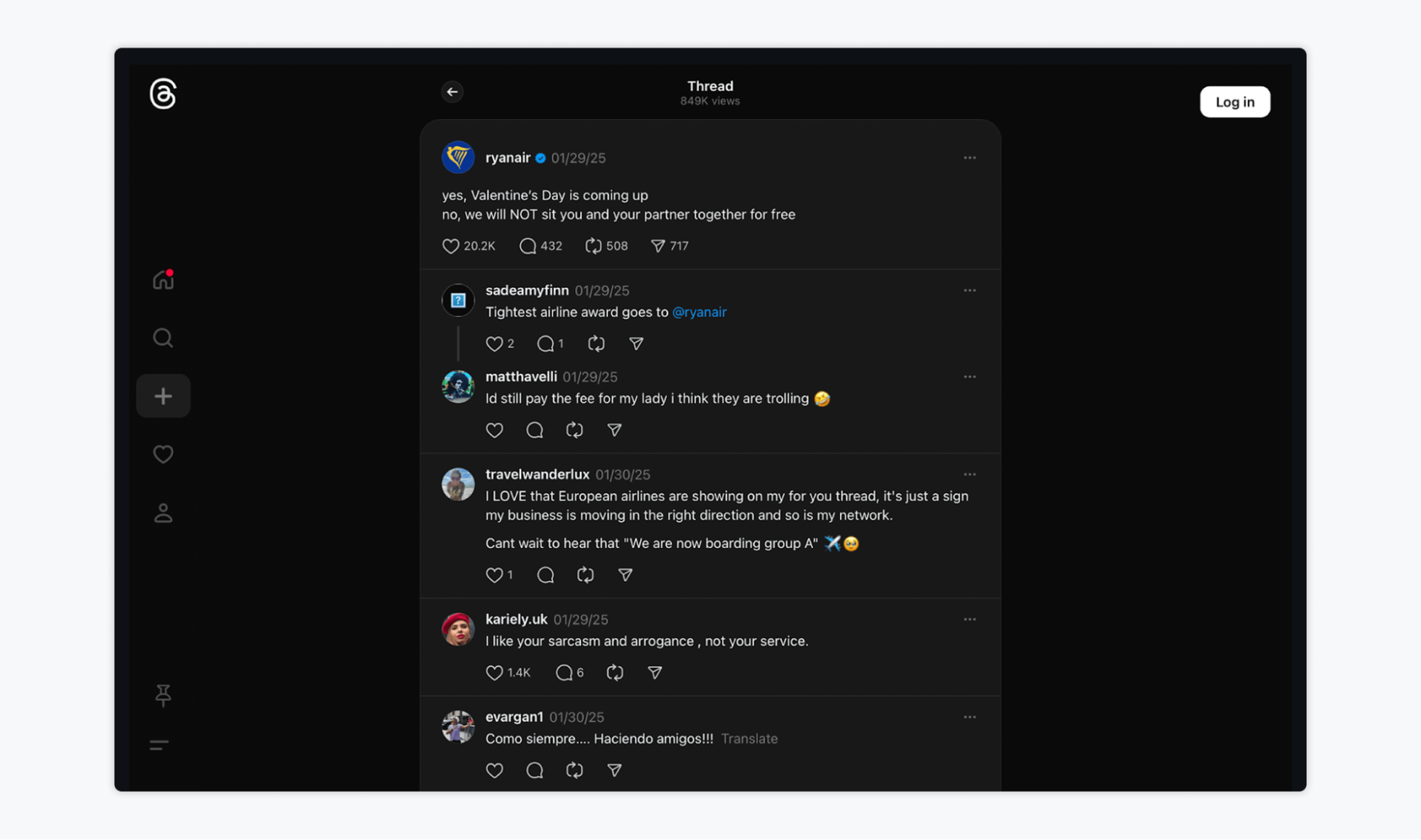
This type of content works well when audiences are already saturated with polished, sentimental campaigns and are looking for something different.
How to execute: Create light-hearted posts that acknowledge Valentine’s Day without leaning into romance. Focus on humour, independence, or self-love. Meme-style visuals, short captions, and reactive posts tend to perform best here.
Idea #4: Playful Brand Moments for Valentine’s Day
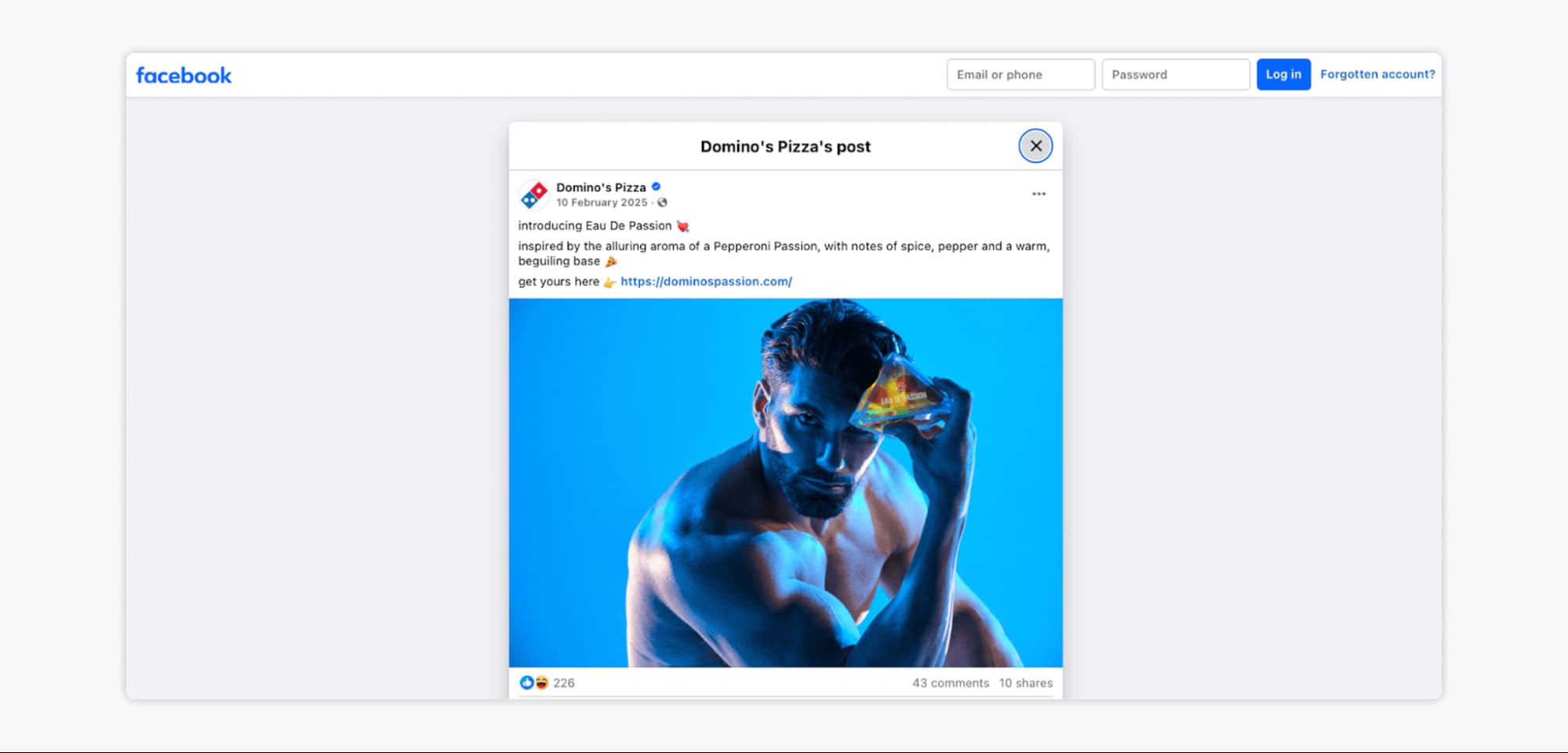
Domino’s Pizza went viral in 2025 by launching a limited-edition pizza-inspired perfume called “Eau de Passion” and promoting it on social media. The quirky concept blurred the lines between food and Valentine’s gifting, sparking conversation, shares, and comment engagement across Instagram and Facebook.
These kinds of playful brand moments are especially effective around Valentine’s Day, when audiences are already primed for novelty and light-hearted content in their feeds.

How to go about it: Create a playful or unexpected campaign tie-in that connects your product to Valentine’s Day in a surprising way. Tease the idea first in Stories, then reveal with a short clip that explains the concept. Invite followers to comment their own tongue-in-cheek “Valentine’s product ideas” for a chance to win a fun prize.
Idea #5: Branded Valentine’s Cards (Shareable Assets)
Not all high-performing Valentine’s content needs to be sales-led. In fact, some of the most engaging posts focus on giving audiences something useful or shareable.
Duolingo shared a set of branded Valentine’s cards on LinkedIn, based on an internal tradition that started within the company. Originally created for employees, the cards were later shared publicly, allowing followers to download and print them for coworkers, friends, or partners.
What makes this approach effective is that it turns Valentine’s Day into a moment of connection rather than a hard sell.

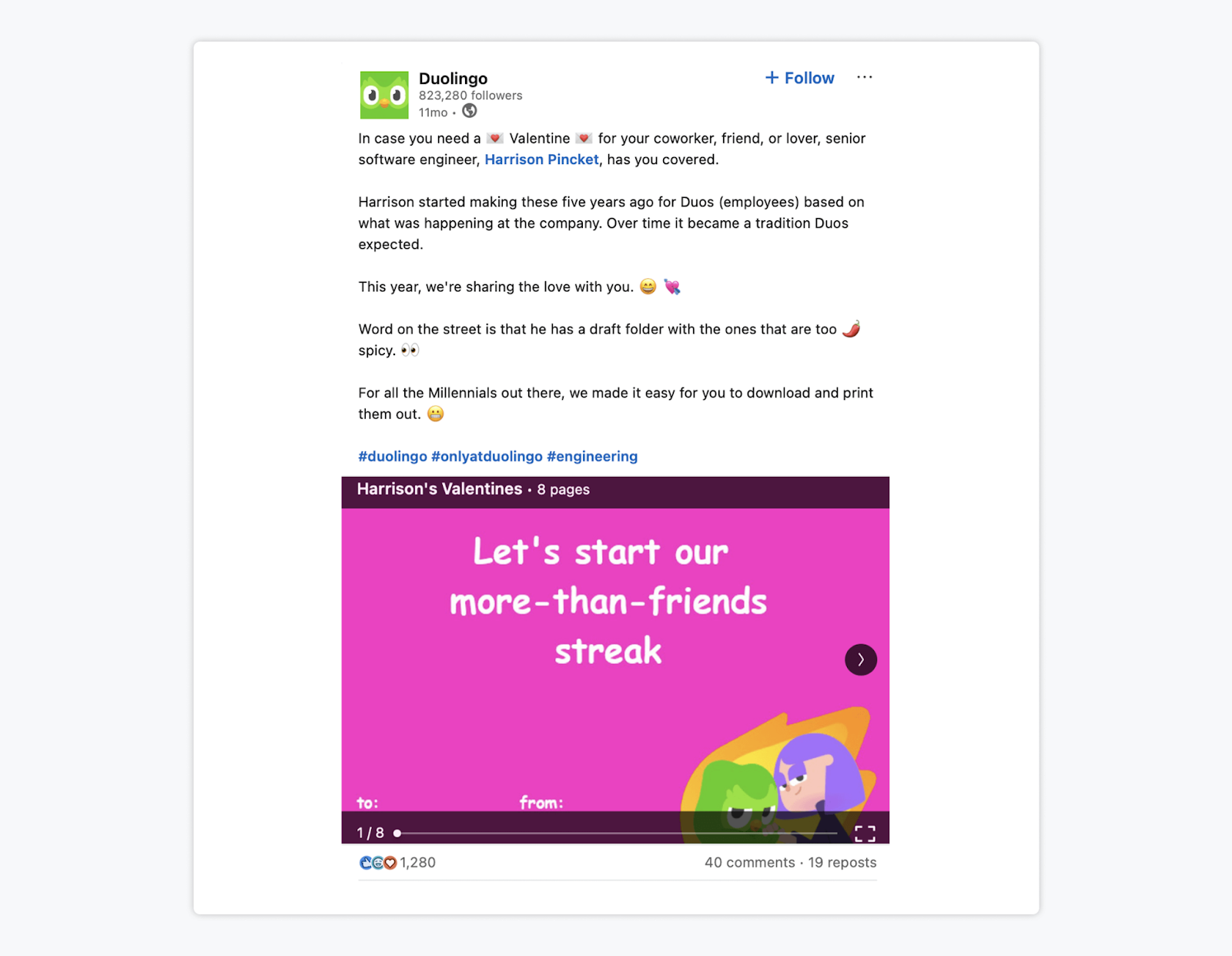
What to do: Create a small set of Valentine’s-themed assets your audience can download or share. These could be digital cards, templates, wallpapers, or short messages written in your brand’s tone. Promote them with a clear call to action, such as “Download, share, or tag someone who needs this,” and encourage reposts to extend reach organically.
Idea #6: Giveaway Carousel (Tag-to-win Campaign)
If your goal is reach rather than retention, giveaways are an effective way to tap into new audiences through existing followers.
Wellness and fitness brand Konfidence ran a Valentine’s giveaway across multiple platforms, encouraging users to follow accounts and tag friends to enter. This activated cross-platform engagement and expanded reach by leveraging personal networks rather than paid promotion.
When done well, giveaway comments often far outnumber likes, helping posts travel beyond your immediate audience.

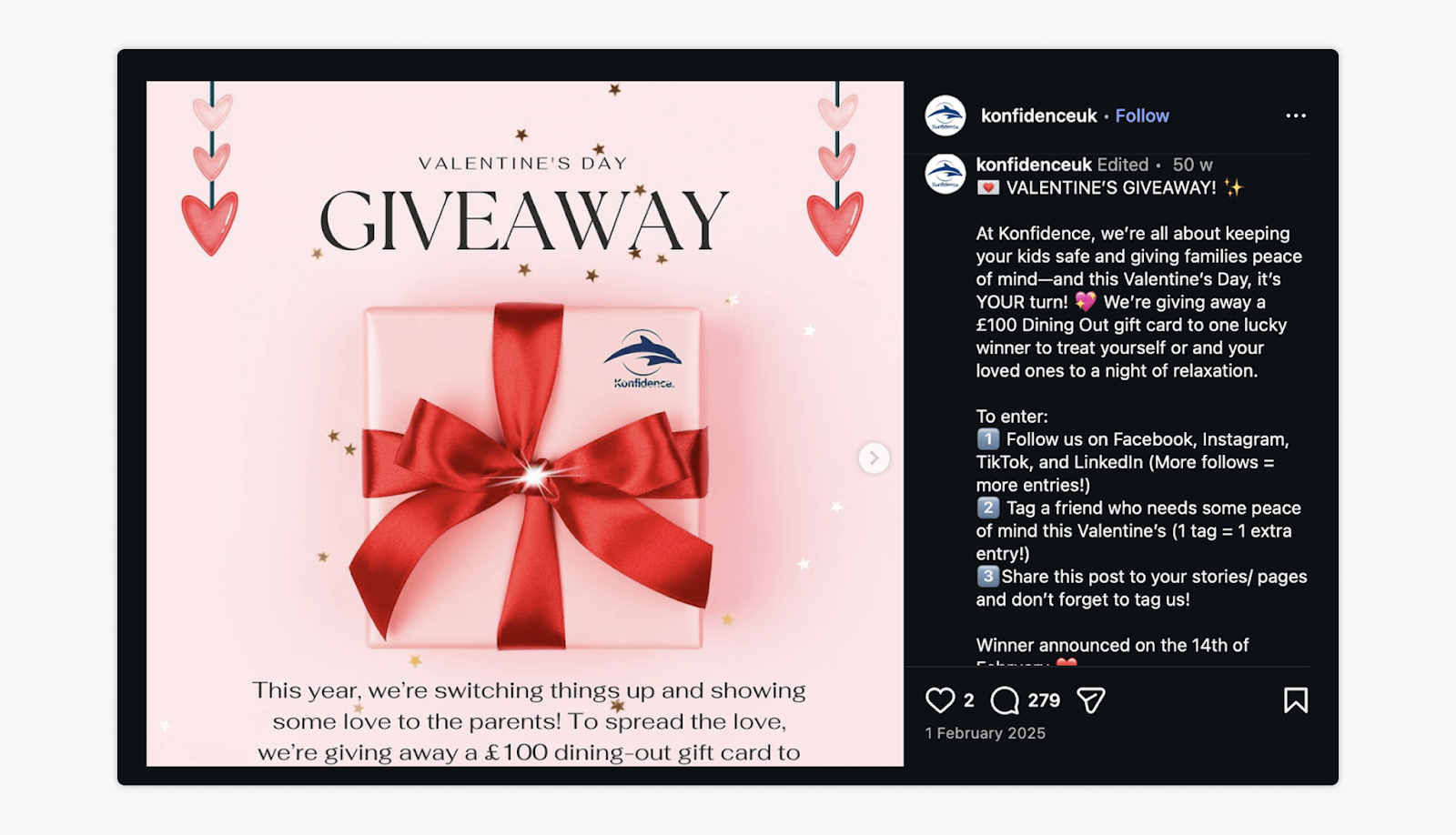
How to implement: Create a Valentine’s-themed giveaway post with a clear prize and simple entry rules. Ask followers to tag the person they would give the gift, and optionally follow your account. Promote the giveaway in Stories with countdown stickers and reshare entries to maintain momentum until the closing date.
Idea #7: Valentine’s Product Promotion (Seasonal Sneak Peeks)
Seasonal moments like Valentine’s Day are ideal for introducing products in a softer, more inspirational way rather than hard selling.
Pandora shared Valentine’s-themed product posts on Instagram ahead of the holiday, showcasing heart-shaped designs and giftable pieces. By publishing this content early, the brand positioned its products as thoughtful gift inspiration instead of last-minute purchases.
This approach works well on social media, where users often save posts and revisit them closer to the date.
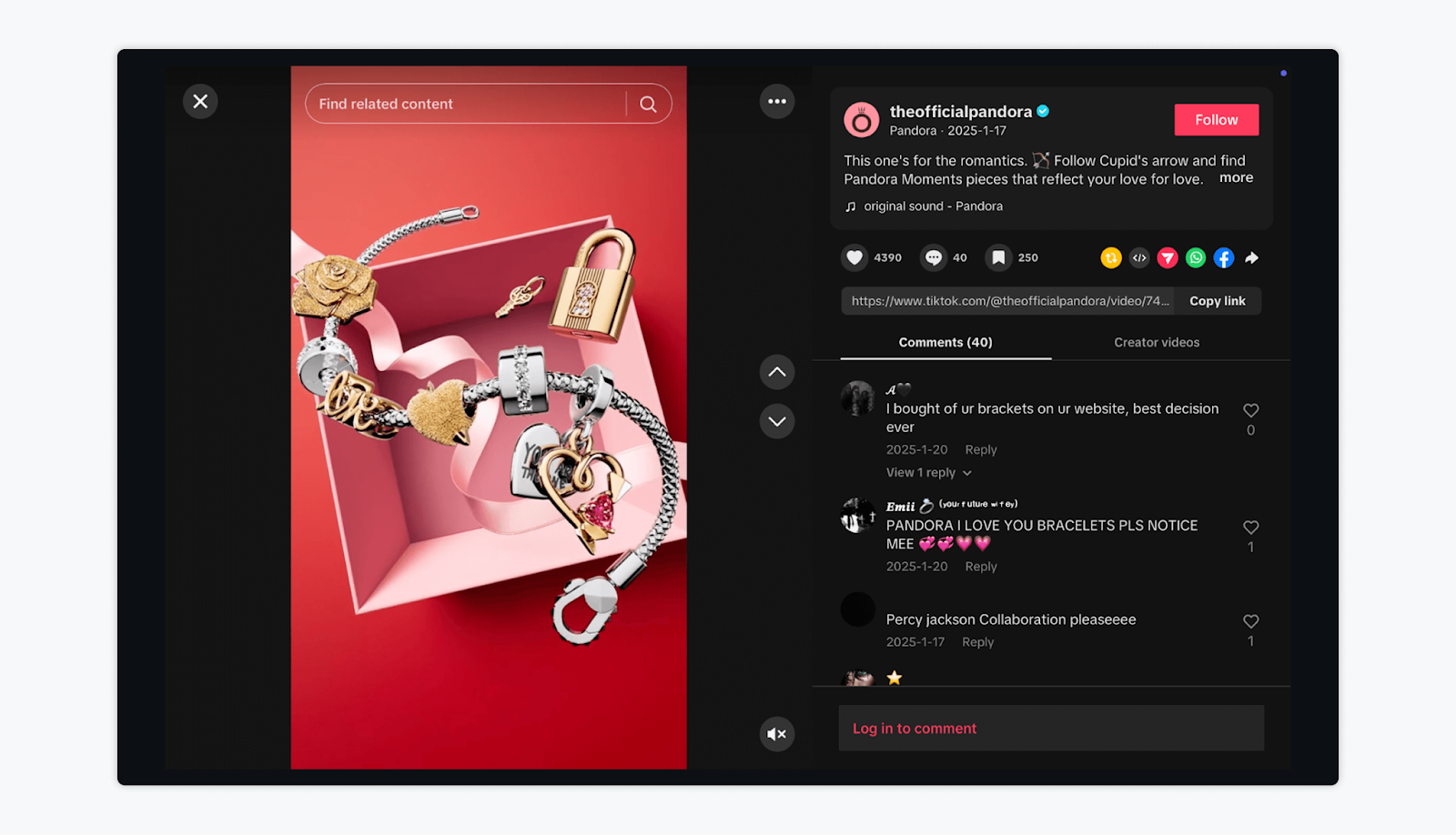
How to do this: Start posting Valentine’s-themed product content two to three weeks before the holiday. Use lifestyle imagery or short Reels that show products being worn or gifted in real-life settings. Reinforce the campaign through Stories and Highlights so your Valentine’s collection remains easy to find.
FAQs
Planning should ideally start two to three weeks before Valentine’s Day. This gives you enough time to develop creative ideas, gather visuals, and align messaging across platforms without rushing. Planning early also makes it easier to schedule content in advance, coordinate client approvals, and adjust your approach based on early engagement or campaign performance.
Not at all. While Valentine’s Day is often associated with B2C marketing, many B2B brands successfully use the moment to highlight partnerships, client appreciation, or company culture. On platforms like LinkedIn, Valentine’s content works best when it focuses on relationships, teamwork, or gratitude rather than overt promotion.
Instagram and TikTok are particularly effective for Valentine’s Day due to their visual nature and strong engagement with interactive formats like polls, Reels, and short videos. Facebook performs well for giveaways and community-driven posts, especially for established audiences. LinkedIn is best suited for appreciation-led or culture-focused content that acknowledges clients, teams, or partners in a more professional context.
Don’t Overthink Your Valentine’s Day Content
Valentine’s Day does not need to be complicated to be effective. A handful of well-planned posts is often all you need to make an impact on February 14.
Seasonal moments like this are much easier to manage when content is planned, reviewed, and approved in advance, especially for teams handling multiple brands or channels. Gain helps marketing teams and agencies keep everything in one place, from content creation and client approvals to scheduling and publishing.
If you want to spend less time chasing feedback and more time creating great content, try Gain for free today!