Social media interactions are where your brand comes to life. If you’re not paying attention to them (or worse, not responding), you’re leaving potential customers behind.
In this guide, we break down the 8 types of social media interactions and how to handle each one.
Key takeaways
- The eight types of social media interactions include likes, follows, comments, direct messages, saves, reviews, tags, and shares.
- Social interactions matter. They tell you how your content is landing with your audience in real time.
- Keep the conversation going. Engagement is a two-way street, so reply to comments and reshare content regularly.
- Hootsuite makes it easier to stay on top of social interactions. Teams can keep track of comments and DMs across different social platforms, all from a single dashboard.
Social media interaction is any form of communication between a brand and users on social media.
Interactions can include likes, comments, direct messages, tags, saves, and even follows.
Social media interactions are how people connect with your brand, and vice versa. Every interaction is a chance to build a relationship, answer a question, or move someone closer to a purchase.
With social commerce on the rise, those interactions matter even more. They’re part of how people find brands and decide who to trust.
Square’s Future of Commerce Report found that interacting with brands is a key part of the buying journey. For example:
- 32% of consumers “like” or follow businesses
- 24% prefer to comment on posts
- 46% want to communicate via social media or direct message
Summary: Social media interactions open the door to deeper engagement, stronger relationships, and ultimately, conversions.
Here are the most common types of social media interactions and how to respond to them effectively:
1. Shares
A share is when someone reposts your content to their own feed or sends it to another user.
Shares don’t just boost engagement. They introduce your brand to new audiences and add a layer of credibility, since the content is coming from someone your audience already knows.
How to respond
Acknowledge the share whenever you can. For instance, if someone shares your post to their story, reply with a quick message or emoji reaction to show you saw it.
Bonus points if you reshare their posts to your branded channels (if it makes sense, of course).
Source: OLIPOP
2. Tags
A tag is when a user mentions your brand on social media. They can tag you in a post, caption, or story. It’s one of the most direct ways people interact with your brand on social.
How to respond
The best way to respond to a tag is to engage with the post you’re tagged in. And if the content aligns with your brand, consider resharing it to your own feed. This is a great way to encourage user-generated content (UGC).
Make it a habit to review tagged posts regularly so you can source UGC and balance your content calendar with both organic and branded content.


Source: MEJURI
3. Likes
Likes are the most common form of social media interaction, and continue to be an important metric for success.
They’re a quick signal that your content is landing with your followers. Plus, the more likes you get, the more likely social media algorithms will push your content to a larger audience.


Source: Siete Foods
How to respond
You don’t need to acknowledge every like, but you should monitor them. Tracking likes over time helps you zero-in on the types of content your audience likes. You can then use these insights to optimize your social media strategy.
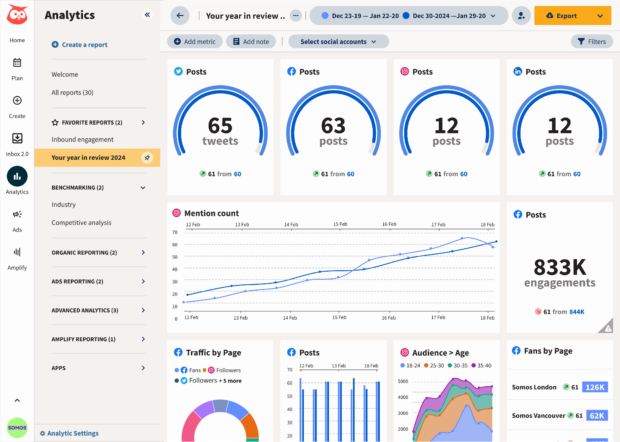
A social media management tool like Hootsuite makes it easy to track social metrics — including likes — in real time. You can look at performance by post, or step back and compare results across social networks.

4. Follows
Follows are when a user chooses to follow your brand’s account or page in order to see your content in their feed.
Follows indicate that someone wants to see more of your content — a strong sign you’re reaching the right audience. Unfollows, on the other hand, tell a different story.
An unfollow is when a social media user decides not to follow your brand account anymore. While the occasional unfollow is normal, a sudden drop in followers can indicate that something in your social media content or strategy is missing the mark.
How to respond
Keep an eye on follower trends over time. If you notice a spike in unfollows or a slowdown in growth, review your recent content and interactions. Even small changes in tone, frequency, or direction can impact audience retention.
Pro tip 💡: Not sure how often to post on your social media channels? We ran the numbers to find the optimal posting frequency for each social media platform.
5. Comments
Comments are when users reply directly to your posts — whether that’s with text, emojis, or by tagging other accounts.
Think of comments as soft leads. Someone stopped scrolling, paid attention to your content, and took the time to respond. That’s intent.
But if you’re ghosting your own comment section, you’re missing out on opportunities to move potential customers closer to decision. That’s why responding back matters.


Source: Laneige U.S.
How to respond
Whether your followers are asking questions, dropping emojis, or expressing their excitement, it’s important to respond promptly. It helps your audience feel acknowledged, giving them more reason to engage again in the future.
For teams managing multiple social channels, keeping up with comments can get overwhelming. Having a central place to monitor and respond to followers — without opening multiple apps — is key for staying on top of everything.
That’s where a social inbox comes in. Tools like Hootsuite Inbox bring comments, DMs, and mentions into one place, so teams can stay on top of every message, no matter where it came from.


Reduce response time (and your workload)
Manage all your messages stress-free with easy routing, saved replies, and friendly chatbots. Try Hootsuite’s Inbox today.
Book a Demo
6. Direct messages
A DM (direct message) is when someone reaches out to your brand privately, usually with a question, concern, or support request. And it’s important to be ready for them.
Square’s Future of Commerce Report found that 24% of consumers prefer to DM a business over any other communication method.
That makes your inbox a front line for customer support.
How to respond
Stay on top of your DMs. Fast responses build trust and create positive customer experiences. On the flip side, slow or missed replies can hurt your brand reputation, especially when users are expecting quick answers.
A centralized inbox makes this a lot easier, and helps teams respond a lot faster. For example, with Hootsuite Inbox, you can save auto-replies for common questions, allowing your team to reply quickly while keeping responses consistent.


7. Reviews
Reviews are everywhere, even on social media.
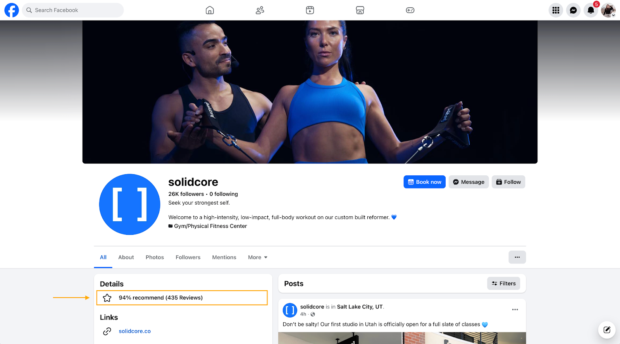
For example, people can write recommendations on Facebook, or leave a product review on Instagram or TikTok Shop.

Source: solidcore
Leaving reviews is a common practice on social media. According to Square’s Future of Commerce report, 22% of consumers wrote a review on a brand’s social media profile in the last 12 months.
Positive reviews help boost your brand’s social proof. When a potential customer reads another person’s feedback or experience with your brand, they’re more likely to imagine themselves making the same purchase.


Source: solidcore
Negative reviews can have the opposite effect. It’s important to stay on top of these, and respond when necessary.
How to respond
Monitor your social reviews and have a few responses prepared for positive and negative scenarios.
Remember that customer reviews — and your responses to them — are public. The way you handle feedback reflects back on your brand, so always remain professional.
8. Saves
A save is when someone bookmarks your content to come back to later. Depending on the platform, this might look like saving a post, pinning it, or adding it to a collection.
Unlike likes — which are often quick and passive — saves are a strong signal that your content is resonating on a deeper level.
Content that gets saved frequently is also more likely to be prioritized by social media algorithms, helping extend its lifespan and reach.
How to respond
Look for patterns in the content that gets saved the most, whether it’s educational posts, how-tos, or inspirational content.
Use these insights to guide your content strategy. If people are saving something, it’s probably worth creating more of it.
To get more social interactions, focus on being responsive, showing up consistently, and prioritizing content that invites participation.
Here are a few ways to do just that:
- Reply to comments. The math is simple: engagement builds engagement. When you reply to comments, it keeps the conversation going and encourages users to participate again in the future.
- Post at the right times. Posting when your target audience is most active can increase early engagement. Tools like Hootsuite offer personalized best time to post recommendations, so you’re never guessing when to hit publish.
- Lean into experimentation. Not every post will land, and that’s okay. Try different formats and tones to see what lands. Over time, you’ll start to spot patterns in what drives the most engagement.
- Use interactive elements. Polls, Q&As, and quizzes make it easy for people to interact without much effort.
- Ask better questions. Opinion-based or slightly polarizing questions tend to perform better than generic ones. Give people something easy (and fun) to respond to.
- Invest in short-form video. Research shows that visual content drives the most social media engagement. If you’ve never posted a Reel on Instagram or a video on LinkedIn, now’s a good time to start.
FAQ: Social media interactions
What is social media interaction and why is it important for brands?
These interactions matter because they show how your audience is responding to your brand. Over time, strong customer engagement can help increase your reach, build relationships, and drive better results from how you use social media.
How do businesses improve social media interaction and engagement?
Businesses improve social media interaction by showing up consistently and making it easy for people to engage. That includes replying to comments, posting when your audience is active, leaning into experimentation, asking better questions, and prioritizing content that invites participation, like polls or quizzes.
What types of social media interactions matter most for performance?
The types of social media interactions that matter most for performance are comments, shares, and saves. These actions often signal stronger intent than likes alone. When people take the time to comment or share content, it can have a bigger impact on your reach, visibility, and overall performance across your social media pages.
How do brands measure social media interaction across platforms?
Brands measure social media interaction using metrics like engagement rate, comments, shares, saves, clicks, and message volume. Tools like Hootsuite can bring this data together across platforms, making it easier to monitor performance and see how you’re tracking against your KPIs.
What strategies increase meaningful social media interaction with audiences?
The most effective way to increase meaningful interaction is to create content that encourages people to respond — and then engage with them when they do. This includes asking opinion-based prompts, responding to comments, tapping into social media trends, and highlighting your audience’s content.
Save time managing your social media marketing with Hootsuite. Publish and schedule posts, find relevant conversations, engage your audience, measure results, and more — all from a single dashboard. Try it free today.