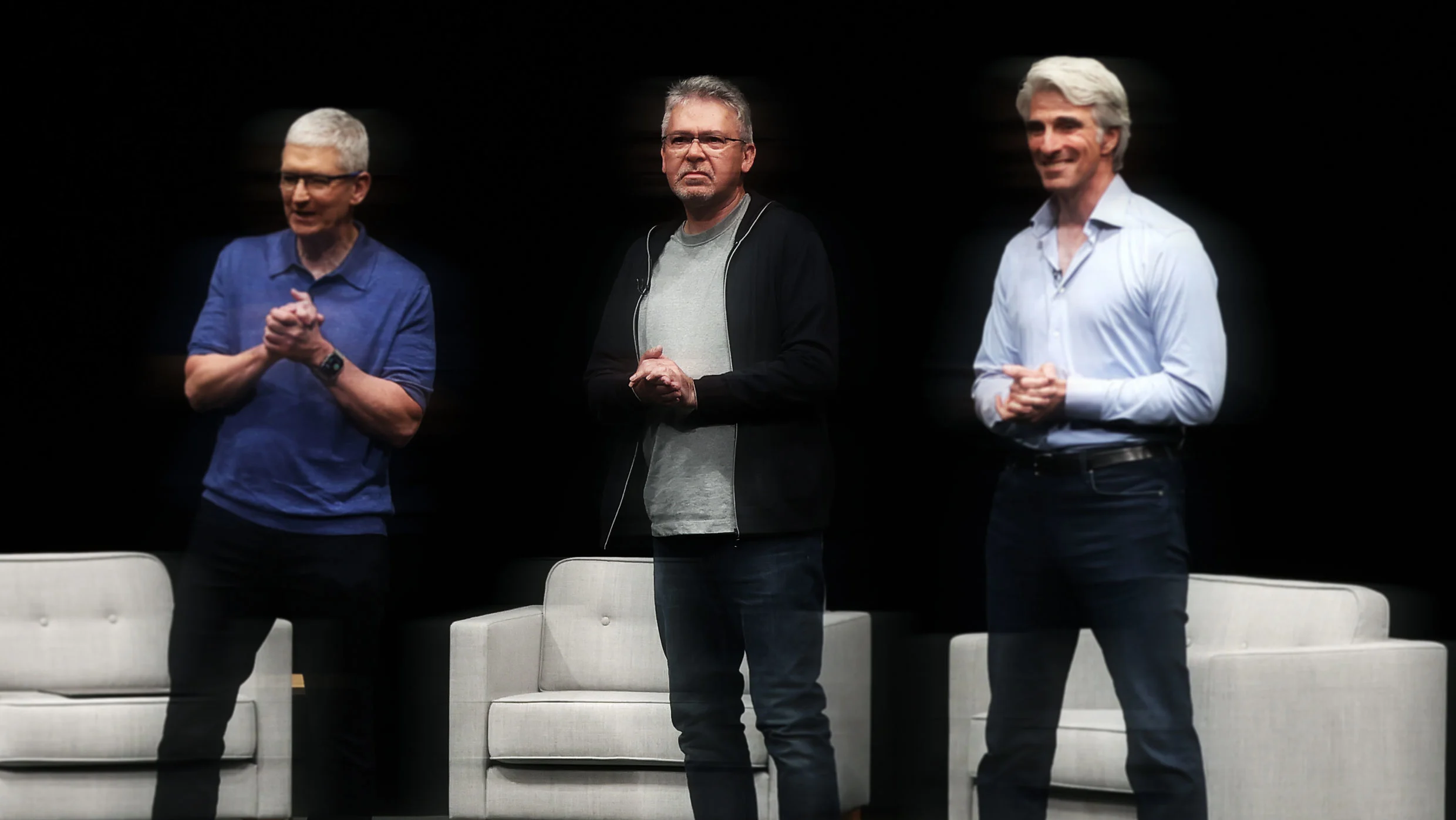
Apple’s AI boss, John Giannandrea, is stepping down after seven years on the job. Apple’s stock price got a slight boost on the news, as some investors saw Apple signaling a new urgency to bring AI to its devices.
Following a transition period, Giannandrea will “retire” next spring, Apple said in a press release Monday. Most of Giannandrea’s AI group will now be tucked into Craig Fedherigi’s software development group, which owns development of the various operating systems in Apple devices.
While the reasons for Giannandrea’s departure are no doubt complicated, it’s a wonder he lasted so long. For years, he’s been linked to Apple’s failure to seize on generative AI to improve its Siri voice assistant and make the iPhone and other iDevices smarter and more personalized.
He may have made errors in judgment. Reports said he waffled several times on the preferred architecture for Siri — on how much of the assistant’s AI processing should run on the device versus a server in the cloud. But it’s also possible that his plans for integrating AI into Apple products encountered friction from other Apple leaders, or were hampered by fears among the leadership team that generative AI would compromise user privacy or create new legal exposure. At any rate, by 2024 Apple’s leadership — including Tim Cook — had lost confidence that Giannandrea’s group could turn AI research into useful (and safe) AI features and products.
Before coming to Apple, Giannandrea had been prolific as the head of search and AI at Google. Under his leadership, the search giant began relying on AI to refine its understanding of certain user-preferred search terms, in hopes of returning more relevant and useful results. He was at the helm of Google’s AI efforts when its researchers invented the transformer language model architecture that sparked the generative AI boom and new apps like ChatGPT.
Apple poached Giannandrea in 2018 to inject new life into its floundering AI efforts. This gave Apple the time and leadership it needed to develop its own models and inject its devices and services with new intelligence.
Apple combined the Siri and AI/machine learning groups and put them under Giannandrea’s control, creating a single point of accountability for infusing the company’s operating systems, services, and developer tools with AI.
Giannandrea’s work during his first years at Apple was kept largely under wraps by the company. Fast Companywhich had been granted meetings with the company’s AI group, was repeatedly denied access to Giannandrea.
As the starting gun of the generative AI revolution sounded with the release of ChatGPT in late 2022, Apple stayed largely silent and remained so even as its peers raced to develop their own large AI models and apps.
Then in June 2024, Apple announced at its developer conference that it would bring “Apple Intelligence” features to its devices, enabling them to offer intuitive and proactive help based on the user’s personal data. It also announced plans to use generative AI to create a smarter “next-gen Siri.” For a time, hope was restored that Apple would catch up with the AI revolution.
But neither Apple Intelligence nor next-gen Siri have shown up. (Apple now says they’ll arrive in 2026.) In lieu of its own AI, Apple tried to integrate OpenAI’s ChatGPT into Siri, but the user experience is clunky.
In March, Apple announced it would be taking Siri out of Giannandrea’s control and placing it inside Fedherighi’s software group. Just six weeks later, Apple removed its robotics research group (which it hoped would lay the groundwork for future Apple home devices) from Giannandrea’s AI group.
Apple believes Amar Subramanya, the Microsoft executive they’ve tapped to replace Giannandrea, can and will get things back on track. A 16-year veteran of Google, Subramanya led engineering for the company’s Gemini Assistant. He has an impressive resume, and very likely a price tag to match.
His hire, along with Giannandrea’s departure, should be read as Apple’s acknowledgment of falling behind its peers in AI — and a signal that it intends to catch up. Interestingly, it was Giannandrea’s departure that got top billing in the press release Apple put out Monday, not the arrival of a new AI chief in Subramanya.
Apple stock got a slight bump on the announcement, closing up $4.25 (1.52%) at $283.10.
Giannandrea’s departure is very much about what kind of tech company Apple wants to be in the long term. Does it want to develop and control its own AI models, or pay to rely on big AI models like Google’s Gemini?
Apple has distinct advantages with its sticky and trusting relationship with users, and control over both its software and hardware, including the chips inside the devices. It’s in a unique position to leverage smaller, more specialized AI models running on those chips to deeply understand and effectively assist users.
Whatever the move, you can expect to see a lot more focus and pressure within Apple to realize new AI features and a smarter Siri in iDevices.
The final deadline for Fast Company’s World Changing Ideas Awards is Friday, December 12, at 11:59 pm PT. Apply today.