




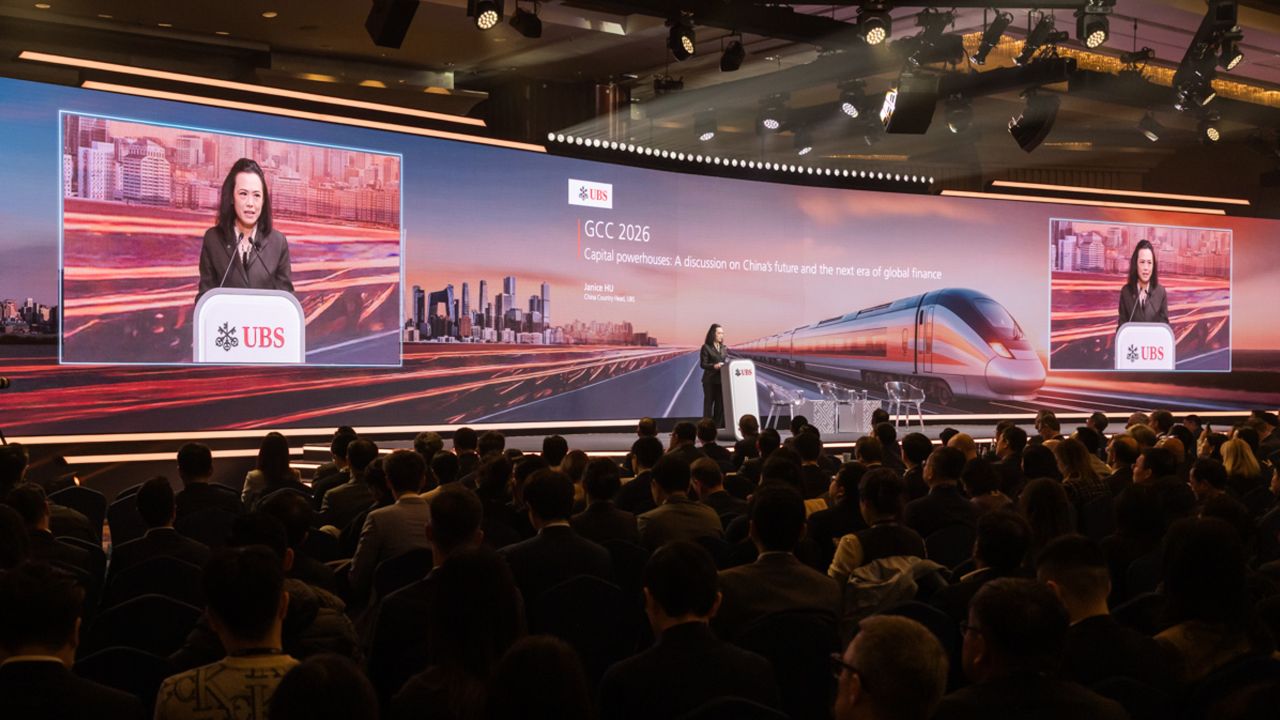
At the UBS Greater China Conference 2026 held in Shanghai on Wednesday, Jimmy Yu, China Technology Semiconductor Analyst at UBS Securities, shared his latest views on global and China’s semiconductor industry cycles, AI-driven growth dynamics, and investment themes. He said that amid the rapid development of AI, the global semiconductor industry is entering a new upcycle, with growth momentum and durability expected to be stronger than in previous cycles.
From a global perspective, Yu expects the semiconductor market to approach $700 billion in 2025, surpass $1 trillion in 2026, representing year-on-year growth of more than 40%. By 2027, the market is projected to reach around $1.18 trillion, with growth remaining in the double digits. While such growth is not uncommon historically, Yu noted that the key difference this time lies in the structural demand shift driven by AI.
Memory is expected to be one of the major drivers of this cycle. Yu said the memory market could grow by close to 50% by around 2027, driven largely by higher prices lifting overall revenue. Even excluding memory, demand for logic chips, foundry services, and related segments remains resilient, supporting sustained double-digit growth between 2025 and 2027.
On the demand side, AI applications are expanding rapidly beyond data centers and cloud computing into financial services, enterprise use cases, and security-related fields. While some applications are still in the early stages, their potential market size is becoming increasingly clear, according to Yu. As a result, investment in AI infrastructure is likely to be one of the most certain growth drivers for the semiconductor industry over the next several years.


Discussing industry cyclicality, semiconductors remain a fundamentally cyclical sector, Yu mentioned. Based on global revenue growth, the industry could approach a near-term peak around the third quarter of this year.
However, indicators such as foundry capacity utilization, capital expenditure, and corporate profitability suggest that the cycle peak may be delayed until the third quarter of next year. He added that equity markets typically price in cyclical changes one to two quarters in advance, prompting investors to position ahead of fundamentals.
Turning to China, Yu said that AI infrastructure development is significantly boosting domestic demand for computing chips, advanced process nodes, advanced packaging, and semiconductor equipment. While China still lags behind overseas peers in advanced manufacturing capabilities, there remains substantial room for improvement in terms of localization and self-sufficiency.
In recent years, revenue growth at Chinese semiconductor equipment companies has outpaced the industry average, with several subsegments showing signs of sustained breakthroughs.

AI is reshaping the demand structure of the semiconductor industry. From cloud computing to edge applications, and from autonomous driving to robotics and intelligent devices, demand for high-performance, low-power chips continues to accelerate. Supported by both global and China-specific drivers, the current semiconductor upcycle is expected to extend into 2026 and potentially beyond.


