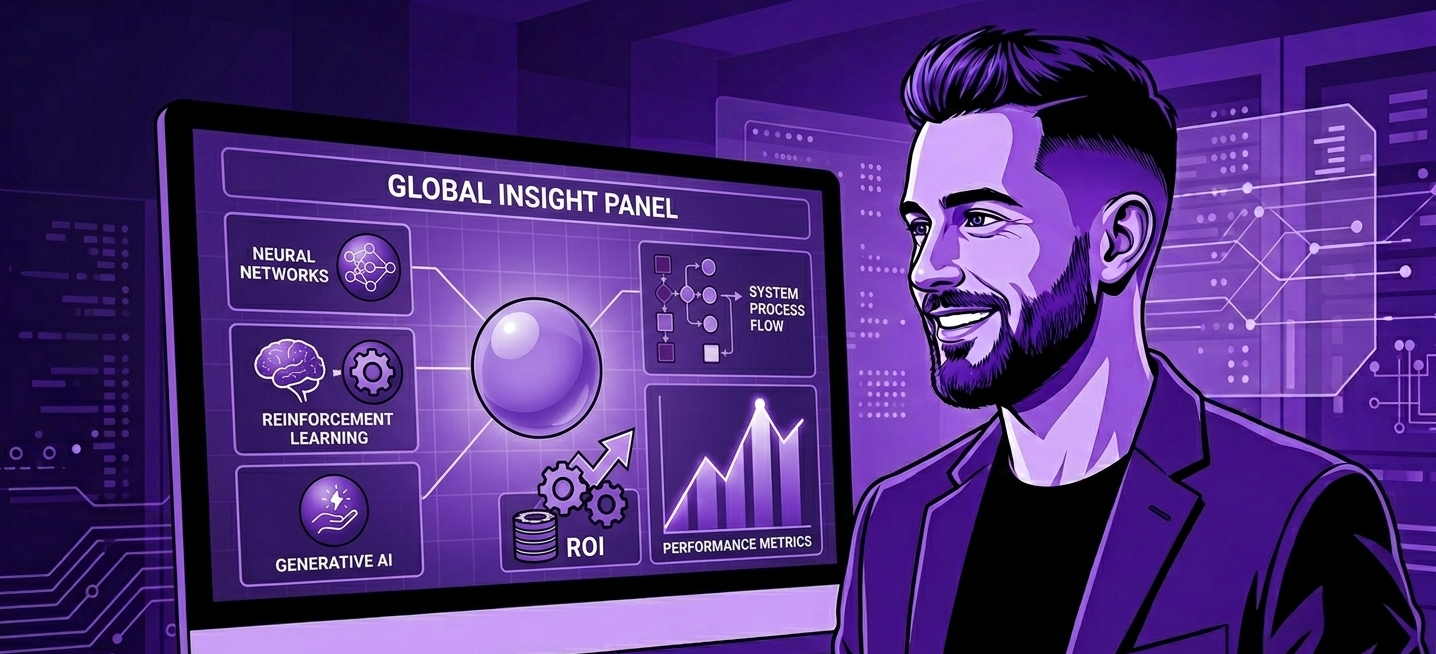
AI Mode is no longer just a futuristic concept reserved for tech giants. Today, tech-driven companies are beginning to run real parts of their operations using AI from automating workflows to deploying AI agents that handle repetitive tasks. The real opportunity is not simply using AI tools, but building systems where AI can analyze, decide, and execute work across your business.
The shift is palpable. Leaders are no longer asking ‘what can AI do?’ but rather ‘how much can I hand over to it?’ This specific operational state where systems analyze, decide, and execute without constant human oversight is rewriting the rules of productivity.
Here is how you can leverage this shift to stop managing tasks and start managing outcomes. Many companies we work with first implement AI Mode through workflow automation, internal AI bots, or small AI-powered micro-apps before expanding automation across departments.
Beyond the Buzzword: What Is AI Mode?
At its core, AI Mode refers to an automated operational state where advanced systems take the wheel. It is the transition from ‘human-in-the-loop’ to ‘human-on-the-loop.’
While traditional software requires you to input data and click ‘process,’ AI Mode utilizes neural networking and reinforcement learning to understand the context of a task. It doesn’t just wait for instructions; it anticipates needs. Whether it is a CRM updating itself based on email context or a supply chain system rerouting logistics due to weather data, the system operates autonomously.
This isn’t magic. It is a convergence of three distinct technologies:
- Neural Networks: These mimic human cognitive pathways to recognize patterns (like seeing a dip in sales before a human analyst does).
- Reinforcement Learning: The system learns by doing. If it makes a scheduling error and you correct it, it won’t make that mistake again.
- Generative AI: Beyond analysis, it can now create solutions, draft responses, and simulate outcomes to solve problems in real-time.
Practical Applications of AI Mode in the Workforce
Theory is fine, but execution is what pays the bills. Businesses that successfully toggle on AI Mode are seeing metrics that were previously impossible.
1. The Productivity Explosion
We aren’t talking about a 10% incremental gain. Companies deploying AI agents and workflow automations are seeing significant productivity improvements, especially when repetitive tasks like reporting, lead qualification, or internal documentation are automated.
By switching to AI Mode for administrative heavylifting, your team stops drowning in calendar Tetris and inbox triage. The AI handles the logistics; your humans handle the strategy.
2. Predictive Intelligence Over Data Management
Old-school data management was about storage and retrieval. AI Mode is about prediction. It doesn’t just tell you what happened last quarter; it tells you what is likely to happen next week based on variables a human brain can’t compute simultaneously. This allows for proactive pivots rather than reactive damage control.
For example, an AI automation could automatically collect campaign data from ad platforms, CRM systems, and analytics tools, then generate a weekly performance report without any manual work. Instead of spending hours compiling spreadsheets, teams receive insights instantly.
3. Hyper-Personalized Customer Experiences
Standard chatbots are frustrating. An AI system operating in full autonomy, however, remembers a customer’s history, tone, and preferences. It doesn’t just answer questions; it solves problems and recommends products with a level of personalization that drives genuine revenue, not just support ticket closures.
Turning It On: A Strategic Roadmap
You cannot simply flip a switch and expect your business to run itself. Implementing AI Mode requires a calculated approach to integration.
Define the End Game
Don’t automate for the sake of automation. Are you trying to cut response times? Reduce overhead? Scale content production? If you don’t have a clear KPI, you will just have a faster way to make mistakes.
Integration is Everything
The most common point of failure is siloed tech. Your AI solution needs to talk to your CRM, your email client, and your project management tools. If the AI operates in a vacuum, it creates more work, not less. Look for scalability and seamless API integrations.
The Pilot Phase
Start small. Let the AI handle internal scheduling before you let it talk to your biggest clients. Treat this phase as an internship for the software. Monitor the outputs, correct the drift, and refine the parameters.
The Guardrails: Ethics and Security
When you enable AI Mode, you are handing over keys to the kingdom. This brings valid concerns that must be addressed upfront.
Data Sovereignty:Ensure your solution isn’t training its public models on your proprietary data. Security protocols must be enterprise-grade. If you can’t verify where the data goes, don’t use the tool.
The ‘Black Box’ Problem:You need to know why the AI made a decision. Ensure there is transparency in the algorithms you employ, especially in sensitive sectors like finance or healthcare.
Cultural Buy-In:Your team might fear they are being replaced. It is your job to frame this correctly: AI removes the robot work from the human, allowing them to do the creative, high-value work they were actually hired for.
The Verdict
The future isn’t coming; it’s already here, and it’s automated. AI Mode represents the difference between a business that scales linearly and one that scales exponentially.
The tools are ready. The safeguards are improving. The only variable left is your willingness to let go of the manual controls and trust the process. Are you ready to upgrade your operations?