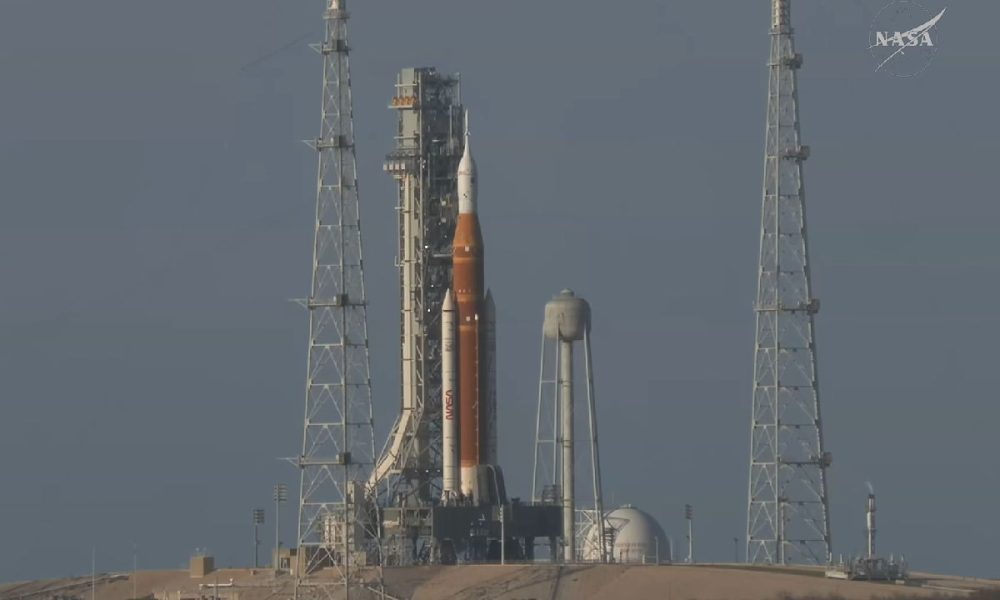
Just a few minutes ago the adventure of Artemis II began, the second launch of the international space project that will once again take humans to the Moon, and beyond, since its final objective is establish a permanent base and sustainable in the satellite that will serve in the future to reach Mars.
If Artemis I launched in 2011 was the premiere, Artemis II goes much further because it is the first manned mission of the project with four astronauts on board (Reid Wiseman, Victor Glover, Christina Koch and Jeremy Hansen). Although it will not land on the moon, it is an essential step to meet the ambitious objectives of the project: completing the Lunar Gateway orbital platform (key to the continued and long-term presence on the satellite) and subsequently serving as a launch pad for the new era of human space exploration: the conquest of Mars planned for 2033.
Artemis II, underway
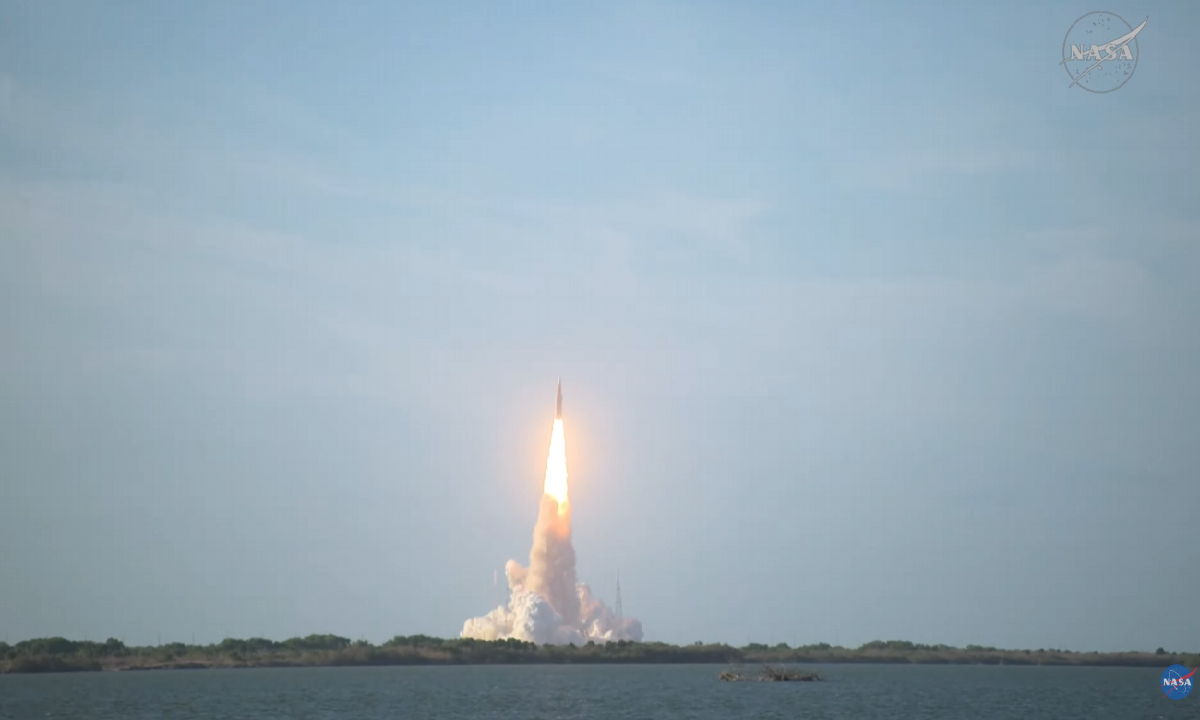
The space mission has begun after the cancellation of the first attempt in February due to a hydrogen leak detected in the main rocket. The launch from the Kennedy Space Center in Florida has been successful, although it has been delayed a few minutes due to an undefined anomaly.
In this way the Space Launch System (SLS), the largest and most powerful rocket ever manufactured and which, thanks to the successive improvement of its versions (blocks), will be able to cover all Artemis launches including the arrival of humans to the lunar south pole in 2027. The launch system is a disposable super-heavy lift vehicle designed by NASA. Its development includes four versions or blocks, from the first capable of putting 70 tons into orbit to the most powerful capable of lifting 143 tons.
The rocket has propelled the spacecraft ‘Orion’the ship in charge of taking the four astronauts on board to lunar orbit. It is a reusable spacecraft divided into two main spaces, a crew module (CM) manufactured by Lockheed Martin and a service module (ESM) manufactured by ESA, the European Space Agency (ESA) that has joined NASA in an international project where the Japanese Aerospace Exploration Agency (JAXA), the Canadian Space Agency (CSA), the Brazilian Space Agency (AEB), the Australian Space Agency (ASA), and the Space Agency also participate. Mexicana (AEM), as well as other private US companies.

The general Artemis project also contemplates other technological news such as the Advanced Exploration Lander landing craft to descend from the Orbital platform to the satellite; HERACLES, a human-enhanced robotic architecture and scientific exploration capability, and the Moon Cruiser, a logistics vehicle based on the Orion ATV spacecraft and ESM service module, which will be used as auxiliary support for the Lunar Orbital Platform Gateway.
Test trip, necessary
The Artemis II mission is designed to orbit the Moon on a 10-day trip. Orion will remain in orbit and will not approach the surface on this trip, but its astronauts will be able to boast of having traveled through space Farther than any human being has ever traveled (400,000 km) in a long arc that will reach 7,500 kilometers beyond the far side of the Moon. To put it in perspective, note that the astronauts of the Apollo program, 50 years ago, were in lunar orbit just about 110 kilometers from the surface. This will represent a huge achievement for the still nascent space age.
In addition to traveling further than anyone else, Artemis II will take a woman and a black man to the Moon for the first time. It shouldn’t be anything special, but in the current situation of anxiety here on Earth, it is another notable fact.
The next morning, after 24 hours in Earth orbit, the ship will execute the maneuver known as ‘translunar injection’, an engine ignition that will send them on a direct trajectory towards their destination. Although they will not land on the moon, the astronauts will simulate key maneuvers and after visiting the far side of the Moon they will use the mechanism known as ‘free return trajectory’ where the force of gravity will act to return the Orion ship to Earth without needing to turn on the engines. If all goes well, they will land in the Pacific Ocean within ten days.
Artemis II will also test the life support systems for the first time, another critical section that should lay the foundations for future missions and especially for Artemis IV scheduled for 2028, the first of the project that would take humans to the surface of the satellite. 50 years later of the end of the Apollo missions.
A very ambitious program with which We will return to the Moon and establish a lunar base to achieve a permanent human presence. This outpost will become a nerve center for a wide range of activities, from scientific research and energy generation to the construction of liveable and sustainable infrastructure. And finally, serve as a launch pad to take humans to Mars.
You can review NASA’s broadcast of the launch on its YouTube channel: