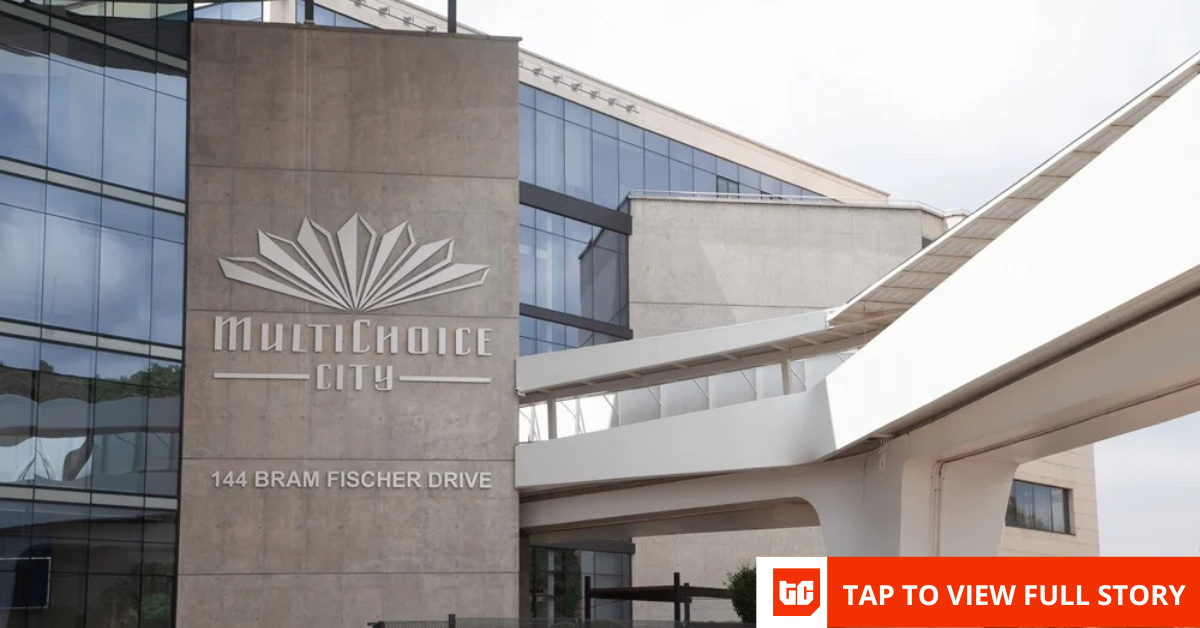
Africa’s independent producers, suppliers, and creative workers are set to feel the strain as the French media giant Canal+, which recently acquired Multichoice, Africa’s biggest pay-TV company, rolls out cost-cutting measures to stabilise its balance sheet.
In the past two financial years, MultiChoice lost 2.8 million linear subscribers as rising household costs and global streaming competition weighed heavily on its pay-TV business.
On Thursday, 29 January, its new owner, Canal+, announced a plan to save more than €400 million ($478 million) annually by 2030, to stabilise the business by cutting content, technology and operations costs.
Now under Canal+, MultiChoice has been Africa’s largest buyer of local TV and film. But its new cost-cutting drive threatens to hit the creative ecosystem that sustains thousands of jobs and has become central to the continent’s cultural exports.
For a sector already struggling with rising costs and changing viewer habits, these cuts could undo years of growth and creativity. And threaten to transform an era of peak TV into a survival-of-the-fittest landscape where only the most commercial, low-risk productions survive.
“MultiChoice’s cost-cutting is increasingly unavoidable rather than optional,” said Thabo Mosala, the director of Wrenjos Consulting, a strategy and leadership consulting firm.
He notes that maintaining a legacy cost base in a shrinking market is no longer viable, and Canal+ has prioritised restoring financial health through strict cost discipline rather than open-ended investment.
In October 2025, barely weeks after finalising its takeover, Canal+ reportedly asked MultiChoice suppliers for a blanket 20% cut on all invoices, from office vendors to production houses and new contractors.
Because merger rules prevent immediate job cuts, Canal+ insists it will not raise subscription fees for DStv packages that could affect its customers. Instead, most of the cost-cutting is being pushed onto MultiChoice’s wider network of suppliers, including those providing content.
Read: Canal+ risks probe after demanding 20% discount from MultiChoice suppliers
According to Adrian Galley, vice-chair of the South African Guild of Actors (SAGA), “many producers were already accepting ‘minimal budgets’ and throttling the entire production value chain to survive, so a further 20% cut on invoices, sometimes after delivery, risks’ catastrophic harm’ to livelihoods and long-term sector sustainability.”
Mosala points out that now cost reductions are flowing through procurement cuts, reduced commissioning budgets, and tighter contract terms, shifting employment pressure into the broader ecosystem of independent production houses, technical suppliers, and freelancers.
These players now face fewer projects, thinner margins, and greater uncertainty, which translates into fewer gig opportunities and slower skills development, even if MultiChoice’s internal headcount remains largely stable for now.
Galley says that such cost-cutting measures erode trust, undermine years-long relationships, and contradict assurances given to regulators that local content and diverse procurement would be protected under the merger.
Local content, long a strategic differentiator for MultiChoice, is emerging as a major fault line. As subscriber revenue declines, there is less room to fund a high volume of originals, which leads to fewer commissions, more conservative commissioning decisions, and less tolerance for creative risk.
Mosala warns that, over time, this dynamic could weaken the local content pipeline, hollow out production capacity, and erode employment in the creative economy, unless cost-cutting is carefully managed to avoid permanent damage to the very ecosystem that underpins MultiChoice’s relevance.
Showmax’s struggles and the hit-driven future of African originals
On an investor call on Thursday, 29 January, Canal+ CEO Maxime Saada described Showmax as “not a commercial success” and a significant drag on MultiChoice’s financial performance.
He noted that past investments in marketing, content, and technology for the platform were too high relative to returns, and signalled plans to reduce them as part of the synergy programme.
This stance unsettles African producers who have seen Showmax and DStv more broadly as crucial outlets for local storytelling and as cultural infrastructure for the continent’s film and TV industries.
If Showmax is repositioned primarily through a profitability lens, budgets are likely to tilt even more strongly towards titles with clear commercial upside.
In practice, that favours breakout, high-impact series like Shaka iLembe, the 12-part historical drama that ranked among Showmax’s most-watched dramas on DStv, attracted over 7.5 million viewers on its return, and set a new first-day viewing record on Showmax.
Canal+ continues to frame the MultiChoice deal as a long-term bet on Africa’s demographic and economic fundamentals: fast population growth, rising incomes, greater electrification, and deeper pay-TV and streaming penetration.
The group points to MultiChoice’s expansion to over 40 million subscribers in the past decade as evidence that the underlying market remains attractive if the cost base is right.
To execute its strategy, Canal+, in a statement, said it has created a unified Africa management team under David Mignot, combining leadership from both legacy organisations to drive integration and capture synergies across the continent.