




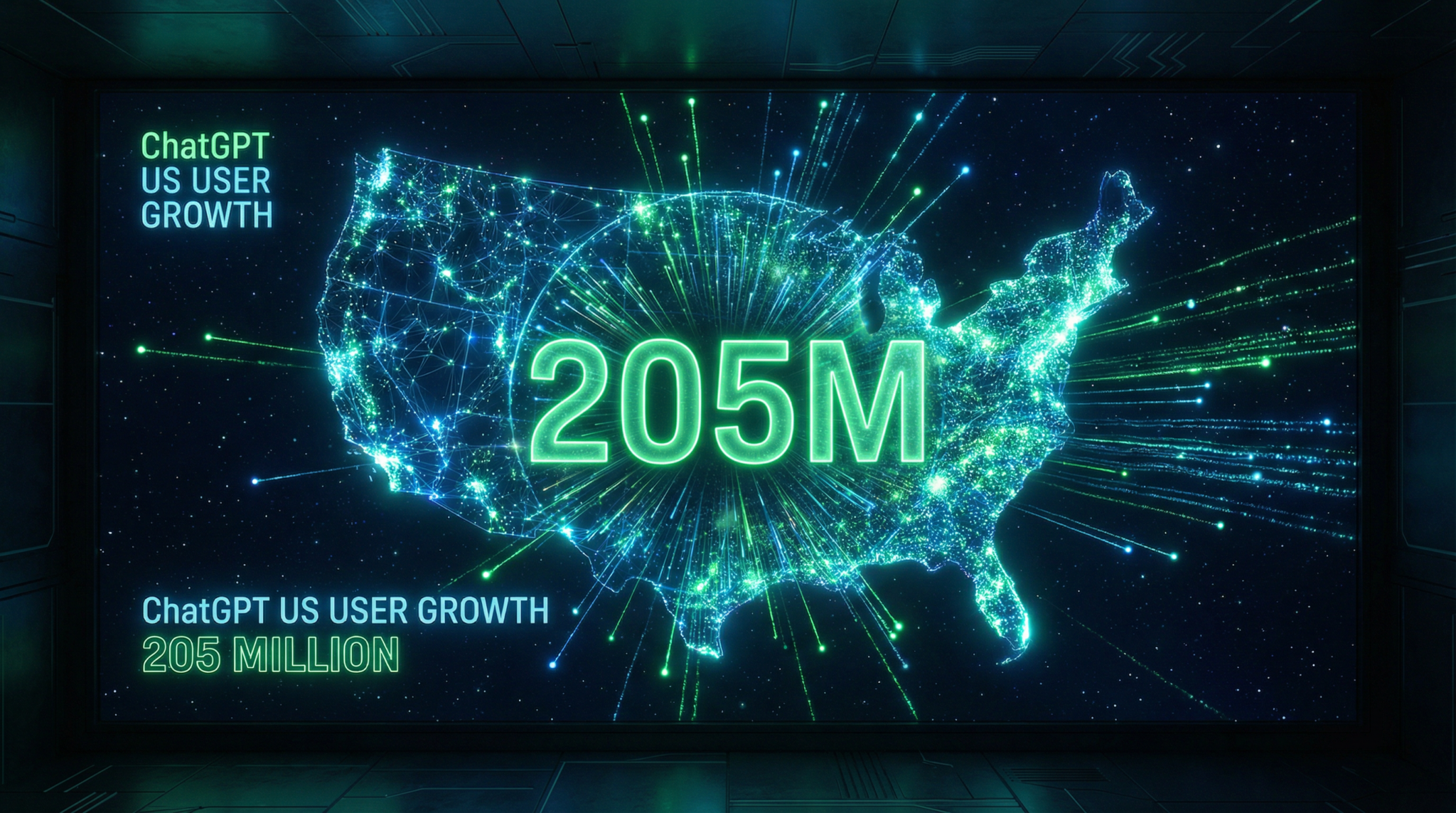

ChatGPT Surpasses 205 Million Users in the US: A New Era for AI Adoption
As of March 2026, ChatGPT has reached an unprecedented milestone: 205.2 million users in the United States alone. This staggering figure highlights not only the rapid adoption of AI conversational agents but also ChatGPT’s dominance in the generative AI landscape. To put this number in context, the US population is approximately 334 million, meaning over 60% of Americans have engaged with ChatGPT at least once. This level of penetration is unheard of for any software product within such a short timeframe, underscoring the broad appeal and utility of AI-powered conversational tools.
ChatGPT’s growth trajectory is emblematic of a larger trend towards AI integration in everyday life, transforming everything from personal productivity and entertainment to commerce and creative industries. The platform’s 205 million users represent diverse demographics, including students, professionals, marketers, developers, and casual users. This mass adoption has been fueled by continuous improvements in natural language understanding, integration into popular platforms, and expanding use cases.
Moreover, ChatGPT holds a commanding 60.4% share of the global generative AI market, according to recent industry reports. This gives OpenAI a dominant position relative to other competitors such as Google’s Bard, Anthropic’s Claude, and Meta’s AI initiatives. Such market dominance confers significant strategic advantages, including greater data access, developer ecosystem growth, and influence over AI industry standards. However, it also places OpenAI under intense scrutiny by regulators, privacy advocates, and the broader tech community.
OpenAI’s approach to evolving ChatGPT’s capabilities has been multifaceted. In March 2026, the company introduced the Agentic Commerce Protocol, a novel shopping integration that enables ChatGPT to act as a proactive commerce agent, facilitating seamless retail transactions. This protocol represents a strategic pivot from purely conversational AI to an AI commerce facilitator, aimed at tapping into the massive US and global retail markets. Concurrently, OpenAI has shifted its commerce focus towards retailer-specific ChatGPT apps rather than relying solely on the centralized ChatGPT app experience. This move reflects an effort to deepen partnerships with retailers and embed AI directly within their ecosystems.
Despite these advancements, OpenAI faces significant challenges. The ChatGPT app store, launched approximately six months prior, has struggled to gain traction, as noted by the Los Angeles Times on March 30, 2026. The app store’s faltering performance has prompted OpenAI to reconsider its strategy around app distribution and third-party integrations. Additionally, OpenAI recently shut down its Sora video generator tool to streamline its product offerings, signaling a focus on core competencies ahead of a potential IPO. The company also paused plans for an “erotic mode,” which was intended to explore adult-content moderation and engagement, in order to concentrate resources on safer and more universally applicable products.
Security remains a critical concern for OpenAI and its users. Recent patches addressed severe vulnerabilities in ChatGPT and OpenAI Codex, including DNS exfiltration flaws and exposed GitHub tokens that could have led to unauthorized data access or code manipulation. These incidents underscore the complex security environment AI platforms operate within and the importance of robust safeguarding measures. Moreover, public backlash over a $2 million deal with Credit Union (CU) led to a delayed rollout of ChatGPT in that sector, reflecting ongoing challenges in managing partnerships and public perception.
Finally, the implications of ChatGPT’s growth and OpenAI’s strategic moves extend beyond the company itself. Content creation, AI image generation, marketing and SEO optimization, and travel planning have emerged as top use cases, fundamentally altering workflows in these domains. The AI industry at large is watching closely as OpenAI prepares for its anticipated IPO, which could redefine market dynamics for AI startups and incumbents alike.
The Rise of ChatGPT: How It Became the Default AI Assistant
The journey of ChatGPT from an experimental language model to the default AI assistant for over 205 million Americans is a story of continuous innovation, strategic foresight, and ecosystem development. OpenAI’s initial forays into generative AI began with the GPT series, culminating in GPT-3’s release in 2020, which set new benchmarks for natural language processing (NLP) capabilities. However, it was the launch of ChatGPT in late 2022 that truly captured public imagination by offering an accessible conversational interface that democratized AI interaction.
Early adoption was driven by a combination of factors. First, ChatGPT’s ability to generate coherent, context-aware responses across a wide range of topics made it invaluable for tasks as diverse as coding assistance, writing, tutoring, and brainstorming. The free-to-use model initially lowered barriers, encouraging millions to experiment and integrate AI into their workflows. Additionally, OpenAI leveraged partnerships with Microsoft, embedding ChatGPT technology into platforms like Bing and Office 365, exponentially increasing its reach and utility.
OpenAI’s iterative model improvements, including fine-tuning based on user feedback and reinforcement learning from human feedback (RLHF), significantly enhanced ChatGPT’s accuracy and safety. The launch of GPT-4 in early 2024 introduced multimodal capabilities, enabling ChatGPT to process image inputs alongside text, further broadening its appeal and applicability.
Simultaneously, the ecosystem around ChatGPT expanded rapidly. Third-party developers built plugins that connected ChatGPT to external services, from calendar management to real-time data retrieval. Educational institutions adopted ChatGPT for personalized learning, while enterprises integrated it into customer support and knowledge base automation. This network effect helped solidify ChatGPT’s position as the go-to AI assistant.
Importantly, OpenAI’s commitment to transparency and ethical AI use helped build trust. The establishment of guidelines around content moderation, data usage, and privacy fostered confidence among users wary of AI-generated misinformation or bias. Still, OpenAI faced criticism and regulatory scrutiny, which it addressed proactively by publishing safety reports and engaging with policymakers.
By mid-2025, ChatGPT’s user base had grown explosively, coinciding with growing public awareness of AI’s potential to disrupt industries. The introduction of subscription tiers, such as ChatGPT Plus, offered premium performance and features, monetizing the platform without alienating free users. The cumulative effect of these strategies was a tipping point: ChatGPT became synonymous with AI assistance, a cultural and technological touchstone embedded in daily life.
Today, ChatGPT is not merely a chatbot but an integral component of digital interaction, powering everything from creative content generation to complex problem-solving. Its ubiquity is a testament to OpenAI’s vision and execution, laying the groundwork for the next phase of AI innovation.
ChatGPT Shopping Revolution: How the Agentic Comme

Revolutionizing Commerce: The Agentic Commerce Protocol and Beyond
One of the most significant developments in ChatGPT’s evolution has been the introduction of the Agentic Commerce Protocol (ACP) on March 24, 2026. This protocol represents a paradigm shift in how AI interfaces with e-commerce, transforming ChatGPT from a passive assistant into an active commerce agent capable of autonomously navigating retail ecosystems to fulfill user needs.
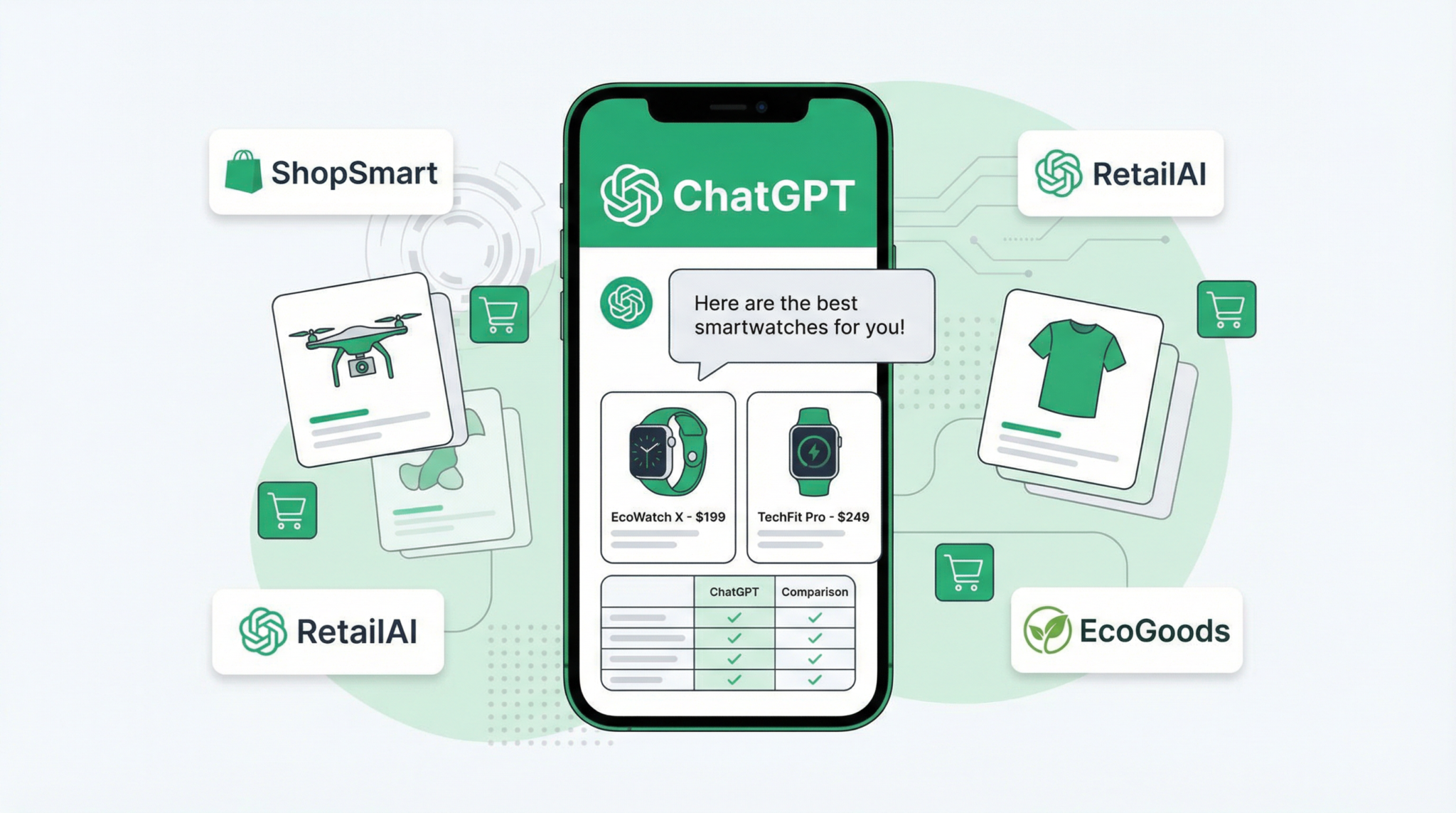
The ACP enables ChatGPT to perform multi-step shopping tasks, such as comparing products across retailers, negotiating prices, applying coupons, and managing checkout processes—all within the conversational interface. Underpinning this capability is a secure, standardized framework that allows ChatGPT to interact with retailer APIs, payment gateways, and fulfillment systems while respecting user privacy and security constraints.
OpenAI’s strategic pivot focuses on retailer-specific ChatGPT apps, moving away from a one-size-fits-all centralized app model. By embedding tailored AI assistants directly within retailer platforms, OpenAI aims to enhance user experience with contextual, brand-aligned interactions. This approach also offers retailers greater control over the shopping journey, enabling personalized promotions, inventory optimization, and customer engagement powered by AI.
This shift is informed by extensive market analysis. The US retail market exceeds $6 trillion annually, with e-commerce accounting for over 20%. The integration of AI agents capable of managing complex purchase decisions stands to increase conversion rates and average order values significantly. Early pilot programs with major retail partners have demonstrated uplift in customer satisfaction and repeat purchases when using AI-enhanced shopping assistants.
Technically, the ACP leverages advancements in agent-based AI architectures, combining natural language understanding with decision-making algorithms and transactional security protocols. The protocol ensures compliance with financial regulations and supports multi-modal interactions, allowing users to upload images or voice commands to facilitate product searches. Furthermore, the system incorporates dynamic feedback loops, allowing ChatGPT to learn from individual user preferences and retailer constraints to optimize future interactions.
OpenAI’s commerce strategy is also designed to be extensible, allowing third-party developers to build custom commerce agents for niche markets such as luxury goods, B2B procurement, or subscription services. This extensibility is supported by an SDK that abstracts the complexities of payment processing and inventory synchronization.
While the ACP and retailer-specific apps represent a bold vision for AI-driven commerce, challenges remain. Retailers must invest in API readiness and data standardization to fully leverage the protocol. Moreover, consumer adoption hinges on trust in AI handling sensitive financial information—a factor OpenAI addresses through rigorous security measures and transparent user consent mechanisms.
Overall, the Agentic Commerce Protocol signals a new frontier where conversational AI transcends informational queries to become a transactional partner, reshaping retail dynamics and consumer behavior.
App Store Challenges and Strategic Pivots at OpenAI
Approximately six months ago, OpenAI launched the ChatGPT app store, a marketplace intended to host third-party plugins and extensions that enhance ChatGPT’s capabilities. The app store was envisioned as an ecosystem hub, enabling developers to innovate on top of OpenAI’s language models and users to customize their AI experience. However, recent reports from the Los Angeles Times (March 30, 2026) reveal that the app store is struggling to meet expectations.
Several factors contribute to the app store’s faltering performance. Developer adoption has been slower than anticipated, partly due to stringent security and privacy requirements imposed by OpenAI. While these safeguards are essential, they have increased the complexity and cost of plugin development. Additionally, user engagement metrics indicate that many ChatGPT users prefer the native capabilities of the assistant over installing and managing plugins.
From a strategic perspective, OpenAI is responding by refocusing efforts on deepening integrations within existing platforms and with retailers, as discussed in the commerce section. This pivot includes deprioritizing the standalone app store in favor of curated, branded AI experiences that offer smoother, more seamless interactions. OpenAI is also investing in improving core ChatGPT functionalities, reducing fragmentation across multiple plugins and apps.
Furthermore, OpenAI’s decision to discontinue the Sora video generator tool exemplifies this streamlining approach. Sora, which allowed users to generate AI-driven video content, faced stiff competition from specialized startups and struggled to maintain a consistent user base. By shuttering Sora, OpenAI can allocate resources to higher-impact products and avoid diluting its brand with less successful ventures.
This strategic consolidation aligns with OpenAI’s broader preparation for a potential initial public offering (IPO). Investors and market analysts favor companies with focused product lines and clear paths to profitability. By concentrating on the ChatGPT core experience and high-potential integrations, OpenAI aims to demonstrate sustainable growth and operational discipline.
While the app store’s challenges are a setback, they also offer valuable lessons in balancing openness with user experience and security. OpenAI continues to explore innovative ways to foster developer ecosystems, including more accessible APIs and incentive programs, but the near-term emphasis remains on quality over quantity.
OpenAI’s 2026 Strategy: Driving Enterprise Growth
Security and Trust: Addressing Vulnerabilities in ChatGPT and Codex
As ChatGPT’s user base surpasses 205 million in the US, security and trust remain paramount concerns. OpenAI recently disclosed patches for multiple critical vulnerabilities affecting ChatGPT and its programming assistant, Codex, underscoring the complexities of securing large-scale AI platforms.
One notable flaw involved DNS exfiltration, where malicious actors could exploit DNS queries to covertly extract sensitive information from ChatGPT’s environment. This vulnerability posed a risk of data leakage and unauthorized access to protected resources. OpenAI’s security team responded swiftly by deploying patches that monitored and restricted DNS queries, preventing exfiltration attempts while maintaining service performance.
Another major issue concerned exposed GitHub tokens embedded in Codex-generated code snippets. These tokens, if harvested, could allow attackers to access private repositories or modify codebases, presenting significant risks for developers relying on Codex for coding assistance. OpenAI implemented token sanitization mechanisms and enhanced code output filtering to prevent token leakage and reduce the attack surface.
These incidents highlight the intricate balance between AI model openness and security. AI assistants like ChatGPT and Codex generate dynamic content that may inadvertently include sensitive information if not properly controlled. OpenAI has invested heavily in automated content scanning, anomaly detection, and user reporting tools to mitigate risks.
Beyond technical vulnerabilities, trust challenges extend to data privacy, content moderation, and ethical AI use. OpenAI’s decision to pause the development of an erotic mode reflects a cautious approach to content boundaries, prioritizing safe and inclusive user experiences. Likewise, backlash over a $2 million deal with Credit Union (CU) that led to a delayed ChatGPT rollout reveals the sensitivity around AI partnerships and public perception.
OpenAI’s transparent communication regarding these security and trust issues, including publishing detailed vulnerability reports and engaging external auditors, reinforces its commitment to responsible AI deployment. Nevertheless, as AI becomes more embedded in critical workflows, continuous vigilance and adaptive security strategies will be essential to maintain user confidence.
The Road to IPO: What’s Next for OpenAI?
OpenAI’s meteoric rise and 205 million-strong US user base set the stage for a highly anticipated initial public offering (IPO), potentially the most significant in the AI sector to date. Industry insiders expect OpenAI’s IPO to occur within the next 12 to 18 months, contingent on market conditions and regulatory approvals.
Preparations for the IPO have already influenced OpenAI’s strategic decisions. The streamlining of product offerings, including the shutdown of Sora and the pause on erotic mode, reflects a desire to present a focused, scalable business model to investors. Likewise, the emphasis on commerce integrations and retailer-specific apps demonstrates a clear monetization strategy beyond subscriptions and licensing.
Financially, OpenAI is reported to be generating several hundred million dollars in annual revenue, primarily through ChatGPT Plus subscriptions, enterprise contracts, and strategic partnerships such as the Microsoft investment. The introduction of the Agentic Commerce Protocol is expected to unlock new revenue streams by capturing transaction fees and value-added services in the retail sector.
OpenAI’s valuation is projected to exceed $60 billion at IPO, reflecting its dominant market share and growth prospects. However, the company faces significant challenges, including regulatory scrutiny around AI ethics, data privacy, and antitrust concerns due to its market dominance. OpenAI has proactively engaged with regulators and policymakers to address these issues, investing in compliance infrastructure and transparency initiatives.
Post-IPO, OpenAI aims to expand its AI platform capabilities, including enhanced multimodal models, real-time data integration, and domain-specific AI agents. Investment in AI safety research remains a priority to ensure responsible innovation. Additionally, OpenAI plans to broaden its international footprint, adapting ChatGPT and related products to diverse languages and regulatory environments.
For investors and the AI ecosystem, OpenAI’s IPO will serve as a bellwether for the commercial viability and societal impact of generative AI technologies. The company’s ability to balance innovation, security, and ethical considerations will be closely monitored.
Access 40,000+ AI Prompts for ChatGPT, Claude & Codex — Free!
Subscribe to get instant access to our complete Notion Prompt Library — the largest curated collection of prompts for ChatGPT, Claude, OpenAI Codex, and other leading AI models. Optimized for real-world workflows across coding, research, content creation, and business.
Access Free Prompt Library
Implications for Users and the AI Industry
The milestone of 205.2 million US users for ChatGPT signals a profound transformation in how individuals and organizations interact with AI. For users, this translates into unprecedented access to powerful language models that assist in everything from content creation and marketing to travel planning and coding. The proliferation of AI in these domains enables enhanced productivity, creativity, and personalization, fundamentally reshaping user expectations for digital tools.
For the AI industry, ChatGPT’s dominance underscores the importance of scalable, user-friendly interfaces combined with robust backend AI models. Competitors are compelled to innovate rapidly, pushing advancements in model architectures, multimodal capabilities, and specialized domain knowledge. The success of OpenAI’s commerce initiatives may inspire similar integrations across other AI platforms, accelerating the convergence of AI and e-commerce.
However, this growth also raises critical questions about AI governance, data privacy, and ethical use. The industry must address challenges related to misinformation, bias, and security vulnerabilities to ensure sustainable adoption. OpenAI’s experience illustrates the necessity of balancing rapid innovation with responsible stewardship.
Ultimately, ChatGPT’s reach into the daily lives of over 200 million Americans heralds a new era where AI is not just a tool but a ubiquitous partner in decision-making and creativity. This shift will continue to influence technological development, business models, and societal norms well into the future.
Article by Markos Symeonides


