“Is coding essential for UX Designers?”
If I had a nickel for every time a mentee or someone asked me this very question, I’d probably have enough to buy a lifetime subscription to Figma. As a UX Designer who’s heavily dependent on research, I remember doing my due diligence and extensively scouring the internet, as well as asking my ADPList and LinkedIn mentors this exact same question!
Now, as someone who’s done a LOT of primary and secondary research on this very topic, spoken to almost a bazillion mentors and mentees, and navigated the treacherous waters of UX design, I’m here to offer my two cents—adjusted for inflation, of course.
Let’s dive in.
The Case for Coding: Bridging the Gap
Many will argue that having some coding knowledge is a superpower for a UX designer. Why? It builds a sturdier bridge between you and the developers who bring your designs to life. When you understand the basic principles of HTML, CSS, and maybe a little JavaScript, you’re not just handing over a pretty picture; you’re providing a blueprint that’s grounded in technical reality. This shared language can make the development process smoother and lead to better collaboration. As the tech experts at PixelForce note, understanding the basics of code can significantly improve the designer-developer workflow.
Furthermore, knowing the technical parameters of a project helps you design with constraints in mind from the get-go. Instead of designing a feature that’s a nightmare to implement, you can create solutions that are both elegant and feasible. This practical awareness is a huge advantage, as it shows you’re not just a designer, but a product thinker who understands the entire ecosystem (Ironhack, “Advantages of Learning to Code as a Designer”).
The Case Against Coding: Focus on the User
On the other side of the aisle, many designers argue that their primary focus should remain squarely on the user. The “U” in UX stands for “User,” after all, not “Unicorn-who-also-codes.”The core of a UX designer’s job is research, empathy, information architecture, and interaction design.Spending significant time learning to code could divert focus from honing these essential, human-centered skills. The AND Academy supports this view, emphasizing that coding is not a prerequisite for a successful career in UX design.
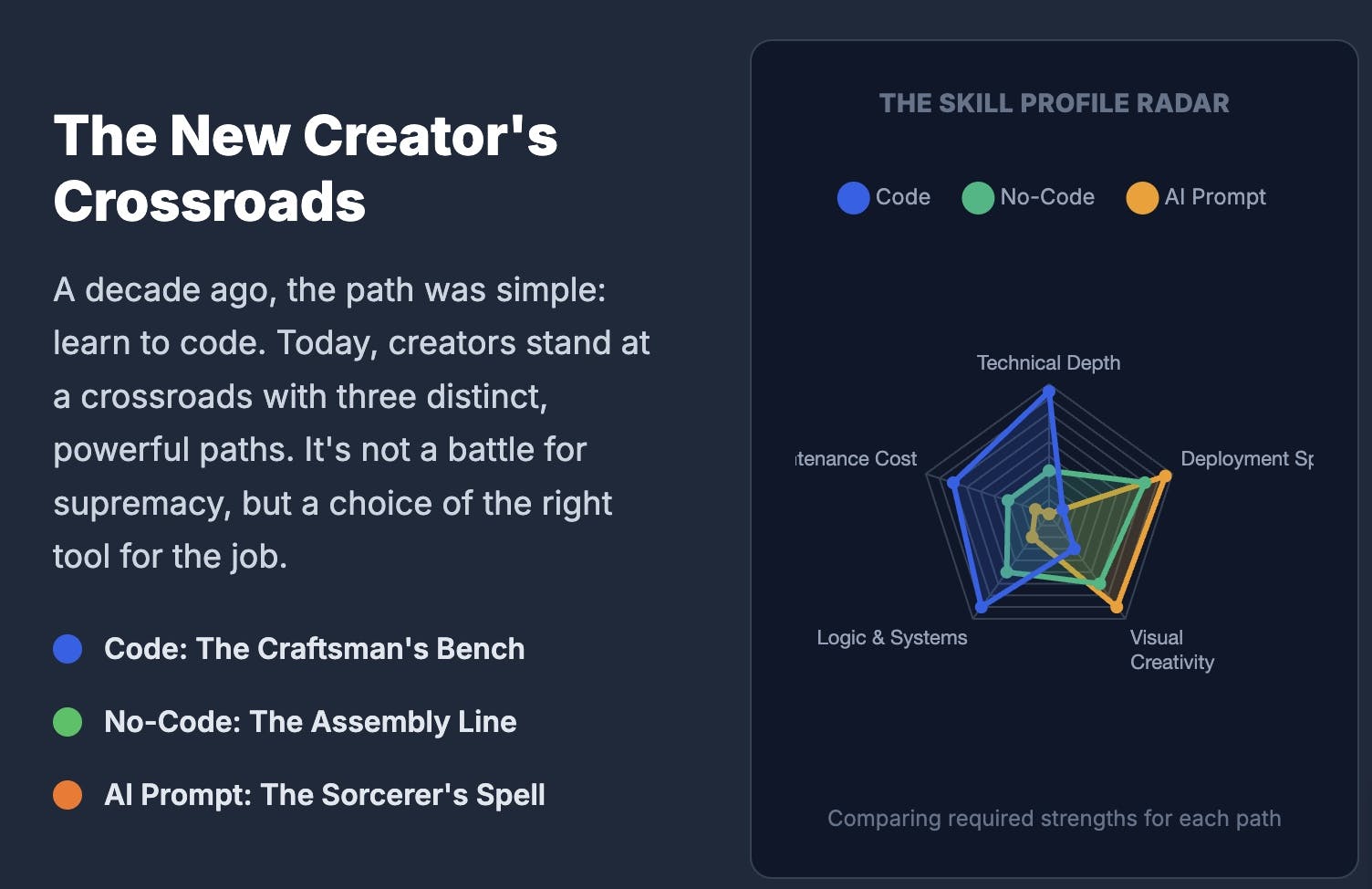
Plus, let’s talk about the rise of no-code and low-code tools. Platforms like Webflow, Bubble, and Framer are making it possible for designers to build fully functional, beautiful websites and apps without writing a single line of code.As UserGuiding points out in their analysis, these tools empower designers to create and test high-fidelity prototypes independently, making the need for dedicated coding skills less critical than it once was.
The AI in the Room: A New Twist in the Debate
Just when we thought the lines were drawn, AI walked into the room and flipped the table over. Today, AI tools can translate Figma designs directly into front-end code, generate code snippets from a simple text prompt, and automate many of the technical tasks that once fell to developers.
On the surface, this seems to bolster the “case against coding” in a big way. If an AI can write the code for you, why bother learning it?
But it’s not that simple. The emerging consensus is that AI doesn’t eliminate the need for technical knowledge; it changes it. To effectively use these powerful AI tools, you need to be a skilled director. This means:
- Writing better prompts: Your ability to clearly articulate what you want the AI to build is crucial.
- Auditing the output: AI-generated code isn’t always perfect. A designer who understands code can spot errors, identify inefficiencies, and know when the AI has missed the mark on the user experience.
- Knowing what’s possible: Understanding the fundamentals of code helps you know what to ask for in the first place.
Essentially, AI is shifting the skill from writing code to reviewing, editing, and steering AI-generated code. As tech publication Brainhub notes, AI is becoming an essential tool in a developer’s arsenal, not a replacement, and the same principle applies to designers.
The Final Verdict
So, do you need to code to be a UX designer in the age of AI? The short answer is still no. The longer, more useful answer is that you need to be technically literate and AI-savvy.
The goal isn’t to become a full-time coder. The goal is to be an indispensable collaborator. In today’s world, that means understanding three languages: the language of design, the language of your users, and the basics of the language your developer and AI colleagues speak—code.
If you want to work at a small startup, that knowledge will be a huge asset. If you’re aiming for a large corporation, it will make you a more effective and strategic partner.
My recommendation? Don’t chase the title of “coder.” Chase the goal of becoming a better collaborator and a smarter director of the powerful tools at your disposal. Learning the fundamentals of code and how to effectively prompt AI is one of the best ways to foster respect, build better products, and make yourself a more well-rounded and future-proof designer.