Open-source database maker ClickHouse Inc. today announced that it has closed a $400 million late-stage funding round at a $15 billion valuation.
The Series D investment, which comes about six months after the company’s previous raise, was led by Dragoneer. It was joined by GIC, Index Ventures, Khosla Ventures, Lightspeed Venture Partners, T. Rowe Price and WCM Investment Management. The round follows a year in which ClickHouse’s annualized recurring revenue rose by more than 250%.
“Major platform shifts ultimately reward the infrastructure companies that sit closest to production,” said Dragoneer partner Christian Jensen. “As models become more capable, the bottleneck moves to data infrastructure.”
A storage device is divided into segments called sectors. Usually, each sector holds a few hundred or thousand bytes. ClickHouse’s namesake database places columns in sectors that are immediately adjacent to one another. That approach enables it to perform data analysis tasks such as averaging product prices faster than many competing platforms.
ClickHouse also speeds up queries in other ways. When a user searches a large dataset for a specific piece of information, the system avoids looking through sections of the database that don’t contain the relevant record. It takes a similar approach to speeding up data modification queries. ClickHouse only updates the specific records that a user wishes to change instead of the entire dataset.
The company monetizes the open-source version of its database with a paid cloud version. ClickHouse Cloud, as the service is called, removes the need for customers to manage the underlying hardware or manually install updates. The administrative tasks that it doesn’t perform on users’ behalf can be automated through integrations with third-party management tools.
The company disclosed that its cloud service has over 3,000 customers. Its installed base includes Meta Platforms Inc., Sony Corp., Lyft Inc. and other major tech firms.
The company also divulged that it’s acquiring Langfuse GmbH, a startup with an open-source tool for monitoring large language models. Companies use Langfuse’s software to track the latency and infrastructure usage of their LLM-powered applications. Additionally, it collects data on the workflow through which a model generates prompt responses. Developers can use that data to identify the root cause of hallucinations and find a fix.
Langfuse uses ClickHouse’s database to store the LLM telemetry it collects. Following the acquisition, the latter company will enhance the integration between the two products. ClickHouse says the goal is to make its database a more competitive choice for developers building AI applications.
Some AI applications run on not one but two databases. One is used to process complex analytics queries while the other supports simpler, frequent data management tasks such as updating customer records. Systems geared toward the latter use case are known as transactional databases.
ClickHouse plans to roll out the enhanced Langfuse integration alongside a managed transactional database based on PostgreSQL. Like Langfuse, the service will be integrated with the company’s namesake columnar store. AI applications can use ClickHouse to power analytics queries and the managed PostgreSQL service to perform transactional database tasks.
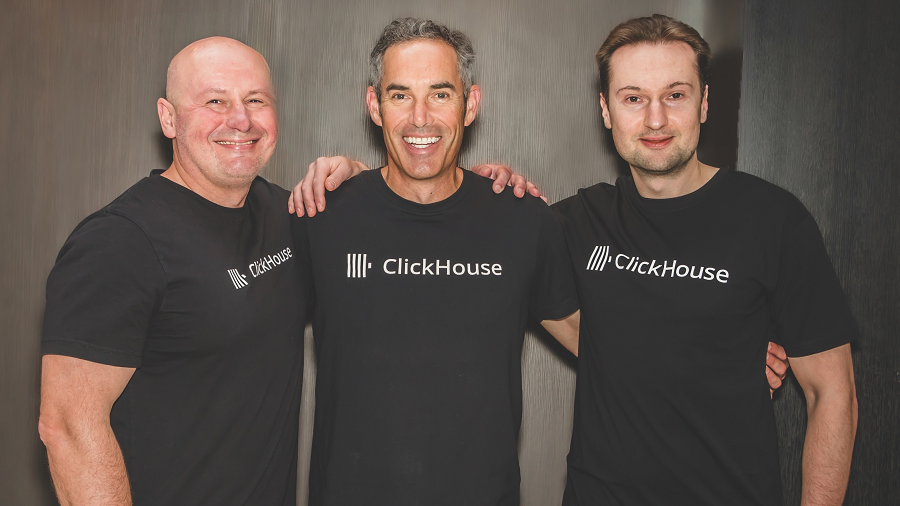
Photo of ClickHouse’s founders: ClickHouse
Support our mission to keep content open and free by engaging with theCUBE community. Join theCUBE’s Alumni Trust Network, where technology leaders connect, share intelligence and create opportunities.
- 15M+ viewers of theCUBE videos, powering conversations across AI, cloud, cybersecurity and more
- 11.4k+ theCUBE alumni — Connect with more than 11,400 tech and business leaders shaping the future through a unique trusted-based network.
About News Media
Founded by tech visionaries John Furrier and Dave Vellante, News Media has built a dynamic ecosystem of industry-leading digital media brands that reach 15+ million elite tech professionals. Our new proprietary theCUBE AI Video Cloud is breaking ground in audience interaction, leveraging theCUBEai.com neural network to help technology companies make data-driven decisions and stay at the forefront of industry conversations.