If rumors are accurate, 2026 is going to be a huge year for Apple. We’re expecting the first foldable iPhone, an all-new home hub device, updated displays, and possibly, the first OLED MacBook Pro and the first AI smart glasses.
Apple will split its iPhone launches, introduce a low-cost MacBook, and debut a much smarter, LLM-based version of Siri. In our 2026 guide, we’ve outlined everything we know about the new products coming from Apple in 2026, based on current rumors.
iPhones
While we’ll get a low-cost iPhone 17e in 2026, the iPhone 18 that’s normally sold alongside the iPhone 18 Pro models is supposedly being held back until 2027, which means there won’t be a standard iPhone 18 in 2026. September 2026 will see Apple launching the foldable iPhone and the Pro iPhone models, so be prepared to spend some cash if you want a brand new iPhone in 2026.
iPhone 17e (Early 2026)
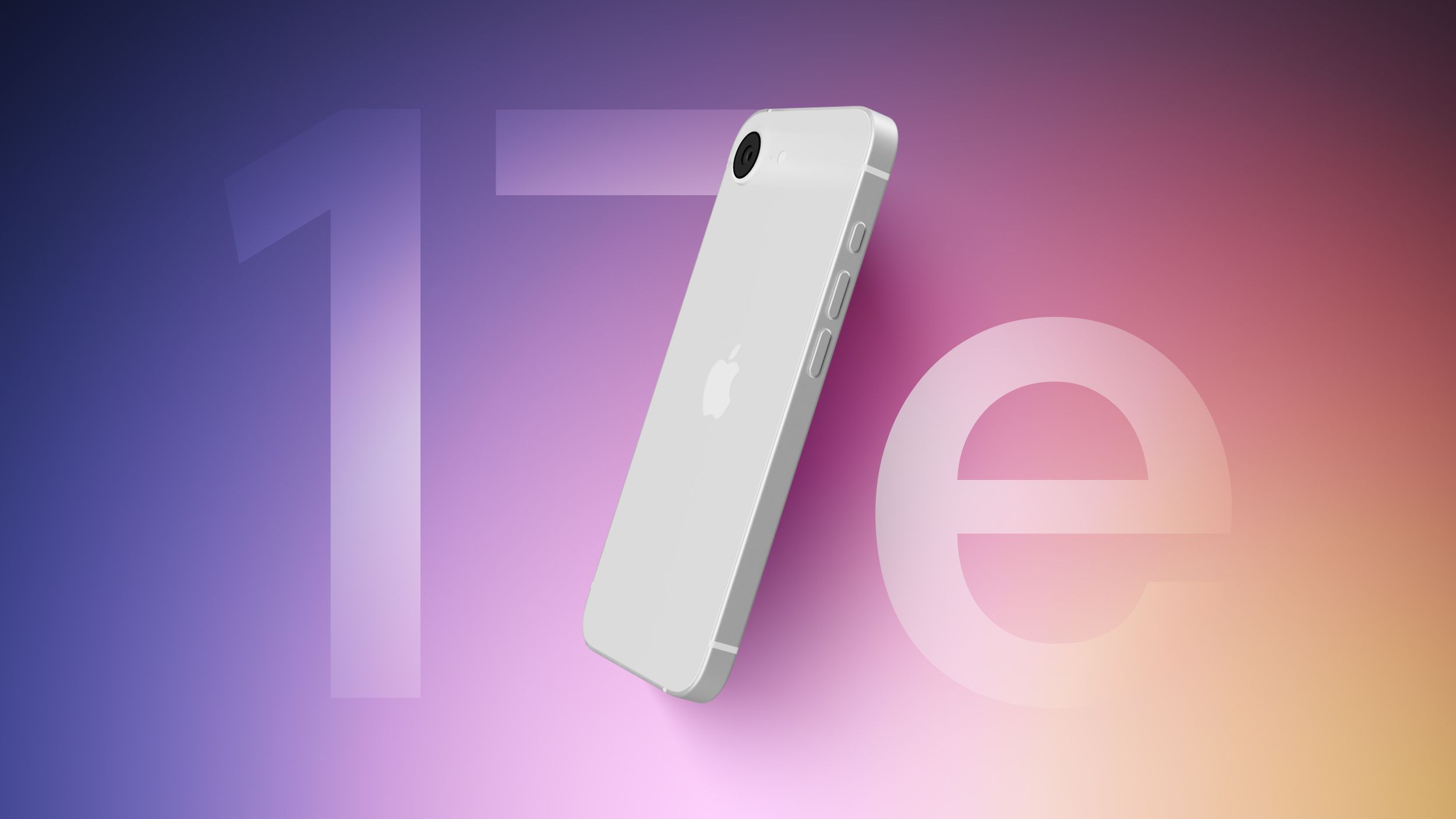
An iPhone 17e is expected in early 2026. It could have a refreshed design with slimmed down bezels and a Dynamic Island instead of a notch, giving it a more modern look that’s more in line with the iPhone 17 lineup.
Another rumor says that it will have slimmer bezels but no Dynamic Island, so it is not clear if it will have a notch or a Dynamic Island.
While the iPhone 16e did not include a magnetic ring to allow it to attach to MagSafe chargers, the iPhone 17e could include MagSafe compatibility.
iPhone 18 Pro (September 2026)
The iPhone 18 Pro models will look a lot like the iPhone 17 Pro models, but there could be some changes to the display thanks to new Face ID technology. We’re expecting the same 6.3-inch and 6.9-inch size options, with the same bezel, display quality, and rear camera setup with the camera plateau that was introduced in 2025.

Apple may have finally figured out under-screen Face ID, so 2026 could be the year that the Dynamic Island disappears, allowing for more screen space. Rumors suggest that the Face ID components will be under the display, but there will be a hole-punch camera cutout at the top left corner of the screen. It will be a noticeably different look compared to the iPhone 17 Pro models, and if the Dynamic Island is indeed going away, there will be some loss of functionality. Apple uses the Dynamic Island to display Live Activities and other important notifications.

Rumors suggest the iPhone 18 Pro Max could be slightly thicker than the 17 Pro Max, and there’s also a chance Apple could use a frosted glass material for the MagSafe charging area to reduce the two-tone appearance between the glass and the aluminum frame. Rumored color options include burgundy, brown, and purple, but Apple is expected to choose just one to go along with more traditional colors like silver.
With the iPhone 18 Pro models, Apple is expected to introduce its first chip built on a new 2-nanometer node, the A20. With an updated process, the A20 chip could be up to 15 percent faster than the A19, and up to 30 percent more power efficient, perhaps leading to battery life improvements. Apple is also rumored to be implementing a new packaging technology (Wafer-Level Multi-Chip Module, WL-MCM).
Apple currently uses an SoC that integrates the CPU, GPU, Neural Engine, Secure Enclave, and other supporting components like the Image Signal Processor onto a single die, but RAM is a separate chip that’s stacked on top of the SoC during the packaging process. If the A20 is upgraded with WL-MCM technology, RAM will be added at the wafer level (before the wafer is cut into chips) instead of the packaging level (after the wafer is cut), reducing interconnect delays.
With WL-MCM, RAM is more closely integrated with the other chip components, improving memory bandwidth, reducing latency, and boosting efficiency.
The iPhone 18 Pro models will continue to feature a triple-lens rear camera setup with Wide, Ultra Wide, and Telephoto lenses, but the main wide-angle lens could get an upgrade. Rumors suggest Apple will add a variable aperture, which would allow users to control the amount of light that’s hitting the lens for better performance in low lighting conditions and more control over depth of field. All prior iPhones have had fixed apertures.
Apple might tweak the Camera Control button, eliminating the swipe-based touch gestures and the haptic feedback. It is easy to accidentally change image parameters when taking a photo because of the Camera Control button’s swipe controls. Apple added a setting to disable the swipe functionality in iOS 26 after user complaints, but the button might be better off without it.
The iPhone 18 Pro could get Apple’s C1X modem, or an upgraded C2 modem that supports mmWave 5G. Current iPhone 17 Pro models use Qualcomm modems, but Apple is ready to expand its in-house modem technology to the entire iPhone lineup. An N1 networking chip with combined Wi-Fi 7, Bluetooth 6, and Thread is expected.
Foldable iPhone (September 2026)
The first foldable iPhone is on track to launch in September 2026, coming seven years after Samsung released its first foldable smartphone. Naming hasn’t been announced, but rumors have taken to calling it the “iPhone Fold.”

Apple is going with a book-style design, so the iPhone Fold will open and close like a book. When the display is open, it will be around 7.6 inches, and when it’s closed, it will be around 5.3 inches. It’s said to look similar to an iPad mini when it is unfolded, and it will use OLED display technology.

Apple is prioritizing thinness, and so the foldable iPhone could be just 4.5mm when it’s open, making it Apple’s thinnest device by far. When closed, it could be between 9mm and 9.5mm.
The foldable iPhone won’t have a notch or a Dynamic Island, and rumors suggest that it might not have Face ID at all. Apple could instead use a Touch ID side button, similar to an iPad. There will be a camera in the top-left corner of the display for taking selfies, and there will also be a pair of rear cameras.
Apple has been focused on ensuring the iPhone Fold doesn’t have a noticeable crease when it’s open, a problem that the company has reportedly solved with display improvements and a strong, durable hinge made from Liquidmetal. The crease is said to be “nearly invisible” when the iPhone is unfolded.
Apple will use the 2-nanometer A20 chip for its fall 2026 iPhones, including the foldable iPhone.
The iPhone Fold isn’t going to be cheap, and rumors suggest the price will be between $2,000 and $2,500. The most recent information is on the higher end of that range.
iPads
Several iPads are getting updates in 2026, but most will be minor refreshes. The iPad mini is an exception, because rumors say it could get an OLED display. There’s no iPad Pro rumored for 2026, with the next update expected in 2027.
iPad (Spring 2026)
A 12th-generation iPad could come out in spring 2026, likely around March. There are no changes expected for the design, so it will continue to have an 11-inch edge-to-edge display, Touch ID Side Button, USB-C, and thicker bezels than other iPad options.

The next low-cost iPad is expected to use Apple’s A19 chip, which is the chip that Apple used for the iPhone 17. It is built on a 3-nanometer process and it will offer major speed and efficiency improvements over the A16 chip that’s in the current model.
The A16 chip that Apple used in 2025 does not support Apple Intelligence, but the A19 does, so that will mark a major update for Apple’s affordable tablet. The 2026 model should be able to support Apple Intelligence features that are unavailable with the 2025 model.
The A19 also offers hardware-accelerated ray tracing and similar features for improved gameplay. The 11th-generation iPad has 6GB RAM, but Apple will need to bump that up to 8GB for Apple Intelligence.
It is unusual for Apple to use such a new chip in its most affordable device, but the company may want to ensure that the iPad is able to keep up with all of the Apple Intelligence features coming in 2026, such as the new version of Siri.
iPad Air (Spring 2026)
The iPad Air will get an early 2026 update, around the March/April timeframe. No design changes are rumored for the iPad Air, so we can expect the same 11-inch and 13-inch size options.

Apple will upgrade the iPad Air to the M4 chip. The M4 CPU is up to 30 percent faster than the M3 CPU, while the GPU is up to 21 percent faster.
In actual use, you may not see much of a difference between the M3 and M4 on the iPad Air, though you might experience modest improvements with system intensive games and tasks like video editing.
The iPad Pro was upgraded with fast charge functionality with the update to the M5 chip, and that’s something that could trickle down to the iPad Air.
The iPad Air could get the N1 networking chip and the C1X modem.
iPad mini
The next-generation version of the iPad mini is rumored to feature a major technology upgrade, with Apple set to adopt an OLED display. The iPad mini will be the second tablet to adopt OLED after the iPad Pro.

Along with an OLED display, the iPad mini 8 is expected to have a more water resistant design that better holds up to splashes and even submersion in water. Apple is creating a vibration-based speaker system that uses the display or chassis to produce sound, eliminating the need for a traditional speaker.
With the surface vibration speaker, Apple could remove the speaker holes in the iPad mini, making it better able to withstand exposure to moisture.
Leaked Apple code suggests that the iPad mini will feature the A20 Pro chip. That’s the next-generation chip that we’re expecting Apple to use in the iPhone 18 Pro models, so if the iPad mini is using the same chip, it could come out around the same time as the iPhone 18 Pro.
If Apple ends up going with the A19 Pro instead, the iPad mini could launch earlier in the year.
With OLED display technology and the more water resistant design, the iPad mini 8 could be $100 more expensive than the current model.
Macs
Apple will refresh the Mac lineup with M5 chips early in the year, plus there’s a new low-cost model. Later in the year, there’s a possibility we’ll get an M6 OLED MacBook Pro.
Low-Cost MacBook (Early 2026)
Apple is going to release a low-cost MacBook in 2026, with the device set to be more affordable than the $999 MacBook Air. With the affordable notebook, Apple is aiming to better compete with cheap Chromebooks and Windows PCs.

Apple analyst Ming-Chi Kuo believes the low-cost MacBook will have a display that’s around 13 inches in size. The MacBook Air has a 13.6-inch display, so the more affordable MacBook could be slightly smaller. It’s sounding like it won’t be too far off from the 13-inch MacBook Air, though.

There are no details on how thick it might be, but Apple probably won’t prioritize a thin design for a machine optimized for a low price. Since the MacBook Air can run fine with an M-series chip and no fan in an enclosure that’s 0.44 inches thick, there’s no reason for the MacBook to be any thicker than that.
The low-cost MacBook will have a standard LCD display with no mini-LED technology or ProMotion refresh rate. It could come in bright colors like the iMac, with Kuo suggesting Apple will offer it in silver, blue, pink, and yellow.
Apple is planning to use its A18 Pro chip in the MacBook. We first saw the A18 Pro in the iPhone 16 Pro models. The chip is built on Apple’s second-generation 3-nanometer process, featuring 8GB RAM and support for Apple Intelligence.
It’s fast and efficient, and more than capable of handling day-to-day tasks. In Geekbench 6 benchmarks, the A18 Pro offers single-core CPU performance scores at the level of the M3 Ultra, and multi-core performance scores higher than the M1 chip that Apple used in the first Apple silicon MacBook Air. Metal scores that measure GPU performance are also similar to the M1 chip Metal scores.
The A18 Pro will be equivalent to the M1 for some tasks, and faster for other tasks. Apple no longer sells the M1 MacBook Air from its own store, but it has offered the machine through Walmart at a $599 price point.
There are no specific details on price as of yet, but Bloomberg claims it will cost “well under $1,000.” The MacBook Air is priced starting at $999, so it would need to come in under that.
Apple could launch the low-cost MacBook in the first half of 2026. Updates are planned for the MacBook Air in early 2026, so the low-cost model could launch sometime in that same timeframe.
MacBook Air (Early 2026)
Apple is working on an updated MacBook Air, and rumors suggest that it will come out in the first few months of 2026. It’s going to get the M5 chip, but no other new features are rumored. The design will remain the same, and we’ll get the same 13-inch and 15-inch size options.

Based on updates to the 14-inch MacBook Pro, it could also get a faster SSD, and there might be a new color option to replace the light blue from 2025.

MacBook Pro (Early 2026)
14-inch and 16-inch MacBook Pro models with M5 Pro and M5 Max chips are expected to join the M5 MacBook Pro that came out in October 2025.

The M5 Pro and M5 Max will have more CPU cores and better GPUs for improved performance, with the chips available in both 14-inch and 16-inch machines. Apple is also expected to add faster SSDs to the new machines.
As with the MacBook Air, no design changes are expected for the early 2026 refresh, with a major overhaul coming in the final months of 2026 or the early months of 2027.
Mac mini (Mid-2026)
There is a new version of the Mac mini in development, with M5 and M5 Pro chips. So far, there are no rumors of design changes or other updates, but the Mac mini could get the same SSD improvements as Apple’s 14-inch MacBook Pro.

Mac Studio (Mid-2026)
The Mac Studio could come out in the same timeframe as the Mac mini. Apple didn’t release an M4 Ultra chip, but there will be an M5 Ultra.

Sometime around the middle of 2026, the Mac Studio will get M5 Max and M5 Ultra chip technology. The M5 Max will offer much faster CPU and GPU performance than the M5, and the M5 Ultra will double the M5 Max.

We haven’t heard rumors of design changes or any other updates for the Mac Studio as of yet.
Mac Displays (Early to Mid-2026)
Apple hasn’t released a new display since the Studio Display launched in 2022, but there are apparently two new models that are in development and slated for release in 2026.

The next-generation version of the Studio Display could feature the same 27-inch screen size, but with mini-LED technology instead of LCD. mini-LED means better HDR, brightness, contrast, and colors. The current Studio Display has an A-series chip inside, and the next-generation version could get the A19 Pro that Apple used in the iPhone 17 Pro.
There are actually two displays in development, but it’s unclear if that’s the next Studio Display in two sizes, or a Studio Display and a more expensive Pro Display XDR successor.
OLED MacBook Pro (Late 2026/Early 2027)
Apple is developing a revamped touchscreen OLED MacBook Pro that uses next-generation M6 chip technology. It’s not yet clear if the machine will come out in late 2026 or early 2027, but 2026 is a possibility.

If Apple does debut the OLED MacBook Pro in late 2026, it will be a year with two MacBook Pro refreshes. Apple has done that once before when the M2 Pro and M2 Max chips launched in early 2023 followed by M3 chips later in the year, but it is a rare occurrence.

Rumors suggest that the OLED MacBook Pro will feature a hole-punch camera without a notch, maximizing the available display area. The design could be closer to the iPhone’s Dynamic Island, but there is no sign that Apple plans to adopt Face ID on the Mac. Touch integration will be added to the Mac’s screen for the first time, and Apple plans to adopt a reinforced hinge that stays stationary when the display is touched, and cuts down on any vibration associated with touch-based gestures.
OLED technology offers better brightness, a higher contrast ratio with deeper blacks and whiter whites, better colors, and less power usage for battery improvements.
The design of the MacBook will also be updated, and it will have a thinner, lighter chassis. There will be a keyboard and trackpad as usual, with the touch gestures augmenting existing functionality.
The M6 could be built on TSMC’s 2-nanometer process, introducing speed and efficiency improvements for impressive gains in battery life without compromising power. The OLED MacBook Pro could also be the first MacBook to incorporate 5G connectivity, with Apple including a C2 chip in the device. The C2 chip is Apple’s rumored second-generation in-house modem that will support mmWave and sub-6GHz 5G speeds.
With an OLED display and touchscreen technology, the MacBook Pro could see a price increase. Apple may also limit the features to higher-end, more expensive models.
M5 iMac (Timing and Status Unknown)
The iMac could get an M5 chip at some point in 2026, but timing isn’t clear. We haven’t heard anything about the iMac in some time, and there are no rumors of design changes or major updates on the horizon.

There have been nebulous rumors of an iMac with a larger display, but there’s no sign that such a Mac is still in active development.
M5 Max iMac (Timing Unknown)
Leaked internal software suggests that Apple is developing a new version of the iMac that includes an M5 Max chip. Max chips are typically reserved for “Pro” machines, so it’s entirely possible that Apple is planning to launch a new iMac Pro at some point in 2026.

Nothing else is known about this mysterious iMac, and it could also be a machine that Apple uses exclusively for internal testing. If there is a larger-screened iMac in the works, it could feature mini-LED display technology, similar to the rumored Studio Display 2. Sizing is unclear, but it would presumably be larger than the standard 24-inch iMac.

Mac Pro (Timing Unknown)
Apple is probably going to release a new Mac Pro at some point, but it’s unclear when. Bloomberg originally said a Mac Pro would come before the end of 2025 with some kind of M4 chip, but that didn’t happen, so now 2026 or later is the only option.

It’s possible the Mac Pro will get a refresh with the M5 Ultra chip when the Mac Studio does, but we haven’t heard confirmation of that and Bloomberg says it’s not going to happen. The Mac Pro is reportedly on the back burner at Apple, so no new model could come at all.
If Apple refreshes the Mac Pro this year, it will get Thunderbolt 5, and it will likely support at least 512GB RAM and 16TB storage, because that’s what the M3 Ultra chip supports.
Home Products
We didn’t get a new HomePod mini or Apple TV in 2025, so those are expected in 2026, plus Apple is working on a new home hub device.
Home Hub (March/April 2026)
Apple is working on a home hub or “command center” that will serve as a centralized location for controlling smart home products, listening to music, making video calls, getting the weather, looking things up with Siri, displaying photos, making notes, viewing calendar events, and more.

The device has an all-display design that resembles an iPad, with a 7-inch display. It’s said to be similar in size and shape to two iPhones placed side-by-side, but Apple is designing two variants. The first version is designed to be mounted on a wall, while the second version has a speaker base that looks similar to a HomePod mini and can be placed on a desktop or countertop.
The home hub will have its own operating system, and while there won’t be an App Store, Apple apps will be available as widgets.
Built-in sensors will be able to determine when someone is near the home hub, and the features displayed will change based on presence. If no one is by the hub, it might show information like the time and temperature, but if someone approaches, it could shift to an interface for adjusting the temperature.
Presence detection will enable features like turning on the lights when someone enters the room, and it might also be able to tell one person from another. The home hub will play music, and it does have a camera that can be used for video calls.
Touch-based interactions will be available for widgets, but the hub will be heavily reliant on Siri voice commands. Siri could have a personified look on the hub, with one design described as a version of the Mac Finder icon.
While screen-based smart home devices like the Echo Show are available for under $200, Apple could price the home hub somewhere around $350. Price could vary for the version with the speaker base and the wall-mounted version without it.
Apple is aiming to launch the home hub sometime in the March to April 2026 timeframe.
HomePod mini (Early 2026)
A new HomePod mini is ready to launch, and it could launch in early 2026. The HomePod mini 2 will get an updated S-series chip based on the Apple Watch S10, and there will be new color options.

We haven’t heard anything about other features that could come to Apple’s small speaker, but no design changes are expected.
Apple TV (Early 2026)
Like the HomePod mini, the next Apple TV 4K won’t look any different, but it will get an updated A-series chip, like the A17 Pro or A18. The new chip will support Apple Intelligence, so the next-generation Apple TV could be more capable than before.

Apple is expected to add the N1 networking chip to the Apple TV with Wi-Fi 7, Bluetooth 6, and Thread support.
The HomePod mini and the Apple TV are linked to Apple’s smart home platform and serve as smart home hubs for Matter, the cross-platform protocol that opens up the number of smart home accessories that are compatible with HomeKit.
AirTag 2 (Early 2026)
The AirTag 2 supposedly isn’t getting a new design, but it will have an updated Ultra Wideband chip and a speaker that’s harder to remove to prevent tampering. Leaked Apple code suggests it will get improved pairing, more detailed battery level reporting, and improvements to tracking AirTags that are moving and in crowded places.

Apple Security Cameras (Late 2026)
Rumors suggest that Apple is designing its own indoor security cameras that will connect to HomeKit and interface with the planned home hub.

Cameras designed directly by Apple would offer unique integrations with Apple devices, and would offer greater privacy than competing devices because of Apple’s dedication to privacy and security. The first cameras could come out as soon as late 2026, and we could see other accessories like doorbells follow.

Wearables
Apple could introduce AI smart glasses as soon as 2026, plus we’re expecting new Apple Watch models.
Apple Watch Series 12 (September 2026)
No big design updates are expected for the 2026 Apple Watch, and another major design refresh isn’t planned until 2028 at the earliest.

There are no health features that are ready to go, though Apple is working on non-invasive blood glucose monitoring.
It’s been a long time since the Apple Watch got a major processor update, and with the iPhone shifting to a 2nm chip, 2026 could also be the year that the Apple Watch gets a speed boost. Apple could introduce a new S12 chip.
Apple Watch Ultra and Apple Watch SE
Apple doesn’t update the Apple Watch Ultra and the Apple Watch SE on an annual basis, so it’s not clear if we’re going to get new models in 2026 yet.

AI Smart Glasses (Late 2026 Introduction)
Apple is working on smart glasses that will rival Meta’s AI Ray-Bans, and we could see them as soon as 2026. Rumors suggest that Apple will show off the glasses late in the year, but a launch won’t happen until 2027.

Previewing devices and features early has not worked out well for Apple with the canceled AirPower and the delayed Apple Intelligence Siri implementation, so it’s still not clear if an early introduction will happen.
The smart glasses are expected to include cameras, speakers, sensors, and AI integration, but no displays will be included. The glasses will let users do things like take photos, listen to audio, make phone calls, and get answers to questions.
Processing will be done on the iPhone, and Apple is aiming to make the glasses a fashion accessory with multiple material and frame options.
AirPods Pro (Late 2026)
Even though the AirPods Pro 3 were just released in 2025, Apple analyst Ming-Chi Kuo believes that another AirPods Pro update is coming in 2026.

The AirPods Pro could get an infrared camera for enhanced spatial audio with the Vision Pro and support for in-air gestures. It’s possible the AirPods Pro won’t be a new version, but a higher-end update to the AirPods Pro 3.
Software
We’ll get iOS 27 at WWDC as usual, but the next major update will actually happen in spring when Apple releases iOS 26.4.
iOS 26.4 with LLM Siri (March/April 2026)
Right around March or April, Apple will release iOS 26.4, an update that’s expected to introduce some major changes to Siri. The software is supposed to include the smarter, more capable version of Siri that Apple debuted way back in June 2024.

Apple has held off on launching the home hub because it is waiting to debut the smarter, more capable version of Siri that’s been in the works since Apple Intelligence features launched in iOS 18. The original plan was for a better version of Siri to come out in an iOS 18 update, but Apple decided Siri just wasn’t good enough to do what it wanted.
Siri was delayed so Apple could overhaul the underlying architecture that powers the personal assistant. The new Siri will be more similar to ChatGPT or Claude than the Siri of today, incorporating large language models to answer complex queries and complete more complicated tasks.
Here’s what Apple originally promised Siri would be able to do with Apple Intelligence:
Personal Context
With personal context, Siri will be able to keep track of emails, messages, files, photos, and more, learning more about you to help you complete tasks and keep track of what you’ve been sent.
- Show me the files Eric sent me last week.
- Find the email where Eric mentioned ice skating.
- Find the books that Eric recommended to me.
- Where’s the recipe that Eric sent me?
- What’s my passport number?
Onscreen Awareness
Onscreen awareness will let Siri see what’s on your screen and complete actions involving whatever you’re looking at. If someone texts you an address, for example, you can tell Siri to add it to their contact card. Or if you’re looking at a photo and want to send it to someone, you can ask Siri to do it for you.
Deeper App Integration
Deeper app integration means that Siri will be able to do more in and across apps, performing actions and completing tasks that are just not possible with the personal assistant right now. We don’t have a full picture of what Siri will be capable of, but Apple has provided a few examples of what to expect.
- Moving files from one app to another.
- Editing a photo and then sending it to someone.
- Get directions home and share the ETA with Eric.
- Send the email I drafted to Eric.
This summer, Apple software engineering chief Craig Federighi said that transitioning Siri to new architecture was a success, and that the personal assistant is going to be an even bigger update than expected.
“The work we’ve done on this end-to-end revamp of Siri has given us the results we needed,” Federighi told employees. “This has put us in a position to not just deliver what we announced, but to deliver a much bigger upgrade than that we envisioned.”
Apple decided to use AI technology from Google, so Siri will in part be powered by a Google Gemini model that Google designed for Apple. Siri will be as capable as Gemini since it is using the same underlying technology, but Apple will run the model on its own Private Cloud Compute server with no information provided to Google.
The new version of Siri is expected to be ready for an iOS 26.4 update planned for the same March or April timeframe rumored for the home hub.
iOS 27, macOS 27 and More
New versions of iOS, macOS, and Apple’s other software platforms will be previewed in June at WWDC before launching in September. New Apple Intelligence features are expected thanks to the improved Siri that Apple will be rolling out in the months ahead of WWDC.

Apple Intelligence could be used for nutrition planning and medical suggestions, as part of a new paid Health+ service that’s coming out next year. We don’t know specifics yet, but Apple Intelligence features could also expand to additional apps.
With iOS 27, Apple could update Siri’s design. Siri will get its major overhaul in iOS 26.4, but a new visual look is supposedly planned for iOS 27. There are no specifics about what the redesign might entail, but rumors linked to Apple’s upcoming tabletop robot suggest that the company might introduce a version of Siri that’s more animated, similar to the Mac Finder logo. That more animated version of Siri could also come to the iPhone and iPad.
Apple is working on several new satellite features for the iPhone, and some of these could come in iOS 27, though timing is unclear.
- Apple Maps via satellite
- Photos in Messages via satellite
- Satellite API framework for third-party apps
- Satellite over 5G
- Satellite connectivity without the need for a view of the sky.
Some of these features could require new hardware, but options like Apple Maps via satellite would not require components beyond what’s available now.
There will be new iOS 27 features that are designed for the foldable iPhone, such as interfaces and experiences made for a larger screen.
Bloomberg‘s Mark Gurman has described iOS 27 as a “Snow Leopard” update, suggesting that Apple will focus on improving underlying performance and quality rather than introducing major new functionality.
Read More
Make sure to follow MacRumors.com and the MacRumors roundups and guides over the course of 2026 to keep up with all of the rumors we’re hearing. Bookmark our What to Expect Guide and our Events Guide to see a continually updated overview of what’s on the horizon.