





To view this video please enable JavaScript, and consider upgrading to a web
browser that
supports HTML5
video
NASA has begun moving the Artemis II rocket onto its launch pad ahead of the next mission to the moon.
The US space agency said on Tuesday that a crew will set off for our cosmic neighbour ‘no earlier’ than February 6.
Four astronauts will do a lap around the moon before splashing down in the Pacific Ocean after 10 days.
The Artemis II mission is another step closer to happening after crews began the painstakingly slow operation of rolling the giant rocket the size of London’s Big Ben out into the open.
The rocket emerged from the hangar at NASA’s Kennedy Space Center in Florida – at a maximum speed of 1mph.
After the slow arrival, engineers will carry out preparations and connect it to the electrical and fuel lines before a dress rehearsal at the end of the month.


When could the Artemis II rocket launch?
Officials have admitted that given that everything from the weather to rocket performance could stop the mission, it’s more likely from February 6 onwards as the moon has to be in the right position.
Other potential launch dates are:
- February 6, 7, 8, 10 and 11
- March 6, 7, 8, 9 and 11
- April 1, 3, 4, and 5
Artemis, NASA’s return-to-the-moon programme, has been plagued by delays, technical hiccups and budget cuts for years.
This has all but denied generations of astronauts their chance at walking where Neil Armstrong once did in 1969.


The last time humans were casually strolling – or moonwalking, we suppose – on the moon was for the 1972 Apollo 17 mission.
Donald Trump made bringing American space boots back on the lunar ground a goal during his first administration, signing Artemis in 2017.
Space officials were tasked with working with commercial companies like Elon Musk’s SpaceX to build a lunar-orbiting Gateway outpost.
The project’s first mission, known as Artemis I, involved an un-crewed Orion capsule doing a 1.3million mile lap around the moon in 2022.
Unlike the Apollo missions, the second Artemis mission won’t actually land on the moon.
Nevertheless, it will be the first to leave Low Earth Orbit (LEO) in 53 years.


It will also be the first time that astronauts launch on top of NASA’s giant Space Launch System rocket and then swing around the Moon inside the Orion crew capsule.
This equipment was one of the main reasons Artemis II was postponed by more than a year, with NASA citing issues with Orion’s life support system.
Who are the Artemis II astronauts?
The Artemis II crew will consist of three NASA astronauts – Reid Wiseman, Victor Glover and Christina Koch – and one Canadian, Jeremy Hansen.
Astronauts won’t get a chance to set foot on the Moon until Artemis III lands on the Moon’s south pole in 2027.
China, meanwhile, plans to do the same by 2030 – complete with building a nuclear reactor to power the country’s research outpost.
When is Artemis III scheduled to land on the moon?
While the ongoing Artemis mission does not involve humans traipsing on the surface of the moon, plans are already underway for a lunar landing.
The Artemis III mission is expected to launch no earlier than mid-2027 as development of the Starship is still well underway.
What does becoming an astronaut involve?

A career as an astronaut doesn’t just involve handing over a CV and cover letter to NASA.
Meganne Christian, a reserve astronaut with the European Space Agency, told Metro that spacefarers have to undergo rather oddly specific training.
‘There’s particular training for sleeping. When you have to sleep on a space station, you put yourself in a sleeping bag that’s stuck on your quarters,’ she said.
‘You just end up floating there – once you get used to it, you apparently get a really, really good night’s sleep.’
There’s even a dedicated programme to boldly go… to the toilet in space.
Your average Earthly toilet makes the most of gravity to dispose of waste, yet astronauts don’t have such a luxury up in the stars.
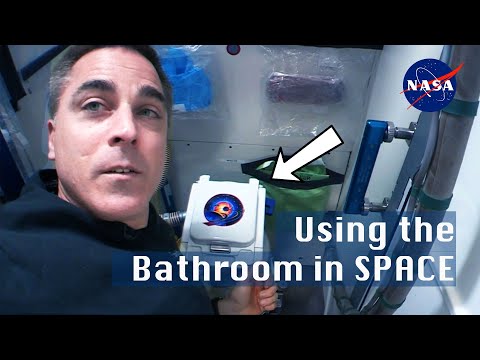
This means waste could freely float around the place, not only becoming an unhygienic eyesore, but also a threat to sensitive equipment.
‘It’s something you do closer to the mission,’ Christian said. ‘There is training involved as you need to be able to maintain it and fix it if something goes wrong.
‘But also just using the toilet, because it is a little different and you have to make sure you… align yourself very well.’
Get in touch with our news team by emailing us at webnews@metro.co.uk.
For more stories like this, check our news page.
MORE: SpaceX capsule carrying Nasa astronaut with ‘serious medical condition’ splashes down to Earth
MORE: We’re just weeks away from sending people to the moon for the first time in 53 years
MORE: Moon to get first hotel by 2032 (but don’t look at the price tag)


