




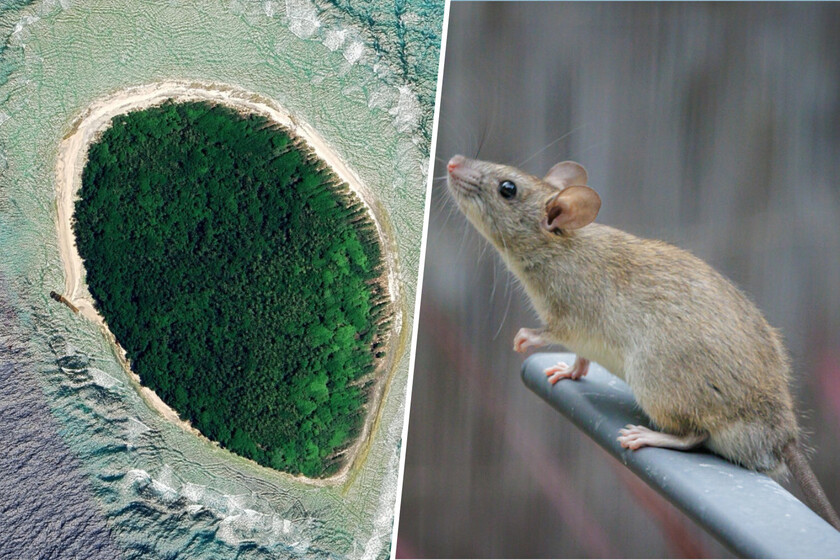
Before we get to work, I propose a game: open Google Earth, type “Bikar Atoll” or “Jemo Island” and let the search engine take you to those remote points lost in the middle of the Pacific. What do you see? Beaches with turquoise waters and white sand, leafy trees, nature in its purest form. The typical place that promises paradise on earth and where anyone would want to go for a week’s trip. The problem is that until recently both islands had a problem: they were infested with rats that had turned their ecosystem upside down.
Until recently.
In a remote part of the Pacific… The Marshall Islands are located, an island republic located in the region of Micronesia, Oceania, famous for its paradisiacal images and dreamy sandy beaches. Among its string of islands there are two in particular that have attracted the attention of environmentalists in recent months: Bikar Atoll and Jemo Island, both included in the Ratak island chain.
The reason? After intense conservation work and a campaign that dates back to 2024, the two islands have seen their fauna and vegetation recover little by little. As an example, ecologists explain that they have found a colony of hundreds of onychoprion fuscatus (sooty terns) with chicks in an area where until not so long ago there was not a single one. Not to mention the thousands of sprouts that have begun to appear on previously bare soil.
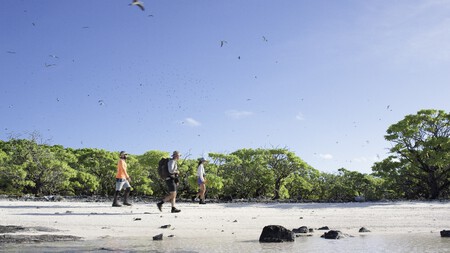

An annoying (and voracious) stowaway. There is little mystery about this change. It is explained by a campaign launched last year that focused on the big problem that was devastating the ecosystems of Bikar and Jemo: rats.
Although both islands have always been known for their birds (when Spanish explorers discovered Jemo they nicknamed it ‘The Birds’), over time they ended up displaced by another animal with a voracious appetite: rodents that arrived hidden on board ships and fed on eggs and other local species, which drastically impacted the delicate island ecosystem.
A date: 7/24. Things began to change in July 2024, when Island Conservation, together with the Marshall Marine Resources Authority, launched an ambitious campaign to eliminate the invasive rats. With the help of a drone he launched baits throughout the islands, a meticulous work that led him to cover each hectare with around 25 kilos of a product designed especially for rodents without affecting the rest of the native species.
Months later the team returned to Bikar and Jemo to assess the scope of the campaign. “As soon as you step on the island, your senses are activated to the maximum: you look for rats, you look for birds on the ground, look for any sign that indicates whether we have won or lost,” confesses Paul Jacques, director of Island Conservation to CNN. What he obtained during that visit was “a great revelation,” confirmation (confirmed with studies) that the plague had subsided.

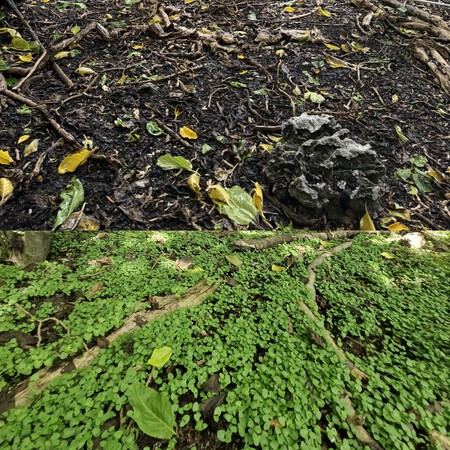

Change of terrain after the disappearance of the rats.

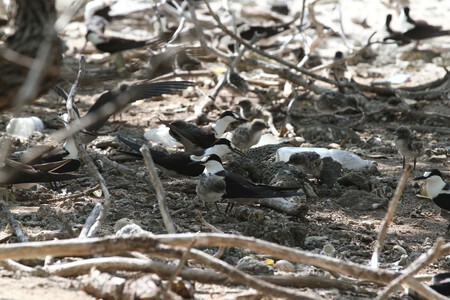

Baby birds found on the island.
“Drastic transformation”. The quotation marks are from Paul Jacques, who summarizes what they found on the islands: “A colony of 200 sooty terns where there were none before fed hundreds of chicks.” “We also counted thousands of seedlings of the native tree Pisonia grandis in just 60 supervised 12-meter plots in the forest. In 2024 we had not found any,” says the person responsible for the project, who recalls that this regeneration is essential for the fauna that inhabits both islands.
“Native forests are fundamental for the nesting of seabirds and crucial for carbon absorption and the ecological health of the island,” he insists. When the rats disappeared, the turtles, crabs and birds were no longer harassed, which was soon reflected in the rest of the ecosystem.
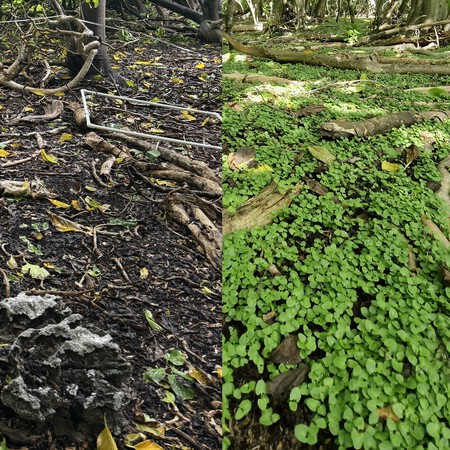
More birds translated into more guano, which in turn improved soil fertility, encouraging more native vegetation and reefs. And as a picture always says more than a thousand words, Island Conservation has taken it upon itself to document the change with a series of photos showing the before and after of the campaign.
Far beyond Bikar and Jemo. The change is important for the islands, but Island Conservation insists that the success of its campaign goes further. “This integrated approach offers enormous benefits for biodiversity, demonstrating how land and sea conservation, when strategically linked, can boost resilience and ecological impact.”
The organization also recalls that the regeneration of the islands benefits neighboring island communities, such as the one located in Likipe, which have historically come to Jemo in search of natural resources. Without rats, they now find more crabs there and hope to achieve sustainable fishing.
Imágenes | Andrew Arch (Flickr), Google Earth e Island Conservation
In WorldOfSoftware | New York rats have become a pest that is impossible to eradicate. They have a secret: their own language


