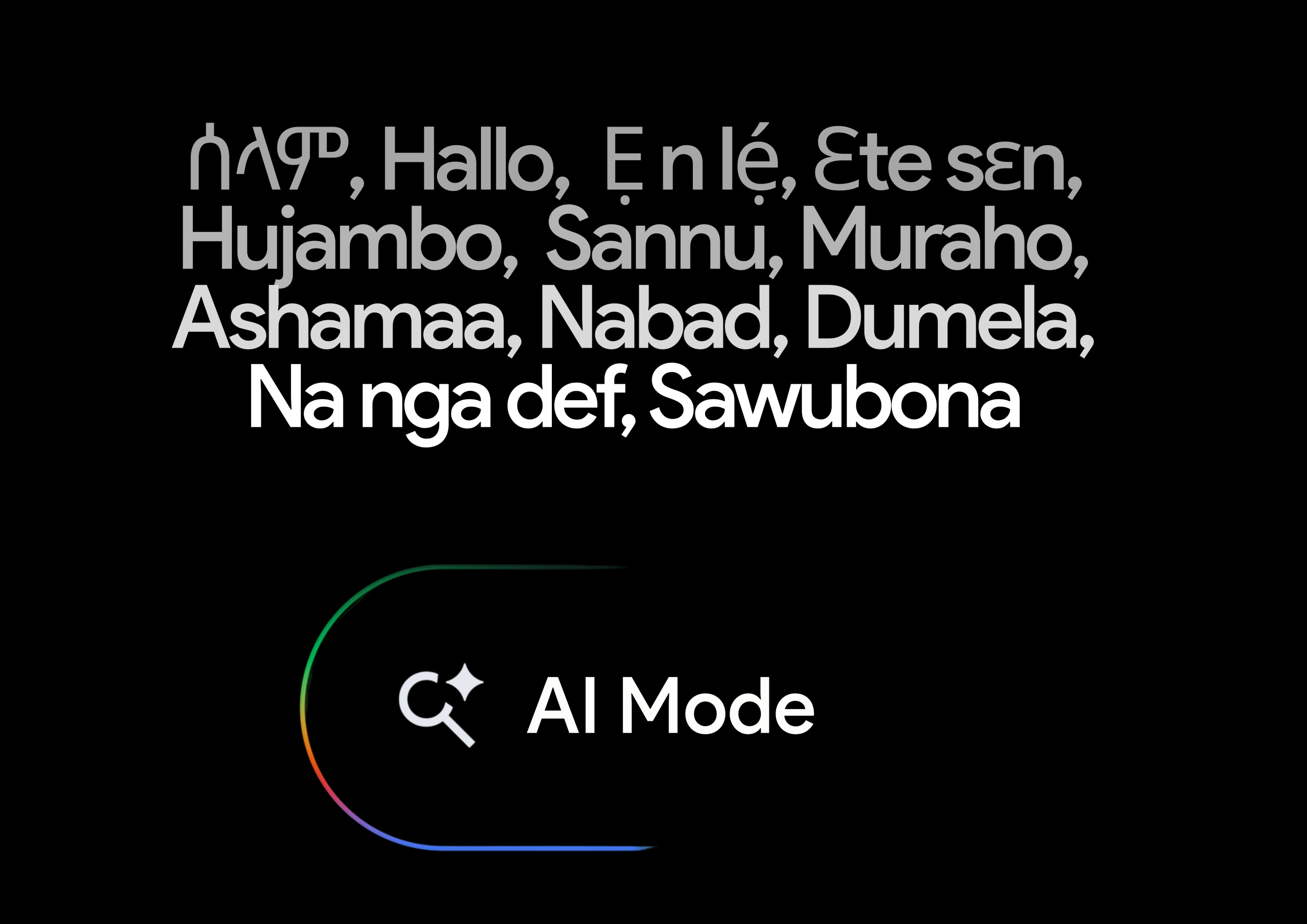
Google has added Yoruba and Hausa to the list of languages supported by its AI-powered Search features, AI Overviews, and AI Mode, bringing two of Nigeria’s most spoken primary languages into its search environment.
The update allows users to ask questions and receive AI-generated summaries in their native tongues directly within Google Search.
The expansion brings Google’s AI Search language support in Africa to 13 languages, including Kiswahili, Wolof, Afrikaans, Kinyarwanda, Akan, Oromoo, Amharic, Somali, Hausa, Afaan, Setswana, isiZulu, Sesotho, and Yoruba.
Google said the languages were selected based on search activity across the continent to make its AI-powered search tools accessible to more users.
“With the advanced multimodal and reasoning capabilities of our custom version of Gemini in Search, we’ve made huge strides in language understanding, so our most advanced AI search capabilities are locally relevant and useful in each new language we support,” said Taiwo Kola-Ogunlade, Communications & Public Affairs manager for Google West Africa.
Nigerians speak over 500 languages. While English is the official language, Hausa and Yoruba are among the most widely used, with a combined 48.7% of speakers across the country. Expanding AI search capabilities into those languages reduces the friction of interacting with complex digital tools, particularly for users who are more comfortable searching or speaking in their mother tongue.
Native speakers could type or narrate any question in any supported language on AI Mode within the Search experience in the Google App.
This update comes weeks after Google launched WAXAL, an open-source speech database developed in collaboration with African universities. The database was designed to support the development of speech recognition systems and voice assistants.
These efforts are part of Google’s broader strategy to localise artificial intelligence tools for African users.
“This is about ensuring Nigerians can converse with Search in their mother tongues, making information more helpful for everyone,” said Kola-Ogunlade.