TL;DR
- Last year, Google announced that developers would have to register even when users are only sideloading their apps.
- Eventually Google backed down, and offered to give advanced users an option for manual installs from unknown sources.
- Ahead of that rolling out, we’re seeing Google Play begin to prepare for this system’s arrival.
Changes are coming to how Android users install apps outside the safety and protection of the Play Store. Google sounded the alarm last summer, warning the Android community that starting in 2026, even developers releasing apps for sideloading would have to register with Google. Following some immediate pushback, Google softened its stance a bit, ultimately agreeing to give informed users the option for an “advanced” installation flow that would support even unverified apps. And as we wait to see exactly how that’s going to work, we’re starting to spot some early pieces of it.
At least, we’re definitely identifying text strings recently added to Google Play (here we’re looking at version 49.7.20-29) that make reference to verified installs — and the ability to proceed even without verification. But we have questions about whether or not this represents that new “advanced flow” Google teased. Take a look:
Code
Install without verifying
If you install without verifying, keep in mind apps from unverified developers may put your device and data at risk.
Can't verify app developer
No internet, can't verify app developer
The app can't be verified at the moment
Even with us still uncertain exactly how these messages will appear to users, their content alone offers a bit of insight into what to expect. Clearly, there’s an active component to the process that requires a data connection, and without one available, users will be presented with a warning that developer status can’t be verified.
Don’t want to miss the best from Android Authority?


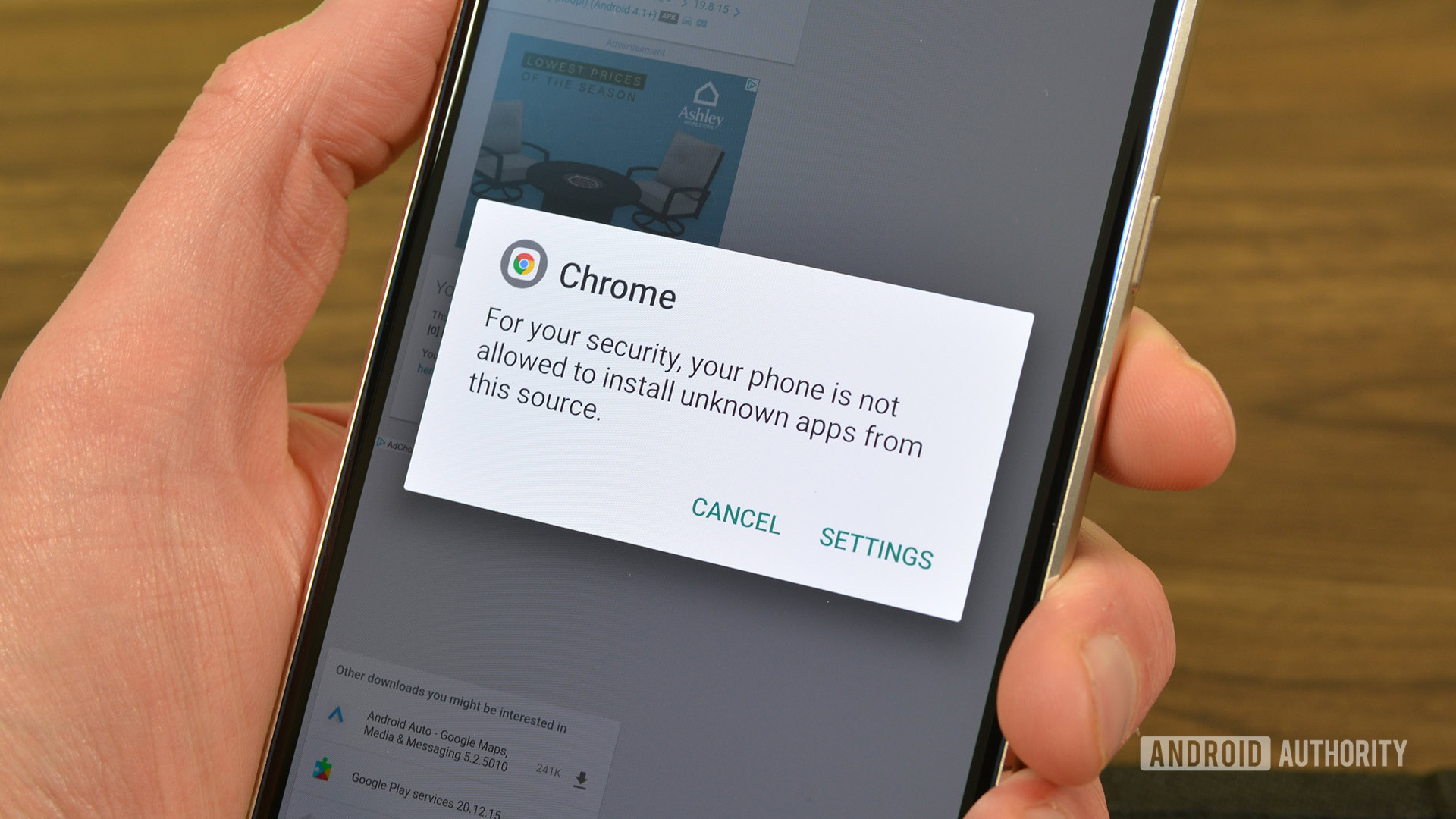
We also see what looks like an option for moving forward with installation despite the lack of developer verification. Now, without being able to go through this new install workflow just yet, we may be getting ahead of ourselves, but at least based on these few strings, we have to say — this doesn’t feel particularly robust? Sure, there’s that explicit warning about the risk involved, but it doesn’t feel that much different from the sort of message we already see when enabling the installation of unknown apps.
That said, keep in mind that we’ve still got a long way to go before Google is expected to flip the switch on this new system, so there is still more than ample time to dial-in the experience and make sure that users won’t be able to breeze through installation of possibly sketchy apps without clearly communicating that they know what they’re doing. Google’s timeline involves first introducing the program to users in Brazil, Indonesia, Singapore, and Thailand, and even then, not until September of this year.
⚠️ An APK teardown helps predict features that may arrive on a service in the future based on work-in-progress code. However, it is possible that such predicted features may not make it to a public release.
Thank you for being part of our community. Read our Comment Policy before posting.