We may receive a commission on purchases made from links.
It’s typical to assume that when you’re buying any electronic gadget, the more you spend, the better. After all, premium items typically cover the basics and add a high-quality build, some nice-to-haves, and other bells and whistles. For monitors, the same applies. Sure, there are budget-friendly options on the market. At the same time, premium options exist for anyone who would like the latest specs, the best picture quality, and other niceties that are exclusive to high-end shoppers.
For instance, some of the best monitors use OLED panels that offer better picture quality than their LCD counterparts, but you might be surprised at how long OLED computer monitors actually last. High-end monitors might also have faster response times for crisper images in certain scenarios, such as gaming, and they also have high-resolution displays that enhance the overall quality of images and text. Plus, you’ll enjoy way more features on high-end models than on cheaper panels, which makes them great for different use cases, such as gaming and work.
While it’s evident that modern TVs are more affordable than most PC monitors, you don’t want to splurge on a high-end monitor when a cheaper model can get the job done. Especially if you’re trying to be smart with your money. But often, it’s not just about the money. It’s really more about the value you’re getting.
Downsides of buying high-end computer monitors

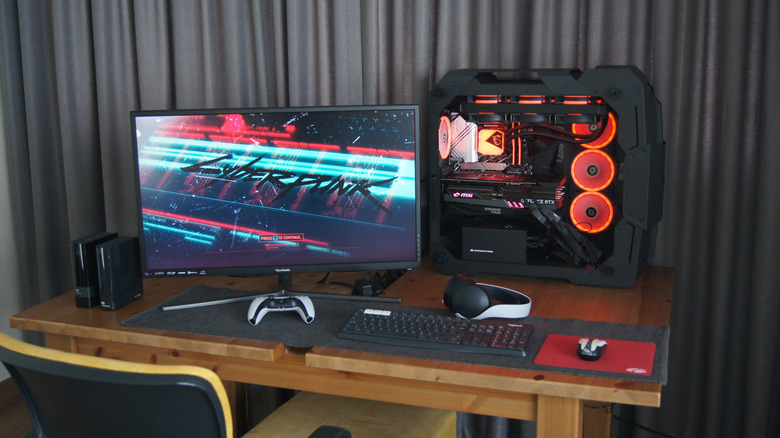
One of the downsides of buying high-end computer monitors is that they don’t come cheap. Premium monitors have a premium price tag to match. They can cost several times more than lower-end options, so if you’re on a tight budget, they’re most likely out of reach. Take the ASUS ROG Swift OLED PG27UCDM, for example.
It’s ranked as the best monitor of 2026 by RTings, one of the most reputable consumer gadget review sites, and has received near-perfect scores in almost all aspects. But, to get such a monitor, you should be ready to spend some serious cash. For context, this model is currently selling for a whopping $1,099 on Amazon — and that’s at a $100 discount. Mind you, this is a 27-inch monitor.
If you want even more premium options, you could end up spending as much as $5,000 and upwards. However, pricing alone isn’t the only problem. The extra money you pay for premium monitors brings diminishing returns rather than dramatically better results. For instance, 120Hz on a cheap monitor might not sound as impressive as 240Hz on a high-end one, but the latency gains beyond 120Hz diminish sharply.
Cheaper monitors are more than enough for most
With the high cost and diminishing returns of high-end monitors, the smart way to get the most for your money is to consider cheaper models. One thing that makes cheap monitors good enough these days is that they include features that were considered premium in the past. This trickle-down effect, along with the continuous improvement in monitor technology, has resulted in a case where monitors are not only getting cheaper but also better at the same time.
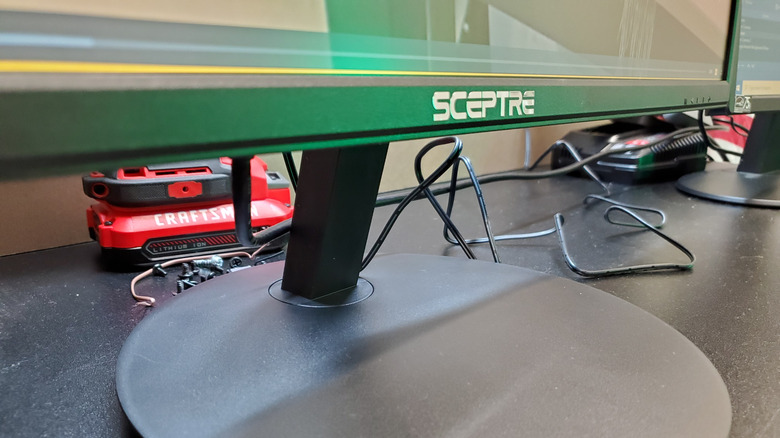
For example, while you would previously have to spend north of $300 to get a high-refresh-rate monitor, you can now get one for as low as $100 or even less. Many of these offer 120Hz or even 144Hz refresh rate, like the Sceptre E225W-FW144 22-inch gaming monitor, which sells for under $70. While a high-end monitor might offer 165Hz and 240Hz refresh rates, or even more, anything past 144Hz is less noticeable as diminishing returns start to kick in.
Additionally, while premium monitors are packed with lots of features, many of them aren’t necessary for most people in everyday use. RGB lighting, for instance, doesn’t add any tangible benefit to how you use a monitor, but a high-end option is probably charging you a fair bit extra for that. So before you splurge on your next purchase, make sure you check out the best cheap computer monitors, as you might find one that meets your needs without breaking the bank.