




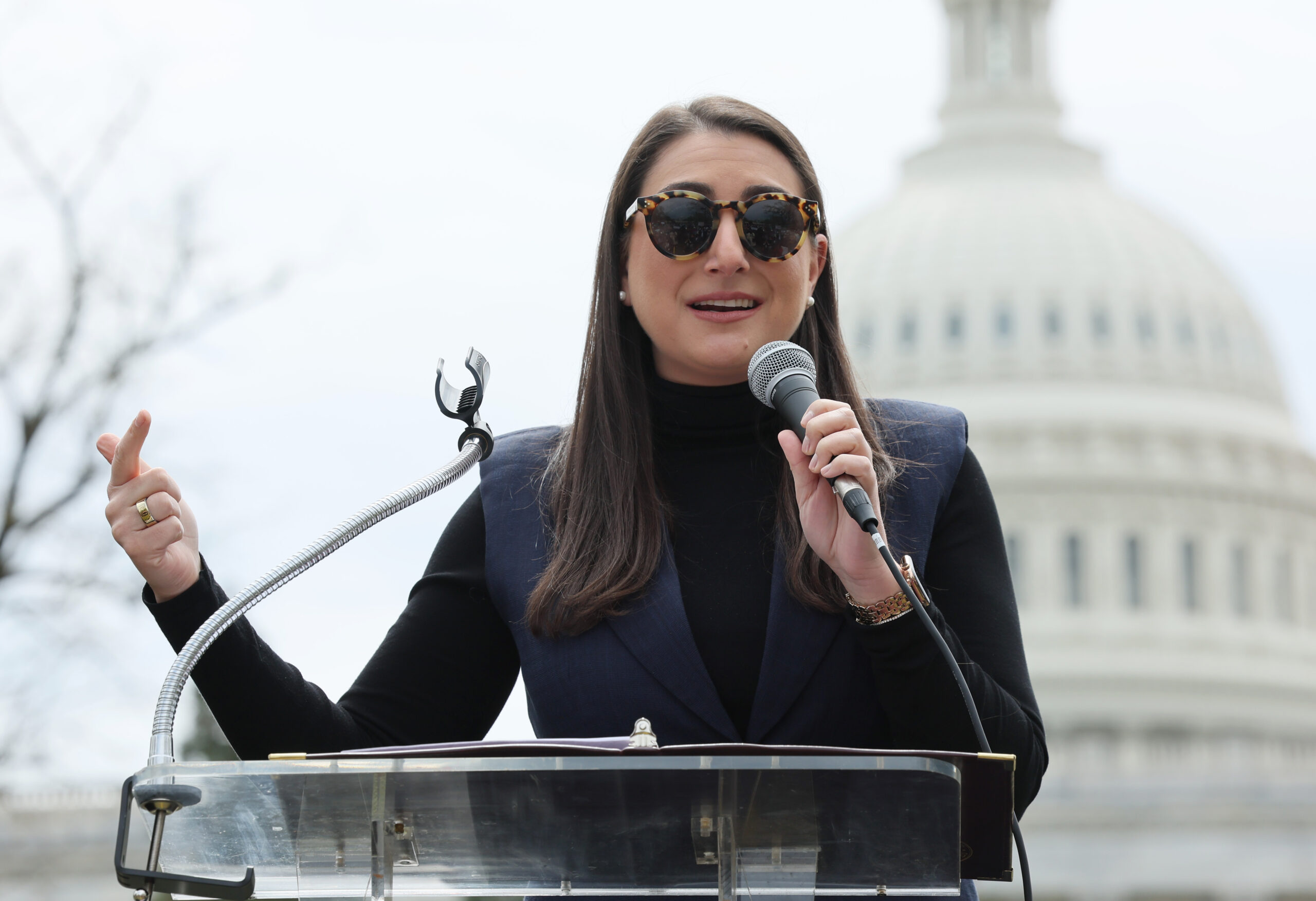
A bipartisan group of House of Representatives members is introducing a resolution that makes recommendations for addressing the spread of anti-Semitism through artificial intelligence models and highlights the ways in which these programs have been used to spread a variety of forms of anti-Jewish hatred.
The resolution, led by Reps. Sara Jacobs (D-CA), Don Bacon (R-NE), Juan Ciscomani (R-AZ), and Laura Friedman (D-CA), emphasizes that AI models “can generate, amplify, or normalize anti-Semitic content, deepfakes, synthetic media, and deeply anti-Jewish biases, and can be weaponized to target Jewish individuals and institutions, as well as U.S. institutions, thereby massively normalizing anti-Semitism and anti-Jewish biases.” It also notes that there is an extensive history of AI models espousing anti-Semitic attitudes, dating back to at least 2016.
The resolution states that combating anti-Semitism is a national priority and that tech companies have a “responsibility to implement robust safeguards,” including transparency measures, working with anti-Semitism experts and taking steps to prevent the spread of anti-Semitism or violent content targeting Jewish people.
Jacobs said Jewish insider this week, AI is accelerating conditions of rising anti-Semitism and danger to the Jewish people “with the rapid creation, spread and amplification of anti-Semitic content that actively makes us less safe.”
She emphasized that the public is increasingly turning to AI as an information tool without “control” over the anti-Semitic content that AI spreads.
The resolution encourages tech companies to implement standards to prevent anti-Semitism, including “supporting enforcement technology, red teaming methodologies and datasets to guide risk identification, measurement, mitigation and management of AI systems,” as well as expanded data sharing and access for researchers to study anti-Semitic content and assess potential responses.
It also recommends periodic public reporting by tech companies on anti-Semitic content on AI platforms and how the platforms respond to it.
It urges governments, civil society, academia and business to develop “effective interventions” against anti-Semitic content and harassment, including plans to respond to threats of violence.
The legislation also calls for efforts to improve education and digital literacy among young people, to recognize and resist anti-Semitic narratives and AI-generated hatred.
“Companies must strengthen and enforce standards and safeguards for AI systems that protect the human rights and safety of all people, including the Jewish community,” Jacobs said. “I think they could do much more, and that is why we need a societal approach to anti-Semitism, which we call for in this resolution.”
Jacobs said the resolution is a “first step” in highlighting bipartisan consensus on the issue, noting that while it is non-binding, it does include specific standards and recommendations for the industry.

