
Every day, people reveal buying intent on social media without filling out a form or clicking an ad.
Social listening for lead generation helps teams catch those early signs — the questions, complaints, and product searches — that show someone might be ready to buy from you.
Let’s explore how to turn those moments into leads your team can actually use.
Social listening for lead generation is the act of watching online conversations in order to find customers who express interest in what you’re selling.
It helps enterprise teams spot questions, problems, and early buying signals that show when someone could be a potential customer. When these signals appear in one place, your team can reach out faster and start sales conversations sooner.
Source: Logan Lyles
The difference between lead-gen listening and brand monitoring
- Lead-gen listening looks for buying intent
- Brand monitoring looks for mentions of your brand
PSA: Both are useful, but they serve different goals.
Think of brand monitoring (also known as social monitoring) more like a safety net for your business. It shows you how people are communicating about your brand or industry so you can be prepared for any shifts in sentiment.
Lead-gen listening is more sales oriented. Yes, you’re still listening to customer conversations around your brand or industry, but your motivation for doing so is to find qualified customers.
A quick way to tell the difference:
- Lead-gen listening tracks questions, pain points, product searches, competitor mentions, and phrases that show someone is ready to buy.
- Brand monitoring tracks your brand name, sentiment, reviews, and community conversations.
Bonus: Download a free guide to learn how to use social media listening to boost sales and conversions today. No tricks or boring tips—just simple, easy-to-follow instructions that really work.
Enterprise businesses should use social listening to increase the amount of qualified leads their business can market to.
When you track what people say across social media platforms, you can learn more about what they want, and then tailor your marketing strategy to those needs.
Social listening also helps teams move faster. Instead of waiting for a form fill, your sales team can step in the moment someone asks for help online.
According to eMarketer, 60% of US B2B marketers plan to invest more in social media in 2025. With more buyers starting their research on social, listening helps teams spot interest earlier and act faster.

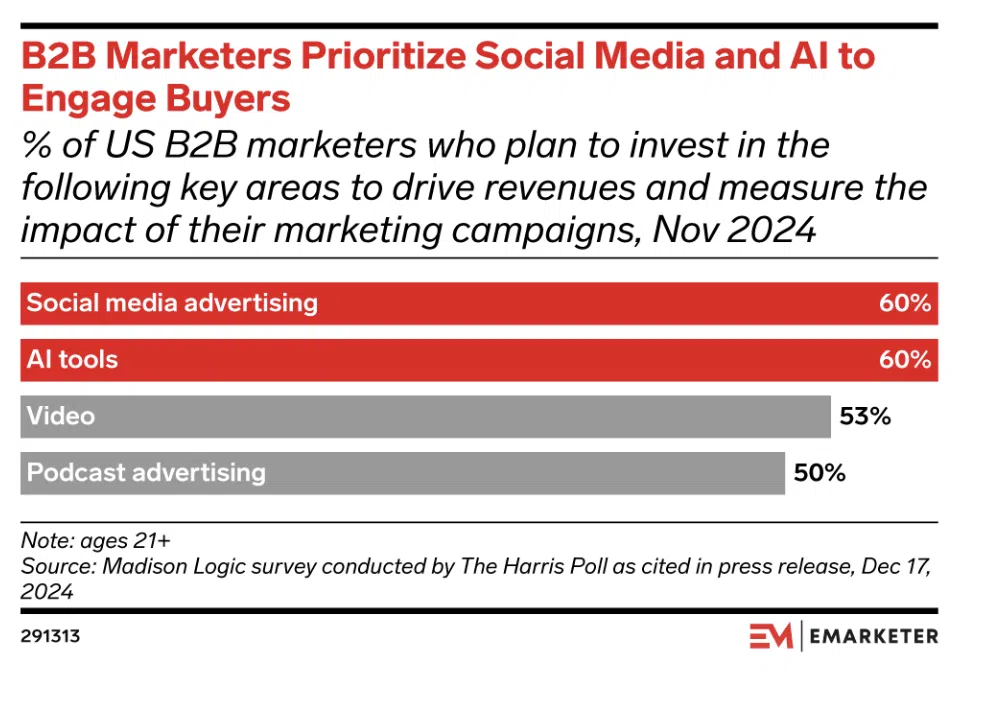
Source: eMarketer

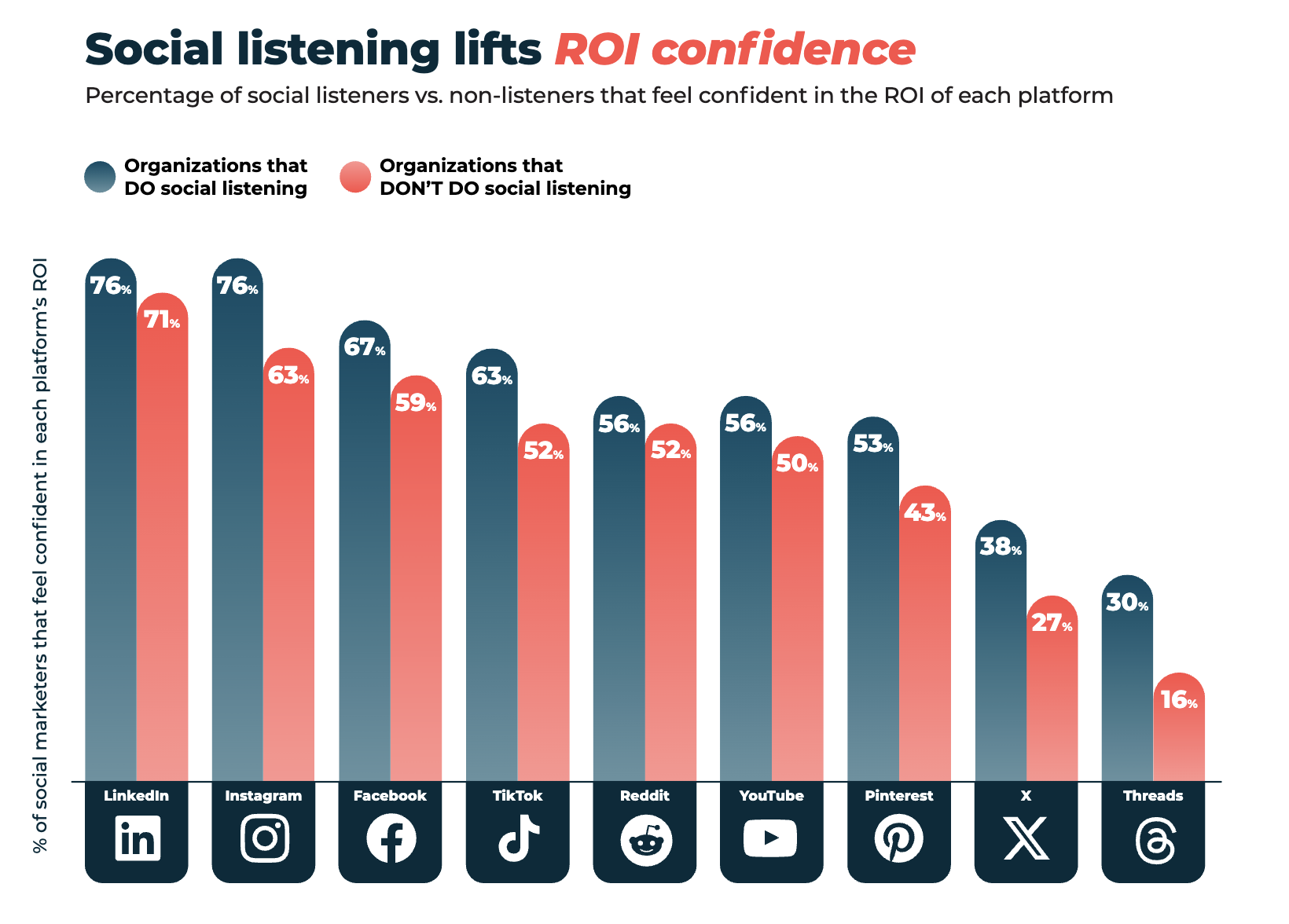
Here are the main reasons enterprises rely on social listening for lead generation:
- You find potential customers earlier. Many people share their needs or problems online before they look at landing pages or ads.
- You can join conversations that matter. You’ll see when people are looking for help your brand can give.
- You qualify leads with better data. Pain points, keywords, and competitor mentions give your team stronger context.
- You support sales with actionable insights. Your sales teams get details they can use in outreach, demos, and follow-up.
- You optimize your social media strategy. Listening shows what your audience truly cares about, not just what they click.

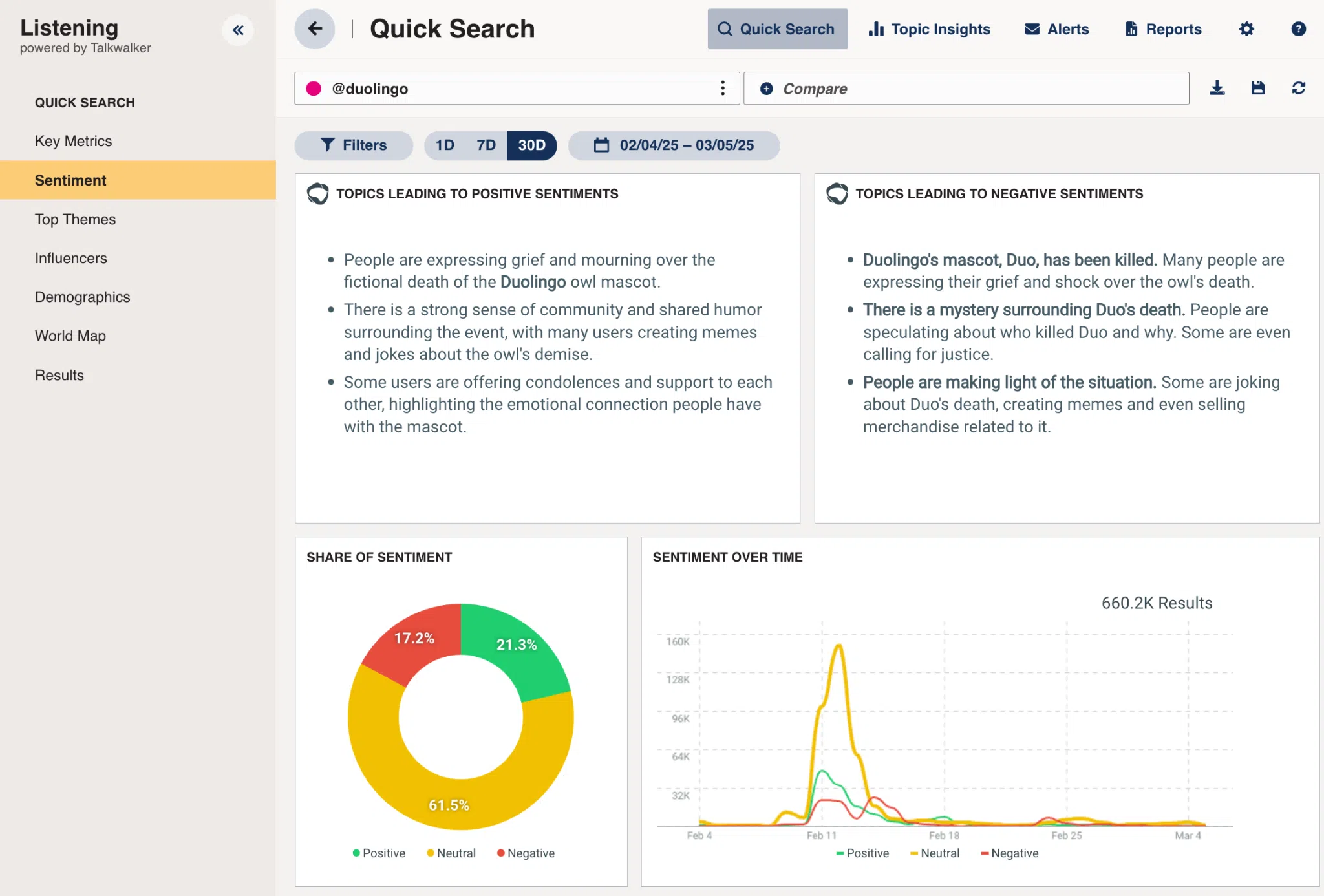
You can identify lead opportunities with social listening by tracking the words, questions, and moments that show someone might want or need your product. These signals often appear in everyday posts across social media platforms, forums, and online communities.
When someone asks for a tool recommendation, complains about a competitor, or talks about a problem your product solves, that person may be a potential customer.
Here are the key types of lead signals to track:
1. Questions about your category
Look for people asking for help or advice, whether about the products you offer or the wider industry you exist in.
These questions might look like:
- What’s the best tool for managing social media accounts?
- Looking for recommendations for a new pair of waterproof running shoes. Any ideas?
- I’m tired of posting to social media manually every day. How are you guys doing it?


Source: Reddit
2. Pain points or struggles
These are posts where users share problems your product can solve.
Look for posts like these:
- “My team can’t keep up with all our social media platforms.”
- “We need better sentiment analysis to understand customer feedback and satisfaction.”
For example, this year we used social listening to spot a steady rise in posts complaining about long wait times from a competitor.
In response, we built a “No-Wait Guarantee” campaign that drove 35% more traffic to our site and a 10% lift in new customer sign-ups. Read all about it in our 2025 Social Media Trends report!
3. Competitor mentions
People who compare tools or complain about a competitor are warm potential leads.
Listen in for these kinds of comments:
- I just started with [insert competitor name]. Not bad so far. What do you guys use?
- Thinking about buy a [insert competitor product]. How is everyone else liking it?
- I’m so tired of [insert competitor name]’s customer service. Thinking about switching. Recommendations?


Source: Reddit
4. Product searches or shopping language
These signals show stronger buying intent.
Reach out to these people, they’re ready to buy:
- “Looking for pricing on social media management tools.”
- “Need a platform that supports automation and analytics that fits a startup budget.”
5. Relevant hashtags and trending topics
Certain hashtags can reveal people who are looking for help now.
Examples:
- #SocialMediaHelp
- #MarketingTools
- #LeadGeneration
6. Industry conversations
Industry conversations can show early signs of what people need or where they are running into problems. These posts often point to gaps your product can help fill.
Look out for these conversations:
- Our sales teams need better data from our social media marketing campaigns.
- Trying to connect our CRM with our social tools. Any advice?

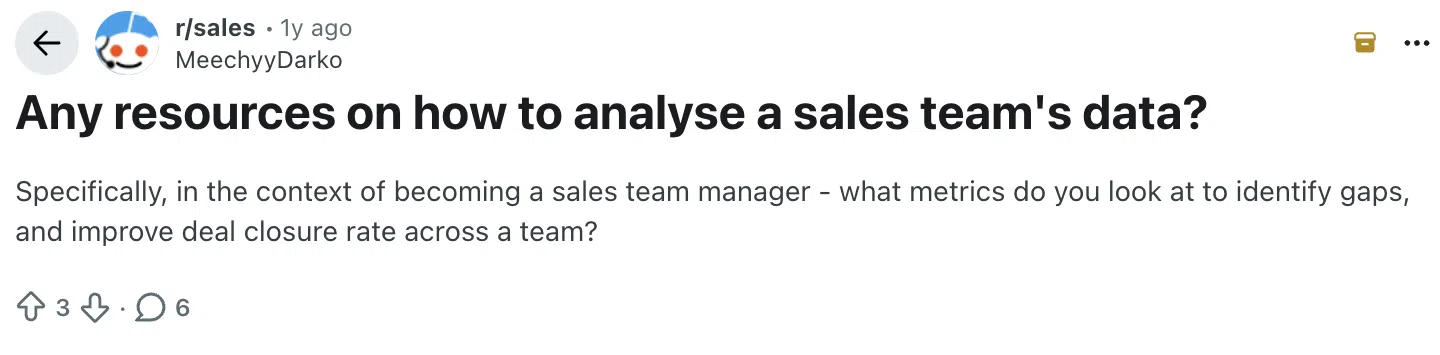
Source: Reddit
7. Community posts from influencers or power users
Influencers and power users often notice problems and trends before everyone else. When they share a pain point or ask for tools, it can signal what many other people in your target audience are feeling too.
You can:
- Watch their posts for repeated complaints or common questions.
- Note which products or features they wish existed.
- Look at the comments to see how other people react or agree.
Pay attention to what they post and how often certain themes come up. Repeated questions, feature requests, or frustrations can point to strong lead opportunities.
The comments matter too. If others jump in to agree, add context, or share similar customer satisfaction issues, that’s a clear signal worth following up on.
Pro tip💡: Make social listening an important part of your influencer marketing strategy.
How do you turn listening insights into qualified leads?
To turn listening insights into leads, your team needs a simple handoff. When someone finds a post that shows interest or a clear need, it shouldn’t sit unnoticed.
Tag it, send it to the right teammate, log it in your CRM, and keep track of what happens next.
This way, small moments online can grow into demos, calls, and new customers.
Here’s how to set up your process:
1. Set up workflows to assign and nurture prospects
Once you find a potential lead, your team needs a clear follow-up path.
This includes:
- Tagging the post or message inside your listening dashboard.
- Assigning it to a teammate who will respond.
- Adding notes about the pain point or intent signal.
- Sending a quick reply that helps the person, not pressures them.
Inside Hootsuite, teams can assign posts to the right person and track who owns next steps. This removes confusion and makes sure every potential lead gets a response.
2. Route signals to your CRM or sales tools
Your CRM is where all warm leads should live, even if they start on social media. When you move these signals into the same system your sales team already uses, you make it much easier for them to follow up with context.
You can send:
- Screenshots or saved posts
- The user’s pain point in their own words
- Sentiment insights
- Tags for product interest or urgency
This gives sales teams context they can use to personalize outreach and increase conversion.
Sharing this information shouldn’t feel messy or manual. If you’re juggling tabs or flooding your sales team’s inbox with updates, there’s a simpler way.
Integrations like Hootsuite Social Customer Care let social and sales teams share information directly inside the CRM. Sales reps can see past interactions, social data, and pain points right in a customer’s profile, without switching tools.
3. Use automation to speed up handoffs
Automation helps your team follow up faster without checking dashboards all day. Inside Hootsuite, you can use automated tags and assignments in Inbox to route messages based on keywords, sentiment, or topic. This helps surface potential leads right away so the right teammate can step in.
You can also use app integrations to push social data into the tools your sales team already works in. That way, follow-ups happen faster, with less manual copying and pasting.
Automations can help you:
- Flag posts that mention key problems or competitors
- Auto-assign messages to the right teammate
- Tag conversations with product interest or urgency
- Notify sales teams when a strong signal appears


3. Track what happens next
A strong system follows the lead from the first signal to the final conversion.
This includes:
- How many potential leads you found
- How many became qualified leads
- How many booked meetings
- How many converted
Hootsuite Analytics helps teams measure this path and see which listening signals lead to the best metrics and results.


#1 Easy Social Listening
Brand mentions, trending topics, and sentiment at your fingertips. Enhance your social strategy with the insights that matter.
Start free 30-day trial
To understand what actually turns social conversations into qualified leads, we spoke with Sarah Stephenson, Director of Social Media at tmp.
1. Listen for problems, not brand mention
Many brands start social listening by tracking their own name. Sarah says that’s usually where teams limit themselves.
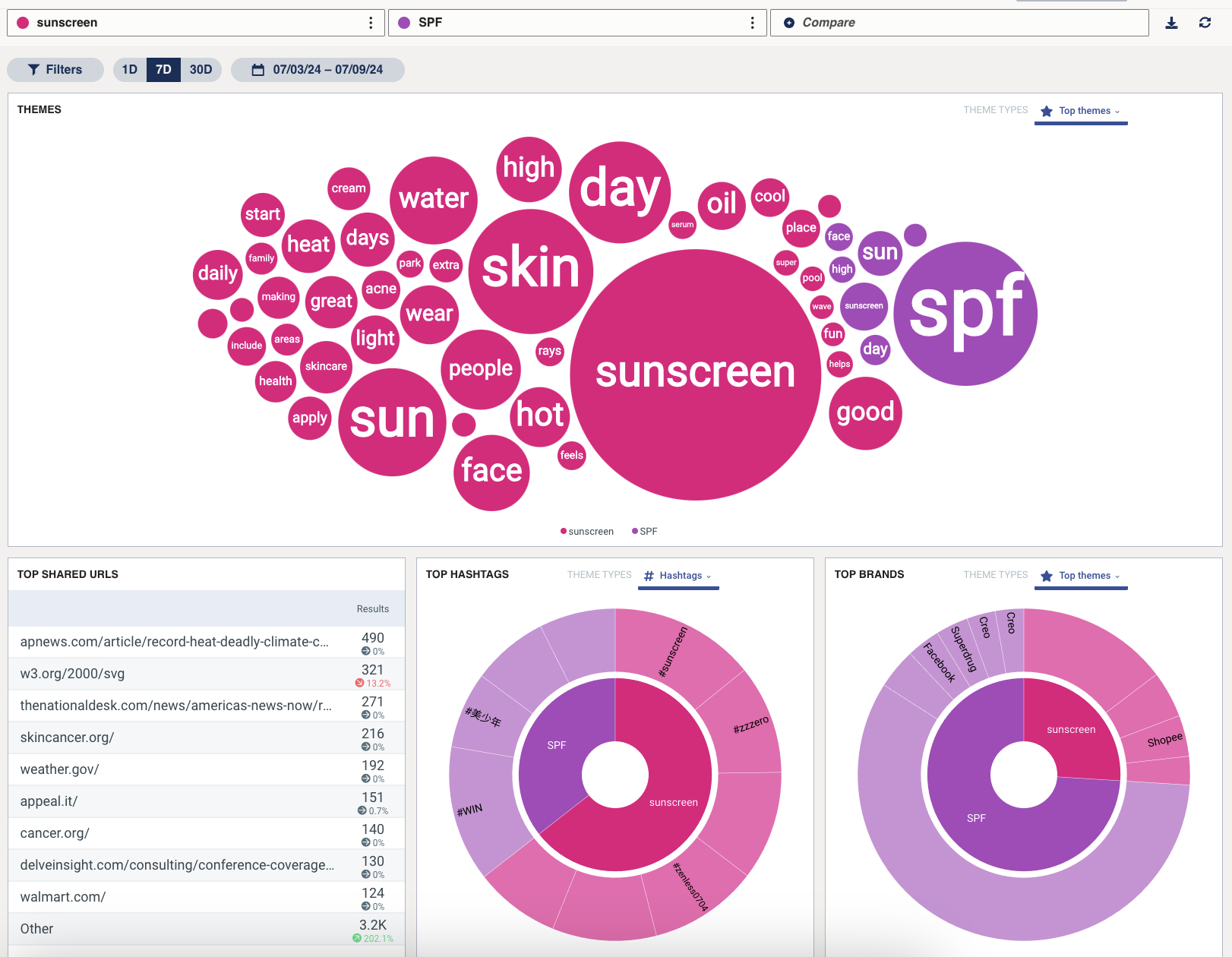
“Brands often focus too heavily on brand keywords, but the real opportunity is in the pain points… the questions, the frustrations, the comparisons, and the ‘how do I…?’ moments,” says Sarah.
Those posts reveal unmet needs. Someone asking how to fix a workflow, comparing tools, or venting about a challenge is often earlier in the buying journey than someone tagging a brand directly.
“That’s where you’re going to see the most value and insight into your audience,” Stephenson says.
2. Weigh intent and context together
Not every keyword equals a lead. Stephenson emphasizes that meaning comes from the full picture.
“Context matters as much as the keyword. Who is asking and why they are asking is critical, and it’s often something that is overlooked.”
The strongest signals usually combine clear intent with situational clues. Stephenson points to phrases like, “We’re evaluating,” “We need a new solution,” or “Does anyone have any recommendations?”
These are especially helpful when paired with signs of decision-making influence. She also flags urgency as a strong indicator, noting that time-bound language like: “this quarter, before year-end, or ASAP” often signals a higher likelihood of conversion.
“Repeated engagement around the same challenge is another strong signal, as it shows an active problem rather than passive interest,” Stephenson shares.

3. Respond with value to earn trust
Once a signal appears, the instinct to sell can be hard to resist. Stephenson advises the opposite approach.
“Lead with help, not a pitch. Think about what is in it for your customer, rather than for you.”
She recommends responding directly where the conversation is happening, but only if you can add something meaningful.
“Respond in-platform but respond with value. For example, relevant insights, resources, or perspective, this will then move the conversation forward naturally. You need to build the trust first, conversion second,” Stephenson notes.
4. Make listening a daily habit
Lead generation doesn’t come from checking dashboards once a week. It comes from staying close to the conversation.
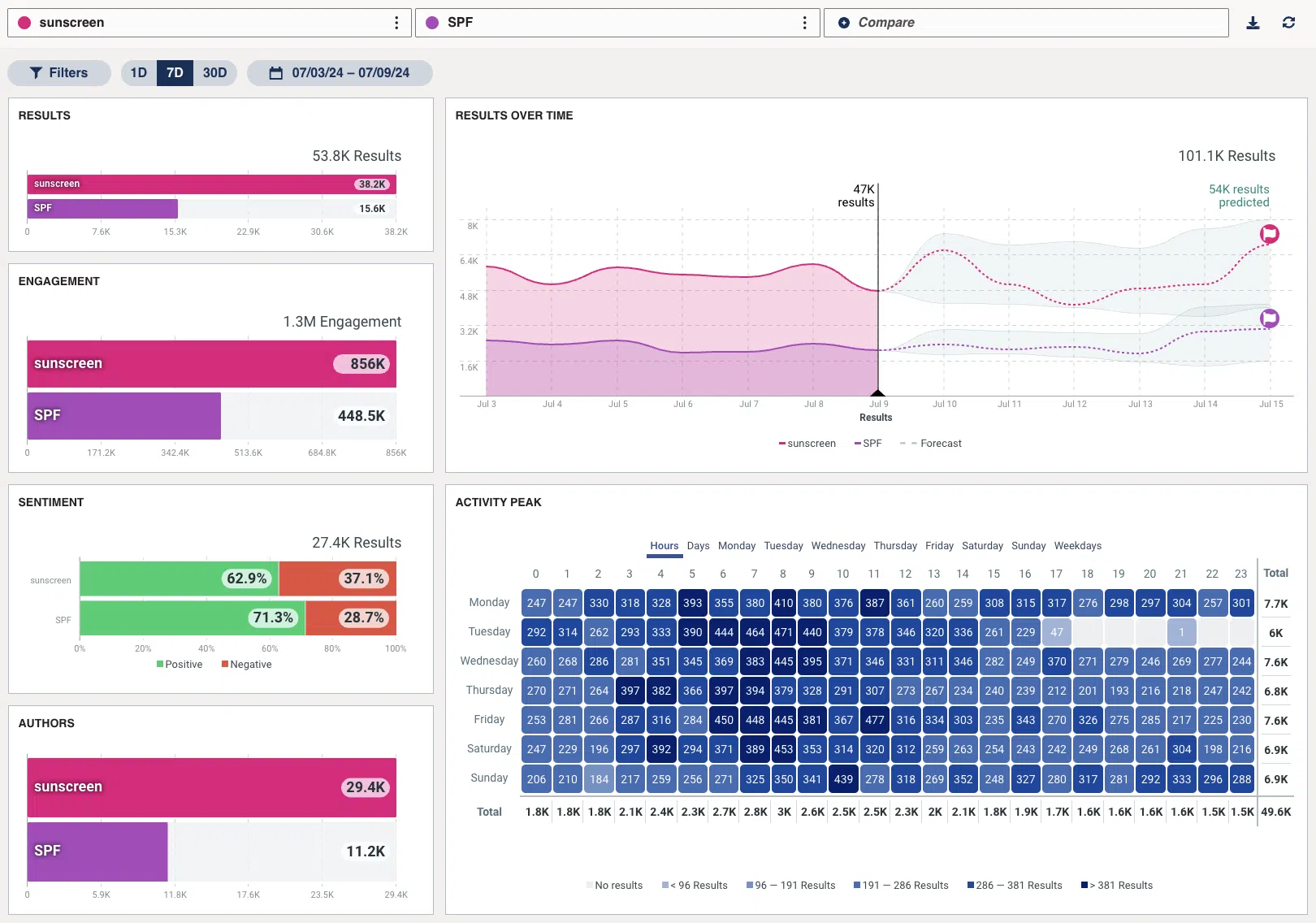
“It starts with daily scanning of high-intent keywords and relevant comment threads, combined with weekly reviews to identify emerging themes and recurring pain points.”
Stephenson also stresses alignment. Regular check-ins with sales and demand teams help determine whether someone is still in awareness or moving into consideration.
Without that alignment, listening insights risk becoming interesting observations instead of real opportunities.

5. Read the room before you engage
One of the most overlooked skills in social media listening is restraint, says Stephenson.
“Social listening isn’t just about spotting a keyword, it’s about understanding how people are talking, who’s driving the discussion, and what role a brand should (or shouldn’t) play in that moment.”
Stephenson warns that jumping into a thread too quickly or with a sales-led response can damage credibility.
“Listening means reading the room. Look at the platform norms, the sentiment, and the intent behind the comment…” she says. “The brands that succeed know when to engage, when to add value quietly, and when to simply listen.”
She sums up by adding, “Social listening isn’t a shortcut to leads, it’s more like a shortcut to relevance.” And relevance, over time, is what builds trust, relationships, and sustainable revenue.

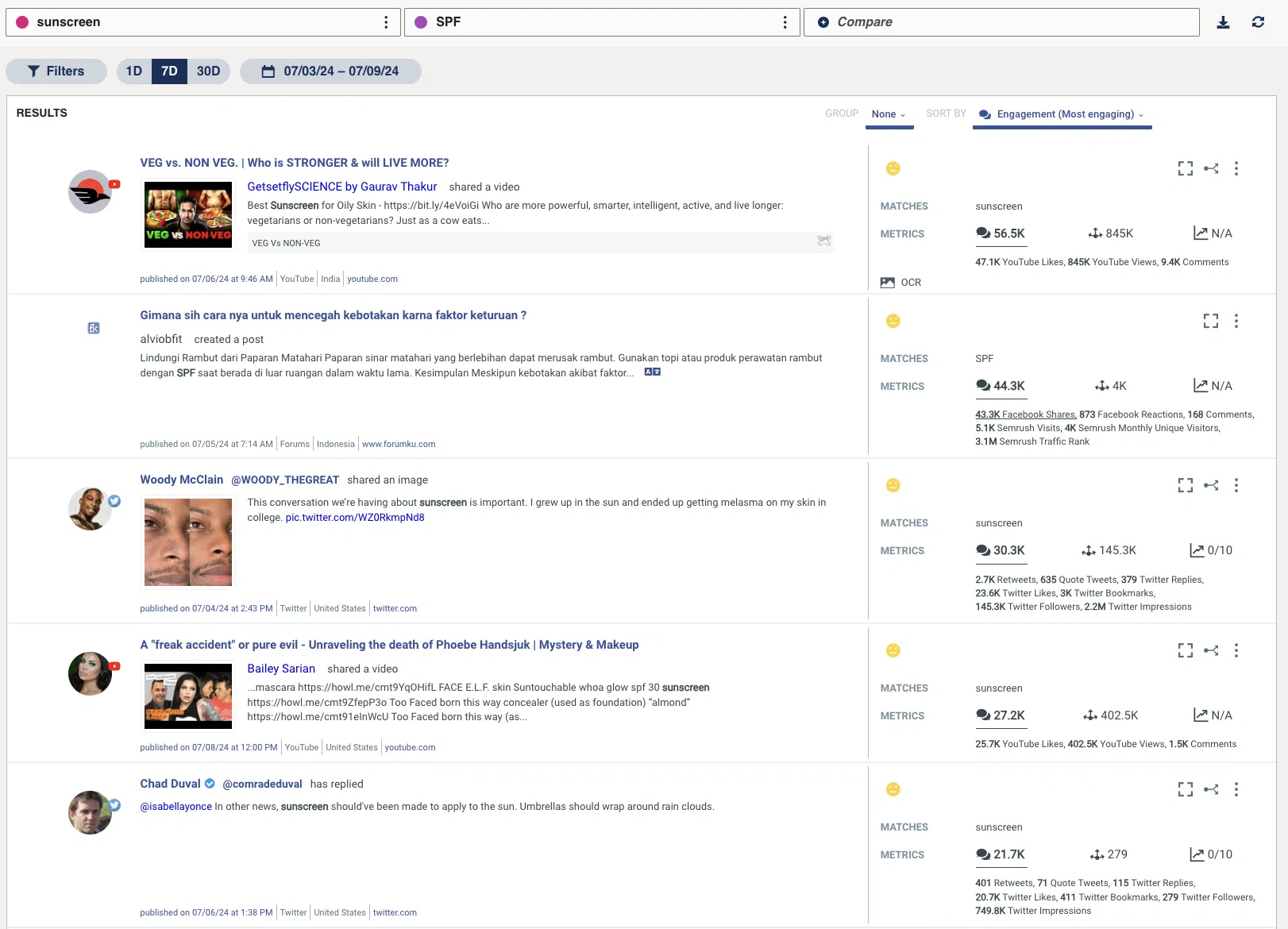
Enterprises use different social listening tools to collect, sort, and act on social conversations that may lead to new customers. The right tools help teams notice buying signals in real time and turn them into outreach steps that sales teams can use.
Here are the main types of tools that support lead generation through social listening:
- Listening tools that track topics, keywords, pain points, and brand mentions.
- Engagement tools that let teams jump into conversations and respond quickly.
- CRM tools that store potential leads and keep follow-up organized.
- Analytics tools that measure which conversations turn into quality leads (and loyal customers).
- AI tools that scan large volumes of online conversations and surface useful patterns.
Most enterprise teams need several of these working together to build a strong workflow. But having everything in one place makes it much easier to spot potential leads and take action fast.
A strong example of this is the NBA team that used Talkwalker by Hootsuite to bring all of its fan conversations into one place.
With one dashboard for listening, sentiment analysis, reporting, and benchmarking, the team could spot trends earlier, change their content faster, and measure results clearly.
That setup led to a 46% increase in impressions and a 352% increase in social video views over previous seasons.
How does Hootsuite help businesses find leads?
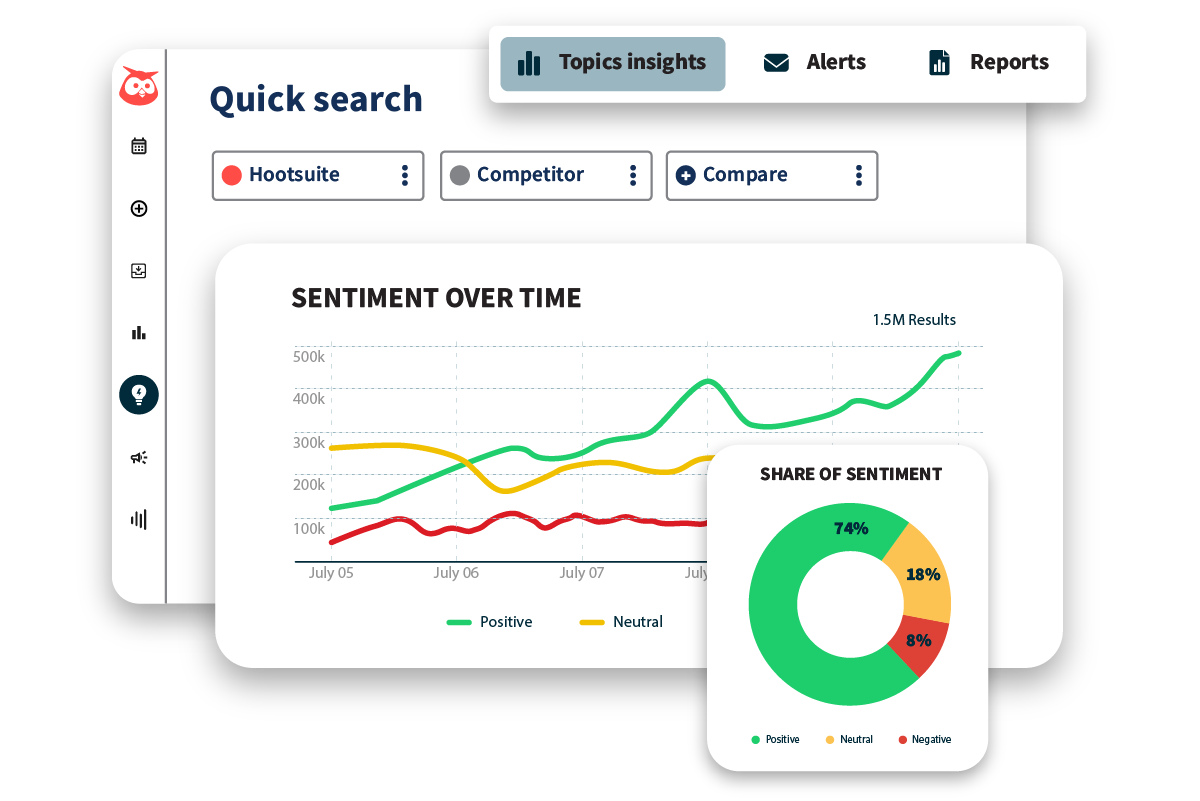
Hootsuite helps businesses find leads by pulling key conversations into one dashboard and showing when someone might need your product or service.
Teams can watch pain points, competitor mentions, and relevant keywords across multiple social media platforms without switching tools.
With Hootsuite, teams can:
- Use Streams or Listening dashboards to watch real-time conversations.
- Track hashtags, brand mentions, and industry keywords that show early buying intent.
- Save important posts and assign them to the right teammate for follow-up.
- Add context like pain points or questions before passing leads to sales.
- Connect insights to a CRM so sales teams have all the details they need.
- Measure how many of these signals turn into qualified leads or conversions.
- Use AI-powered insights to further power your social listening strategy.
- Benefit from an all-in-one social media marketing platform, built for enterprise teams.
Hootsuite gives enterprises a simple way to use social listening in their everyday workflow, helping teams move from online conversations to real business results.

Social listening for lead generation FAQ
What is social listening for lead generation?
Social listening for lead generation means watching online conversations to find people who may want your product or service. It helps teams spot questions, pain points, and intent signals that can turn into sales conversations.
How do I find sales leads with social listening?
You find sales leads with social listening by tracking the words, posts, and questions people share when they are looking for help. When someone talks about a problem your product solves, your team can step in and start a helpful conversation.
What signals should I track to find potential customers?
To find potential customers, track pain points, product searches, competitor mentions, hashtags, and direct questions in your category. These signals show when someone may be ready to learn more or compare options.
How do I measure lead quality from social listening?
You measure lead quality by tracking how many social leads turn into replies, meetings, or conversions. You can also check the strength of the original signal, such as urgency, clear pain points, or specific product needs.
Which tools help automate listening-to-lead workflows?
Tools that help automate workflows include social listening tools, CRM platforms, and AI-powered filters. These tools sort conversations, flag high-intent keywords, and send signals to sales teams in real time.
How does Hootsuite support enterprise lead generation?
Hootsuite supports enterprise lead generation by tracking real-time conversations, surfacing key intent signals, and helping teams follow up quickly. Hootsuite lets you monitor keywords, assign posts to teammates, send signals to your CRM, and measure which conversations turn into qualified leads.
Save time managing all your social media with Hootsuite. From one powerful dashboard, you can plan, schedule, and publish content across every network, engage your audience in real time, track performance, and uncover insights with OwlyGPT and social listening tools. Try Hootsuite free today.