The customer is always right. Really. The success of your brand depends on their good word.
That’s why customer advocates are worth their weight in sales. But where can you find them?
We’re sharing how you can use social listening to increase customer advocacy, plus six real-world examples to get inspired.
Key takeaways
- Customer advocacy is earned, not forced. Advocacy happens naturally when brands listen, improve, and respond, not when they self-promote.
- Social listening turns everyday feedback into insight. Monitoring mentions and sentiment reveals customer needs and expectations in real time.
- Social listening helps identify brand advocates. Tracking repeat mentions and positive reviews can help you spot loyal customers.
- Tools like Hootsuite make advocacy easier. Brands can track sentiment, catch untagged mentions, surface trends, and be alerted of sudden changes.
What is customer advocacy?
Customer advocacy is the practice of nurturing relationships with your happiest, most loyal customers with the goal of turning them into brand advocates.
This matters because consumers trust word-of-mouth over a brand’s own marketing. In fact, 34% of consumers say “too much self-promotion” is a major turn-off in how they perceive brands on social.
By turning more consumers into advocates, you can boost brand awareness, customer satisfaction, and brand sentiment.
The key: Social media listening (keep reading).
Social listening and customer advocacy work together by helping brands see what people are saying online and turning positive experiences into real recommendations.
Social listening lets you track and analyze brand mentions, customer feedback, competitor mentions, industry trends, and more. When you use those insights to improve products and experiences, you give customers something worth talking about.
That’s how advocacy grows — not because you asked for it, but because people are happy to share.
That’s just the tip of the iceberg. Here are more ways social listening and customer advocacy work together:
Surfacing customer (and prospect) insights
Your target audience will tell you what they want from your brand (or products) online, you simply have to listen.
From praise to pain points to ideas for improvement, these insights show you what’s working and where there’s room to do better.
When brands acknowledge customer feedback publicly — like Canva on LinkedIn — it helps build trust and shows customers they’re being heard.
The result is stronger products, better customer relationships, and a better experience for the people you’re trying to reach.
Identifying (and engaging) brand advocates
Social listening helps you quickly identify people who repeatedly engage with or mention your brand, products, or services.
By tracking repeat mentions, positive reviews, and ongoing engagement, you can spot potential brand ambassadors in your customer base without having to dig through every comment or post.
Whether it’s a glowing review on X or a TikTok praising your latest product, social media listening tools help surface the loudest (or most consistent) voices that matter most.
Brands like Knix leverage user-generated content (UGC) to break up a feed of traditional marketing posts:


Source: Knix
Spotlighting authentic customer content — like a positive review — builds trust with new audiences and strengthens relationships with existing fans. This kind of recognition turns happy customers into long-term advocates.
Pro tip 💡: Spot an influencer praising your brand? Teaming up with those who already love what you do make for the most authentic, impactful partnerships.
Building customer-centric strategies based on listening insights
Social listening helps you build more customer-centric strategies. By looking at patterns in feedback and support requests, you can spot issues or frustrations early.
If the same issues keep coming up — or the amount of feedback outpaces your team’s capacity — that’s a good sign to improve your customer experience.
For example, tech companies like Slack involve customers in their product development process.
Through Slack’s beta program, those who opt-in get updates before they become available to the general public. And if they have concerns or suggestions, they can submit them to Slack’s team as feedback.


Source: Slack
When you use social listening insights to guide what you fix, build, or prioritize next, you create experiences that feel more thoughtful. Done right, this approach turns customers into passionate advocates.


#1 Easy Social Listening
Brand mentions, trending topics, and sentiment at your fingertips. Enhance your social strategy with the insights that matter.
Start free 30-day trial
Measuring the reach and sentiment of brand mentions
Measuring brand sentiment shows how people are reacting to your brand over time.
Social listening tools can alert you if customer sentiment takes a nosedive (or jumps), so your team isn’t caught off guard. Platforms like Hootsuite Listening use enhanced sentiment analysis to tell you how consumers really feel and how many feel that way.


With real-time insights, you can quickly get to the root of the conversation and respond in a thoughtful way. That makes it easier to protect your brand and reply thoughtfully on your social media channels.
You can use social listening to find customer advocates (current and future) who already love what you do.
With Hootsuite, every plan includes what you need to start.


Use Listening Basics to discover trending hashtags, brands, and events anywhere in the world, or dive deeper for personalized insights on your brand.
You can track what people are saying about you, your top competitors, your products — up to two keywords tracking anything at all over the last seven days — across all major social media platforms.
Plus, you can use Quick Search to analyze things like:
- Key metrics. Are more people talking about you this week? What’s the vibe of their posts? Hootsuite Listening doesn’t just track what people are saying — it uses enhanced sentiment analysis to tell you how they really feel.
- Top themes. How are people talking about you? Are there patterns in the positive and negative feedback? Which other social media conversations are you showing up in?
- Results. Ready to get into specifics? The results tab will show you a selection of popular posts related to your search terms — you can filter by sentiment, channel, and more.


If you want to take social listening to the next level, our upgraded listening can show you sentiment over time, top influencers in your space, audience demographics, and much more. Interested in a free demo? Book one now.
Need to see the concept in action? Here are six brands using social media listening to increase customer advocacy.
1. Marlow
Monitoring conversations about your brand and industry online is a powerful marketing tool.
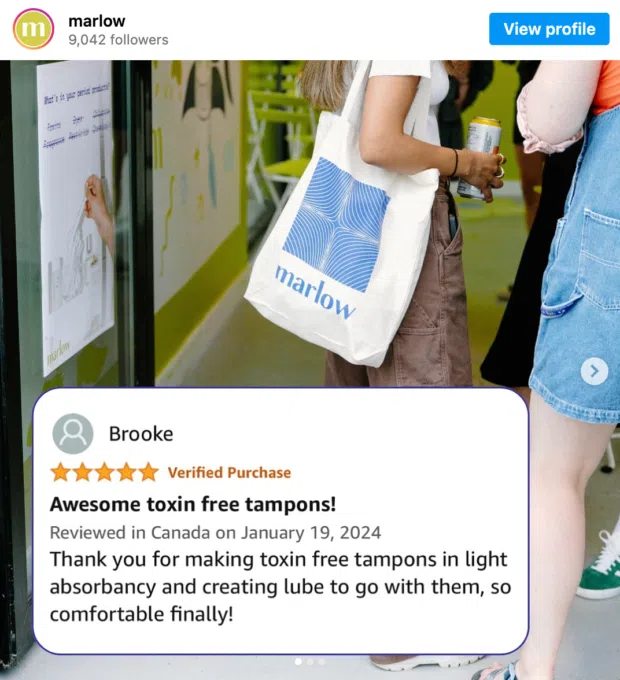
Take menstrual brand Marlow, for example. When concerns about tampons started spreading online, their team sprung into action.

Source: Marlow
They used the moment to do two important things: Reassure customers that their products were safe and spotlight positive online reviews for the ultimate stamp of approval.
The takeaway? A brand that addresses their customers’ concerns head-on can drive customer loyalty.
2. Grubhub
When food delivery became an essential lifeline during the global pandemic, concerns like driver safety, disinfection protocols, and cost were all the talk of the (virtual) town.
Grubhub used social listening to understand how they can best keep their community safe, fed, and happy.
To put hungry quarantiners at ease — and position themselves as the food delivery service among competitors — Grubhub implemented programs to help customers save money and order food safely.
As the year came to a close, Grubhub showed another side of social listening. When their “Belly Dance” ad started showing up as a meme online, the team embraced it.
They created content around the meme (garnering a record-breaking 651K engagements for the Grubhub X account) and launched the #DeliverTheRemix contest, inviting followers to help choose the next song for the ad.

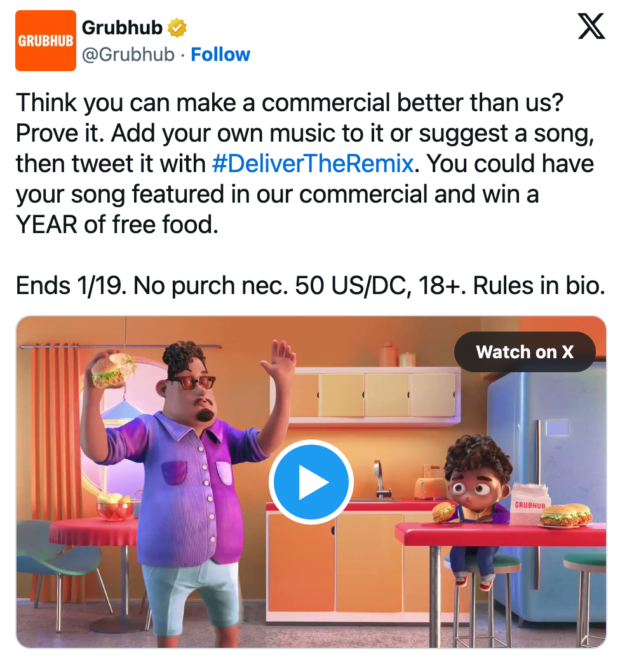
What started as mixed sentiment turned into high engagement and brand visibility, and proof that listening closely can help brands respond smarter.
3. Haus Labs
Between heavy filters and professional shoots, it’s hard to know which beauty brands are the real deal.
That’s why Haus Labs’ feed is one to watch.
The Lady Gaga brand breaks up their grid with UGC that organically boasts their makeup. Case in point: Marie-Louise’s makeup tutorial featuring various House Labs’ products.

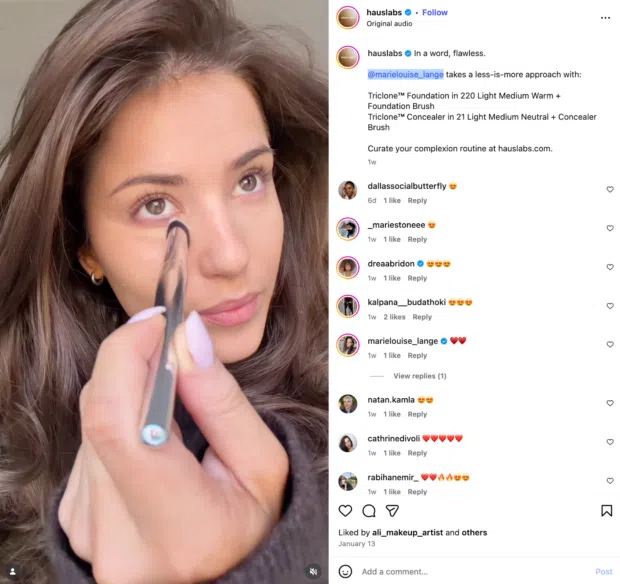
A thumbs up from a macro influencer? With the potential to develop an authentic, lasting partnership? That’s a win-win.
Pro tip 💡: Collect and share UGC across your social channels with Hootsuite. Get started.
4. HelloFresh
HelloFresh is proof that when it comes to brand advocacy, social listening is the missing ingredient.
Before, the team spent long hours manually monitoring and analyzing data, and missing important mentions where the brand was not directly tagged.
As the company grew, the meal kit provider invested in social listening to monitor the brand reputation, analyze customer feedback, and measure the performance of its marketing initiatives.


The result? Over 400% more monthly HelloFresh mentions were identified — and the social team never missed a beat, question, or complaint.
5. Spotify
You know you take social listening seriously when you have an entire X account and website dedicated to it.

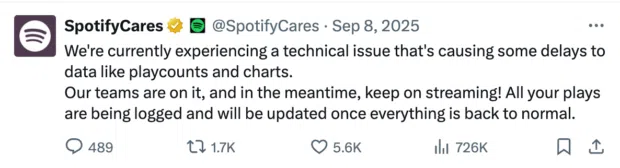
While this type of social listening allows users to come directly to them, The Spotify Cares account also monitors tagged and untagged mentions.
That way, they never miss an opportunity to offer support.
6. Cargolux
When Cargolux Airlines International used social listening to measure their latest splash — moving two beluga whales from China to Iceland alongside Sea Life — they discovered an even bigger opportunity.
By paying close attention to online conversations, the team was able to:
- Increase brand mentions by 20% across the world
- Shape their social messaging based on feedback to maximize engagement
- Increase mentions in a target market, UK, by 42%


How did they do it? As the story gained traction, Cargolux and its partners stayed closely tuned into social chatter. This helped them keep the conversation going, respond to interest, and make the most of the moment.
TL;DR: To become a brand that your customers want to shout about, you have to show that you understand them inside-out. Only then can you meet their needs, develop a strong consumer-brand relationship, and become their preferred brand.
FAQ: Social listening for customer advocacy
How can social media increase customer advocacy and brand loyalty?
Social media increases customer advocacy and brand loyalty by giving people a place to share real experiences and feel heard by brands. When companies listen, respond, and act on feedback, customers are more likely to trust them and recommend them to others.
What social media strategies drive customer advocacy?
A strong social listening strategy focuses on listening, engagement, and authenticity. Brands build advocacy by responding to customer needs, sharing user content, highlighting real stories, and showing appreciation for loyal followers.
How do brands turn customers into advocates on social media?
Brands turn customers into advocates by creating positive experiences online and acknowledging people who speak up for them. This can include replying to posts across social platforms, resharing customer content, solving problems publicly, and inviting loyal customers to take part in marketing campaigns or feedback programs.
What are examples of customer advocacy campaigns on social media?
Customer advocacy campaigns often spotlight real customers, encourage user-generated content, or invite people to take part in challenges or feedback programs. Examples include resharing customer reviews, featuring community stories, or running campaigns where customers help shape products or content.
How do you measure customer advocacy on social media?
You can measure customer advocacy on social media with a tool like Hootsuite, which tracks brand mentions, sentiment, engagement, and repeat supporters. These signals help you understand how people feel about your brand and whether they’re recommending it to others.
Discover valuable insights you can’t find anywhere else with Hootsuite Listening. Get started managing all your social profiles in one place with a free 30-day trial.