What does Facebook engagement mean?
Facebook engagement refers to how how Facebook users interact with your content through reactions, comments, shares, and clicks. It shows whether a Facebook post is relevant enough for your audience to stop scrolling and take action.
Engagement matters because Facebook’s algorithm uses these interactions to decide how widely your posts appear in the news feed. When people actively comment, share, or click, your post reach increases. When they don’t, organic reach declines, regardless of your follower count. For most brands, Facebook engagement is the main signal that determines whether content gets seen or ignored.
Engagement also gives you direct insight into what your Facebook audience cares about. If posts with original photos or short videos consistently receive more comments than professional or stock photos, that’s a clear signal to adjust your Facebook content and overall social media strategy. In other words, engagement shows which ideas connect and which ones miss.
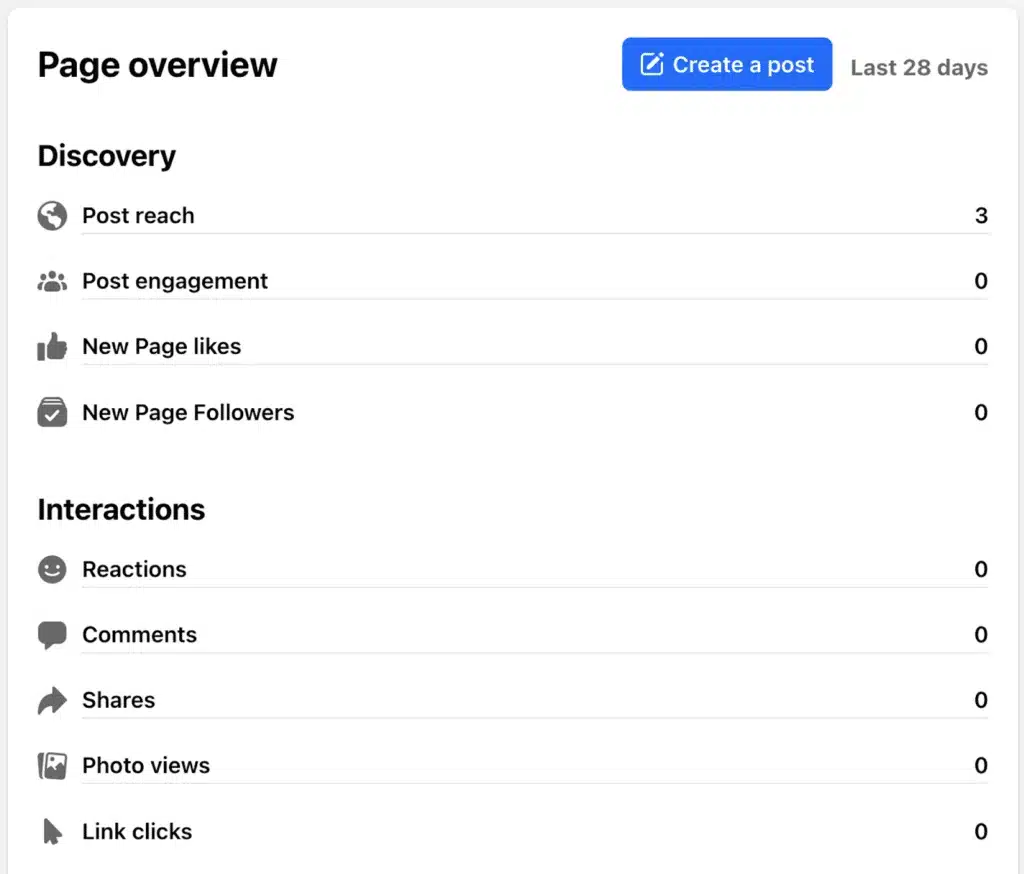

You can monitor Facebook page engagement using Facebook Insights inside Meta Business Suite or through a Facebook analytics tool that fits your workflow. These tools surface related engagement metrics such as post reach, interactions, and audience behavior, helping you understand how people respond to what you publish and where to focus next.
How to calculate your Facebook engagement rate
To calculate your Facebook engagement rate, you need two numbers from your Facebook page dashboard or your Facebook analytics tool:
- Total interactions: reactions, comments, and shares on a post
- Post reach: the total number of Facebook users who saw that post
The standard engagement rate formula looks like this:
Facebook engagement rate = (total interactions ÷ post reach) × 100
For example, if a Facebook post reached 2,000 people and received 60 interactions, the engagement rate would be 3%. This makes it easier to compare how different posts perform, even when their reach varies.
If you don’t want to calculate this manually, you can use SocialBee’s free Facebook engagement rate calculator to get the number instantly without spreadsheets or extra work.
What is a good Facebook engagement rate?
A good Facebook engagement rate depends on context. The median across industries is around 0.046%, but what matters is how your brand page compares to similar businesses and to its own past performance.
Start by comparing your engagement rate to your industry average. Some sectors, such as fashion, naturally see lower engagement. In those cases, a rate closer to 0.03% can still be competitive when measured against similar Facebook pages.
Next, compare your current results to your own 30–90 day baseline. If your Facebook page engagement is trending upward over time, your content strategy is moving in the right direction, even if you’re still near the median.
Finally, look at engagement by content type. Facebook Reels and Facebook Stories often generate more interaction than link posts, while original photos usually outperform generic stock photos. These patterns matter more than chasing a single “good” number.
What does Facebook recommend for boosting engagement?
Facebook’s own guidance on Facebook page engagement is intentionally broad. It focuses on behaviors that align with Facebook’s algorithm and encourage meaningful interactions, rather than tactical hacks. These recommendations won’t replace a full strategy for your social media posts, but they set a clear baseline for how Facebook expects a business page to behave.
Below are the best practices Facebook highlights for increasing engagement.
1. Plan what and when to post
Facebook recommends posting when your followers are most active, not when it’s most convenient for you. You can find this data in Facebook Insights, where you’ll see when your audience is online and which days and hours drive more interaction.
If your Facebook audience spans time zones, scheduling becomes essential. Posting while your audience is asleep almost guarantees lower post reach and fewer interactions, regardless of content quality.
Facebook also advises adjusting post frequency. Posting too often can suppress engagement, while posting too rarely can make your page appear inactive. The goal is moderation, guided by performance data, not guesswork.
2. Use immersive and interactive content formats
Facebook prioritizes content that keeps users active on the platform. That’s why posts with photos, videos, polls, and other interactive elements tend to perform better than text-only posts or link-heavy posts.
Facebook specifically encourages:
- Videos and photos over plain links
- Interactive elements like polls and questions
- Content that invites comments or reactions
- Facebook Stories for casual, in-the-moment updates
You don’t need professional or stock photos for this to work. Original photos and videos often feel more authentic and drive more engagement because they’re easier for users to relate to.
3. Respond and encourage conversation
Working on increasing your engagement doesn’t stop once you post content. Facebook explicitly recommends responding to comments and messages, since users are more likely to keep interacting when they see a page is active and responsive.
This includes:
- Replying to comments on your posts
- Responding to Facebook Messenger inquiries
- Acknowledging feedback, both positive and negative
These interactions signal to Facebook’s algorithm that your page is active and worth showing to more people in the news feed.
4. Build community beyond individual posts
Facebook encourages brands to think beyond single posts and focus on ongoing connections. This includes:
- Using Facebook Groups to create discussion spaces
- Hosting live sessions or events
- Encouraging followers to share their own content or experiences
Community-driven content often generates higher page engagement because it shifts the focus from broadcasting to participation.
5. Boost content that already performs well
Rather than promoting random posts, Facebook recommends boosting content that already shows strong organic engagement. If a post earns more comments, shares, or reactions than usual, paid promotion can help extend its reach to more relevant Facebook users.
This approach reduces wasted ad spend and increases the chances of getting more interaction from people likely to care.
6. Use page features that support action
Facebook highlights several built-in tools that directly support engagement and conversions:
- Page-level CTA buttons like Learn more, Contact us, or Book now
- Crossposting content from platforms like Instagram to reduce duplication
- Facebook Stories to share frequent, low-friction updates
These features are free and designed to help businesses connect, respond, and stay active without relying solely on ads.
How to increase engagement on Facebook: 10 steps
Facebook’s own recommendations are a starting point, but they don’t cover everything. To increase Facebook engagement consistently, you need a system that combines content, timing, interaction, and measurement.
Below is a practical 10-step framework for building a Facebook engagement strategy that works for most brands, especially those that already post regularly but struggle to get more interaction.
1. Optimize your Facebook page for trust, discovery, and action
Before improving individual posts, make sure your Facebook page does its job. Visitors should immediately understand what your business offers and why they should follow or engage.
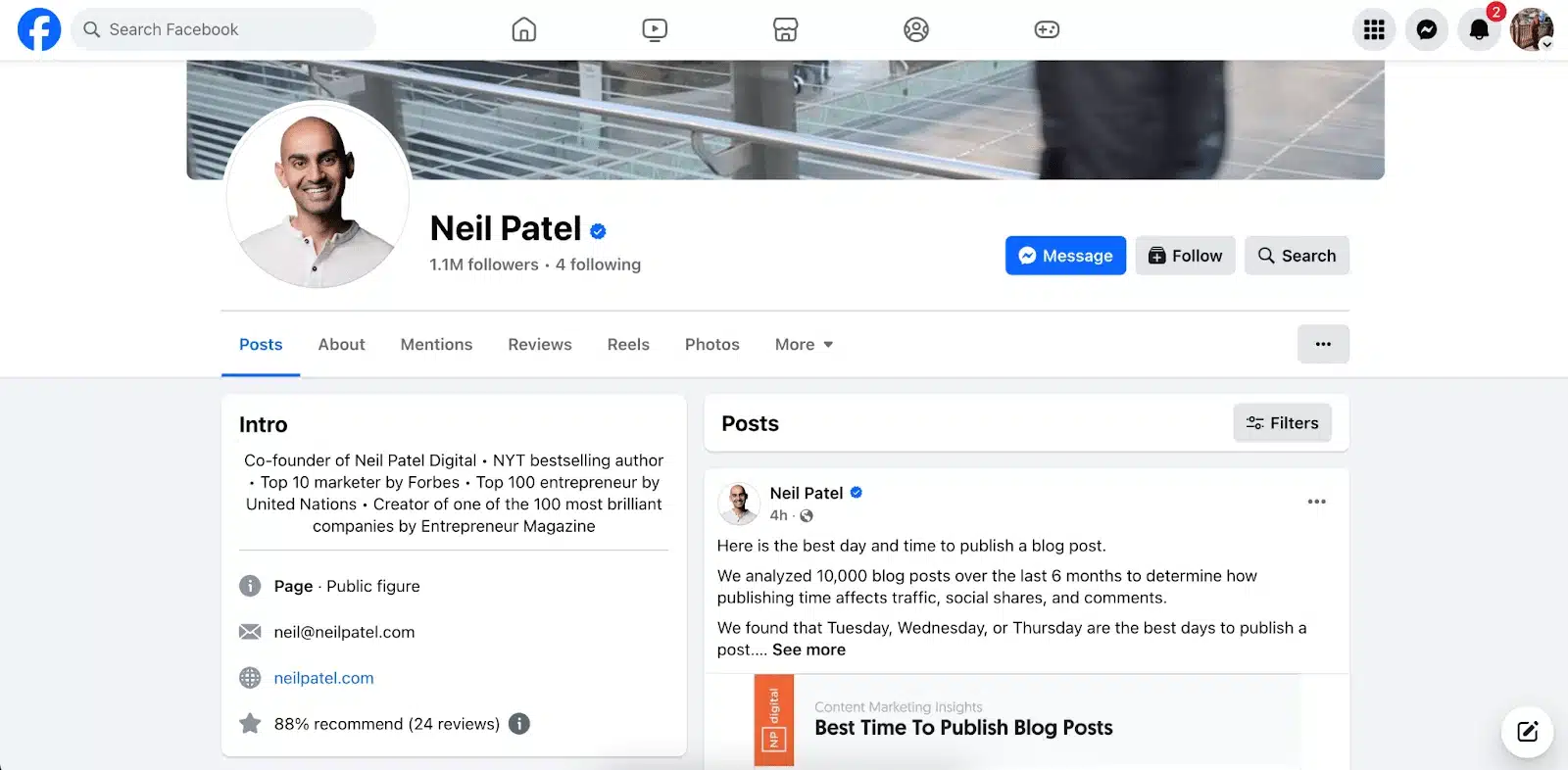

Focus on three areas:
- Trust signals: up-to-date contact details, accurate hours, fast response time, and clear branding
- Discovery signals: relevant keywords in the About section, correct category, and location or service area if applicable
- Conversion signals: a clear CTA button, a pinned post explaining what followers can expect, and one primary link you actually want clicks on
A well-optimized page improves page engagement because people are more likely to interact with content from brands that feel credible and clear.
2. Understand your Facebook audience using real data
You can’t increase engagement if you don’t know who you’re posting for. Use Facebook Insights or your Facebook analytics tool to understand:
- Audience demographics like age and gender distribution
- Top cities and countries
- When your audience is most active
- Which posts and formats get the most interactions
Turn audience insights into decisions. If your audience skews older, prioritize clear captions and informative video content. If most followers are local, publish community-focused posts and local updates. Engagement improves when content matches audience context.
3. Create posts people can respond to
Engaging content gives people something to react to, not just something to read. Posts perform better when they invite a response.
Examples of post formats that drive interaction:
- Questions based on real customer experiences
- Short videos that explain one useful idea
- Before-and-after photos with context
- Opinion prompts related to your industry
- Behind-the-scenes content using original photos
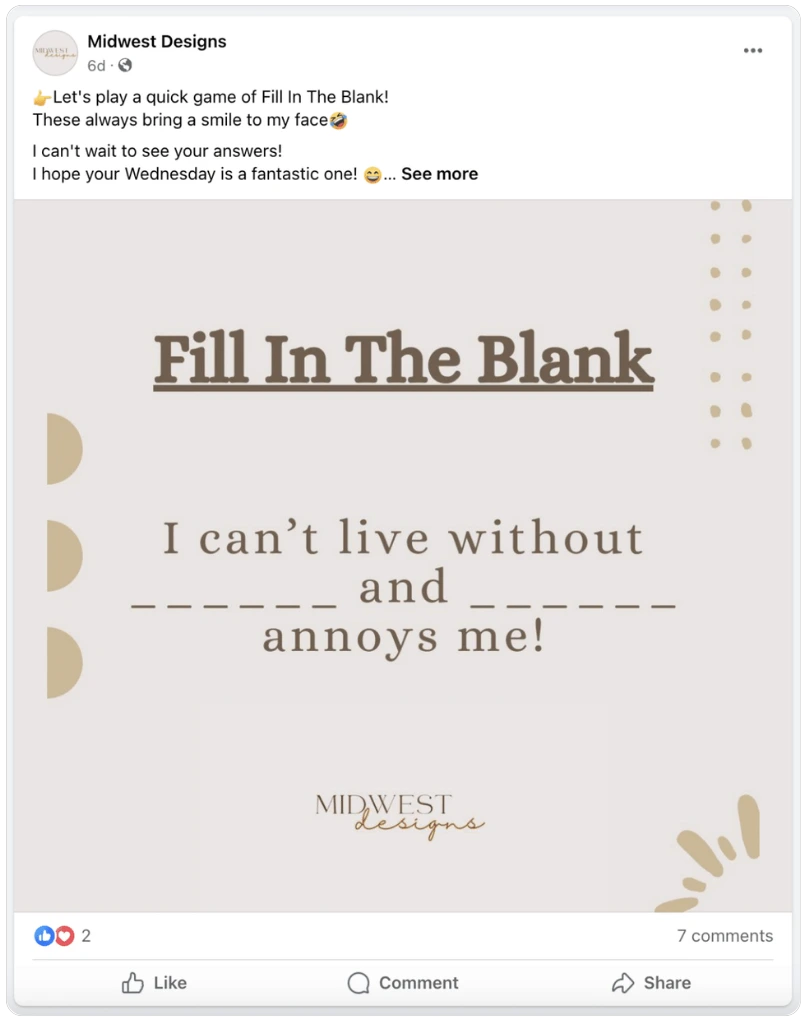

In general, video and photo posts outperform link posts, especially when they keep users on the platform. Content resonates more when it’s relevant, timely, and easy to engage with.