
5 social media post ideas for ecommerce
These post formats show up repeatedly across social media platforms because they’re easy to produce, easy to recognize, and easy for audiences to engage with. You’ll see them used by large brands and small ecommerce teams alike.
1. Product inspiration without a hard sell
Some brands use social media to inspire, not convert immediately. Posts like IKEA’s focus on ideas and aesthetics rather than individual products or prices.
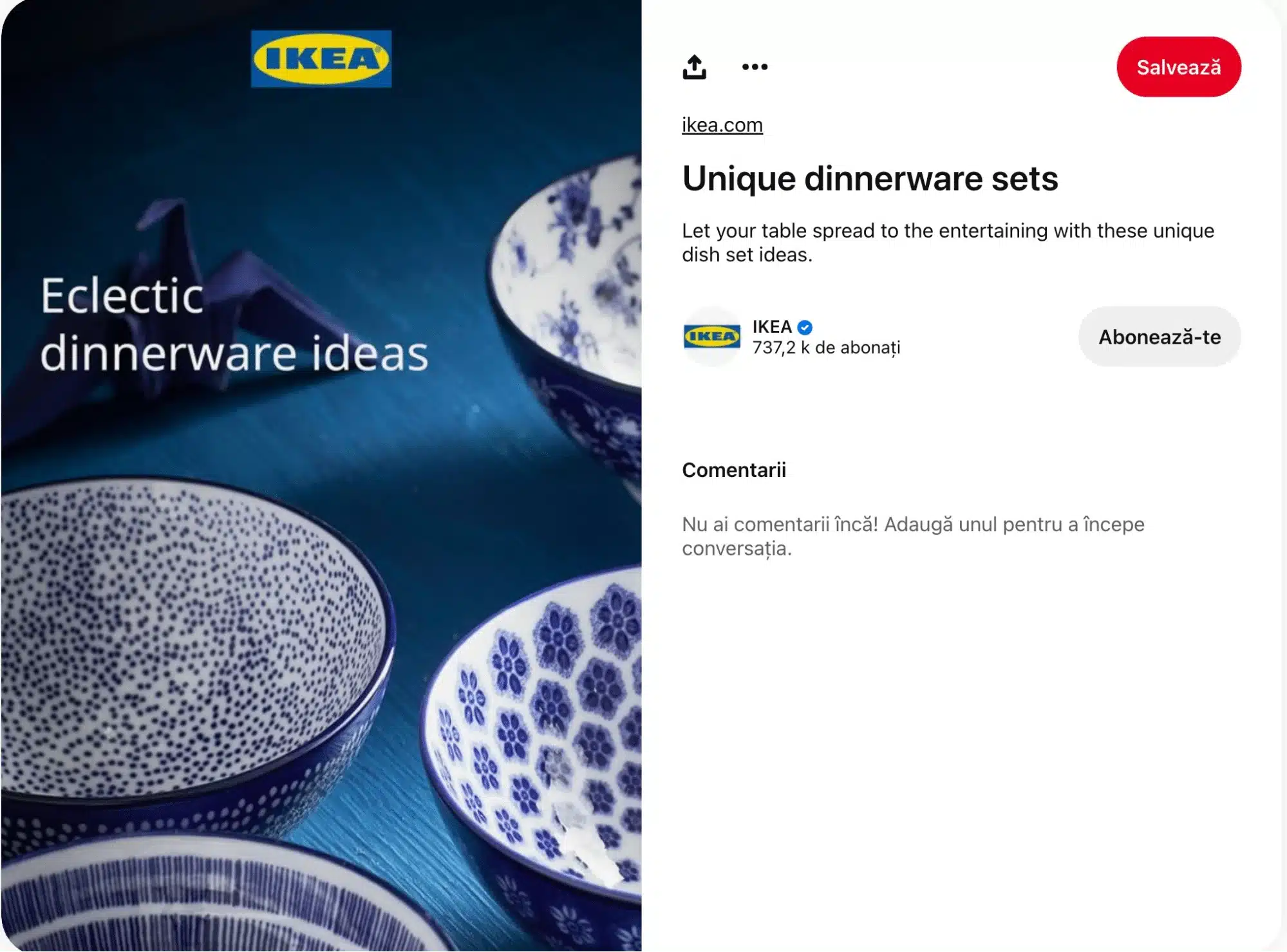

This usually takes the form of:
- A single image or carousel built around a theme
- Minimal copy
- A soft link back to a broader product category
It works well for early-stage browsing and saving behavior.
2. Text-led posts that rely on brand voice
Text-first posts are still common on platforms like X. Brands like Innocent use humor and tone to keep attention while still mentioning the product.


These posts typically:
- Read like native platform content, not ads
- Mention the product briefly rather than leading with it
- Reinforce brand personality more than features
This format supports long-term familiarity rather than immediate conversion.
3. Creator-style product mentions in short videos
Short-form videos where a creator talks directly to the camera are widely used in ecommerce, especially in beauty and fashion.


These videos usually:
- Focus on one product or comparison
- Use informal, unscripted language
- Let the product appear naturally in the frame
They’re commonly reused across organic posts and paid campaigns.
4. Question-led Stories that surface objections
Q&A Stories are a simple way to gather and address questions publicly. Many ecommerce brands use them before launches or during promotions.


This format often includes:
- A question sticker
- Short follow-up answers
- Occasional product references when relevant
It helps clarify details without turning Stories into sales slides.
5. Familiar social formats applied to product discovery
Some brands adapt familiar social interactions, like swiping or revealing content, to introduce products.


This usually looks like:
- A carousel or Story sequence
- A delayed product reveal
- Minimal copy guiding the interaction
The goal is to keep users engaged long enough to notice the product.
3 examples of social media ecommerce done right
1. Djerf Avenue
Djerf Avenue’s social media strategy is closely tied to its founder, Matilda Djerf, who already has a strong presence as an influencer. Instead of separating personal influence from brand promotion, the brand uses it as a foundation for visibility and trust.
Across platforms, the content follows a consistent soft, feminine aesthetic built around pastel colors, clean styling, and calm visuals. The posts rarely push individual products in isolation. Instead, they present a lifestyle that the audience can relate to and aspire to, with the clothing positioned as a natural part of that everyday look.
Instagram and TikTok are the primary drivers of product exposure. On both platforms, content focuses on outfits in motion, daily routines, and behind-the-scenes moments rather than traditional promotional posts. This makes product discovery feel organic and reduces friction in the buying process, especially for younger consumers who expect brands to blend into their feeds.
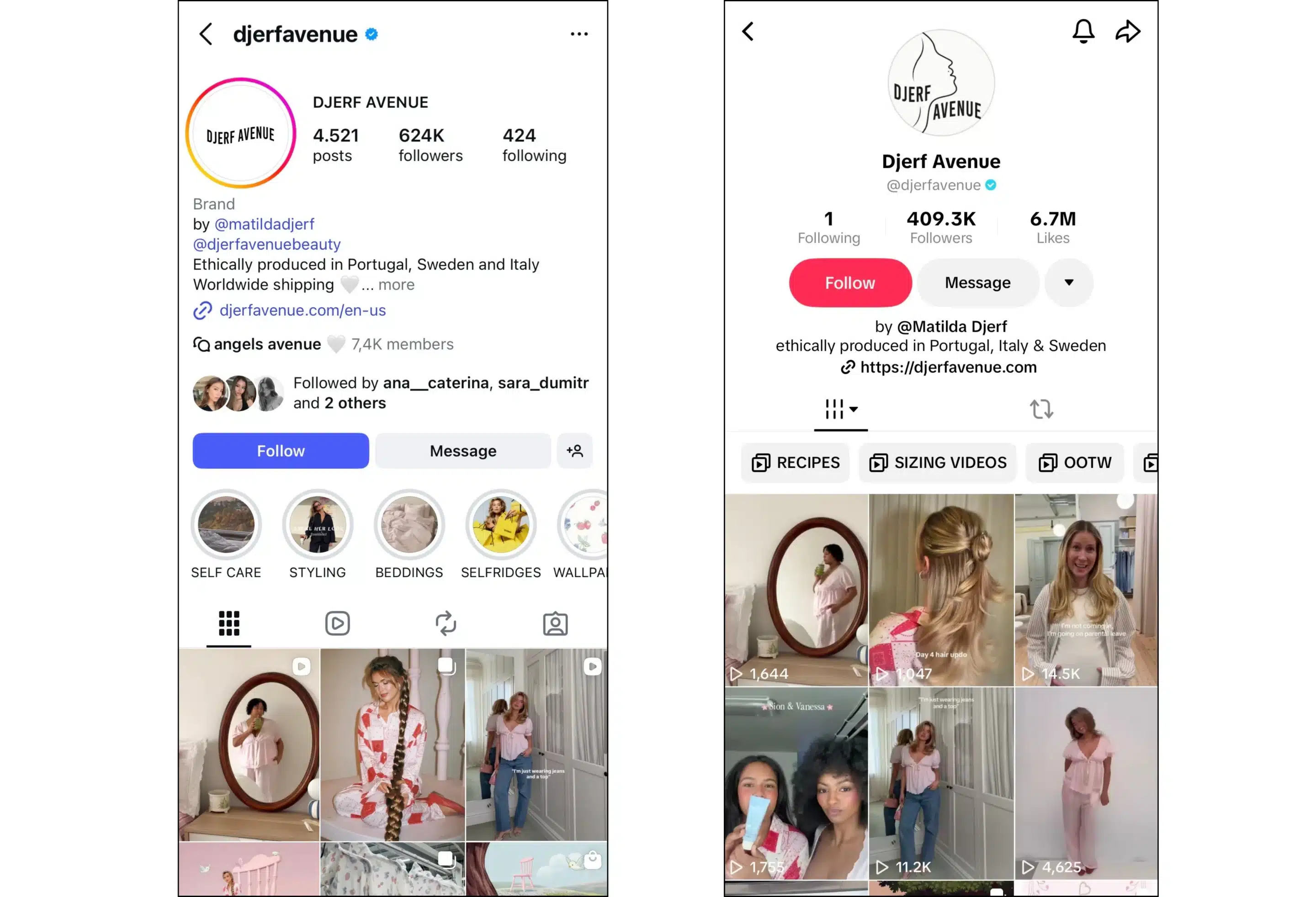

Pinterest plays a supporting role. Because the brand leans heavily into inspiration, Pinterest works as a long-term discovery channel where outfits, textures, and moods live beyond a single post’s lifespan.


YouTube exists mainly as an extension, with limited Shorts content, but it’s not a core traffic or sales channel for the brand.
2. Mejuri
On Instagram, Mejuri shares a mix of product-focused images and lifestyle shots featuring well-known figures. Pieces are often shown worn by actresses, athletes, or influencers such as Brittany Snow, Emma Chamberlain, or Emma Navarro. This approach adds social proof while helping potential customers imagine how the jewelry fits into different lifestyles, from casual to formal.


Facebook plays a more informational role. The brand uses it to communicate store openings, in-person events, and brand updates rather than product discovery. This supports trust and keeps existing customers informed without duplicating Instagram content.


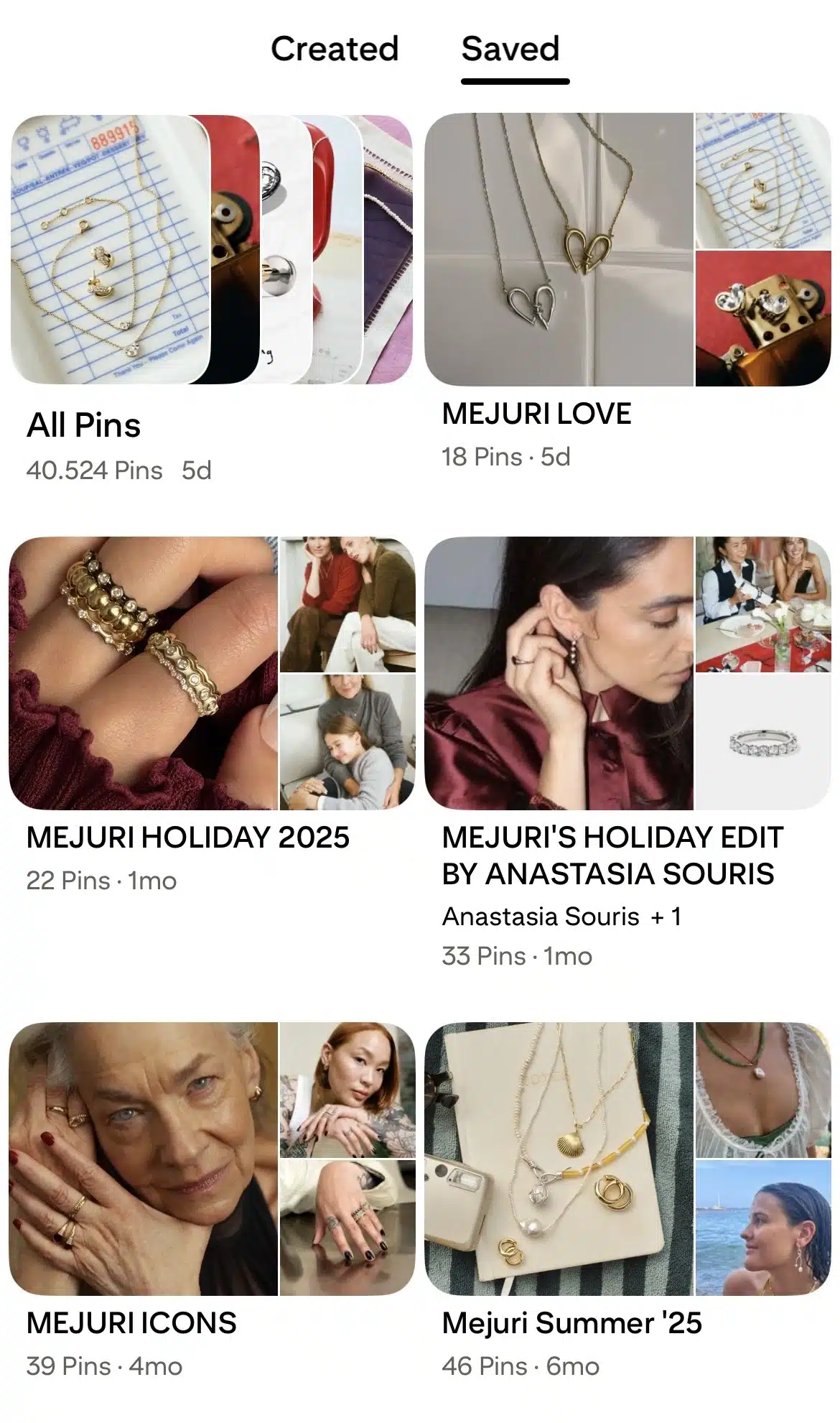
Pinterest functions as a visual catalog. Boards are organized around different jewelry collections, making it easier for users to browse, save, and return when they’re ready to purchase. This supports longer consideration cycles, which are common for higher-value products like fine jewelry.

Mejuri previously maintained a presence on X, but the account has been inactive for several years. The brand’s current strategy is clearly focused on visual platforms that support inspiration and product discovery rather than real-time conversation.
3. The Ordinary
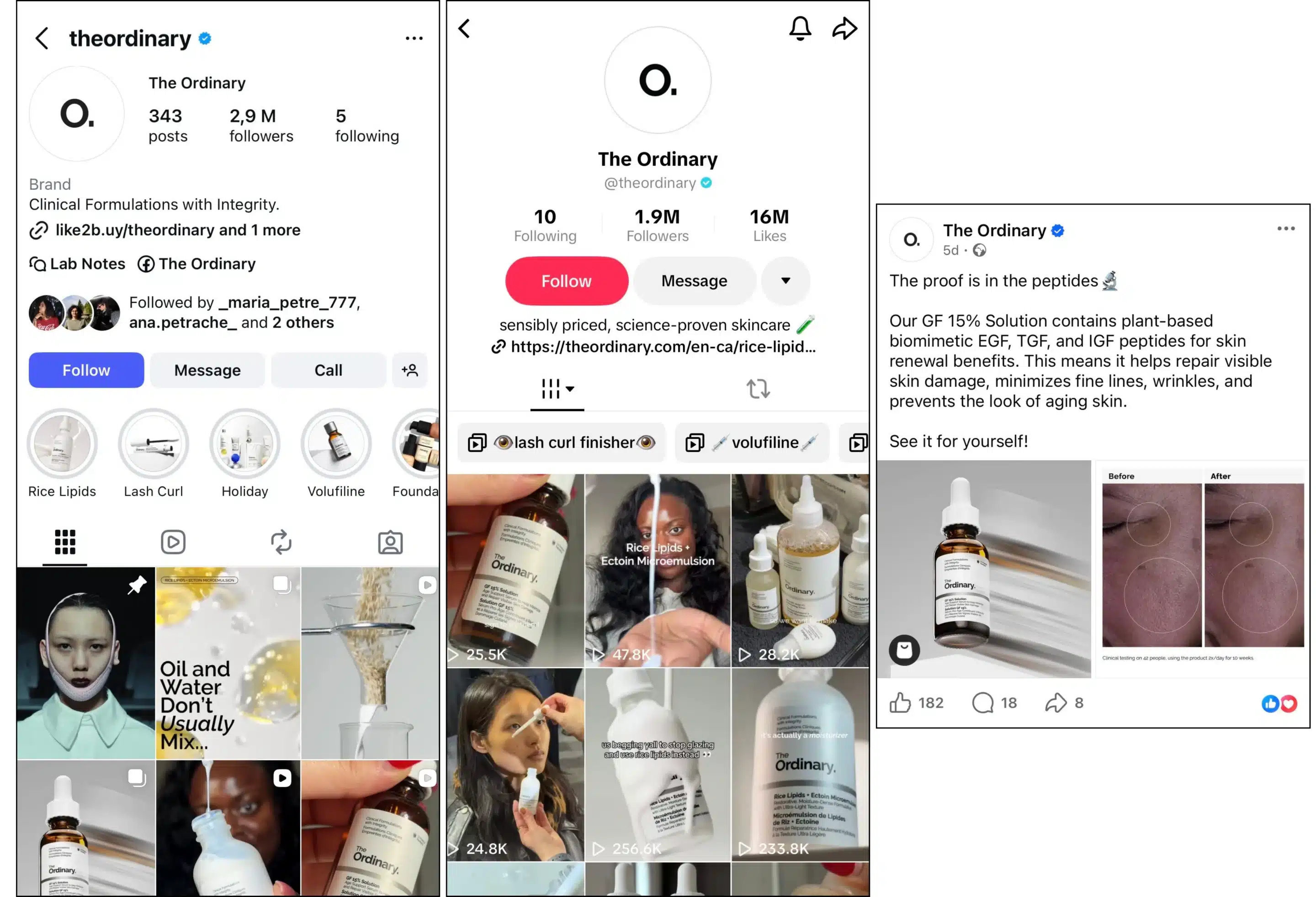
The Ordinary takes a very different approach to social media ecommerce by removing lifestyle aspiration almost entirely. Instead, the brand focuses on clarity, consistency, and a pharmaceutical-style visual language that mirrors how its products are formulated and positioned.
Across platforms, the aesthetic is clean and restrained. Posts rely on close-ups of products, ingredient callouts, and simple demonstrations of how formulas are used. The brand frequently references scientific cues, including the periodic table of elements, to reinforce credibility and make the content feel clinical rather than cosmetic.
Instagram, Facebook, and TikTok are used to distribute this core visual system. Content across these social media platforms is highly consistent, whether it’s a short video showing texture and application or a static post highlighting a specific ingredient and its purpose. This repetition helps social media users quickly understand what each product does and who it’s for.
YouTube plays a more educational role. The Ordinary uses it for product ads and longer informational videos, often featuring people in lab coats and lab-style environments. These videos reinforce the brand’s scientific positioning and support higher-consideration purchase decisions by explaining formulations in straightforward terms.
Frequently asked questions
1. How does social media influence ecommerce purchase decisions?
Social media influences ecommerce purchase decisions by shaping trust, familiarity, and product understanding before a customer visits an online store. Through creator content, reviews, comments, and repeated exposure, social media reduces uncertainty and helps people feel confident choosing one product over another. For many online shoppers, social media is where comparison and validation happen, even if the final purchase happens later.
2. Is social media ecommerce effective without paid ads?
Yes, social media ecommerce can be effective without paid ads, but it requires consistency and strong content signals. Organic content like user generated content, influencer posts, and educational videos supports product discovery and builds social proof over time. Paid campaigns can accelerate results, but organic social media efforts often play a key role in nurturing interest and supporting long-term ecommerce sales.
3. What is the difference between social media ecommerce and social commerce?
Social media ecommerce refers to using social media platforms to promote products and drive traffic to an ecommerce site, where the purchase happens off-platform. Social commerce goes a step further by enabling direct purchases within social media apps through features like shoppable posts, in-app checkout, and native product catalogs.
Improve your ecommerce social media efforts
At this point, the picture should be clear: social media for ecommerce is about choosing the platforms that matter, using content that supports real buying behavior, and paying attention to what actually moves people closer to a purchase.
Where most ecommerce teams struggle is not strategy, but follow-through. Planning posts, keeping schedules consistent, responding to customers, and checking performance across platforms takes time and attention that’s hard to maintain manually.
If managing those day-to-day tasks is what slows you down, SocialBee helps you keep everything in one place. You can plan and schedule content across social media platforms, manage comments and messages, and review performance without switching tools.
Start your 14-day free trial with SocialBee and see whether a more organized workflow makes social media easier to sustain for your ecommerce business.