The About Us page isn’t just a throwaway section of your website—it’s a powerful opportunity to connect with your audience, build trust, and differentiate your small business.
Data shows that as many as 65% of all website visitors will click on a business’s About page, often looking for business information (e.g., hours of operation, address, etc.) or more context on the business (e.g., the origin story, founder info, etc.). An About page is also a top source for AI referral traffic.
Whether you’re starting from scratch or refreshing an outdated About Us page on your website, we’ll walk you through the best practices and how-to steps and share an easy template for writing a slam-dunk About page.
Contents
What is an About Us page?
Before we get into the nuts and bolts, let’s be clear about what an About page is. An About Us page is a section on a website where a business introduces itself to visitors.
Higher Ground Lawn Care & Lighting’s site includes all the elements of a great About Us page.
The About page is a great place to tell the story behind the company, introduce team members, share values and/or your brand mission, and ultimately, build a connection with potential customers. As you’ll see in the examples below, About Us pages help businesses create a deeper connection with online visitors (and can even help bring customers in-store).
🎉 Need help articulating what makes your business special? Get the guide >> How to Create a Unique Value Proposition From the Ground Up
How to write an About Us page for your business
When you’re ready to start drafting (or refreshing) your website’s About page, a step-by-step approach will help you cover all the important bases. Here’s how to tackle it.
1. Start with your “why”
People want to know the story behind your business. This is where you explain your “why.”
- Why did you start it?
- What problems are you solving?
- What are you hoping to accomplish with your vision for this brand?
Start by writing two or three sentences explaining what inspired you to start your business. Don’t overthink it, just be honest and authentic. This is your chance to be relatable.
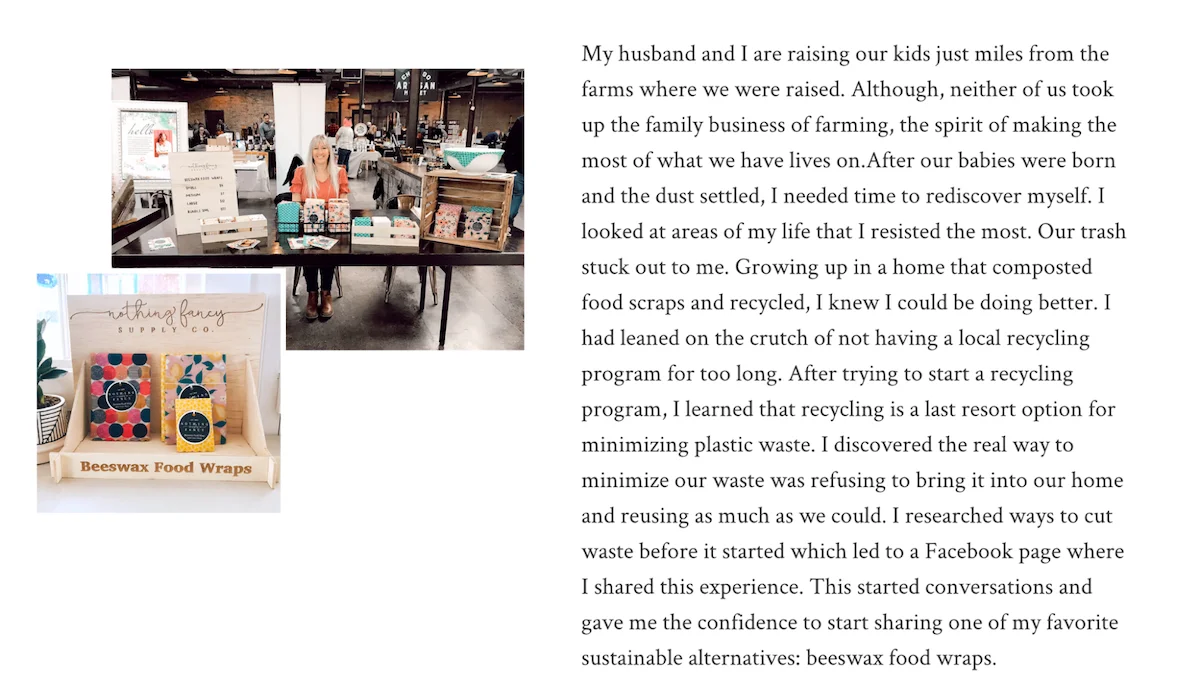

Nothing Fancy Supply’s About page.
2. Introduce the people behind the business
Small businesses thrive on personal connections, and sharing who’s behind the scenes builds trust. Give a bit of background on yourself, your past work experience, and the expertise you’ve cultivated that makes you (and your team) uniquely well-positioned to run your business.
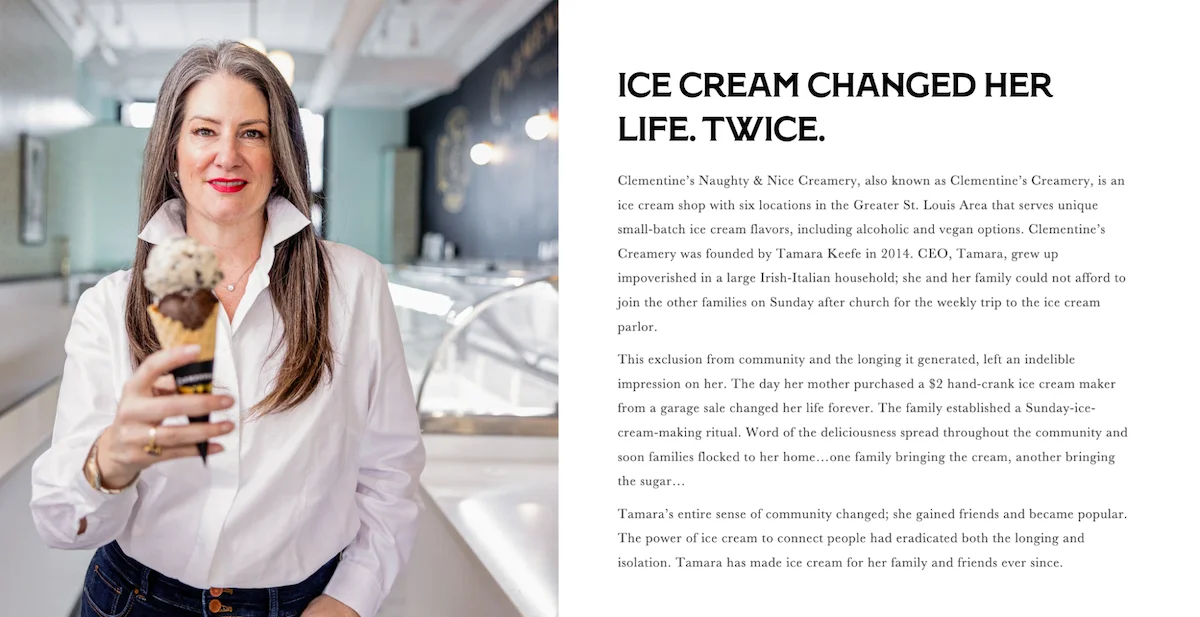

Clementine’s Creamery’s About page.
Include names, photos, and short bios of founders or team members. Don’t be afraid to show some personality, too. This is an ideal place for storytelling and writing in your unique voice.
3. Outline what you do and who your target audience is
Visitors should know exactly what your business offers and who your ideal customer is by the time they scan through your About page. Sure, visitors probably have a vague idea of this if they’re on your website, but this is an environment where you can get more specific.
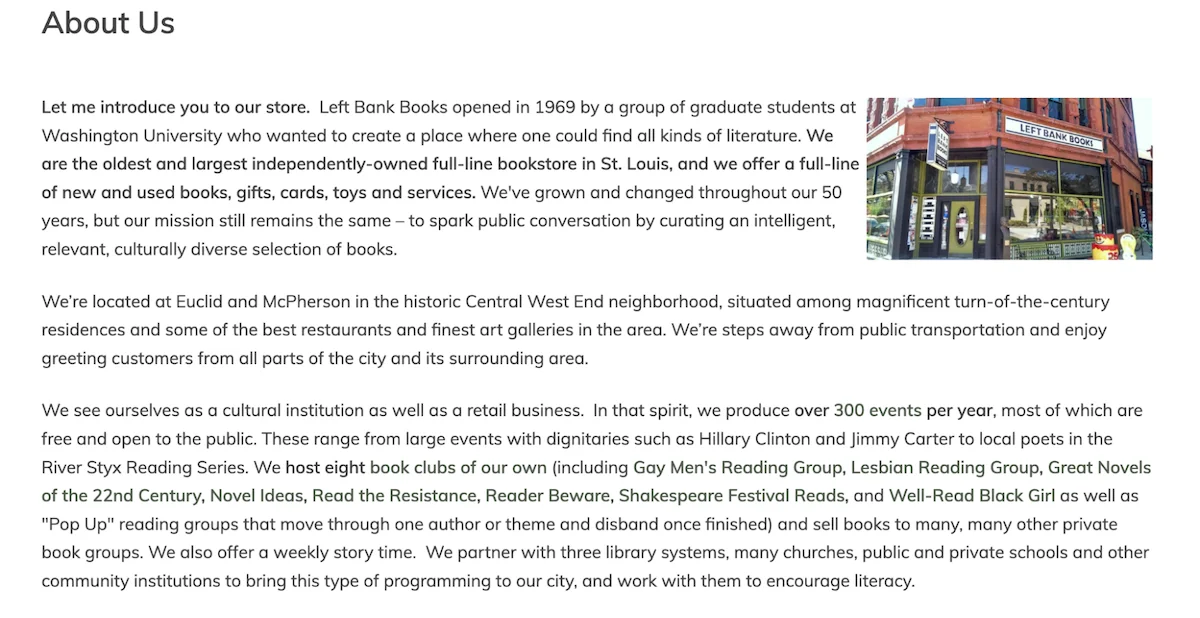

The Left Bank Books About page.
Avoid industry jargon and keep it customer-focused, explaining what you sell or offer and to whom. Doing so helps visitors understand they’re in the right place and that your small business is here for shoppers just like them.
🕵️♀️ Want to understand who you should be targeting with your marketing? Download the guide >> How to Find Your Target Audience [Simple Steps!]
4. Showcase your values
Research shows 82% of today’s consumers want to support businesses whose values align with their own. Building on the last step, be sure to drive home the mission and values behind your business so that visitors know you’re on the same page with them.
Keep it real and avoid vague statements like “we care about quality.” Instead, talk about what you believe in and why it’s important to you, like St. Louis boutique Golden Gems did below.
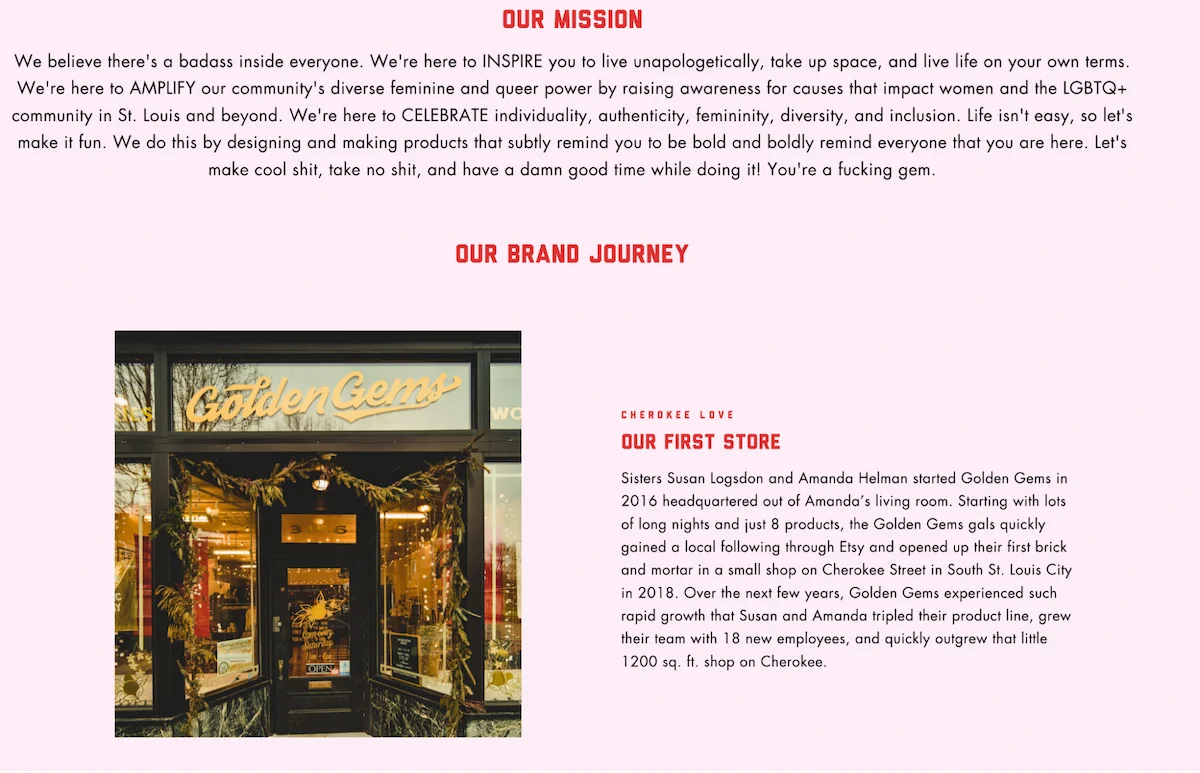

The Golden Gems About page.
5. Give visitors a next step
Include a call to action on your About page to ensure it isn’t a dead end on your website. Whether it’s “Join our newsletter,” “Schedule an appointment,” or “Follow us on Instagram,” make the next step clear.
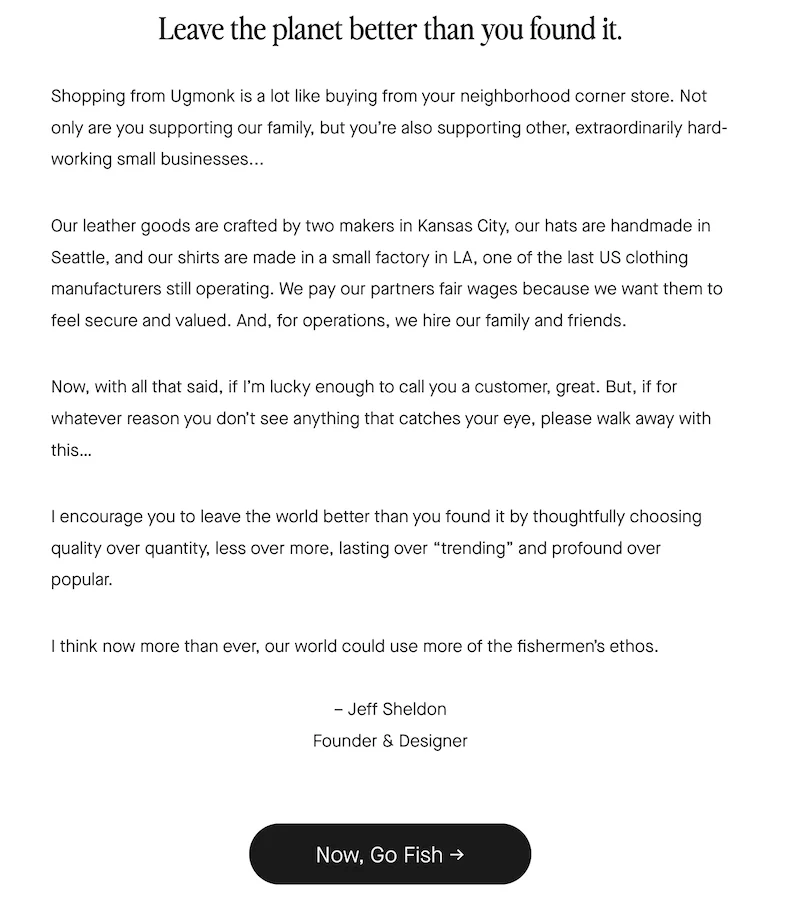

Ugmonk’s About page.
You can also include your contact information here, or a form allowing visitors to contact you if they have questions.
📚 Free guide download >> The 42 Best Call to Action Phrases Ever (& Why They Work)
Other best practices for business About pages
As you wrap up your first draft of your About page, do a quick review to ensure you’ve covered some general best practices.
- Keep it concise. Strive to stay under 1,000 words—enough to tell your story but not a novel.
- Write like you speak. Use a conversational tone that reflects how you’d talk to a customer in real life. If you struggle with this, record and transcribe a voice note to see how your tone comes across there.
- Update it regularly. As your business grows, revisit your About page to keep it current.
- Optimize for search. Sprinkle in a few keywords naturally (like your business type and location) to help with SEO.
- Use social proof. If you have testimonials, awards, or press mentions, include them.
About us page template
We put together a handy template to help you write a great About page. Use it as a guide to make sure you’re hitting all the right marks.
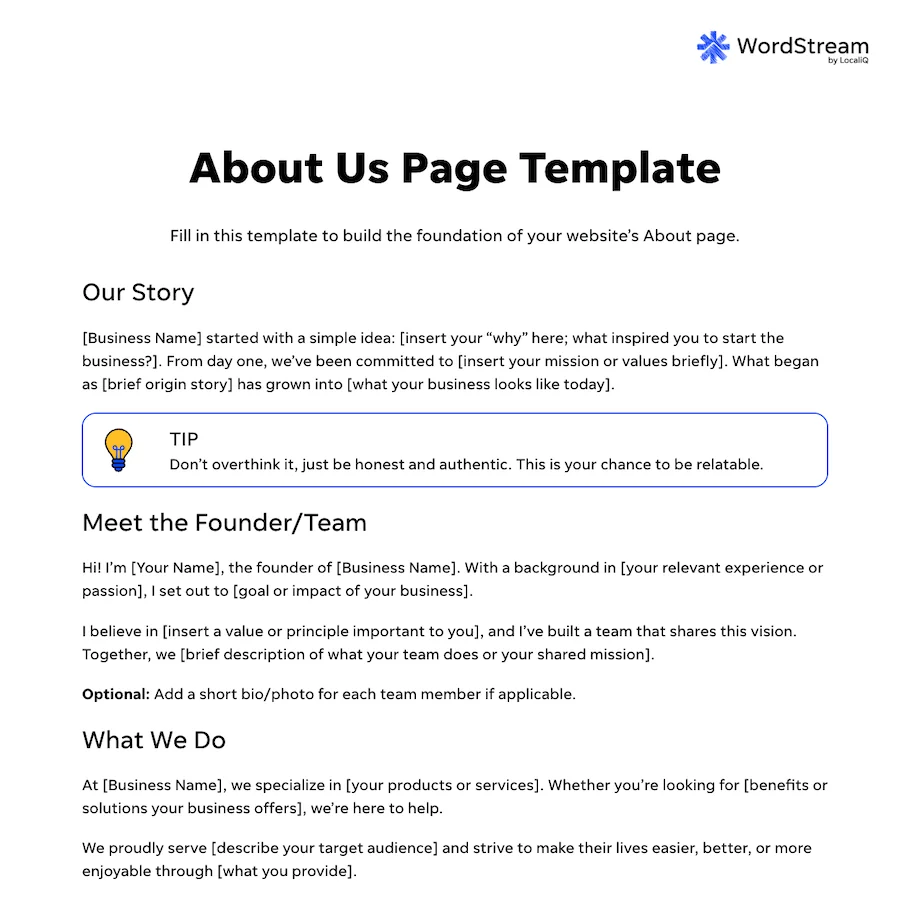

Make a copy
Write your business About Us page like a pro
A well-crafted About page builds a bridge between your business and the people you want to reach. By sharing your story, sharing a bit about the folks behind the scenes, highlighting your values, and guiding visitors toward their next step, you turn a static web page into a powerful tool for connection and conversion.
Use the tips and template we’ve covered to create an About Us page that feels authentic, informative, and uniquely yours. Remember, it’s often one of the most visited pages on your website, so make it count.