




A little more than a year ago, I wrote a piece that got me in trouble — saying that gaming laptops are going to move away from dedicated Nvidia GPUs and toward integrated graphics. Throughout 2025, we saw a couple of experiments, but at CES 2026, the floodgates have opened.
Tom’s Guide at CES
Follow all of our CES 2026 live coverage for the biggest gadget news straight from Las Vegas. And be sure to follow Tom’s Guide on TikTok for the coolest videos from the show.
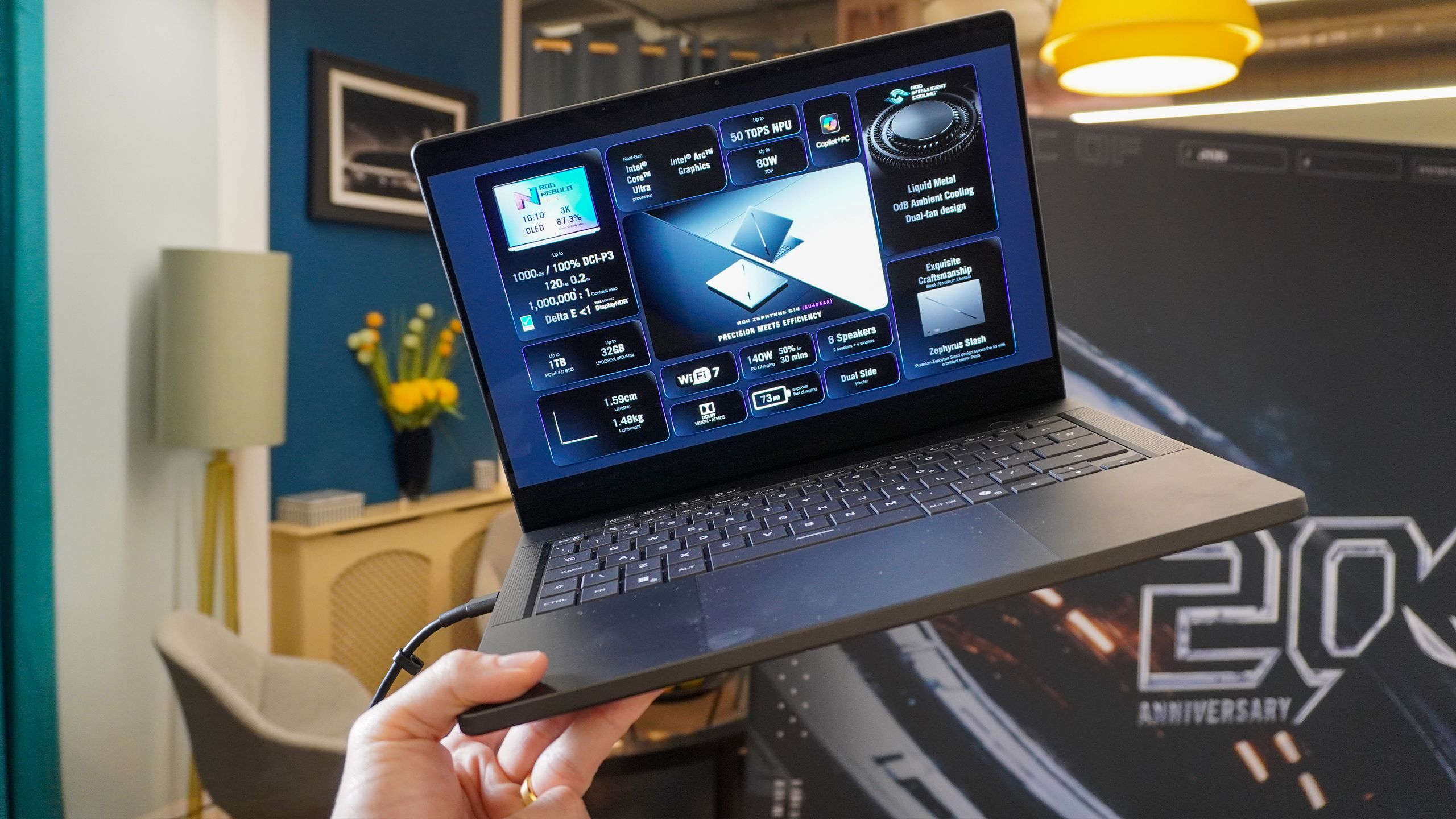
But after fixing the issue and promptly taking it down, Asus told us that this system has been postponed due to “supply issues.”
This was going to be my vindication moment for writing that opinion piece over a year ago. Given the performance you’ll see with them from my testing of this beefed-up Panther Lake chip (and most importantly the power efficiency), this could have been the future of gaming laptops.
But yet, we’re right back to the pesky issue nobody wants to talk about but is very real — possible supply chain issues. And it’s not just Asus feeling it.
Rogging it up


On the surface, nothing had changed. This is the same premium aluminum body that feels great to the touch, the same gorgeous OLED display up top, and the same impressively lightweight construction with attention paid to the ergonomics thanks to a top-notch keyboard and touchpad.
The real difference lay beneath, courtesy of that Intel Core Ultra X9 388H chipset — the beefiest Panther Lake silicon of the bunch that comes with the fully-featured 12-core Arc B390 GPU built onto the chip.
Beyond being a monster for gaming with ray tracing cores to boot, it’s also mighty for AI performance, and you know what that means for gaming — resolution scaling and frame generation.
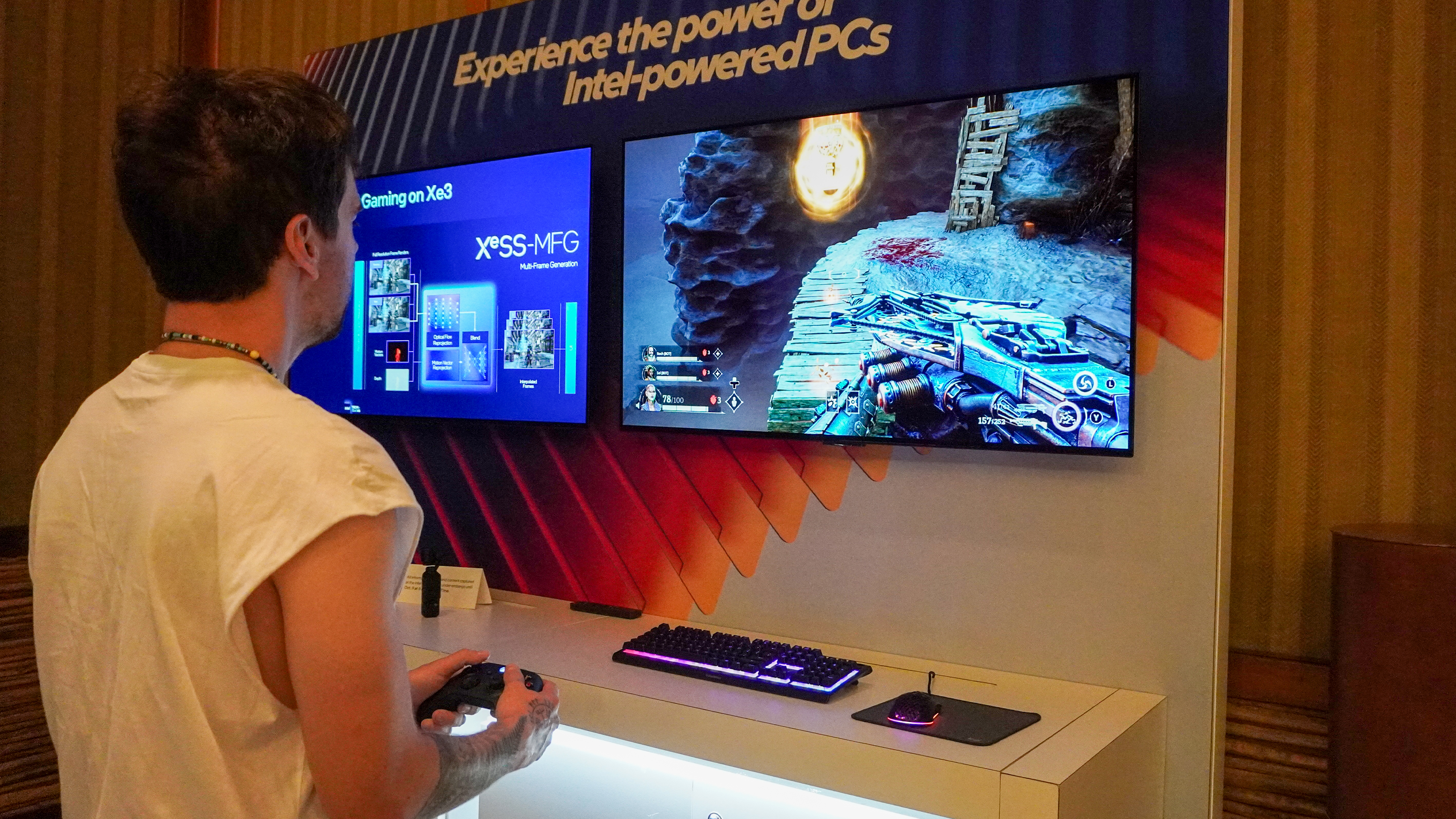
XeSS tech has gotten a tasty upgrade with multi-frame generation and those GPU cores promise a 1.5x uplift in gaming performance, which is Intel being “conservative” in their own words.
In the tests I saw of this Panther Lake chip, Painkiller ran at 220 FPS at 1080p high settings, and Dying Light 2 at 140 FPS. And what’s more, this is all just with 45W of power, which is a far cry of the 125W you’d need to run a dedicated Nvidia GPU.
Don’t get me wrong — you’ll get much better performance out of a dedicated graphics card, but with something similar to slightly older dedicated GPUs in leaked benchmarks with only a fraction of the power demand, this is a far better balance between frames and power efficiency. Simply put, you can game well and game long.
A problem is brewing
Ever since hearing this news, we’ve been talking to other companies that have just announced new laptops sporting Intel Core Ultra Series 3 chips. While there doesn’t seem to be any concerns about the standard H chips, the moment I mention any chip with an X in the name, worries started brewing.
Team Blue’s made a chip that’s so good, everyone wants it, and the demand seems to be outstripping supply. Luckily, this just led to a postponement of the ROG Zephyrus G14, but fingers crossed it becomes a reality.
Because I’m willing to place a bet here (to whoever the lucky editor is looking through my copy), I’m confident that this could very well take a spot on our best gaming laptops list based on my time with it. Watch this space!


Follow Tom’s Guide on Google News and add us as a preferred source to get our up-to-date news, analysis, and reviews in your feeds.
More from Tom’s Guide


Back to Gaming Laptops


