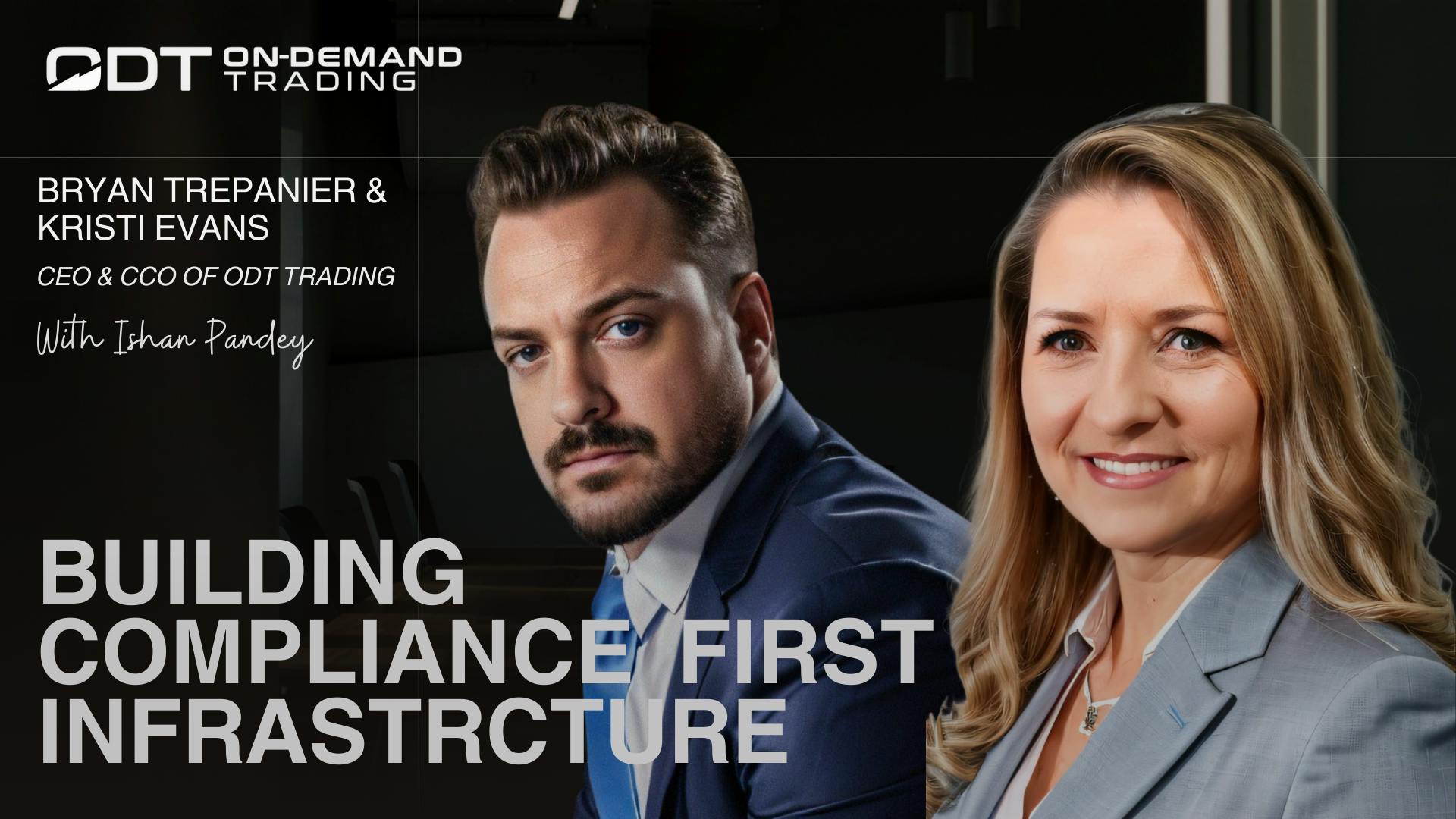
In an industry often criticized for regulatory opacity, ODT Trade Desk is charting a different course. Under the leadership of Chief Compliance Officer, Kristi Evans, the crypto trade desk has built a reputation for proactive compliance and sophisticated fraud prevention, going well beyond minimum regulatory requirements.
With nearly two decades of experience spanning federal regulatory agencies and the evolving crypto landscape, Kristi brings a unique perspective on how digital asset platforms can build trust while fostering innovation. In this conversation, she shares insights on ODT’s anti-fraud architecture, the real-world challenges of crypto compliance, and why regulatory leadership starts at the executive level.
Ishan Pandey: Hi Rodrigo, welcome to our “Behind the Startup” series. We’re thrilled to have you with us today to delve into the fascinating world of ODT Trade Desk. To kick things off, could you share a bit about your personal and professional journey, the experiences that shaped you, and ultimately, what inspired you to embark on the challenging yet rewarding path of building ODT Trade Desk? We’re eager to hear the story behind the vision and the problem your company solves for its customers.
Bryan Trepanier: My journey into crypto started long before ODT existed, back when the industry was still largely misunderstood and definitely underserved. I came from the lending, insurance and fintech world, where processes were structured, compliance was clear, and client expectations were sky-high.
When I stepped into crypto, I saw the exact opposite, clients were wiring large sums of money into opaque platforms, getting no guidance, inconsistent settlement times, little to no guardrails and in many cases, zero support.
The lightbulb moment for me came when I realized there was a massive gap between how sophisticated the crypto markets were becoming and how poor the service layer was around them. Clients needed a desk that operated with the professionalism of a private bank, the transparency of a regulated MSB, and the efficiency of a top-tier trading desk. No excuses, no gimmicks, no “wait 5 days for your withdrawal.”
ODT was built to solve the problems I saw over and over:
• no white-glove experience
• no real compliance infrastructure
• no front-line fraud or scam mitigation procedure
• no hands-on guidance for first-time buyers
• no safe on-ramp for high-value crypto transactions
Today, ODT is the result of that vision, a desk where clients can trade confidently, settle same-day, and know they’re dealing with a team that cares about security as much as speed. Building this company was less about starting a business and more about fixing a broken part of the industry.
Ishan Pandey: Hi Kristi, welcome to our series. You’ve worked across traditional finance regulation with the OCC, CFPB, and NYDFS, and now lead compliance at a crypto trade desk. What fundamental differences have you observed in how fraud manifests in crypto versus traditional banking?
Kristi Evans: Fraud in both crypto and traditional banking is rooted in similar principles—such as exploiting trust and system vulnerabilities but the way it manifests differs significantly due to variations in technology, regulation, and user behavior. Key distinctions include:
Nature of Assets and Transactions:
In crypto, assets are digital, decentralized, and often pseudonymous. Transactions are irreversible once recorded on the blockchain. In contrast, traditional banking deals with fiat currency in a centralized system, where transactions can typically be reversed or disputed.
Regulatory Environment:
Crypto operates under fragmented and evolving regulations, with many exchanges functioning globally without consistent compliance standards, creating opportunities for fraudsters. Traditional banking, on the other hand, is highly regulated, enforcing strict KYC, AML, and fraud detection measures through government and central banking authorities.
Speed and Scale:
Fraud in crypto can occur at lightning speed, as transactions settle instantly and globally. Traditional banking processes are slower, allowing centralized oversight and intervention. Recovery is often possible in banking, whereas in crypto, stolen funds are nearly impossible to reclaim due to irreversible transactions and cross-border anonymity.
Ishan Pandey: Could you please provide an in-depth overview of ODT Trade Desk’s operational length to our readers? Specifically, we’d appreciate it if you could elaborate on the trading volume the desk handles, your diverse client base, including the types of institutions and individuals that actively participate on your platform.
Bryan Trepanier: ODT has grown significantly since launch, and the trajectory has been incredible. We now process seven-figure monthly trading volumes consistently, with certain months surpassing that even further depending on market conditions.
Our client base is intentionally diverse. We support:
• high-net-worth individuals & family offices
• crypto-naive newcomers who want guided, safe & secure compliant onboarding
• businesses purchasing digital assets for operational or treasury needs
One of our key differentiators is that we don’t operate like a retail exchange. Every client gets a private-desk experience—real humans, real communication, and real accountability. That matters when someone is wiring $500, $50K, $500K, or $5M. They’re not looking for a “platform.” They’re looking for a partner who has their back, understands risk, and executes flawlessly.
Ishan Pandey: ODT’s approach to providing digital assets OTC service and compliance with laws is described as “going above and beyond.” Can you walk us through a specific example of where ODT exceeds baseline trading standards and regulatory requirements, and what drove that decision?
Bryan Trepanier: A clear example is how we handle wallet creation and whitelisting, which most OTC desks completely ignore. Many platforms simply ask clients to “paste a wallet address” and take it at face value. That’s exactly how fraud, Account Takeover scams, and elder-abuse cases slip through.
We built a completely different flow.
Every client goes through:
-
Biometric KYC via our onboarding system
-
Mandatory secure wallet creation (biometric wallet or approved alternatives by state)
-
Address whitelisting with on-chain screening through our compliance engine
-
Real-time risk scoring of all address interactions
-
Fraud, Scam and Elder Warning Disclaimers on a recorded line, electronic communications and even direct mail right to the client’s doorstep
This is not an industry standard. In fact, many of our competitors still treat AML as a checkbox. We treat it as a critical security layer that protects clients before they even make their first trade.
Why do we do it?
Because irreversible transactions demand irreversible accountability. If a client gets scammed, no amount of sympathy can retrieve their assets. Prevention is the only real protection, so we engineered prevention directly into the user flow—even when it meant extra cost and complexity on our side.
Ishan Pandey: You’ve managed consent order remediations for major institutions like Bank of America and Standard Chartered. What lessons from those high-stakes regulatory failures have you applied to building ODT’s compliance framework from the ground up?
Kristi Evans: While working through consent order remediations for major institutions, I learned a lot about what not to do when building a compliance program. One big gap I saw was the lack of effective screening for OFAC-sanctioned entities and individuals. That was a hard lesson, and we made sure to close that gap in our own program. Today, we have a strong screening process in place to meet all regulatory requirements for OFAC compliance.
Another issue I noticed was how these large institutions siloed their compliance teams. We took the opposite approach, our program is fully integrated. Compliance staff are cross-trained on every aspect of the workflow, and we work closely with sales to ensure that nothing slips through the cracks.
Finally, we’ve invested heavily in technology and automation. Instead of wasting hours on manual tasks, our tools let us focus on spotting real risk and fraud red flags. It has made our compliance capabilities stronger and more efficient.
n Ishan Pandey: You hold certifications as both a Certified Fraud Examiner and Certified Cryptocurrency Investigator. What fraud patterns are you seeing emerge in 2025 that didn’t exist even two years ago, and how is ODT’s detection system evolving?
Kristi Evans: Romance scams are still one of the most common fraud patterns, but fraudsters have taken them to a whole new level by using cryptocurrency. By the time victims realize they’ve been scammed, it’s too late, the crypto they sent to their “significant other” is gone and can’t be recovered.
Another typology that hasn’t gone away is the tech support or impersonation scam. Victims believe they’re talking to real Microsoft or Apple support or even their bank’s fraud department and end up installing remote access software. That opens the door for online banking account takeovers (ATOs), stolen identities, and compromised credentials.
We’re also seeing synthetic identity fraud, business email compromise, and money mule activity remain strong players in the fraud landscape.
There aren’t many built-in safeguards out there, so we focus on creating strong controls and educating clients about these scams. Over the past year, our detection system has evolved significantly. We’ve added biometrics to the onboarding process, secure account creation, and access to a biometric-enabled crypto wallet. We also rolled out automated wallet screening and integrated everything into one platform so our compliance team can work more efficiently and focus on the real risks instead of manual tasks. n
Ishan Pandey: Compliance is often viewed as a cost center that slows innovation. How do you and Bryan approach the balance between rigorous fraud prevention and maintaining a seamless user experience?
Kristi Evans: Great question, this is one of the biggest challenges in fintech: balancing compliance with innovation. Bryan and I work hard to shift the mindset from “cost center” to “business enabler.” Instead of seeing compliance as a speed bump, we position it as a trust builder. After all, a frictionless experience means nothing if clients don’t feel secure.
Every control we implement is designed to protect clients without adding unnecessary friction. We constantly review and refine processes, so users stay safe without feeling burdened. Rather than relying on rigid rules that block transactions outright, we use dynamic risk scoring, low-risk actions go through instantly, while anomalies get flagged for review.
Collaboration is key. Bryan and I partner closely with product and development teams to embed compliance early in the design process. That way, security isn’t an afterthought; it’s part of the user experience from day one.
Bryan Trepanier: Clients want safety, not speed bumps. Kristi and I treat compliance as a product feature, not a roadblock.
I look at compliance the way a luxury hotel looks at security, you should feel it, but never trip over it.
Our philosophy is simple:
The best user experience is trust.
We build every process with two questions in mind:
• How do we keep the client safe?
• How do we keep the experience fast, intuitive, and human?
That’s why we embedded compliance directly into our product design. Instead of bolting on controls after the fact, we bake them in from the moment a client registers. The result is an onboarding and trading flow that feels natural to the user but still meets the standards of a regulated MSB and a modern OTC desk.
This approach doesn’t slow innovation, it accelerates it. When compliance and product work in lockstep, you can scale safely, expand state coverage faster, and onboard larger partners with confidence. n
Ishan Pandey: Your background includes policy development for blockchain intelligence and exchange analysis. How does ODT leverage on-chain data and analytics in your AML program, and what limitations still exist in blockchain forensics?
Kristi Evans: On-chain data and analytics form the foundation of our AML program. We use blockchain intelligence to manage the unique risks of crypto transactions through:
-
Wallet Risk Scoring: Every wallet we interact with is screened against OFAC and global sanctions lists. We also apply clustering techniques to uncover related wallets and build risk profiles using our analytics tools.
-
End-to-End Traceability: Unlike traditional banking, crypto allows us to trace funds from the initial transaction all the way to the final off-ramp into fiat, giving us critical visibility into suspicious patterns.
-
Unified Compliance Platform: Our on-chain monitoring, wallet screening, and case management are integrated into one system, enabling faster investigations and audit-ready reporting.
That said, blockchain forensics still has limitations. The biggest challenge is pseudonymity, transactions are transparent, but linking addresses to real-world identities depends on external KYC data. Fraudsters also exploit multiple chains and bridges, making tracing more complex and resource-intensive, which impacts operational costs.
Ishan Pandey: Looking ahead, as digital assets markets mature globally, what do you see as the biggest challenge facing crypto exchanges in the next 3-5 years, and how is ODT preparing for it?
Bryan Trepanier: The biggest challenge will be the convergence of regulatory clarity and client expectations. As more states and federal agencies formalize crypto rules, the industry will split into two groups:
- Platforms that built real compliance from day one
- Platforms scrambling to retrofit compliance under pressure
We know which side we want to be on.
Here are the challenges I see coming:
• stricter state-level licensing (MTLs) for OTC desks
• increased scrutiny over custody, proof-of-funds, and settlement flows
• mandatory identity-verified wallets
• deeper reporting obligations for large-value consumers and businesses
• demand for traditional-finance reliability with crypto-native speed
ODT is preparing by building the foundation now, biometric onboarding, automated wallet screening, integrated AML workflows, and same-day settlement capabilities. We’re positioning ourselves not just to survive regulation, but to lead in it.
As the market matures, clients will gravitate toward operators who run like professional financial institutions. That’s exactly who we are building ODT to be.
Don’t forget to like and share the story!
:::tip
This author is an independent contributor publishing via our business blogging program. HackerNoon has reviewed the report for quality, but the claims herein belong to the author. #DYO
:::
n n