Less than a year ago, Lenovo’s AI teams worked in silos, on islands independent of each other. The Motorola engineers did not talk to the ThinkPad engineers. Those with the tablets were doing their thing. And the AI experiences that were coming to market “They didn’t look the same, they didn’t communicate with each other, they didn’t use the same technologies“, acknowledges Jeff Snow, Head of AI Product at the company.
It was the diagnosis of a company that had arrived late to realize something: having hardware in all segments is of no use if the software does not unite them.
The answer was to create the AI Ecosystem Group, a cross-functional organization that Snow describes as the missing piece: “Luca (Luca Rossi, the head of the Intelligent Devices Group) said we had to bring it all together. We took everyone who worked in AI, from phones to PCs and tablets, and brought them together.”
The result has its own name: Lenovo Qira, formerly known as Kira during internal development, a layer of intelligence which is beginning to be deployed on more than twenty company devices: ThinkPad, Yoga, Legion, IdeaPad… And which in 2026 will make the leap to Motorola.
The value proposition is seemingly simple, but difficult to execute: that the AI knows who you are, what you are doing and where you are doing it, without that information leaving your devices.
“If you use ChatGPT, any interaction you have with it is in the cloud, and that’s very risky. People sometimes don’t realize that if they share personal information with an LLM, that information is free and open in the cloud,” Snow says. Lenovo wants to play on the other side: small models, specific for specific tasks, executed locally.
The practical demonstration has some understated magic. You drag a PDF to the Qira icon on your laptop, tell it to remember it, and the system vectorizes the document and indexes it locally. From that moment, you can ask questions about that document from your mobile. The file has never left the PC’s hard drive. “It’s like making a call and asking someone something,” explains Snow. “You only get the answers to what you ask. You haven’t asked him to tell you his entire life at once.”

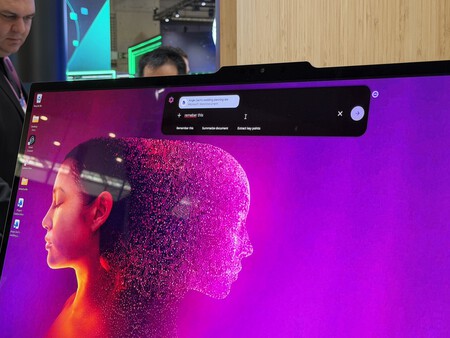

Example mentioned by dragging a file to the Qira icon, in the upper area of the monitor, so that it is vectorized and retains its information so that it can be consulted from another device without leaving the computer disk. Image: WorldOfSoftware.
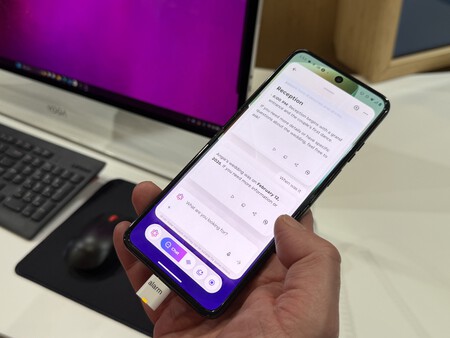
The document in the previous image being consulted indirectly (through a specific question) from a Motorola. Image: WorldOfSoftware.
This balance between personalization and privacy is the core of Lenovo’s differentiating argument against its competitors. At MWC there were many brands that added AI by pasting a layer of OpenAI or Gemini on top of their interface. Snow puts it forcefully: “We want to be the ones who make AI experiences feel native on devices, not just an app that has everything in the cloud.” The bet is that the most useful AI is not the most powerful, but the one that knows the most about you, and that to know about you without betraying you it needs to live where you live: on your hardware.
The robot that Lenovo presented at the stand (the AI Work Companion, a physical desktop device with presence and audio sensors) illustrates how far they want to take this concept of ‘ambient AI’.

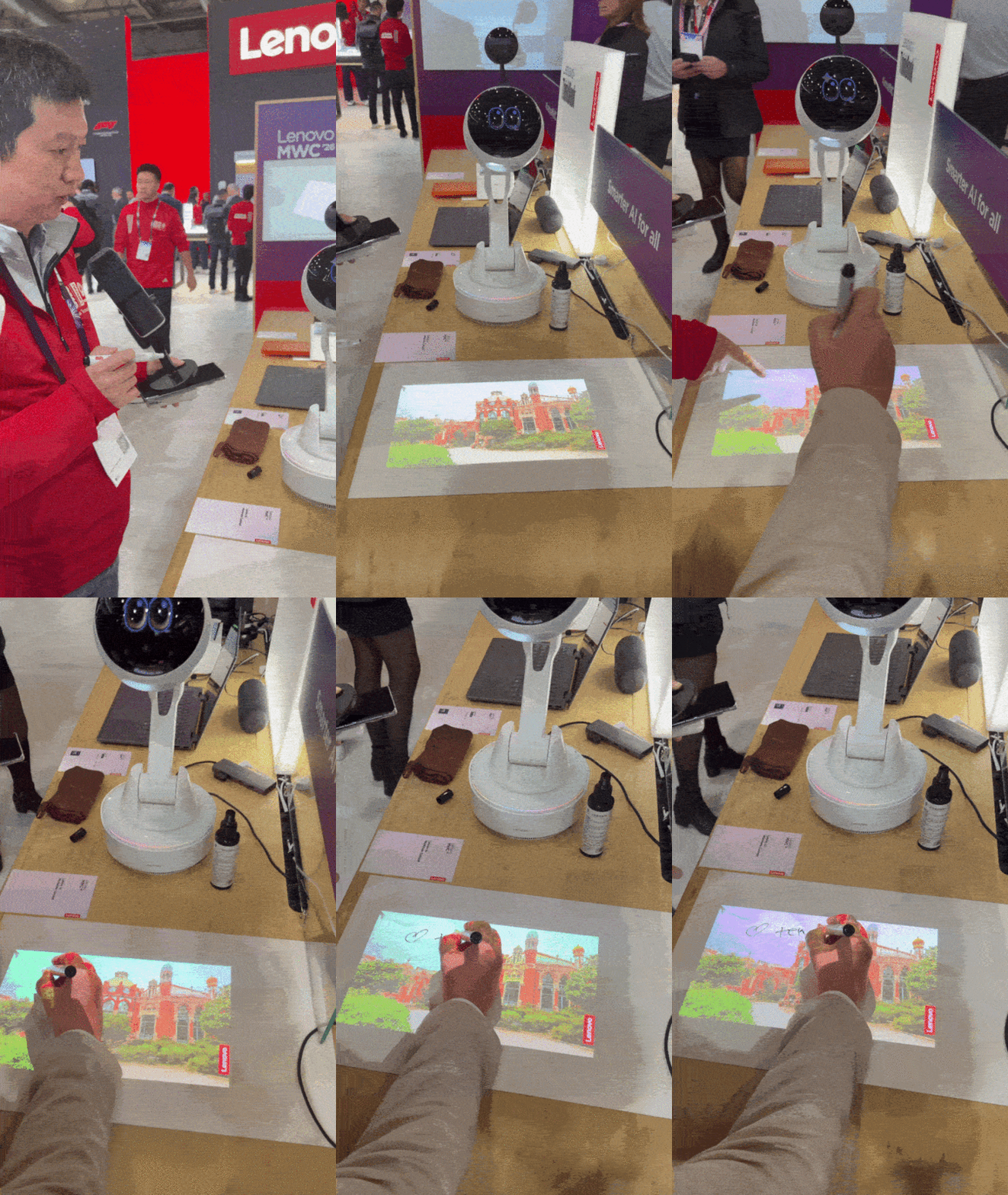

The AI Work Companion robot can project an image, capture what we physically write down on it, outside the monitor; and then print both the image and the annotations. Among other things. Image: WorldOfSoftware,
Snow is the first to acknowledge that the device itself is a prototype. “The important thing is not the device, but the sensors and the proactive nature it has,” he clarifies. The robot detects when two people are talking and can offer to take notes without being asked. He sees that someone has taken a pen and is drawing something, and asks if he wants to save that sketch. It is an AI that observes the context instead of waiting for instructions.


There is, in fact, the direction towards which the entire strategy points: agentic AI. Snow defines it as the state they want to reach with Qira: a system that not only answers questions, but understands a user’s patterns (what they research, what they Buy, what they are interested in) and acts autonomously on their behalf. “If you are a student, you will have different issues than if you are a mother taking care of her family. Based on interactions, you understand the issues and build agents that help you in a more autonomous way.”
It is a vision that sounds familiar because it is the one that is being sold, with different nuances, by practically all the players in the sector. The difference is that Lenovo comes into this race with an advantage that OpenAI and Anthropic don’t have: a gigantic installed base of heterogeneous hardware.. PCs, laptops, tablets, Motorola phones, wearables...
If you can get Qira to truly work seamlessly across all of those devices (Windows and Android, x86 and ARM, on-premises and cloud) you’ll have built something that its pure software competitors can’t easily replicate.
The risk, of course, is that “if he succeeds” is a very loaded conditional. The history of the sector is full of ecosystems promised and never delivered. For now, Qira is beginning to be deployed in six languages and nine regions, with Spanish among them, and integration with Motorola is still a promise for the coming months.
Snow talks about foundation, starting point, direction. Great AI stories always have that structure: we are building something that doesn’t quite exist yet, but in whose direction it is worth believing.
What does already exist is competitive pressure. At MWC 2026, the framework of the interview with Snow, AI stopped being differential and became mandatory. Each manufacturer has his cape, his assistant, his invented name. In that context, Lenovo’s bet (local privacy, cross ecosystem, sensors as the system’s eyes and ears) is one of the few that has a coherent logic beyond marketing.
If they execute it well, they will have found the gap between the cloud giants and hardware manufacturers who continue to treat AI as an accessory. If not, they will have built yet another silo, only with a cooler name.
Featured image | WorldOfSoftware
In WorldOfSoftware | The latest from Lenovo is a gaming laptop with a rollable screen. It makes more sense than it seems