




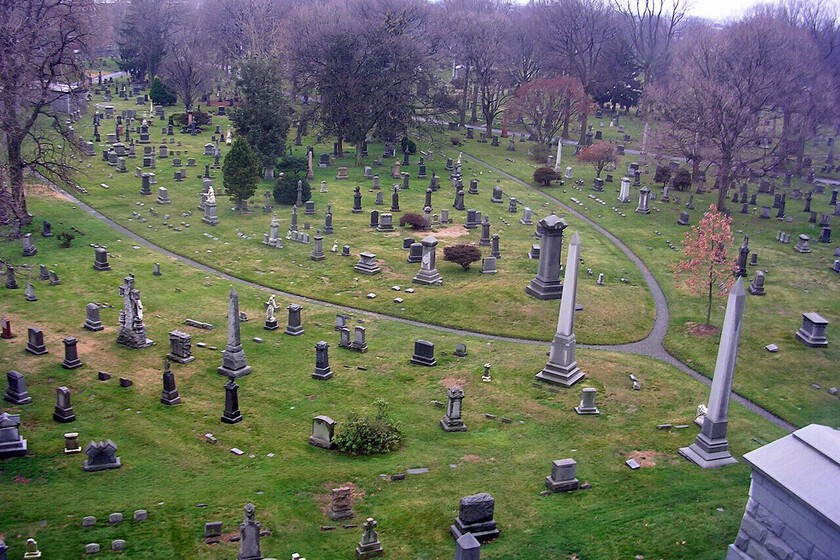
Beyond our cultural differences, most countries in the world (especially in the West) tend to share something: we do not like to talk about death. Nothing. That is why it is curious that in New York, part of the public attention has been revolving for some time around one of its great cemeteries, Green-Wood, a 190-hectare cemetery founded in the 19th century. Even more striking is that Green-Wood is not in the news for its infrastructure or logistics, but for the new service it wants to implement: “natural organic reduction”, also known as “terramation” or (more graphic) “human composting.”
And yes, it is exactly what it sounds like: treating corpses so that they become human compost. It may sound strange or macabre, but its defenders claim that it is an alternative and much more “ecological” way to say goodbye to the world.
Green-Wood Earrings. We mentioned it before. In a world accustomed to living with its back on death, it is not common to find cases like that of Green-Wood, a huge cemetery of almost 200 hectares located in the western part of Brooklyn that has been arousing public curiosity for weeks. Recently, media outlets such as CBS News, New York Posts or even The Wall Street Journal Extensive reports were devoted to it due to the decision of its managers to opt for a new (and controversial) service: “terramation”.
Put that way, the term may not be understood very well, but that changes when you use its most common synonym: “human composting.” If everything goes according to plan and the New York State Cemetery Board gives it the green light, New York families will be able to do so there starting next year. They won’t be the first. “Terramation” has been available for some time in other parts of the US and there are other countries that have also approved it, such as Sweden.
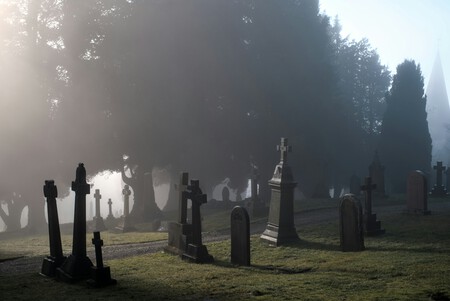

Last (and ecological) goodbye. When a person dies, the most common thing is that their body ends up in a coffin and rests underground or in a pantheon. It is also common (increasingly) for the deceased to record their wish to be cremated. Burials and cremations, however, are only two of the ways in which we can say goodbye to this world. In recent years, much less popular alternatives have been developed (and with a sometimes more complicated legal framework), but they generate increasing interest.
For example, “ecological burials”, which seek to reduce the contaminating footprint of the funeral to a minimum. As? Avoiding the use of chemicals for embalming or coffins made with non-biodegradable materials. The idea is simple: make it as easy as possible for nature. Another option is “aquamation”, a cremation method based on water and alkaline chemicals.
one step further. The “human composting” system like the one Green-Wood wants to incorporate goes one step further. The corpses are placed in special containers in which the natural degradation process is accelerated. Thanks to a regulated flow of air, temperature and humidity, as well as organic material, the microbes do their job and the body decomposes in just a few weeks. “They remain in a capsule for 40 days, a time during which, thanks to a gentle rocking, it becomes earth,” Green-Wood explains.
If remains such as bones remain after this process, they are treated separately to add them to the final result: a kind of human ‘compost’ that can then be distributed throughout a garden or in which, for example, a seed can be planted to remember the deceased. The same thing that many families do with ashes, only after a more natural and ecological process. At least that is how its promoters defend it, who insist above all on its environmental sustainability.

What advantages are those? The underlying philosophy is the same as that of “ecological burials”, in which embalming and coffins are usually dispensed with, but with an extra advantage: since there is no burial, it does not need the space that a traditional burial requires. And that is not a minor detail in cemeteries like Brooklyn. Cremation also has this advantage, but there are experts who warn of its ecological footprint: during cremations, certain toxins are released into the atmosphere, in addition to a notable amount of CO2.
“A 2021 report indicates that the impact on the greenhouse effect of a cremation, taking into account electricity consumption, transportation and the resources used, as well as natural gas, is about 430 kg of CO2 equivalent,” note professors Sandra van der Laan and Lee Moerman in an article published in January in The Conversation. “According to the same report, each standard burial in Australia is responsible for the emission of about 780 kg of CO2 equivalent.”
Environment… and something more. Beyond its greater or lesser attractiveness in ecological terms, “human composting” offers another great advantage: costs and space. three years ago The Guardian already reported that the promoters of “terramation” in the US offered the service for $7,000, not very different from a traditional cremation or burial, although in the latter case another crucial cost is added to the embalming and coffin: that of the land.
Plots in cemeteries are a scarce commodity and this translates into both a logistical and cost problem. “Burial is increasingly inaccessible for many. It is expensive and cemeteries are running out of space, especially in urban areas,” warn Sandra van der Laan and Lee Moerman. Its analysis focuses on Australia, but is transferable to other countries.
A scarce and “valuable” resource. “While many Australian cemeteries now have a limited term of use for plots (25 years in most cases, renewable up to 99), the space is still valuable,” the experts warn. They are not the only ones who point out that handicap. In a recent report for TWSJ On Green-Wood, Tom Fairless recalled that the Brooklyn Cemetery is running out of space. A prospect that is unlikely to improve as the baby boom cohort ages, passes away, and creates greater demand for funeral services, coffins… and graves.
Is the problem so serious? It’s certainly not new. In 2017 Forbes already published an article in which it warned that Green-Wood was running out of space, which led its managers to use their imagination, dispensing with green areas, rethinking internal roads and even buying a plot to expand the facilities. His case is interesting because, even then, almost a decade ago, the sector pointed to him as an example of what was to come. “I think unfortunately many cemeteries will reach this point.”
This represents a challenge for a sector that moves billions of dollars and relies heavily on traditional services, such as space management, services such as embalming or the sale of flowers and coffins. TWSJ assures that the funeral industry moves around 20 billion dollars a year, a thriving business dominated by funeral homes, cemeteries, crematoriums and religious groups. The “terramation” represents an opportunity and a challenge for them.
Are they all advantages? At all. “Human composting” has also received criticism. Its detractors warn that the process can be toxic and above all point out ethical and moral issues. Of course, the solution has not been liked by the United States Conference of Catholic Bishops, which has opposed both “terramation” and alkaline hydrolysis, considering that “they do not meet the Church’s requirements for due respect for bodies.”
Added to the mistrust of certain religious groups is the complex legal framework that requires adopting new forms of treatment of corpses. In the US, there are more than a dozen states that have approved composting (the first was Washington, in 2019), but its expansion continues to pose a challenge, both politically and socially. For example, it is having a difficult time obtaining legal protection in Germany.
Images | Wikipedia and Rodion Kutsaiev (Unsplash)
In WorldOfSoftware | The dramatic retreat of a glacier in the Arctic has just revealed a spectacular “graveyard” of prehistoric whales


