




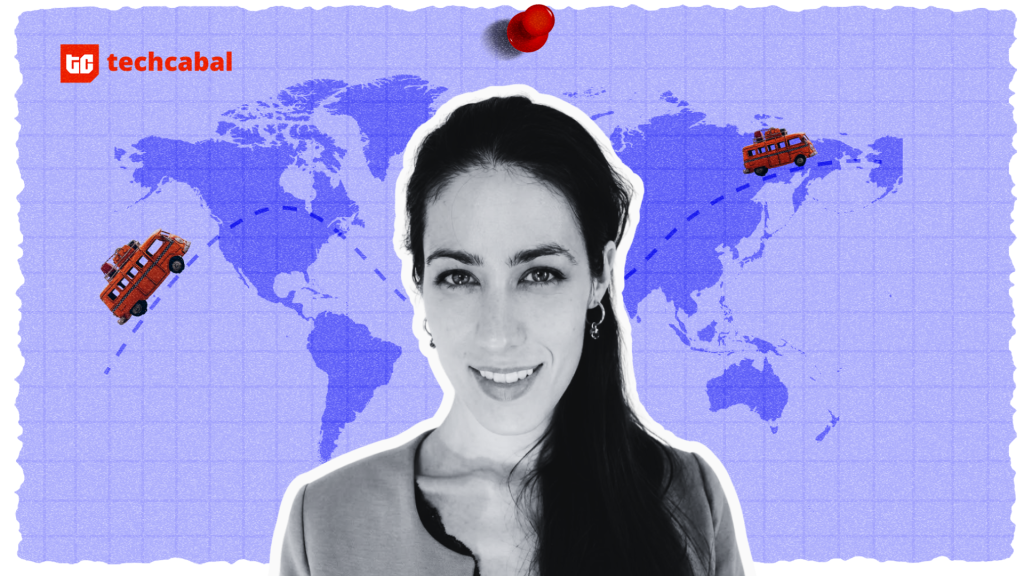
Driving through the Egyptian desert along the Red Sea, hotspotting a MacBook while typing reports in the back seat because being offline for a three-hour flight is a luxury that a risk analyst cannot afford.
Other times, it’s realising that Kizomba, a dance you once learned in the vibrant streets of Dakar, Senegal, somehow exists in different forms across the continent and is a gateway to connecting with people in communities as you travel.
This is the life of Maya Hautefeuille.
In one decade, she’s a photojournalist in the Middle East, documenting the Syrian revolution and the aftermath of the Arab Spring. In the next, she is a senior analyst, uncovering the intersection of politics and economics within African countries for 14 NORTH, a company providing insights and business intelligence for Africa’s frontier and emerging markets.
Staying close to communities in what Hautefeuille labels as being ‘on the ground’ has helped her realise that places that are very misunderstood from the outside.
“I like to make sense of places [and] help people make better decisions ultimately,” she said. “Maybe that came across in how I was raised, and I grew up a bit mixed and all over the world.”
Building bridges from Japanese classrooms to French social movements
Born to an American-Japanese mother and a French father, Hautefeuille spent most of the first decade of her life in Japan, shaped by education from a school built to overcome the trauma of the Second World War, and under a curriculum imbued with peacemaking philosophies.
According to Hautefeuille, the learning emphasis leaned towards students being good global citizens, as opposed to a strong micro-focus on being nationalistic to their respective countries.
“There’s nowhere else on earth where they taught [me] those things and made it as though it should be your life mission to be a good citizen of wherever you are and build your bridges,” she said.
Hautefeuille would later live out what it meant to be a global citizen, moving to the United States when she was 10, then a year later to France, and eventually Australia and across Asia. She spent her late teens in her home country, France, where she observed the country punctuated by social movements and protests.
“I was very into politics and questions of power…and inspired by movements that claimed to be about liberation,” she said.
Being ‘on the ground’ in France also fuelled Hautefeuille’s interest in Africa and the Middle East, specifically due to France’s historical relationship with North Africa, and post-colonial movements that had taken place in Africa.
“If I hadn’t gone to France,” she admitted, “I wouldn’t have been able to see these things at a closer level.”
And so, in 2007, Hautefeuille pursued a Bachelor’s in African studies at Columbia University in New York. She was only there for a year, but it was a turning point for how she viewed the world.
Relearning power with Mahmood Mamdani
Studying under professors like Mahmood Mamdani, an Indo-Ugandan anthropologist, academic, and political commentator, with whom she resonated because of his multicultural background, Hautefeuille was introduced to new ways of thinking about power and history.
“I had one teacher who really impressed upon me,” she recalled. “The way he taught his theories is very different, and because he always brought an identity element [to his teachings], being an Indian-African and part of liberation movements.”
However, in search of a school that she felt encompassed African studies more holistically, she transferred to the School of Oriental and African Studies (SOAS) in London the next year. At SOAS, she learned Swahili and Arabic, regarding language as the crucial infrastructure for understanding the Indian Ocean trade, which linked East African city-states to Middle Eastern countries such as Arabia and Persia.
Before her master’s program, between 2008 and 2009, Hautefeuille had hitchhiked without public transportation or a personal vehicle from France to Touba, the spiritual capital of Senegal, travelling through Spain, Morocco and Mauritania.
That early, gritty immersion to study the Mouridiya Sufi brotherhood, an Islamic order, served as her first experience with the country, and it was not an easy journey. “[I stayed] with Senegal families whose life revolved around that holy city, the mosque, the rituals, the sharing of food, the cooking of the food, the greeting of the marabus. It was like a very regulated lifestyle around the mosque.”
After completing her studies in 2011, she began her master’s at the same school in the same year till 2012, but this time in Middle Eastern studies. While her degree was within the Middle Eastern studies department, her focus remained firmly on West Africa. Hautefeuille was drawn to the program for a very specific reason: the study of Senegalese religious movements.
Her field ‘’Anthropology/Sociology of Religions’’ was hosted in that department, and she intended to study Senegalese Sufi movements through that lens.
After she completed her master’s, Hautefeuille moved to East Jerusalem for a post-graduate research internship in a British/Palestinian studies centre. It was a period in the Middle East that marked the beginning of her photojournalism.
From late 2013 to 2018, Hautefeuille was based on the Turkish-Syrian border, sometimes in Palestine, in Lebanon, where she strengthened her command of Arabic, all the while documenting migration and hospital bombings as a freelance photojournalist and advocate.
Hautefeuille photographed for Al Jazeera and Danwatch. Her interest in photojournalism stemmed from the urge to document and understand the relationship between power, people, and identity.
“In conflict, you’re seeing really impactful things, and I had had an urge to document that,” she said. “So I started with journalism.”
But as December 2018 closed in, while Hautefeuille continued advocacy work on Syria, she began feeling professional fatigue as the conflict stalled. And soon, she was yearning for the life she had once experienced in Senegal once more.
Trading rituals of the Touba for the rhythm of Dakar
By April 2019, Hautefeuille returned to Dakar. But this time, it was different. Where she had once lived in Touba, the holy city that ran on routines around the mosque, shared food, and muslim brotherhoods, the capital thrummed with a different frequency.
Dakar thrummed with Kizomba dance communities, bustling markets, tight-knit neighbourhoods, and graffiti-covered walls, where the rhythm of the street was different from the cadence of the holy city.
From April to December, whether it was teaching English at a French Lycée in Dakar for a semester, freelancing for UN media outlets, or PR consulting for advisories.
“Everything flows in Senegal… opportunities come really fast,” Hautefeuille recalled.
Her resonance with the country remained even when the pandemic struck in 2020, with France making the last call for flights, Hautefeuille did not return.

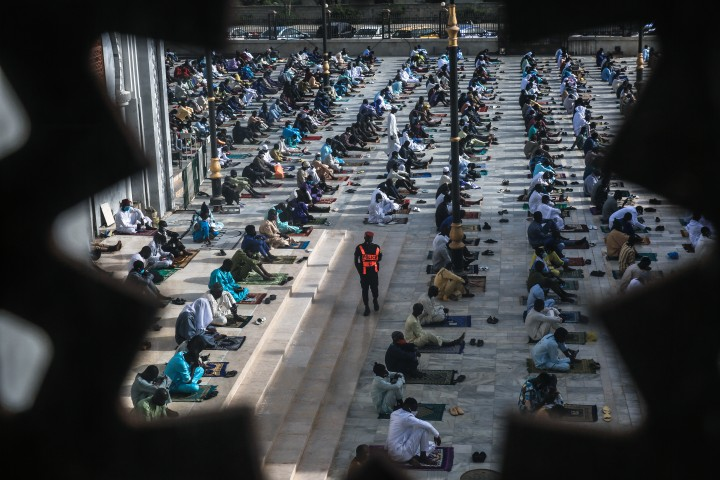
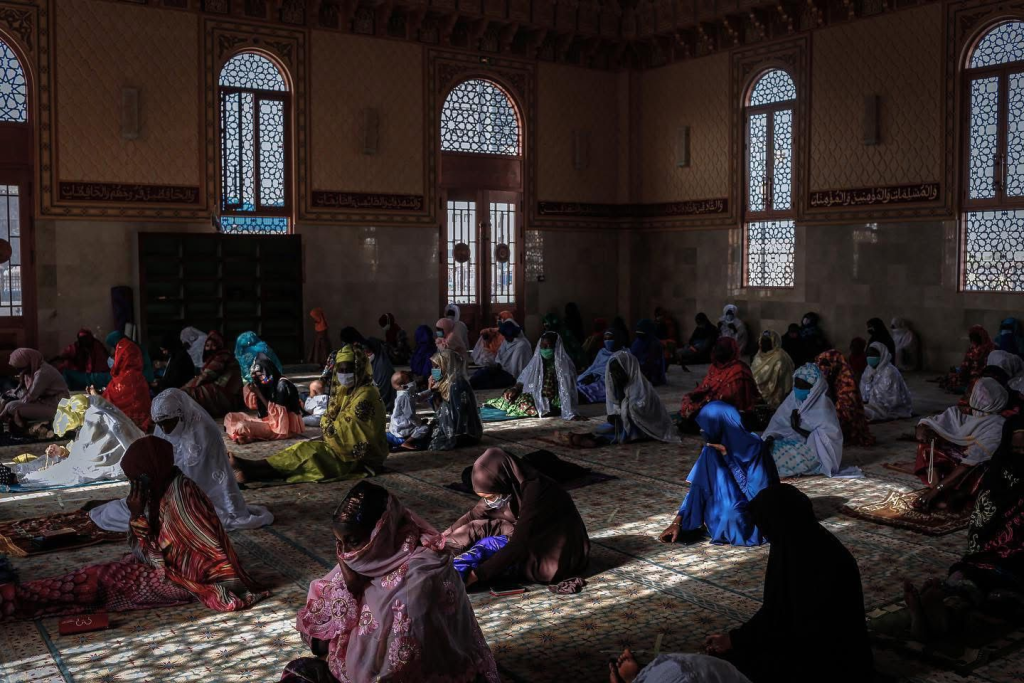
She applied for a journalist pass, a press card that grants journalists access to spaces that would be otherwise reserved. She stayed out past curfew hours at dusk, capturing life in the midst of uncertainty, just like she had in the Middle East.

By November 2021, the APO Group, a pan-African communications consultancy and press release distributor, accelerated her transition into the private sector, where she managed high-stakes accounts like NBA Africa. “They needed someone to be an account manager regarding their specific PR needs,” she said. “Whether it was organising press conferences, sending out press releases, bringing African media to you so you can get interviews in African media to get more exposure on the continent.”

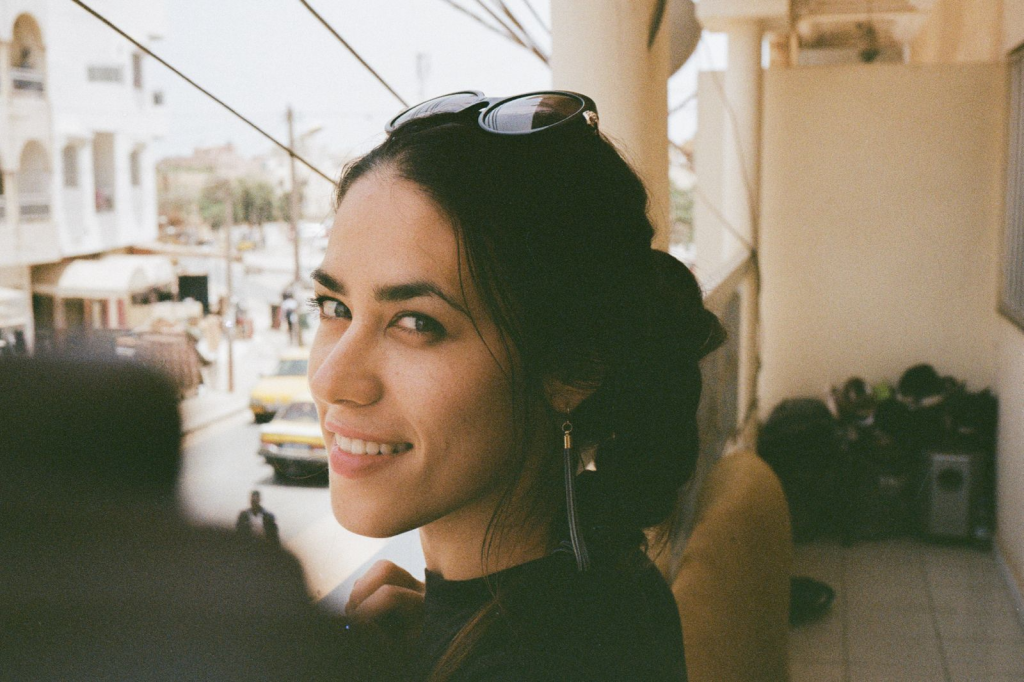
Her ability to navigate Francophone Africa was an asset, even if she maintained a complicated relationship with the language of her father.
“Speaking French is a plus to understand the news and the music,” she said. She notes that even the French people in Senegal didn’t perceive me as “Maya the French girl,” because she did not act like the stereotypical French person.”
Yet, this outsider-insider status allowed her to move through Dakar’s urban culture, hip-hop, street art, and breakdance, with a fluidity that “English alone” could never provide.
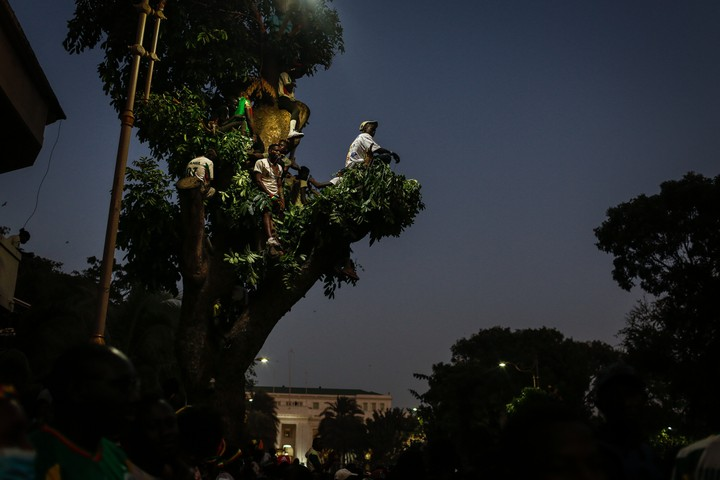
In May 2023, Hautefeuille was in North Africa for the inaugural GITEX Africa, the largest tech showcase on the continent, in Marrakech, Morocco, as an account manager for APO Group, where she facilitated media relations in an environment of high-level tech policy, government regulation, and economic shifts.
The desire for hardcore economic and political analysis resurfaced in June, leading her to a search for a change. By January 2024, Hautefeuille had relocated to Morocco and eventually pivoted to work as an analyst for 14 NORTH, a company providing insights and business intelligence for Africa’s frontier and emerging markets, by May of the same year.
The storytelling shift from visuals to data
In the high-velocity world of risk advisory and high dynamism of being a nomad, beyond speaking French, Swahili or Arabic, Hautefeuille uses the language of dance to find stronger communities across the continent.
“The dance community is all over this continent,” she explained. Whether in a crowded club in Dakar or a studio in Cape Town, Kizomba, Bachata, and Salsa provide an instant community. “You meet people who do the same dance, and suddenly you have new friends who show you the area or give you tips. It’s a very easy way to connect.”
This social connectivity feeds directly into her “risk lens.” For Hautefeuille, photojournalism and nomadism are not separate from her current role as a Senior Analyst at 14 NORTH. They are the same intellectual muscle.
“Photography, travel, writing, analysis—they all come from the same place,” she said. “You have to observe patterns, notice what is overlooked, and process complexity with nuance.” This “same lens, different destination” approach has carried her through 67 countries across the world, turning her into an analyst who values firsthand knowledge over secondhand data.
By early 2026, this journey led her to Nairobi, Kenya, her current base for monitoring the economic and geopolitical shifts in the Democratic Republic of Congo, Sudan, and Ethiopia, the Horn of Africa.
“It’s [Kenya] close enough to be exposed to what’s happening on the Red Sea, where there are some geopolitical issues now,” she said. “You’re in East Africa, so you have the East African community, you have the Horn of Africa, not far away. You have the DRC with all of its happenings; people going there for minerals and [the ongoing] conflict.”
Working as a job-independent professional within African business intelligence has also had its perks, with fintech infrastructures and mobile data.
“Fintech in Africa is way more convenient,” she observed, noting that her biggest hurdle isn’t the tech, but sometimes finding a “quiet corner” for a video call. Other times, it’s choosing to travel by road, as opposed to catching a flight, just so she can remain constantly connected.

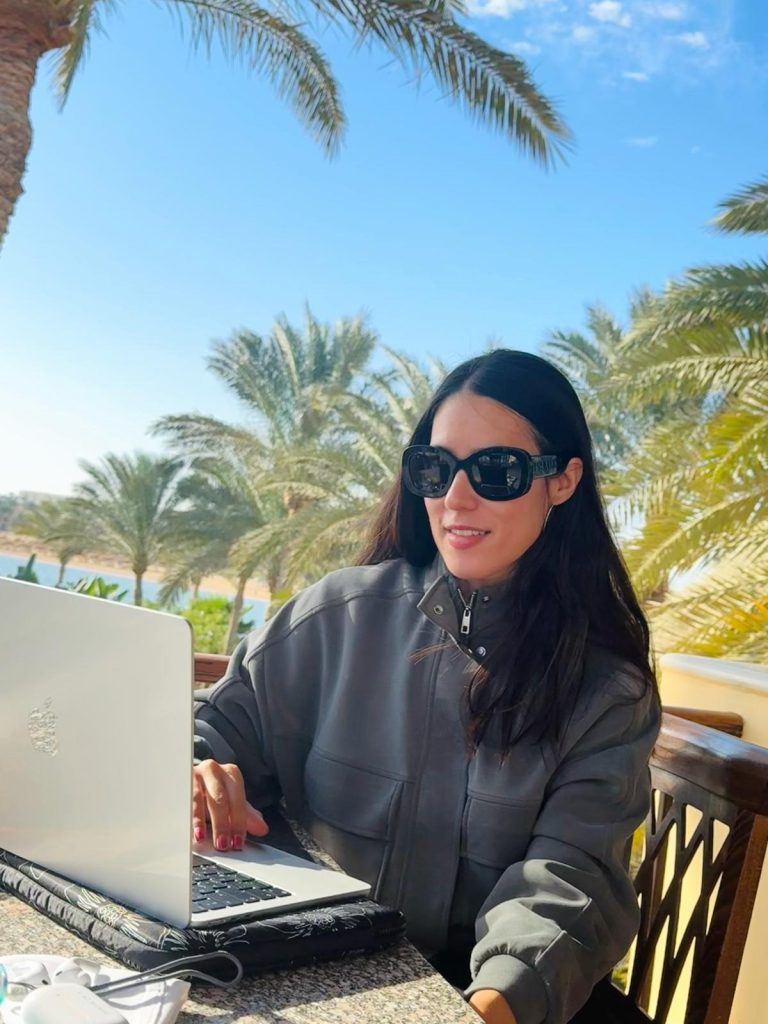
“[Once I was in] Egypt, and far out on the Red Sea, and I realised if I take a flight back to the capital city, which is cheaper, I would be in the air for too long and too far away from the internet,” she said. “So I [decided to] drive seven hours just to make sure I’m on land and connected to data so that I can be reachable and I can be maybe even writing my reports. I was in this car in the back seats typing away, connecting to a hotspot in the middle of the desert, driving along the Red Sea, hoping the Wi-Fi wouldn’t cut. But it’s not the fault of the infrastructure. There’s more like me balancing making sure I’m in I’m reachable.”
2025 was a year of extreme mobility, working from 17 different countries, including Tunisia (Djerba Island), Egypt (Red Sea and Cairo), South Africa and Ethiopia, experiencing local political dynamics firsthand in Tripoli, Libya.
As a nomad, Hautefeuille’s life has been a series of full-circle moments. From her early days advocating for Sudanese refugee rights in Jerusalem to her current role monitoring the crisis in Sudan from Nairobi, or from growing a niche interest in the spirituality within Senegal to finding home in its cities, the threads of her career remain tightly woven. In her experiences, she has discovered that across countries and cultures, while the human framework remains the same, details differ.
“We are in the same framework, but the conflicts are different, the resources are different. The governance is different, and this is only something you can experience firsthand. It’s all about sense-making ultimately,” she said. “ And this doesn’t happen from afar. It happens from being close.”


