For the last several years on theCUBE, I’ve been using a phrase that at first sounded abstract and now feels obvious: AI factories.
- Not data centers.
- Not GPU clusters.
- Factories.
At the time, it was shorthand for something deeper: a shift from computing as infrastructure to computing as production. Raw data goes in. Intelligence comes out. Tokens, decisions, actions — those are the new units of value.
At CES 2026, with Nvidia Corp. unveiling the Rubin platform alongside Alpamayo, that thesis has fully snapped into focus. This wasn’t a product launch. It was Nvidia showing its hand after years of deliberate, often misunderstood moves. What we’re seeing now didn’t happen overnight. It’s the result of a long arc — one I’ve been fortunate to track in real time through hundreds of conversations across hyperscalers, OEMs, startups and operators actually running these systems.
From GPUs to factories
Early on, Nvidia won by building the best accelerators. CUDA mattered. Graphics processing units mattered. But the real shift began when Jensen Huang stopped talking about chips and started talking about systems. Then about stacks. Then about factories.
What became clear in interviews with Dell Technologies, Amazon Web Services, Microsoft, CoreWeave and others is that artificial intelligence stopped behaving like traditional enterprise software. It didn’t scale linearly. It didn’t tolerate latency. And it punished inefficiency — especially power, networking and operations. AI workloads exposed the truth: You can’t bolt intelligence onto legacy infrastructure.
So Nvidia did something unusual for a semiconductor company. They kept pulling the problem up the stack.
- Networking.
- Storage.
- Security.
- Scheduling.
- Serviceability.
- Even how racks are assembled and repaired.
Rubin is the logical endpoint of that journey so far.
Rubin: The factory becomes the product
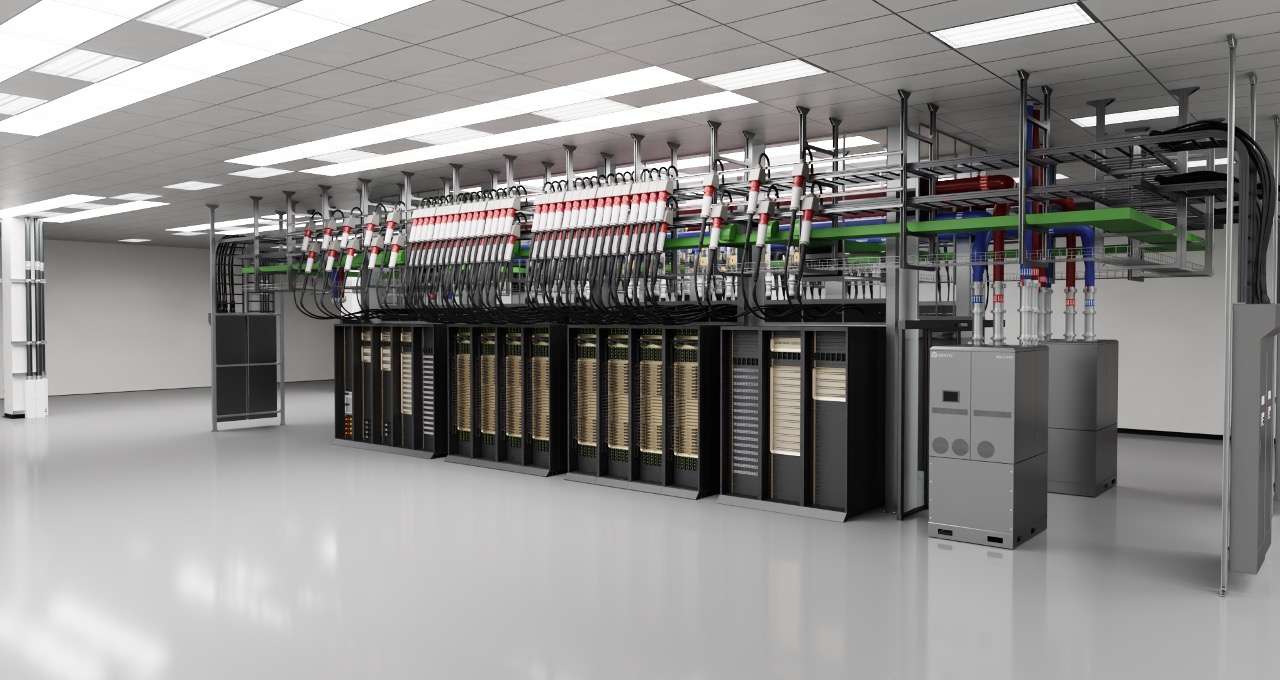
Rubin isn’t interesting because it’s faster than Blackwell. Every Nvidia generation is faster. Rubin is interesting because it treats six chips as one machine, and that machine as a manufactured product, not an integration project.
- CPU. GPU. Switch. NIC. DPU. Ethernet.
- Designed together. Shipped together. Operated together.
This is extreme codesign not as a buzzword, but as an economic weapon.
When Nvidia says Rubin delivers:
-
10 times lower inference token cost.
-
Four times fewer GPUs for mixture-of-experts training.
-
Massive gains in performance per watt. It’s not talking about benchmarks. It’s talking about industrial efficiency.
That’s why Microsoft is building Fairwater AI superfactories around it. Why CoreWeave can slot it into Mission Control. Why every serious AI lab is planning for it.
Rubin collapses complexity so intelligence can scale. That’s the factory.
Alpamayo: Teaching the factory to reason
But factories alone don’t matter if the output isn’t usable. This is where Alpamayo fits — and why it’s not a side announcement.
For years on theCUBE, especially in autonomy, robotics and logistics interviews, we kept hearing the same thing:
-
Perception is solved enough.
-
The long tail is not.
-
Edge cases define safety.
-
Near-real-time isn’t real-time.
-
Simulation without real data fails.
-
Real data without simulation doesn’t scale.
Alpamayo is Nvidia formalizing those lessons.
- Reasoning models.
- Simulation-first validation.
- Open datasets.
- Teacher systems that train production stacks.
This aligns perfectly with what we heard from operators such as Gatik, Plus and others: Physical AI only works when real-world telemetry and synthetic environments reinforce each other. Rubin manufactures intelligence cheaply. Alpamayo teaches that intelligence how to behave in the real world. That pairing is intentional.
The real pivot: From models to outcomes
Here’s the part many still miss: Nvidia is no longer optimizing for:
-
FLOPS.
-
Model size.
-
Peak benchmarks.
It’s optimizing for:
-
Tokens per watt.
-
Decisions per dollar.
-
Actions per second.
That’s a radical shift.
In an AI factory world, the output isn’t a model checkpoint — it’s continuous inference, long-context reasoning, agentic workflows and physical actions. That’s why we’re seeing AI-native storage, inference context memory, secure multitenant bare metal, and rack-scale confidential computing show up as first-class citizens. This is why Nvidia talks about agentic AI and physical AI in the same breath. They run on the same factories.
Why Nvidia’s lead feels different this time
I’ve covered Nvidia long enough to know cycles come and go. What’s different now is control of the full system loop:
-
Silicon → system → factory → ecosystem
-
Training → inference → reasoning → action
-
Cloud → edge → physical world
This isn’t lock-in through software licenses. It’s gravity through architecture. Everyone else still ships parts. Nvidia ships outcomes.
Looking forward
The real signal in all of this isn’t Rubin’s specs or Alpamayo’s openness. It’s cadence. Nvidia is now on an annual platform rhythm, aligned with how fast intelligence is compounding. That alone changes the competitive landscape.
If AI is the new industrial revolution, Nvidia isn’t selling engines anymore. They’re building the factories, defining the assembly line and teaching the machines how to think safely inside the real world. And if you’ve been watching closely — as we have on theCUBE — this moment doesn’t feel surprising.
It feels inevitable.
Photo: Nvidia
Support our mission to keep content open and free by engaging with theCUBE community. Join theCUBE’s Alumni Trust Network, where technology leaders connect, share intelligence and create opportunities.
- 15M+ viewers of theCUBE videos, powering conversations across AI, cloud, cybersecurity and more
- 11.4k+ theCUBE alumni — Connect with more than 11,400 tech and business leaders shaping the future through a unique trusted-based network.
About News Media
Founded by tech visionaries John Furrier and Dave Vellante, News Media has built a dynamic ecosystem of industry-leading digital media brands that reach 15+ million elite tech professionals. Our new proprietary theCUBE AI Video Cloud is breaking ground in audience interaction, leveraging theCUBEai.com neural network to help technology companies make data-driven decisions and stay at the forefront of industry conversations.