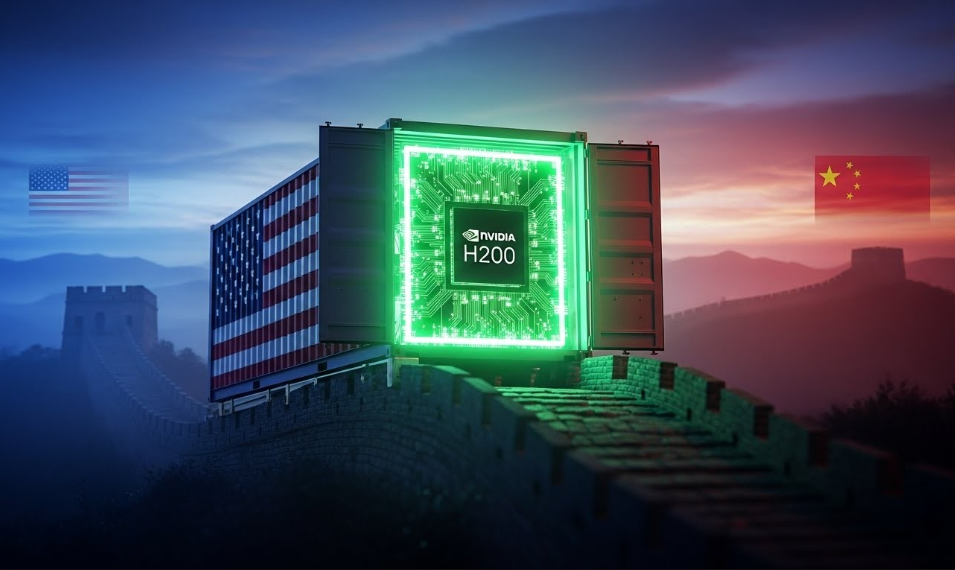
Nvidia Corp. has told Chinese companies that it’s hoping to be able to ship its first H200 graphics processing units to the country by the middle of February, according to a report today by Reuters.
The report cited two people familiar with the chipmaker’s dealings as saying that the first shipment will amount to between 5,000 and 10,000 chip modules, or about 40,000 to 80,000 H200 chips in total. It also quoted a third anonymous source that said Nvidia plans to increase production capacity for the H200 chips in order to accelerate shipments to China by the second quarter of next year.
However, any shipments remain contingent on the Chinese government giving domestic companies the green light to buy Nvidia’s chips. Though Chinese technology giants such as Alibaba Group Ltd. and ByteDance Ltd. have expressed a desire to buy the H200,
Beijing has not yet approved any purchases of the chips, as it’s still considering the implications any decision would have on its domestic chipmaking industry.
The proposed February shipments would be the first delivery of H200 GPUs to China since U.S. President Donald Trump approved their shipment to the country, with the government set to receive a 25% cut. The White House has reportedly launched an inter-agency review of new license applications for the chips, making good on a promise earlier this month to allow Nvidia to sell its second-most powerful artificial intelligence processors to China.
Significant policy shift
Trump’s move represents a dramatic U-turn for the U.S. following the previous Biden administration’s decision to ban all advance chip sales to China over national security concerns. He said at the time of the announcement that the new policy will “support American jobs, strengthen U.S. manufacturing and benefit American taxpayers,” but analysts say economic considerations have likely taken precedence over issues of national security. Semiconductors have emerged as one of the key sticking points at the heart of the rocky trade relationship between the U.S. and China.
In response to U.S. attempts to restrict its access to advanced AI chips, China imposed export restrictions on so-called “rare-earth” materials, which are essential ingredients of processors and other electronics, such as batteries. Trump then met with Chinese President Xi Jinping in South Korea in October, where it appears an agreement was negotiated.
“It’s really a ‘chips for precious rare-earth materials’ deal and it provides advantages for both sides, so we can expect China to relax its restrictions on rare-earth materials soon,” Constellation Research analyst Holger Mueller told News.
However, any shipments of the H200 chips to China will face scrutiny. On Monday, Democratic Senator Elizabeth Warren and Representative Gregory Meeks wrote a letter to the U.S. Commerce Department asking it to disclose the details of any licenses it approves for sales to Chinese entities. The lawmakers also demanded a briefing on the issue before any approvals are issued, including an “assessment of the military potential of the chips for export and the reaction of allies and partners to the decision to export these chips”.
In addition, Warren and Meeks say they want to see the text of any agreement signed by the Trump administration with regard to the H200 deal, as well as an assessment of “the most advanced chips China is producing indigenously”.
The Nvidia H200 GPUs are widely used in AI deployments, although they are an older-generation processor that has since been superseded by the company’s newer Blackwell chips. Because the chipmaker has been more focused on Blackwell, supplies of the H200 chips are thought to be scarce, hence the need for Nvidia to ramp up production for Chinese customers.
Chinese officials are reportedly weighing up whether or not to allow domestic companies to import the H200 chips, as they’re concerned that doing so could stall its own chipmaking efforts. The country has been pushing hard to develop its own semiconductor industry in response to U.S. restrictions. But there are fears that innovation may slow if Chinese companies can access Nvidia’s accelerators.
One possible solution for China might be to insist that Chinese firms buy a set number of domestically produced chips for each H200 they purchase, Reuters said.
Image: News/Dreamina
Support our mission to keep content open and free by engaging with theCUBE community. Join theCUBE’s Alumni Trust Network, where technology leaders connect, share intelligence and create opportunities.
- 15M+ viewers of theCUBE videos, powering conversations across AI, cloud, cybersecurity and more
- 11.4k+ theCUBE alumni — Connect with more than 11,400 tech and business leaders shaping the future through a unique trusted-based network.
About News Media
Founded by tech visionaries John Furrier and Dave Vellante, News Media has built a dynamic ecosystem of industry-leading digital media brands that reach 15+ million elite tech professionals. Our new proprietary theCUBE AI Video Cloud is breaking ground in audience interaction, leveraging theCUBEai.com neural network to help technology companies make data-driven decisions and stay at the forefront of industry conversations.