




Pixar Animation Studios’ storage infrastructure has taken them from animation house to something of a data factory. But to maintain the artistic standard set by films such as “Toy Story”, the studio must now process billions of pixels and textures at a speed that allows artists to iterate in real time without being stalled by hardware.
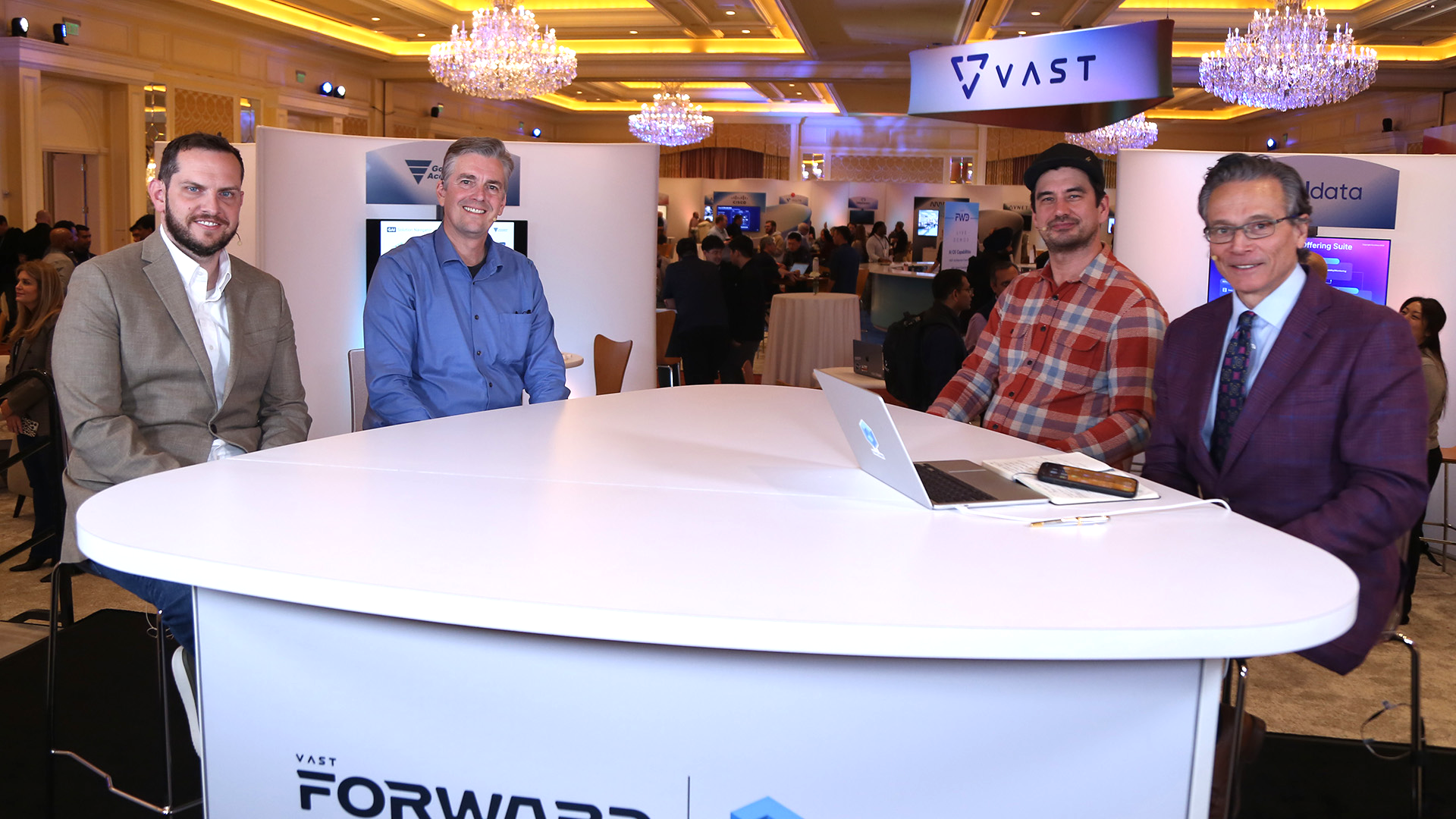
While the studio has transitioned from simple 3D models to complex volumetric rendering, the core challenge remains a massive data science problem. The demand for deterministic, high-fidelity imagery requires a storage foundation that can handle the intense input/output pressure of billions of small file writes and reads, according to Eric Bermender (pictured, center left), head of data infrastructure and platforms at Pixar.
“When the storage hangs, basically the entire render process and all the interactive processes can stop working,” Bermender explained. “Then the last thing you want is artists outside playing Frisbee, because everyone is waiting for the storage to come back online. But we’ve had great collaborations with our partners, with [Vast Data Inc.], to try to harden that storage as much as we possibly can.”
Bermender spoke with theCUBE’s Dave Vellante at Vast Forward 2026, during an exclusive broadcast on theCUBE, News Media’s livestreaming studio. They were joined by Andy Pernsteiner (center right), field chief technology officer of Vast, and Ace Stryker (left), director of AI and ecosystem marketing at Solidigm, a trademark of SK Hynix NAND Products Solutions Corp. They discussed storage infrastructure and why Pixar’s render farm functions more like a supercomputing environment than a traditional media shop. (* Disclosure below.*)
Storage infrastructure and key partnerships power Pixar’s magic
The journey of computer animation at Pixar has evolved into a continuous computational marathon. To keep pace with artistic ambition, the studio requires a technology stack that supports high-fidelity rendering while managing an explosive growth in data. The move toward volumetric characters — which require high-performance throughput — exposed the limitations of traditional tiered storage, according to Bermender.
“Before that, we were dealing with tiered storage structures … it was very difficult to envision how we could create these new characters on a very small flash tier,” Bermender explained. “We engaged with Vast, their premise of … disaggregated storage where you just have one layer of data storage that’s all flash — super high performance.”
NAND — the flash memory technology that powers modern solid-state drives — forms the foundation of today’s high-speed data infrastructure. The goal is doing more with available resources as the AI explosion drives up demand for NAND, according to Stryker. By fine-tuning the product roadmap to include both performance-oriented triple-level cells and capacity-oriented quad-level cell NAND technologies, Solidigm helps partners such as Vast deliver optimal value.
“Eric’s job is removing obstacles for the artists. Andy’s job is removing obstacles for Eric. Solidigm’s job is removing obstacles from Andy from a hardware perspective,” Stryker explained. “When we all work together with the end user in mind, we can make sure that we’re all rowing in the same direction.”
While new trends in generative AI offer exciting capabilities, Pixar remains focused on deterministic workflows where artists have total control over every pixel, Bermender noted. The studio utilizes machine learning for specific applications, such as its denoiser pipeline, which has been in production since 2016. Underlying that workflow is a storage architecture that blends high-endurance and high-capacity flash technologies — a balancing act that remains invisible to the end user, according to Pernsteiner.
“The users don’t have to manage it. They don’t have to see it,” Pernsteiner said, regarding the automated tiering within the platform. “They know it’s there because we tell them it’s there, but other than that, it’s not really a thing they have to think about.”
Here’s the complete video interview, part of News’s and theCUBE’s coverage of Vast Forward:

(* Disclosure: TheCUBE is a media partner for Vast Forward. Sponsors of theCUBE’s coverage, including presenting sponsor Solidigm, do not have editorial control over content on theCUBE or News.)
Photo: News
Support our mission to keep content open and free by engaging with theCUBE community. Join theCUBE’s Alumni Trust Network, where technology leaders connect, share intelligence and create opportunities.
- 15M+ viewers of theCUBE videos, powering conversations across AI, cloud, cybersecurity and more
- 11.4k+ theCUBE alumni — Connect with more than 11,400 tech and business leaders shaping the future through a unique trusted-based network.
About News Media
Founded by tech visionaries John Furrier and Dave Vellante, News Media has built a dynamic ecosystem of industry-leading digital media brands that reach 15+ million elite tech professionals. Our new proprietary theCUBE AI Video Cloud is breaking ground in audience interaction, leveraging theCUBEai.com neural network to help technology companies make data-driven decisions and stay at the forefront of industry conversations.


