




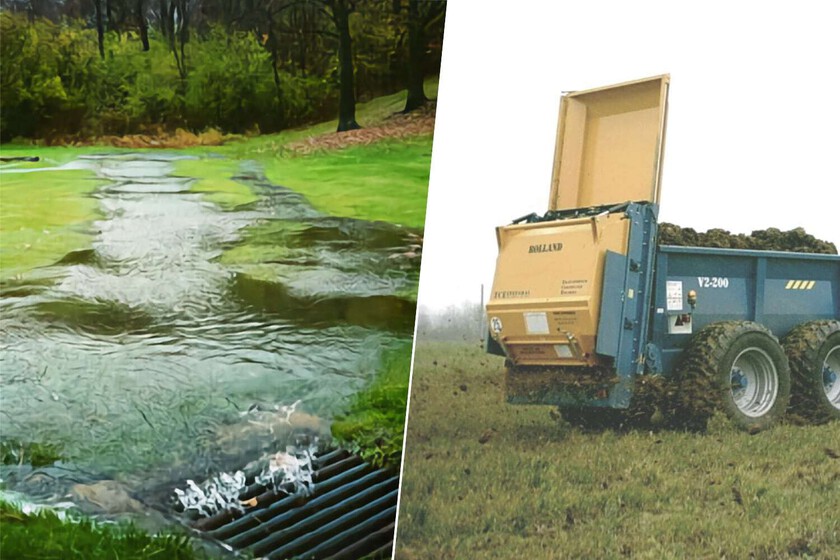
As essential for life as it is problematic. Spain is a clear example of this duality: drought because there is a lack of water, rains for days in a row because they cause the reservoirs to overflow and the data centers want to add to that reality. If we go to the United States, water is also a problem not because there is excess or lack of it, but because it is contaminated. Guilty? Agricultural runoff.
And there are already states prohibiting farms from fertilizing in winter.
What’s happening. The United States Environmental Protection Agency, the EPA, has classified industrial agriculture as the main source of deterioration in water quality in rivers and aquifers in the country. There are several factors, but excess nitrogen, phosphorus and other elements from fertilizers and manure are leaking into large rivers, rural aquifers and coastal areas such as the Gulf of America Gulf of Mexico.
They estimate that each year 12 million tons of nitrogen and another four million tons of phosphorus are applied in the form of fertilizers. There is another waste: manure on livestock farms. The problem? These products infiltrate the earth, reaching groundwater.
In winter, no fertilizer. This is something that occurs throughout the year, but in winter something very curious happens: in areas where it snows or freezes, these nutrients and sediments do not infiltrate into the groundwater (which is already bad), but when the snow melts, they drag the harmful products into the rivers and lakes.
It is something known as surface runoff, and what causes excess nitrogen in rivers and lakes is the proliferation of algae and aquatic plants, which consume the oxygen in the water, resulting in hypoxic zones in which fauna cannot live. There are two alarming cases:
- Gulf of Mexico: Remnants of fertilizers used in the Great Corn Belt of the Midwest flow down the Mississippi into the Gulf of Mexico, forming one of the largest dead zones on the planet.
- Midwest Rivers: In rainy years, nitrate concentrations have far exceeded what drinking water should have for dozens of days in a row.
Consequences. But as we say, this also happens in aquifers, especially in private wells that are less monitored than those belonging to the public system. For example, a report this year estimated that 90% of nitrate contamination in Wisconsin drinking water is due to such agricultural runoff. The study noted that 10% of the state’s private wells exceed the legal limit for nitrates. In intensively agricultural areas, the rate is 20 to 30%.
And chronic exposure to these nitrates has been associated with cancer, pregnancy complications and even “blue baby” syndrome, or childhood methemoglobinemia. That is to say: it is not just an environmental problem, it has escalated to something that affects public health.
Reactive ban. And this has led some states to begin to take action on the matter. In direct response, states such as Michigan, Maryland, Ohio and Vermont have made various prohibitions on the use of fertilizers, manure and fertilizers in winter. Generally, they will begin in mid-December and will extend, depending on the state, until March 1 or April of next year.
The restriction is unpopular among the agricultural sectors, but the problem is that it is a reactive measure and not a proactive one. That is to say: the damage has been done, what is sought is that it does not get worse.


Change of agricultural model. At the federal level, however, the strategy is not direct regulation and prohibition, but rather incentivizing farmers to voluntarily adopt more sustainable practices. Departments such as the USDA or the NRCS are managing financial and technical assistance programs for farmers to optimize their crops, change practices or plant new “cover” crops that absorb excess nitrogen.
In the end, it is complicated because the country has chosen one path, each state is facing the problem in a different way and agriculture/livestock are priority sectors in the United States both for own consumption and for export. And what does the EPA say? That fertilizers are applied in the right amount and at the correct time of year. And also that the animals graze away from streams.
In WorldOfSoftware | The US has a toxic well with tons of contaminated water. They are turning it into a gold mine for rare earths


