






In the rapidly evolving landscape of software development, AI coding assistants like OpenAI’s Codex, Anthropic’s Claude, and the IDE-integrated Cursor have emerged as transformative tools. They promise to augment developer productivity, streamline complex tasks, and even write entire blocks of functional code from a simple natural language description. However, the true power of these sophisticated models is unlocked not just by their underlying architecture, but by the quality of the instructions they are given. This is the domain of prompt engineering—the art and science of crafting inputs that elicit the most accurate, efficient, and secure code from an AI. A well-crafted prompt can be the difference between generating a flawless algorithm and a buggy, unusable snippet. It requires a blend of precision, context, and a deep understanding of how these models ‘think’.
This guide delves into the core principles of effective prompt engineering specifically for AI coding agents. We will move beyond simple one-line requests to explore structured, context-rich prompting strategies that lead to superior outcomes. Whether you are a seasoned developer looking to integrate AI into your workflow or a newcomer curious about the potential of these tools, this article provides a comprehensive playbook. We will explore 30 battle-tested prompts, categorized by common development tasks, from basic code generation and debugging to advanced scenarios like algorithm design and test case generation. These prompts are designed to be practical, adaptable, and immediately applicable to your projects, helping you harness the full potential of AI assistants like Codex, Claude Code, and Cursor. Mastering these techniques will not only make you a more efficient coder but will also position you at the forefront of the AI-driven development revolution. ChatGPT Coding Masterclass Part 2: Prompt Engineering for Developers in the Era of GPT-5.3-Codex
The Core Principles of Effective Prompting for Code Generation
Before diving into specific prompts, it’s crucial to understand the foundational principles that govern successful interactions with AI coding agents. These models are not magic; they are powerful pattern-matching engines that rely heavily on the context you provide. A vague or ambiguous prompt will almost certainly lead to a suboptimal result. Conversely, a prompt that is clear, detailed, and context-aware will guide the AI toward the precise solution you need. The following principles form the bedrock of advanced prompt engineering for code.
- Be Specific and Unambiguous: Your prompt should leave no room for interpretation. Specify programming languages, library versions, variable names, and desired output formats. Instead of asking for a “function to process data,” ask for a “Python function named `process_customer_data` that takes a pandas DataFrame as input and returns a new DataFrame with a calculated `age` column.”
- Provide Context and Constraints: The AI has no knowledge of your existing codebase or project requirements unless you provide it. Include relevant code snippets, data structures, schema definitions, or architectural constraints. If you’re working within a specific framework like React or Django, mention it explicitly. This helps the model generate code that is compatible and consistent with your project.
- Use Role-Playing: A powerful technique is to assign a role to the AI. For example, begin your prompt with “You are an expert Python developer specializing in data science and machine learning.” This primes the model to adopt a specific persona, leveraging its training data related to that domain to produce higher-quality, more idiomatic code.
- Iterate and Refine: Don’t expect the perfect answer on the first try. Prompting is an iterative process. Start with a broad request, analyze the output, and then refine your prompt with more detail or corrections. Often, a short conversation with the AI, where you provide feedback on its previous responses, yields the best results. Treat it as a collaborative coding partner.
- Request Explanations: To ensure you understand the generated code and to verify its logic, ask the AI to explain its reasoning. You can add instructions like, “Explain the code line by line in comments” or “Describe the time and space complexity of this algorithm.” This is not only a great learning tool but also a powerful debugging technique.
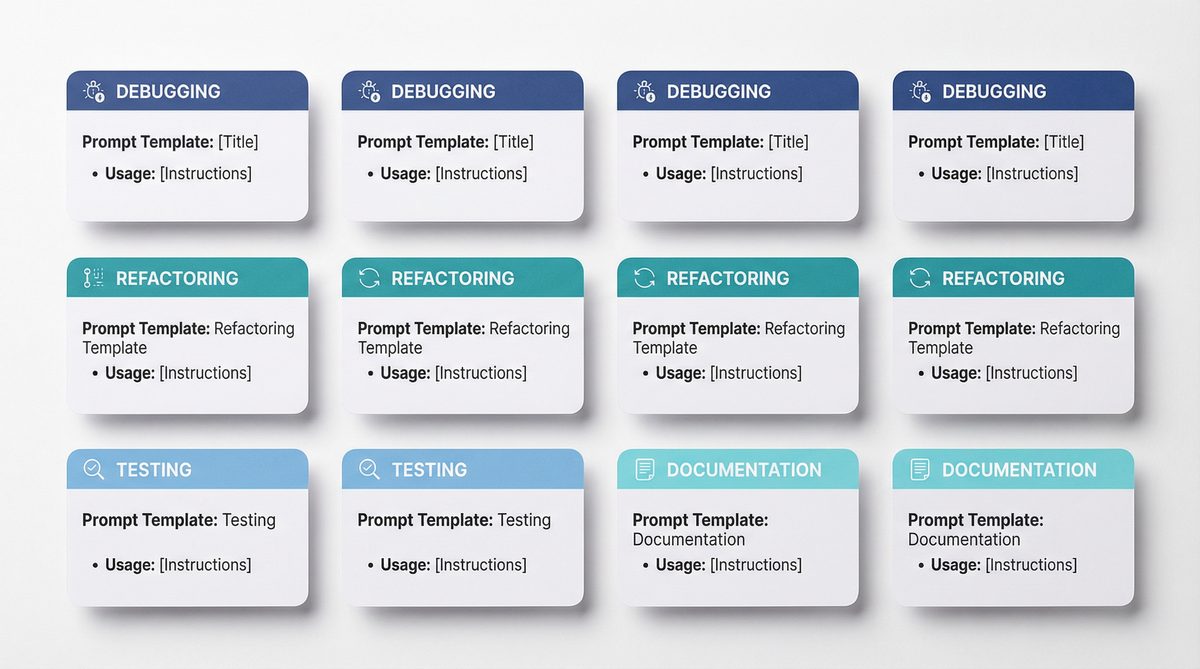
30 Battle-Tested Prompts for Codex, Claude, and Cursor
The following prompts are categorized by common development tasks and are designed to be adapted to your specific needs. They incorporate the principles discussed above to maximize clarity and effectiveness. Think of them as templates that you can customize with your own project-specific details, such as variable names, language choices, and logic requirements. The key is to provide as much relevant context as possible to guide the AI toward the optimal solution.
Category 1: Foundational Code Generation & Completion
This category covers the most common use case for AI coding assistants: generating functional code from scratch or completing partially written code. The prompts are structured to ensure the generated code is robust, well-documented, and adheres to best practices.
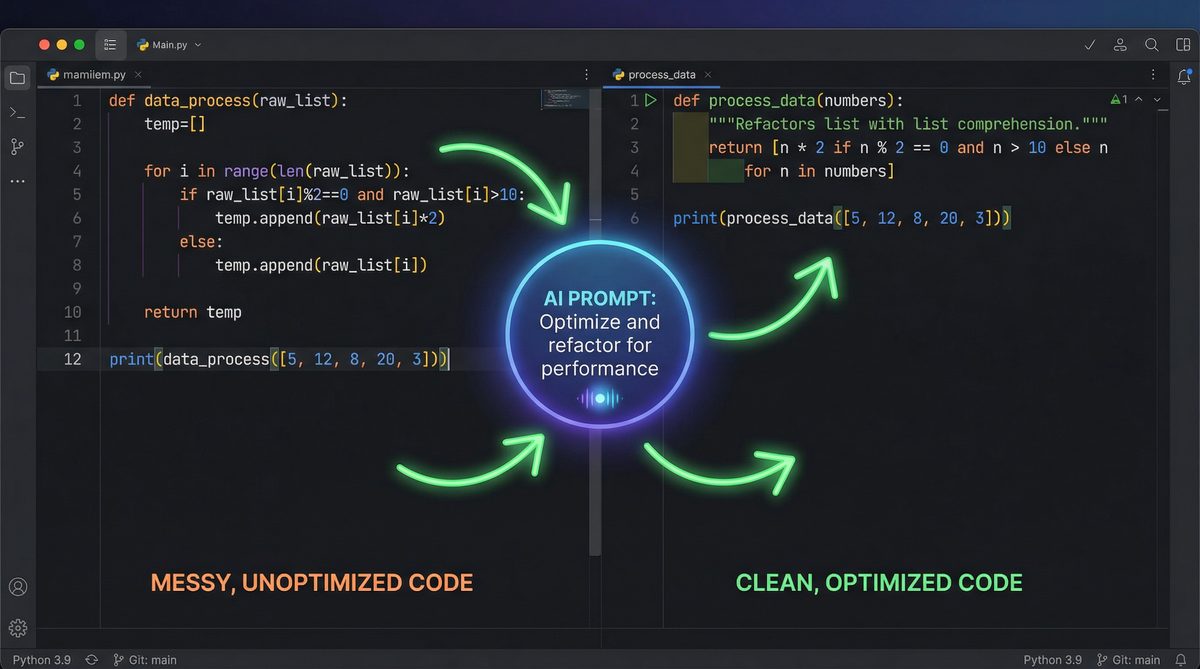
Category 2: Debugging, Refactoring, and Optimization
AI coding assistants can be invaluable for identifying bugs, improving code quality, and optimizing performance. These prompts are designed to leverage the AI’s ability to analyze code and suggest improvements. 99+ Successful ChatGPT Prompts for Coding to Excel in Coding
- 7. Find and Fix a Bug in a Code Snippet:
“The following JavaScript function is supposed to return `true` if all elements in an array are unique, but it has a bug. Identify the bug, explain what is wrong, and provide the corrected code.
“`javascript
function areAllUnique(arr) {
const seen = {};
for (let i = 0; i < arr.length; i++) {
if (seen[arr[i]]) {
return false;
}
seen[i] = true;
}
return true;
}
“`” - 8. Refactor a Function for Readability and Efficiency:
“You are a senior software engineer focused on code quality. Refactor the following Python function to be more readable and efficient. Use a more Pythonic style, add type hints, and include a docstring explaining what the function does.
“`python
def process_data(data_list):
temp = []
for i in range(len(data_list)):
if data_list[i] > 10:
val = data_list[i] * 2
if val < 100:
temp.append(val)
return temp
“`” - 9. Add Error Handling to a Function:
“Take the following Rust function that reads a file and parses it as JSON. Add robust error handling using `Result` and the `?` operator to handle potential `File::open` and `serde_json::from_reader` errors gracefully. Return a custom error type that encapsulates the different failure modes.” - 10. Optimize a Slow Database Query:
“Analyze the following SQL query. It is running slowly on a large `orders` table. Explain why it is inefficient and provide an optimized version. The `orders` table has indexes on `customer_id` and `order_date`.
“`sql
SELECT customer_id, COUNT(order_id) AS num_orders
FROM orders
WHERE YEAR(order_date) = 2023
GROUP BY customer_id
HAVING num_orders > 5;
“`” - 11. Convert Code from One Language to Another:
“Translate the following utility function from JavaScript to Python. Ensure the logic remains identical and that the Python version follows PEP 8 conventions.
“`javascript
const toTitleCase = (str) => {
return str.replace(
/wS*/g,
(txt) => txt.charAt(0).toUpperCase() + txt.substr(1).toLowerCase()
);
};
“`” - 12. Explain a Complex Code Snippet:
“I have this piece of C++ code that uses templates and metaprogramming. Explain what it does in simple terms, what the purpose of the `enable_if` is, and provide a simple example of how to use it.”
Category 3: Algorithm Design & Data Structures
Leverage AI to design and implement complex algorithms and data structures. These prompts guide the AI to produce not just the code, but also the underlying logic and analysis.
- 13. Implement a Sorting Algorithm from Scratch:
“Write a clean, well-documented implementation of the Quicksort algorithm in Java. The function should sort an array of integers in place. Do not use any built-in sorting libraries. Include comments explaining the partitioning logic.” - 14. Design a Data Structure for a Specific Use Case:
“I need to design a data structure to implement a Least Recently Used (LRU) cache. Describe the optimal data structures to use (e.g., a hash map and a doubly linked list), explain why this combination is efficient, and then provide a complete implementation in Python as a class named `LRUCache`.” - 15. Solve a Classic Coding Challenge:
“Provide a solution to the ‘Two Sum’ problem in Go. The function should take an array of integers and a target integer. It should return the indices of the two numbers that add up to the target. Explain the time and space complexity of your solution.” - 16. Generate Code for a Graph Traversal:
“Write a function in C# to perform a Breadth-First Search (BFS) on a graph represented by an adjacency list. The function should take a starting node and return a list of visited nodes in the order they were visited.” - 17. Create a Dynamic Programming Solution:
“I need to solve the classic ‘Coin Change’ problem using dynamic programming. Write a function in Ruby that takes an array of coin denominations and a total amount, and returns the minimum number of coins required to make up that amount. Explain the DP state and transition.” - 18. Implement a Tree Data Structure:
“Generate the code for a binary search tree (BST) in Swift. The implementation should include methods for `insert`, `search`, and `delete`. For the `delete` method, handle all three cases: node with no children, one child, and two children.”
Category 4: Testing and Documentation
Automate the creation of tests and documentation, two critical but often time-consuming aspects of software development. These prompts help ensure your codebase is reliable and maintainable.
- 19. Generate Unit Tests for a Function:
“You are a QA engineer specializing in test automation. Write a comprehensive suite of unit tests for the following Python function using the `pytest` framework. Cover edge cases, including empty inputs, invalid inputs, and large inputs.
“`python
def is_palindrome(s: str) -> bool:
return s.lower().replace(” “, “”) == s.lower().replace(” “, “”)[::-1]
“`” - 20. Create Mock Data for Testing:
“Generate a JSON array of 10 realistic but fake user objects for testing purposes. Each object should have a `name` (string), `email` (unique email address), `age` (number between 18 and 65), and a `country` (from a list of USA, Canada, UK).” - 21. Write API Documentation:
“Generate documentation in Markdown format for a REST API endpoint. The endpoint is `GET /api/products/{id}`. The documentation should include the request method, URL, path parameters (`id`), potential success (200 OK) and error (404 Not Found) responses with example JSON bodies.” - 22. Generate a Dockerfile for an Application:
“Create a multi-stage `Dockerfile` for a production-ready React application. The first stage should use a Node.js image to build the static assets. The second stage should use a lightweight Nginx image to serve the built assets. Add comments explaining each step.” - 23. Write a Regular Expression with Explanation:
“I need a regular expression that validates a strong password. The password must be at least 8 characters long, contain at least one uppercase letter, one lowercase letter, one number, and one special character. Provide the regex and a detailed explanation of how it works.” - 24. Create a GitHub Actions Workflow:
“Generate a GitHub Actions workflow file (`.github/workflows/ci.yml`) that triggers on every push to the `main` branch. The workflow should check out the code, install Node.js dependencies using `npm install`, and run the test suite with `npm test`.”
Category 5: Advanced and Creative Use Cases
Push the boundaries of what you can do with AI coding assistants. These prompts tackle more creative and complex tasks, from code conversion to security analysis. The Complete Guide to AI Coding Agents in 2026: Codex vs Claude Code vs Gemini Code Assist
- 25. Convert a Natural Language Description to a SQL Query:
“You are a data analyst. Write a PostgreSQL query that returns the top 5 customers who have spent the most money in the last 30 days. The database has two tables: `customers` (id, name) and `orders` (id, customer_id, amount, created_at).” - 26. Brainstorm Solutions to a Technical Problem:
“I am building a real-time chat application and I am concerned about scalability. Brainstorm three different architectural approaches I could take. For each approach, list the pros and cons, and the key technologies involved (e.g., WebSockets vs. Long Polling, choice of database).” - 27. Perform a Simple Security Audit on a Piece of Code:
“Analyze the following PHP code snippet for potential security vulnerabilities. Specifically, look for SQL injection, Cross-Site Scripting (XSS), and insecure file handling. Explain any vulnerabilities you find and suggest how to fix them.
“`php
$user_id = $_GET[“id”];
$result = mysqli_query($conn, “SELECT * FROM users WHERE id = ” . $user_id);
“`” - 28. Generate Code in an Esoteric Programming Language:
“This is a creative challenge. Write a program in the esoteric programming language Befunge that prints “Hello, World!”.” - 29. Create a Command-Line Interface (CLI) Tool:
“Generate the basic structure for a CLI tool in Python using the `argparse` library. The tool should be named `file-organizer` and have one command, `organize`, which takes a `–directory` argument. Include placeholder logic for the command.” - 30. Draft an Architectural Design Document:
“You are a solutions architect. Draft a high-level architectural design for a microservices-based e-commerce platform. Describe the key services (e.g., Product Service, Order Service, User Service), how they communicate with each other (e.g., REST APIs, message queue), and the proposed technology stack for each service.”
Access 40,000+ AI Prompts for ChatGPT, Claude & Codex — Free!
Subscribe to get instant access to our complete Notion Prompt Library — the largest curated collection of prompts for ChatGPT, Claude, OpenAI Codex, and other leading AI models. Optimized for real-world workflows across coding, research, content creation, and business.
Access Free Prompt Library
Conclusion
The journey into AI-assisted development is just beginning. The prompts provided in this guide are not just a list of commands; they are a new way of thinking about the interaction between human developers and artificial intelligence. By mastering the art of prompt engineering, you are not simply offloading tasks to a machine. You are engaging in a sophisticated dialogue, leveraging the AI’s vast knowledge and computational power as a true partner in the creative process of software development. The future of coding is collaborative, and the developers who learn to communicate effectively with their AI counterparts will be the architects of that future. Start with these prompts, experiment with your own variations, and continue to refine your approach. The more you practice, the more you will find that the only limit to what you can build is your own imagination.


