“The ghost of the great blackout has returned to haunt Spain,” is how my colleague summed it up after learning that Red Eléctrica Española had detected new “sudden voltage variations” in the peninsular network. The news was enough to reactivate a recent fear: being left in the dark again. And with that fear, the fever for forecasts also ignited.
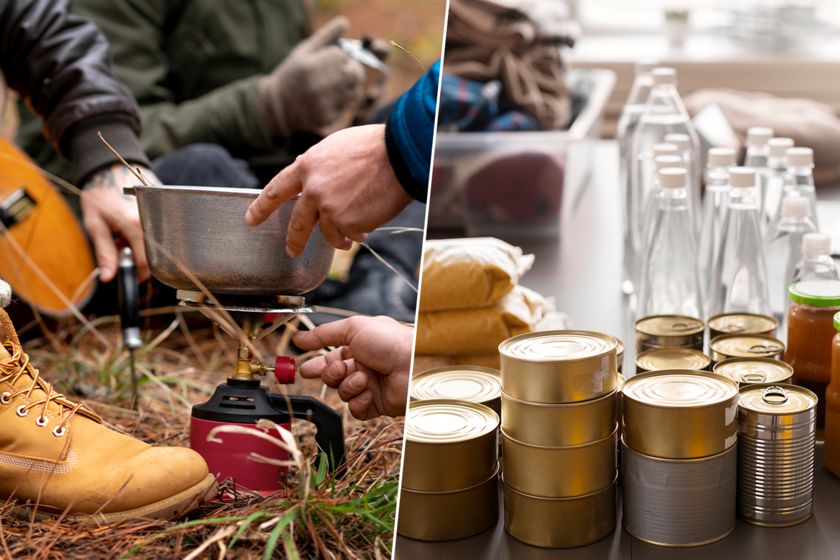
In search of forecasts. Demand for products related to energy supply and survival has increased by 76%, according to data from the European Price comparator Idealo. Among which stand out stoves and camping gas, with an increase of 253%, followed by power stations at 87%, radios at 56% and portable batteries at 49%. Interest in products such as water purification tablets has also skyrocketed by 20% and flashlights by 14%.
An alert that set off the alarms. The alert issued by Red Eléctrica Española on October 7 was enough to put the population on guard. Although the company assured that the voltage fluctuations “do not pose an imminent risk of a blackout,” the population reacted quickly. Many households, still with fresh memories of the April 28 blackout, began to reinforce their domestic emergency kits, as recommended by the European Commission at the beginning of the year.
The great precedent. The current prudence is not accidental. Half a year ago, the peninsula suffered a blackout that left the entire country without power for more than twelve hours. During that day, the chaos moved to the stores: endless lines and empty shelves in hardware stores and large stores. Servimedia data confirms this: the demand for electric generators shot up by 639% and that for gas camping stoves by 547% in just 24 hours.
Mass hysteria or rational prevention? The figures may suggest an emotional reaction, but the data rather points to a new culture of foresight. Before the blackout, only 5% of Spaniards had an emergency kit prepared. After the event, the figure doubled to 10%, and the intention to prepare it went from 32% to 58%, as detailed on YouGov.
The CIS adds that 78% of citizens did not feel afraid during the blackout, although 53.5% acknowledged that they remembered the kit recommended by the EU. Furthermore, 88.2% positively valued the civic and supportive behavior of their neighbors during those hours of darkness. The phenomenon has revived the debate: are we facing a “collective energy hysteria” or a modern form of domestic resilience?
The business of self-supply. In a matter of months, concern about a possible power outage has created a new market niche: that of energy self-sufficiency. Sales of generators, solar panels and stoves multiplied by five after the blackout in April. Large chains such as Leroy Merlin or Decathlon sold out their stocks in hours, while neighborhood hardware stores had their own special August selling flashlights, radios and batteries.
The trend has not stopped. From Idealo they confirm that searches for these products continue to rise. In parallel, interest has grown in so-called portable power stations, small devices capable of charging everything from mobile phones to basic appliances, and which are already among the most consulted articles on the internet.
“Prepper” culture is normalized. Added to this fever of prevention is the rise of so-called preppers, people who prepare for emergencies. In fact, two of them described how the blackout tested their preparedness: Their kits allowed them to cook and stay informed when most people lost power. A phenomenon that, far from eccentricity, reflects a growing search for domestic autonomy.
A new energy consciousness? Red Eléctrica insists that “there is no imminent risk of a blackout,” but citizens—and the market—think differently. The culture of self-sufficiency is no longer a rarity and has become established in the collective mentality.
There is no blackout in sight, but there is a change: many prefer to rely on their generator rather than the electrical system. In times of uncertainty, energy is no longer only measured in kilowatts, but also in peace of mind.
Image | FreePik and FreePik
WorldOfSoftware | A ghost haunts Spain: the ghost of another massive blackout caused by network tension problems