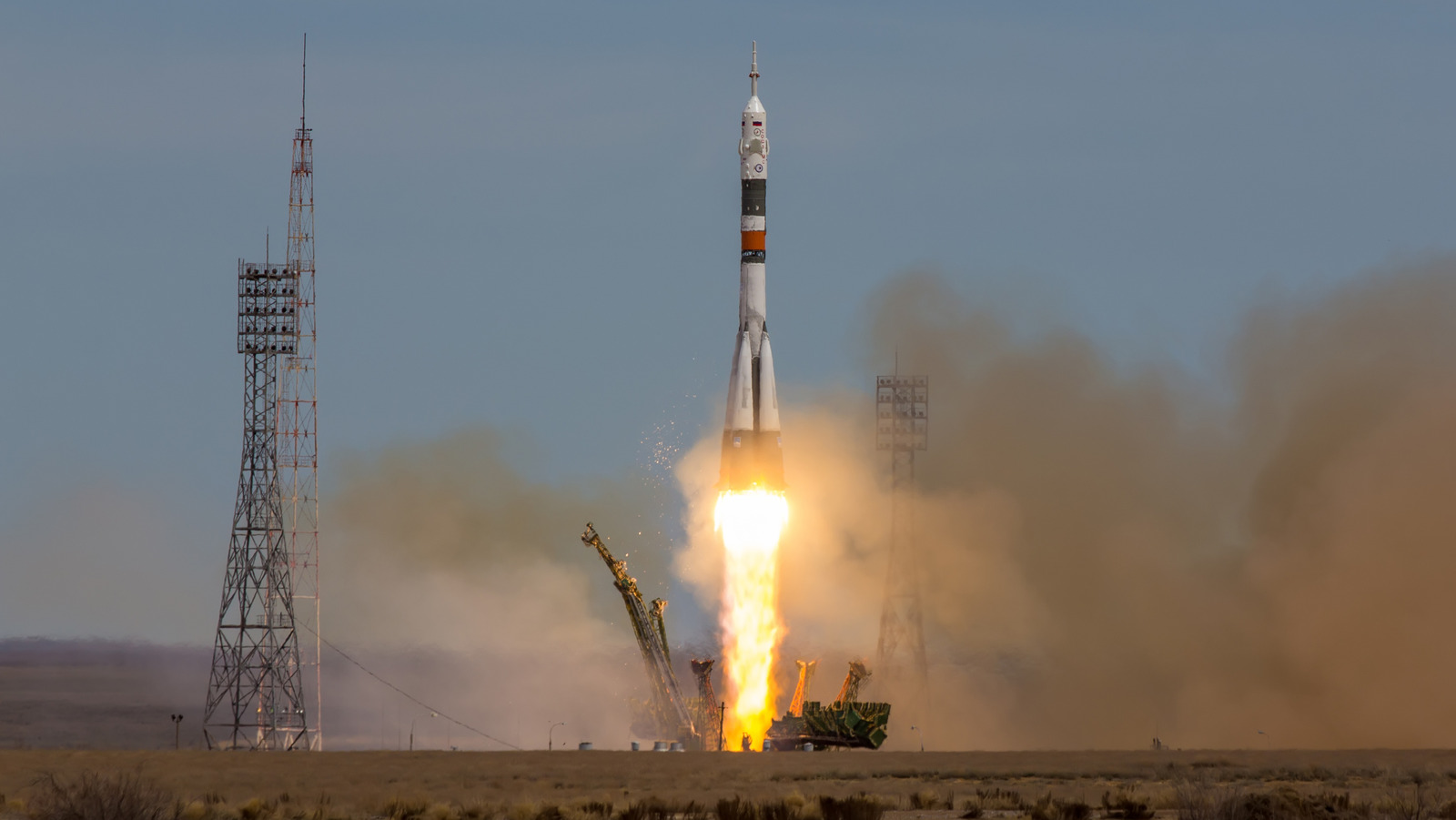
For the first time since 1961, a critical failure with its primary launch pad has rendered Russia’s space agency — Roscosmos — incapable of launching manned space missions. After the successful launch of the Soyuz MS-28 spacecraft on November 27, 2025, a part of the launchpad collapsed. A service platform improperly secured fell into an exhaust trench below it. The space agency publicly responded that the damage was detected and acknowledged, but that the launchpad’s condition is currently being assessed. “All necessary backup components are available for restoration, and the damage will be repaired in the near future.” The important point here is that the damaged launchpad, known as Launch Pad 6 at Site 31 at the Baikonur Cosmodrome facility, is currently the only one used by the space agency for manned missions, which hinders future plans significantly, including future launches for the Russian Orbital Station.
Another launch was planned for December 20 from the same site — the Progress MS-33 cargo spacecraft — carrying supplies to the International Space Station (ISS). The Soyuz MS-28 launch carried a three-person crew, including two Russian astronauts and NASA’s Chris Williams, safely to the ISS. The shuttle and its launch were completed with no complications, and the occupants were transferred to ISS as planned. The question now is how long the damage will take to be repaired, with some claiming it could take years. Russia’s rocket engine has been stuck in a predicament, with space programs having been challenged for some time now, courtesy of Western sanctions heavily damaging its access to new technologies and funding.
How long will the damage take to repair?
Not everyone is confident the damage will be repaired “shortly,” as claimed by Roscosmos in its official statement. Anatoly Zak, an expert on Russian space missions and technology, believes that the platform could take up to two years to repair and restore. In addition, he clarifies that temporary arrangements may not be possible to support crew launches while it’s being fixed. There are other Soyuz launch pads across several sites, including the Baikonur, Plesetsk, and Vostochny Cosmodromes, but 31/6 — the collapsed site — was the only one that currently supports Progress and Soyuz launches to the ISS. That also means that SpaceX is currently the only launch team with an operational crew vehicle that can fly astronauts to the ISS, until 31/6 is properly restored or an alternative becomes available.
NASA is aware of the problem and is coordinating with international partners, but there’s no word on how the teams will proceed going forward. Russia has toyed with the idea of quitting the ISS and originally put forth 2024 to 2025 as the estimate for when it might back out. With future launch plans thwarted, for who knows how long, that may be another option for Roscosmos. Of course, NASA is no stranger to launch complications either. It’s currently working with Boeing to better test and certify its Starliner craft after a small bout of setbacks, one of which left astronauts stranded on the ISS for months longer than planned, which, thankfully, wasn’t the worst thing that’s happened with the ISS.