
The promise of the smart home in which everything works automatically without a problem sounded great, but the reality is that it is still a real chaos of incompatibilities and the most annoying failures. Even if we have all the devices from the same brand, there is still the part of assembling them, hiding cables… Huawei has the solution, although it doesn’t exactly come cheap.
The complete pack
They say in Panda Daily that Huawei has launched an offer of smart-home solutions that come in several packages with different devices and at various prices. The packages are designed to be installed in new construction homes and also for installation in already built homes. With these options, Huawei seeks to offer a comprehensive solution under the umbrella of your HarmonyOS system.
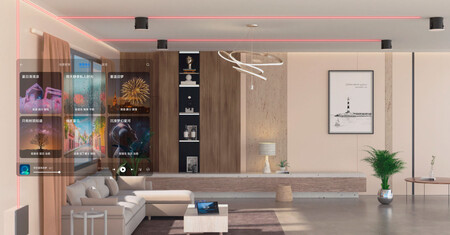

In total they offer six packs, three for new construction homes and three for existing homes. The cheapest is the ‘starter pack’ for already built houses and costs 1,200 euros in exchange and includes the control hub and some essential functions such as lighting, air conditioning and curtain control.
The most expensive packages are those installed in newly built homes. The most basic costs more than 3,500 euros in exchange and has WiFi 7 connectivity throughout the house, control of lights, curtains, air conditioning, smoke sensor for the kitchen and smart lock. The premium package goes up to almost 12,000 euros and adds features such as AI cameras, ambient lighting strips, and speakers throughout the house.
All packs include installation and Huawei is committed to completing it in just 24 hours in the case of existing homes. The announcement is only for China, where Huawei had already launched similar solutions in the past.


The chaos of home automation
In Spain there are solutions provided by installation companies, but We do not find similar proposals through brands with smart-home devices such as Samsung or Xiaomi. Typically, we are the users who Buy the devices and install them at home ourselves. Mounting cameras and lights is quite simple, but if we want deeper automation, for example controlling blinds or blinds, things get complicated and many times we have to go to an installer.
Then there is the issue of compatibility. In my house I have two cameras, several lights, a robot vacuum cleaner and an automatic cat feeder. It’s not much, the problem is that each thing works with a different app and, although I can bring everything together in Google Home, the reality is that there are devices that it does not recognize, others that are deconfigured if the WiFi goes down and in general it is quite cumbersome.
Standards like Matter promised to unify this chaos, but today it still hasn’t taken off. This same year they analyzed the issue in XDA Developers, where they criticized that there are still many devices that do not support it and those that do sometimes lose functions compared to native integrations, as happens with Philips Hue.
Returning to Huawei’s proposal, I don’t think the solution should be to buy a package worth several thousand euros and tie ourselves to a brand forever. However, the fact that it sounds like a much more convenient option than its alternatives It says a lot about the state of the connected home landscape.
Imagen | Huawei
In WorldOfSoftware | Home automation and leaving for a month: Ana Boria has put all her efforts to the test just before the expected trip