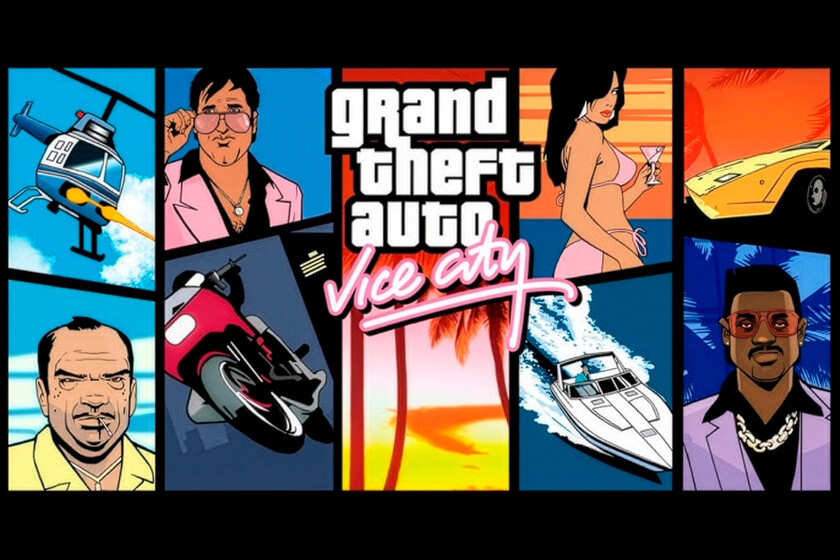
Anyone who has played ‘Grand Theft Auto: Vice City’ probably remembers well that it was not exactly a light game for its time. It was published in 2002 on PlayStation 2 and later came to Xbox and PC in 2003. In those years, installing it and making it work was part of the ritual with requirements that not everyone could meet. That is why it is striking that, more than two decades later, that same title appears running directly in a browser, without installations or disks. The question is inevitable: why now and with what implications.
The response has come in the form of a cease and desist request directed at DOS Zone. The notice, which the platform itself has made public, maintains that the website is “hosting and promoting a browser-based project.” The document demands that the game and any associated functionality be removed, and warns that if this is not done, the company reserves the right to take additional legal action.
Where preservation ends and the legal problem begins
A cease and desist request is not yet a demand, but rather a notice with clear consequences. Its objective is to force the removal of content that the rights holder considers infringing, leaving a formal record of the claim. From that moment on, the designated platform usually faces a clear decision: comply or assume the risk of the conflict escalating. The letter itself anticipates possible subsequent steps, such as communications to the accommodation provider or legal action if the request is not met.
In this case, the notice has not been managed through direct communication between editor and platform, but through EBRAND, specialized in digital surveillance and content removals. This model is common in large catalogs, where the detection and management of potential violations is outsourced to dedicated teams. EBRAND acts as a technical and legal intermediary, in charge of documenting the case and conveying the demands of the rights holder, without publicly assessing the context of the affected project.
DOS Zone, for its part, is presented as a project promoted by video game enthusiasts with a declared objective of preservation and accessibility. In its own texts, the team emphasizes that it does not obtain financial benefits, does not display advertising and does not monetize access to the games it hosts. It also claims to reject any form of illegal distribution and ensures to operate within the legal frameworks it considers applicable. As part of this positioning, the platform maintains that it is willing to remove content immediately upon official request and to cooperate with rights holders.


Screenshot of DOS Zone
The version of Vice City accessible from the browser allowed you to start games with local saves and offered, optionally, saves in the cloud through the js-dos platform to continue the session on different devices. Access was limited in demo form, with progress blocked after the first story point at the Ocean View Hotel. To go further, the system required the user to upload an original game file, which was verified to match the commercial assets.
The claim comes from Take-Two and is part of a broader debate about access and preservation, where the concept of “abandonware” is often invoked. However, this term has no legal validity: the fact that a work stops being sold or changes format does not extinguish its copyright. In the case of ‘Vice City’, the validity of the copyright in USA extends until 2097regardless of the channel through which you try to access the game.

In this specific case, furthermore, the abandonment argument does not even hold up in practical terms. Take-Two continues to sell Vice City and also versions such as ‘Grand Theft Auto: Vice City – The Definitive Edition’ on multiple platforms. Its owners continue to exploit it commercially more than twenty years after its original release. This context reinforces the publisher’s position against any unauthorized execution and helps to understand why the case does not go unnoticed, even in an ecosystem where other similar projects manage to survive without friction.
Images | Rockstar Games/Take-Two | DOS Zone Screenshot
In WorldOfSoftware | I can turn on, control and play my PC from anywhere in the world: three ingredients that make it possible