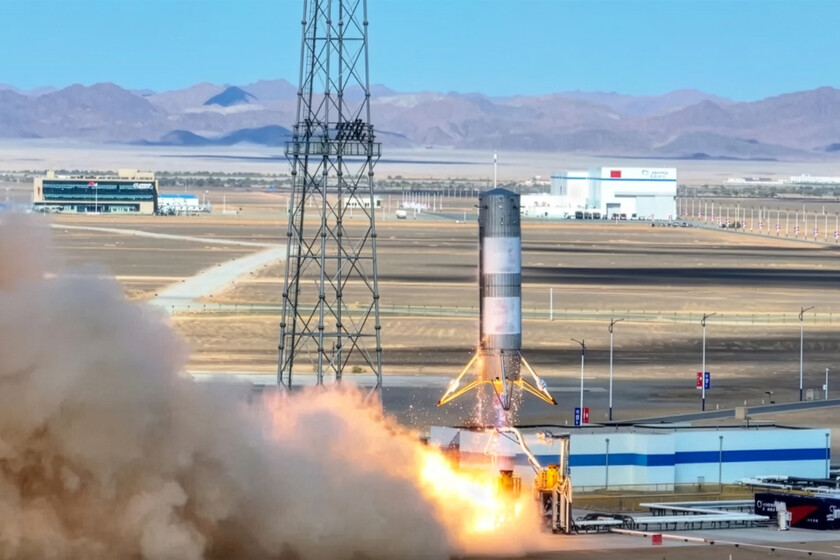
For decades, access to space was conditioned by a simple and very expensive logic: each launch was an almost unrepeatable operation, with rockets designed to be used only once. That model turned cost per kilo into a structural barrier for the entire industry. Reuse broke that inertia and changed the rules of the game, not as an incremental improvement, but as a different way of thinking about launches. Today, that idea has become the bar for who can compete in the new space economy.
The trajectory that is currently taken as a model was not born from a comfortable position. In 2008, SpaceX faced a sequence of technical failures with the Falcon 1 that left the company with no financial margin. Elon Musk even admitted that a fourth explosion would have meant the end of the project. The turning point came first with a successful launch to orbit and, almost three months later, with a NASA contract to transport cargo to the International Space Station. That combination gave oxygen to a company that was still far from demonstrating sustained reliability.
When launching is no longer the most expensive. The traditional model assumed that launch was the most expensive and risky part of any orbital mission. NASA analyzes place historical costs in a typical range of between $10,000 and more than $20,000 per kilogram in low orbit, with an average cost around $18,500/kg. The drop in prices associated with reuse altered that balance: with Falcon 9 and Falcon Heavy, the cost per kilo fell into the range of $3,000 to $1,500. By reducing the cost of travel, the door was opened to launch more often and rethink the scale of projects.
Why LandSpace is coming into the picture now. In this new scenario of more frequent and scale-oriented launches, LandSpace appears. Founded in 2015, a few years after China opened the space sector to private capital, the company has positioned itself as a player focused on building a complete chain from design and manufacturing to launch. Its program aims to recover and reuse the first stage, and in parallel it is committed to liquid oxygen and methane launchers, a combination linked in the industry to cost reduction strategies. This approach fits with China’s need to deploy large satellite constellations in the coming decades.
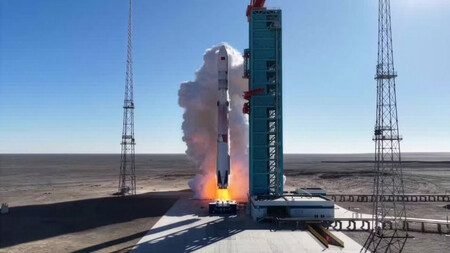

Zhuque-3 de LandSpace
With the Zhuque-3, LandSpace proposed something unprecedented in China for an orbital-class launcher: attempting to recover the first stage in a real flight. The launch made this vehicle the largest Chinese commercial launcher ever flown and the first by a private company in the country to attempt a vertical landing after completing its primary mission. The profile was carefully planned, with a recovery area built specifically for it in the Gobi Desert. LandSpace has not given figures on the probability of success, and the flight was functioning as a recovery test in real conditions.

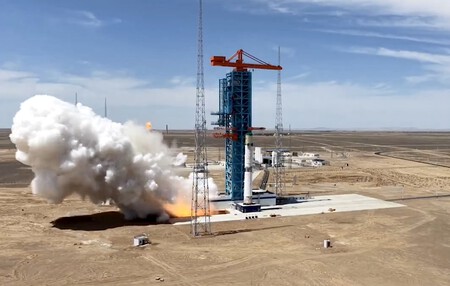

Zhuque-3 de LandSpace
Similar to Falcon 9, with nods to Starship. The comparison with SpaceX is not a rhetorical device, it is in the design itself. Zhuque-3 adopts a very recognizable pattern: nine engines in the first stage, return maneuver, aerodynamic control with grid fins and legs for a vertical landing. At the same time, it is not a carbon copy of the Falcon 9. The rocket is built of stainless steel and uses methane and liquid oxygen as propellants, two features associated with the development of Starship.

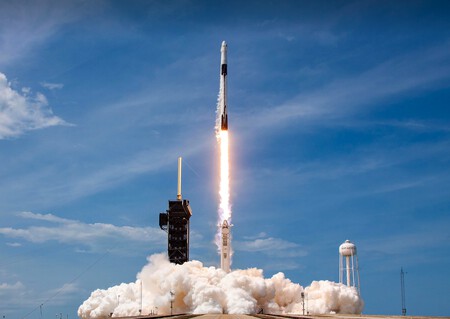

Falcon 9 de SpaceX
The December attempt did not end as LandSpace had planned. After takeoff, the Zhuque-3 completed its initial phase of flight, but the first stage failed to execute the final landing maneuver. According to Reuters, the booster had to start its engines about three kilometers from the ground to stop the descent and carry out a controlled landing, something that did not occur. The result was an impact rather than a vertical landing. The design of the test itself assumed that risk: it was a reuse test, not a complete operational mission.

Reuse and risk tolerance. The commitment to reusable rockets forces us to review how risk is understood within the Chinese space sector. The aforementioned agency highlights that the local industry has historically been dominated by state companies reluctant to see visible failures. The entry of private companies like LandSpace is introducing another logic, closer to controlled experimentation. The fact that failed attempts are documented and publicly explained suggests that the priority is beginning to shift from immediate success to the accumulation of experience, a necessary condition for reuse to be more than a promise.
Images | LandSpace | SpaceX
In WorldOfSoftware | While Silicon Valley dreams of servers in orbit, Russia prepares a nuclear reactor on lunar soil