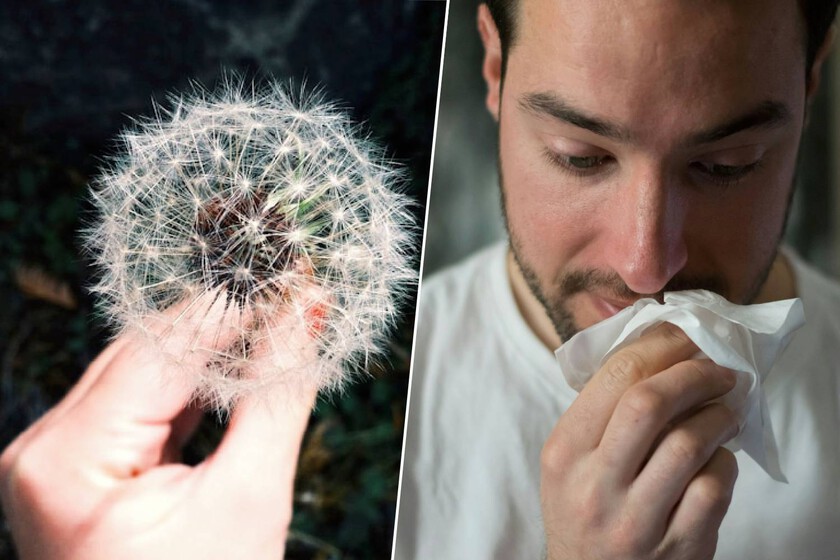
Spring is just around the corner, and although for some it is good news for being able to start making plans outside the home more frequently, for allergy sufferers it is very bad news. The recent meteorology and the climate crisis have been simmering a scenario that experts already classify as extreme and that causes diagnosed allergy sufferers (and even those who are not) to start showing symptoms early.
The experts. The Spanish Society of Allergology and Clinical Immunology itself has sounded the alarm, since the spring that we are about to begin is shaping up to be one of the most intense and harsh in memory for those allergic to pollen in Spain.
And it is not that this year there is “a lot of pollen”, but what is happening is that the behavior of the plants is changing completely. The combination of very intense winter rains with very mild temperatures has generated an “explosive cocktail” that is already beginning to show its first symptoms.
The pollen map. To understand the magnitude of the problem, you have to look at the figures from the SEAIC, which uses meteorological, hydrological and aeropolinic sampling data to draw up its annual forecast. This year, the south and the center of the peninsula bear the brunt, with ground zero in Extremadura, where forecasts point to skyrocketing ranges of between 10,000 and 12,000 grams per cubic meter in both provinces.
In the case of Andalusia, we must highlight Seville, where very high concentrations of 6000-8000 grams per square meter are expected, while in Jaén, the fact that it stands out for its wonderful olive trees means that it also faces “intense” levels.
The center and north of the peninsula. Madrid, Toledo and the rest of Castilla-La Mancha will range between moderate and high levels, easily exceeding the thresholds that trigger the most serious and annoying symptoms.
But the good news is that the north of the peninsula, the Mediterranean coast and the Canary Islands will, in principle, register mild or moderate levels.
The perfect storm. Historically, allergy temperatures followed a fairly predictable biological clock, but not anymore. The abundant rainfall that has drenched the peninsula during the winter months has left the land in optimal conditions. The plants, especially grasses and olive trees, have grown strongly, developing deep roots and dense crowns.
Added to this is the second ingredient of the perfect storm: premature heat. The mild temperatures have caused pollination to come forward, and as the vice president of the SEAIC explains, the environment is increasingly “more hostile” for patients. Pollinosis is no longer an exclusive problem in May and June, but rather begins much earlier and ends later.
Much more allergy. If we look at the trend that has been followed in recent years in this time of allergy, we can see that 2026 is fulfilling the trend that has been set in previous years, so we are talking about a new normal.
A recent study by the University of Córdoba specifically confirmed that the pollen season in Spain has lengthened by about 25 days since the 1990s. The increase in temperatures and desertification are not only stretching the allergy calendar, but are introducing new allergenic species such as amaranths, in areas where they did not proliferate before.


And other factors. Experts point out that the quality of the pollen is something that is also having a lot of influence this season. To understand it, we look at the increase in the concentration of carbon dioxide in the atmosphere, which acts as a fertilizer for plants, which causes them, in addition to producing more pollen, to also express more proteins that are detected by our immune system, generating a greater response that gives us the classic allergy symptoms.
Added to this is also the atmospheric pollution that weakens the respiratory mucous membranes and makes it easier for pollen to penetrate deeper into our lungs.
Take action as soon as possible. With all this data, you have to start taking the treatment (when recommended by the doctor) when these dates are approaching and not wait until you start to feel the infernal itch in your nose or eyes. In addition, checking pollen levels in official sources and wearing a mask at times of higher concentration of pollen to which you are sensitive is the most recommended today.
Images | Brittany Colette
In WorldOfSoftware | It’s normal to make fun of the sudden matcha tea craze, but there is someone who does take it seriously: science