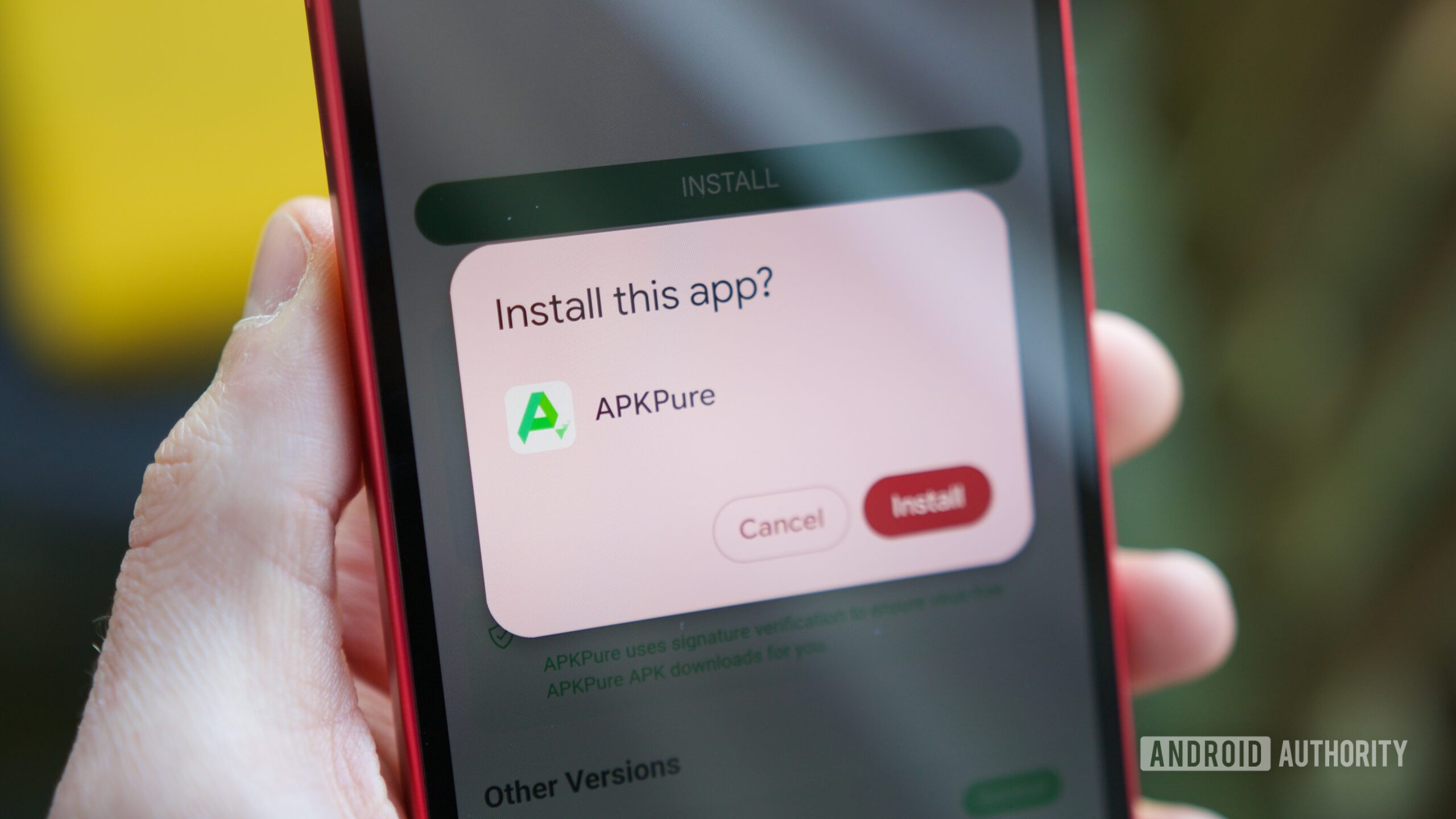
Google announced changes to Android’s sideloading flow last week, and it didn’t take long for opinions to start pouring in. The new process for installing apps from unverified developers, complete with added steps and a one-time 24-hour waiting period, is a major shift from how sideloading has traditionally worked on Android.
We asked Android Authority readers what they think about the new sideloading flow, and the results lean heavily toward skepticism, not so much for the new process, but for the future of Android’s openness in general.
We received over 7,300 votes on our poll and 48% of respondents said the changes make Android less open and hurt power users.
Meanwhile, 31% of the survey takers said they understand Google’s reasoning but still feel the approach is overkill.
Only 18% of the respondents fully supported the move as a worthwhile trade-off for better security, and a small 3% said it doesn’t affect them at all because they don’t usually sideload apps.
That split reflects a broader tension that runs through many of our reader responses — people seem to understand why Google is doing this, but aren’t fully convinced it’s the right way to go about making Android more secure.
Don’t want to miss the best from Android Authority?


Much of the frustration centers around what this represents for Android as a platform. For years, sideloading has been one of Android’s defining features and a symbol of its openness and flexibility. For some readers, adding friction to that process feels like a step away from those roots.
As one commenter put it, “It’s my phone. I want to do what I want, when I want with my device.”
Others readers echoed similar concerns, arguing that restrictions aimed at preventing bad actors end up affecting everyone, including experienced users who already understand the risks.
In particular, the new 24-hour waiting period has become a major point of contention. Some readers feel a delay makes sense in theory but goes too far in practice, especially in situations where sideloading is time-sensitive.
Readers drew comparisons to traditional computing platforms like Windows.
One commenter noted that sideloading isn’t always about experimentation or entertainment. Sometimes, it’s required for work or urgent tasks, making a delay difficult to justify. Some drew comparisons to other computing platforms, where installing software doesn’t come with this level of friction.
“Google is assuming people are using this for entertainment . Sometime you must side load apps for work or for a critical purpose that needs done right away. 24hr waiting is too much. if this is implemented and remains the practice I will not buy Android devices anymore,” said a reader.
“At this point, I wish I could run a full version of Windows natively on my phone .What they call sideloading on Android is literally just downloading and installing an app on Windows. Just saying,” commented another reader.
At the same time, not all feedback was negative. A number of readers correctly pointed out that sideloading itself isn’t being removed, it’s just being slowed down.
“It’s a one time thing, if I need to do it one time. I guess it is not a big deal, hope it’s not a slippery slope thing,” a reader noted.
Users acknowledged that once you go through the initial process, you can choose to allow installations from unverified apps for a period of time or indefinitely.
“As long as they have the setting to keep it on indefinitely after the 24 hour mandatory period I think it is a really good idea,” said a reader.
Still, even among those who understand Google’s intentions, there’s a lingering concern that this could be the start of a broader shift. Several readers described the move as a potential “slippery slope,” questioning whether more restrictions could follow.
Others raised practical concerns about how the system behaves, such as what happens when developer options are turned off.
“I know they give you the option of indefinitely allowing installation of unverified apps; but it’s gonna suck if it resets after turning off developer options just so I can access my banking app,” a reader noted.
For clarity, Google says that if you turn off Developer Options, you’ll need to re-enable them before you can disable the new “advanced flow” for sideloading.
For many users, the balance feels like it may be tipping a little too far in one direction.
In the end, the survey results make it clear that these divided opinions aren’t just about a new sideloading flow or a waiting period. It’s about how users see Android itself.
Google has been increasingly vocal about the need to balance openness with safety, especially as scams and malicious apps become more sophisticated. But for many users, that balance feels like it may be tipping a little too far in one direction.
Thank you for being part of our community. Read our Comment Policy before posting.