Kaitlyn Cimino / Android Authority
On paper, replacing a TV with a projector sounds like an instant upgrade: bigger screen, theater vibes, bragging rights. In reality, though, the switch can be more complicated. Projector owners on Reddit shared what genuinely caught them off guard after ditching their TVs, and their answers mirror much of what we see while testing modern projectors. Below are some of the biggest surprises.
What did you find most surprising about using a projector?
0 votes
1. The jump in screen size can be unsettling

Kaitlyn Cimino / Android Authority
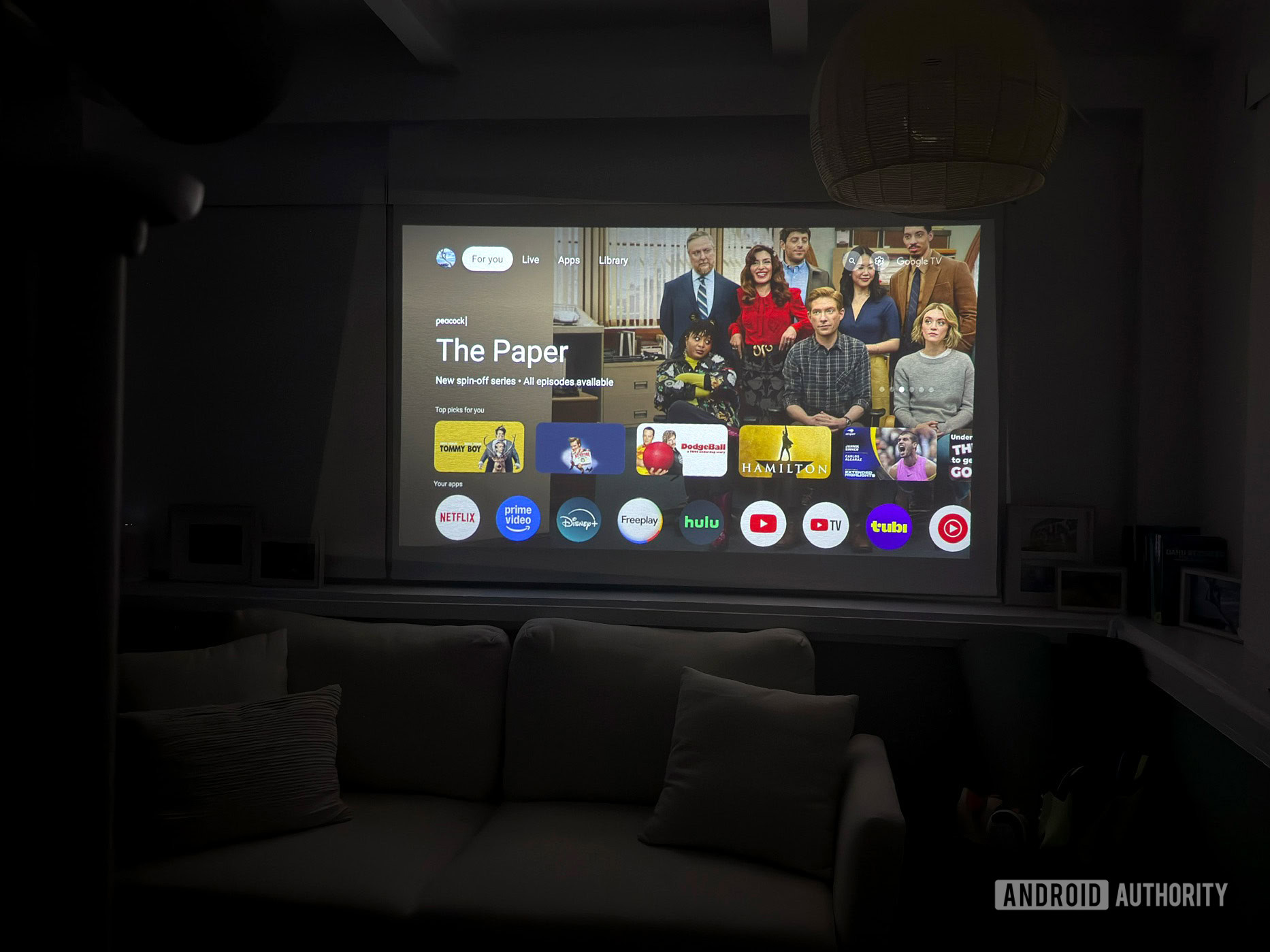
Anyone who has ever attended a backyard movie night knows projectors can go big. What people don’t expect is how different that size feels in daily use. Moving from a 65- or 75-inch TV to a 100- or 120-inch projection often means sitting closer to a much larger image. The setup changes how immersive everything feels, from Christmas movies to cult classics. Meanwhile, even large TVs suddenly start to feel undersized. Once you cross the 100-inch mark, it feels exponentially bigger, even if the numbers don’t look that dramatic.
2. You turn vampire when it comes to sunlight


Kaitlyn Cimino / Android Authority
Most TVs offer brightness specs that brute-force their way through sunlight. Unfortunately, most projectors can’t pull off quite the same feat (although there are powerful exceptions, of course). Many Redditors and I alike have been surprised by how much room lighting negatively affects image quality, even with brighter projectors. Daytime viewing often means closing blinds or accepting washed-out colors. Ultra-short-throw models with ambient-light-rejecting screens help, but they add cost.
3. Built-in speakers usually don’t cut it


Kaitlyn Cimino / Android Authority
Likewise, most TVs ship with decent enough speakers for casual viewing, but many projectors do not. It could be that the scale of the image just calls for extra oomph, but users commonly report that projector audio sounds thin, quiet, or directionally odd. That means that after dishing out the money for a projector and screen, you might also find yourself shopping soundbars or external speakers faster than expected. If you’re budgeting for a projector, assume external audio is part of the package.
4. Plus, there’s the constant fan hum
Kaitlyn Cimino / Android Authority
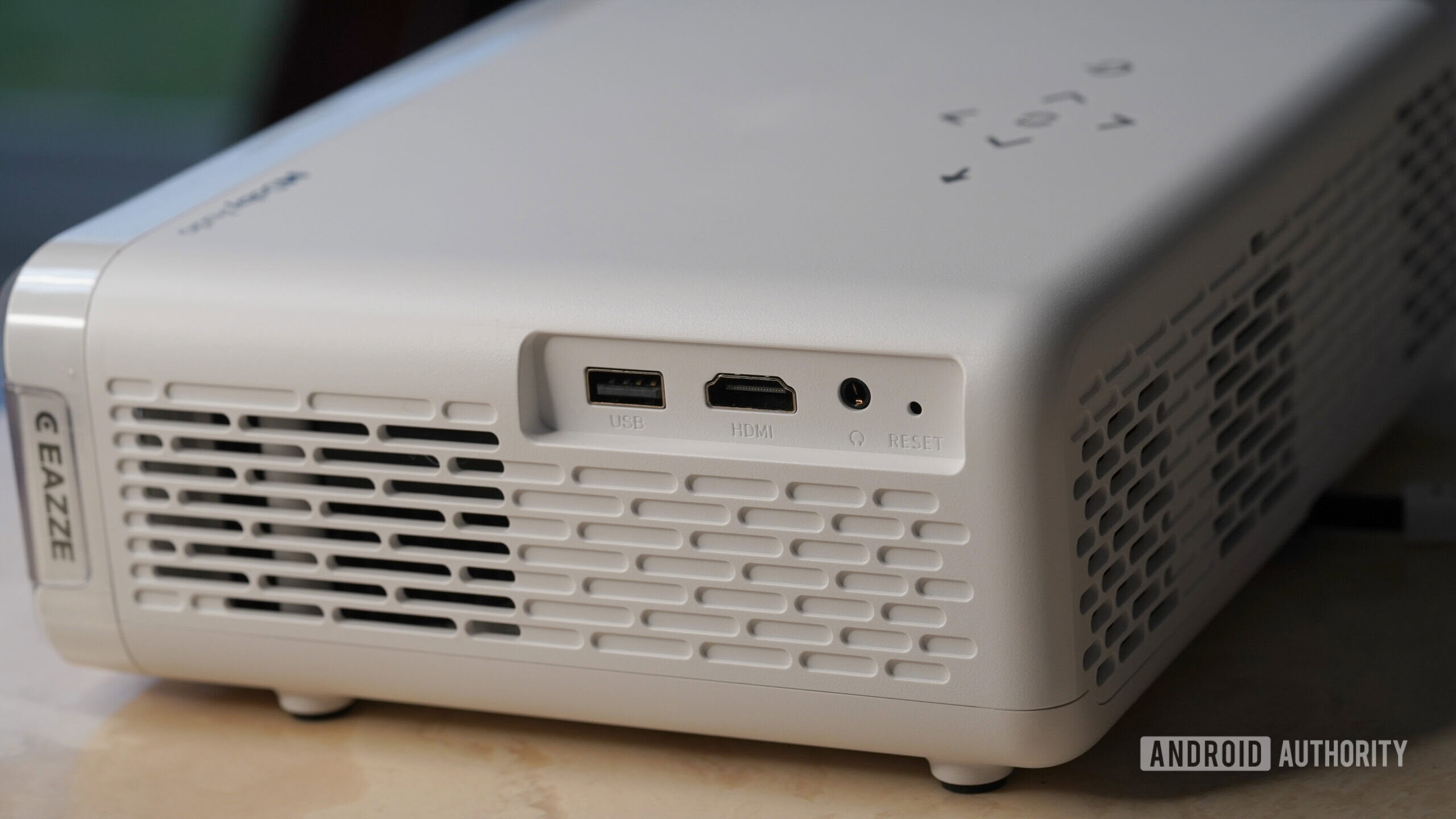
On the topic of sound quality, unlike a TV, a projector also isn’t silent. It’s a bright light engine stuffed into a relatively small chassis, and that means cooling fans. Even laser models need airflow. Several Redditors admit they didn’t think about this until their first quiet movie scene, when a faint hum suddenly became noticeable. It’s rarely loud enough to ruin the experience (especially in eco modes), but once you notice it, you notice it. In my experience, a ceiling-mounted unit over your head can be more noticeable than an ultra-short-throw unit sitting a few feet in front of you. With that said, most modern projectors do a decent job keeping noise under control even if they’re not whisper-quiet like a wall-mounted TV.
Don’t want to miss the best from Android Authority?


5. Setup takes tinkering
Kaitlyn Cimino / Android Authority
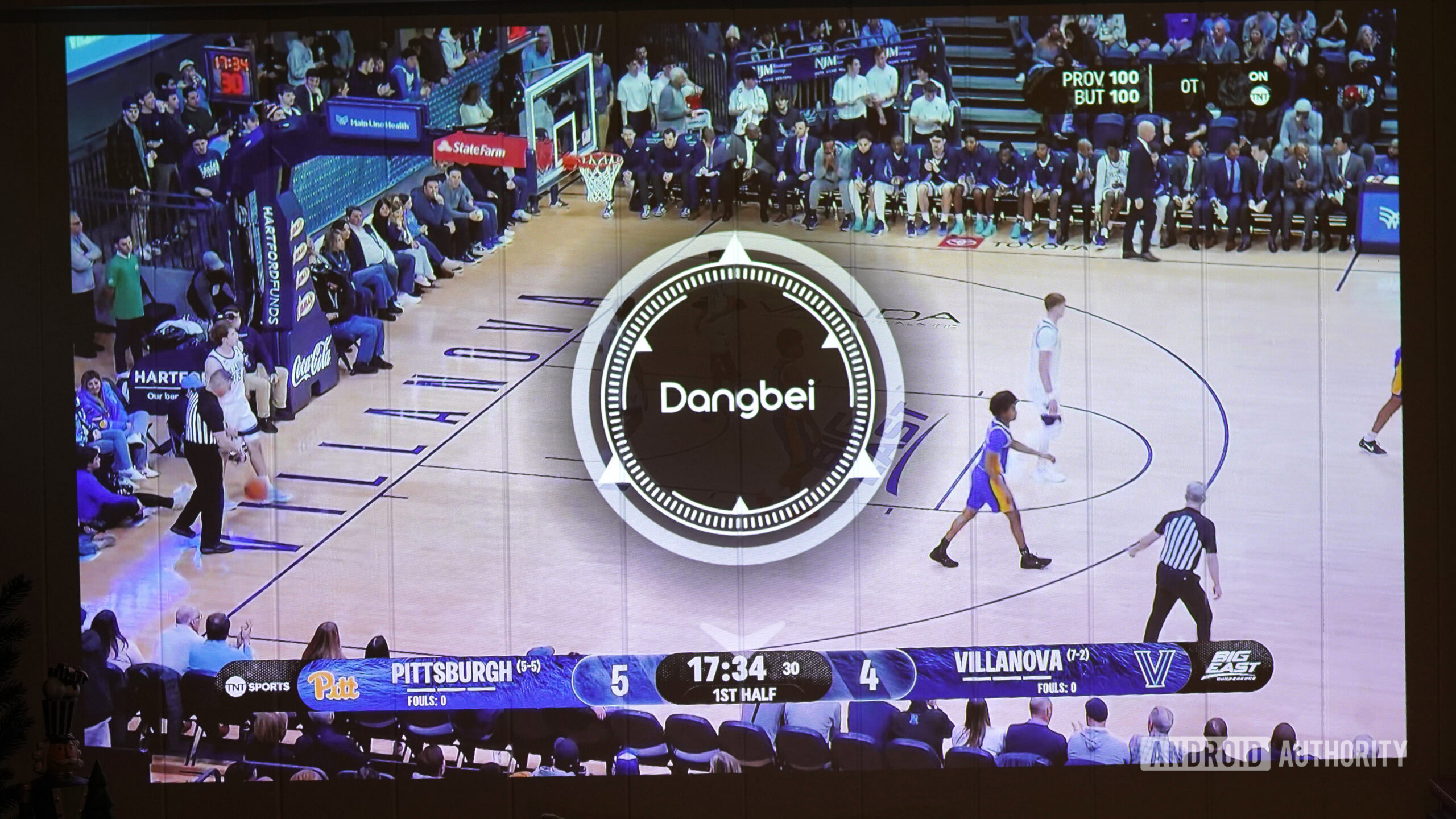
To be fair, modern projectors are dramatically easier to set up than they were even a few years ago. Auto-keystone, obstacle avoidance, and smart calibration tools do a lot of the heavy lifting. However, if you want a perfectly squared, razor-sharp 120-inch image, with fine-tuned contrast and color balance, expect to spend some quality time dialing things in. Mounting, throw distance, screen alignment, keystone correction, focus, zoom, and color calibration all come into play, and that’s assuming you’ve already nailed down a viewing space and lazy boys. You’ll measure. You’ll nudge, then adjust, then probably adjust again.
6. Picture quality is different, not automatically better

Kaitlyn Cimino / Android Authority
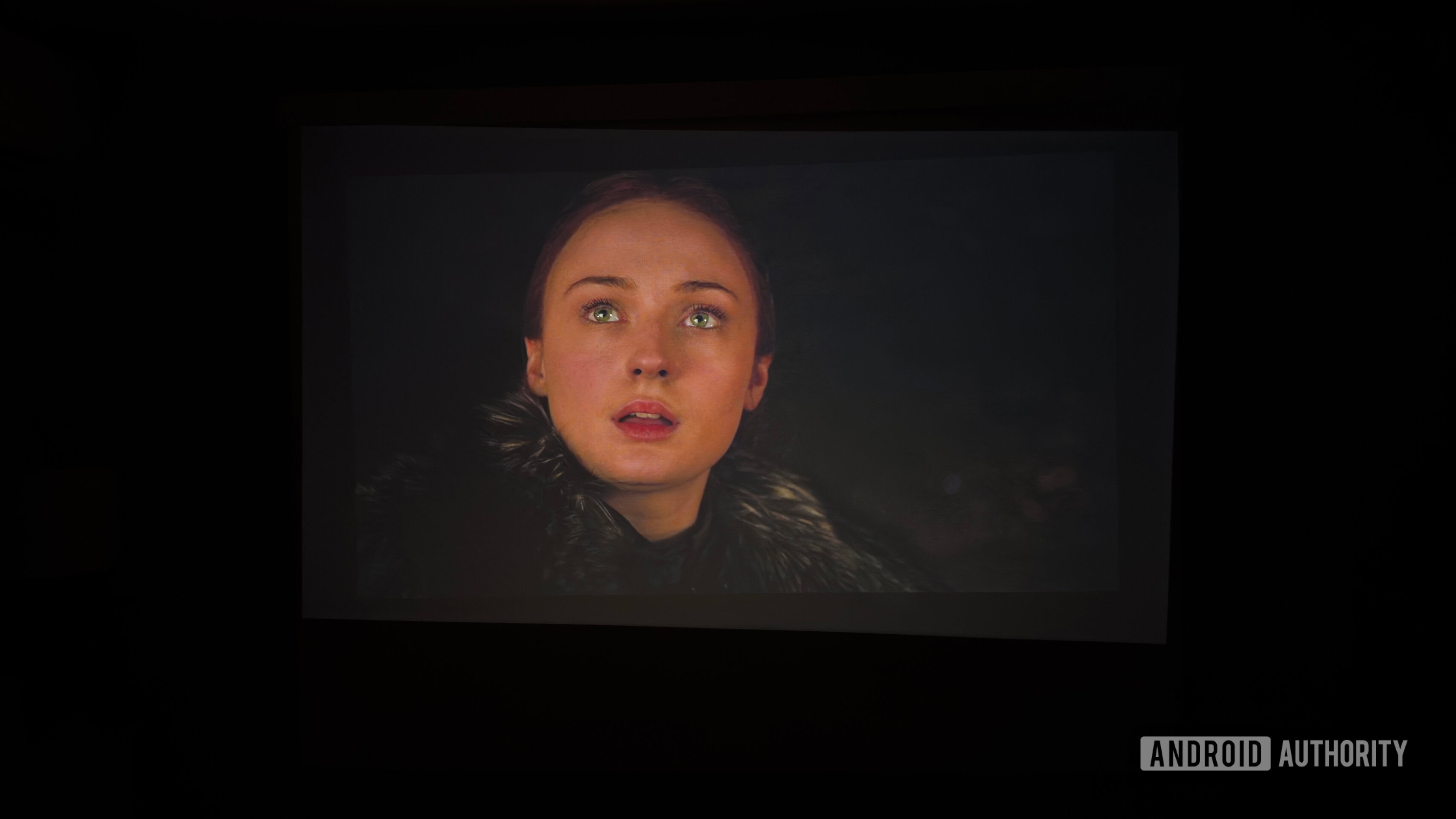
Even high-end projectors don’t always match TVs for brightness, contrast, or HDR punch, and that surprises people expecting a pure upgrade. Black levels in particular can mean less defined shadow detail, especially in rooms that aren’t perfectly light-controlled. At the same time, many users say the softer, reflected light is easier on the eyes for long movie sessions. After a long day of looking at screens at work, I appreciate the softer experience, and others on Reddit concur. I’ve found my TV still wins for raw image precision, but most solid projectors win for scale and pure cinematic feel. Gamers will also note another adjustment, which is input lag. While many modern projectors include dedicated game modes, they don’t always feel as snappy as a good TV with low-latency HDMI 2.1 support.
A projector isn’t just a bigger TV. If you’re chasing immersion and don’t mind managing light and setup, it can be a smooth transition. If you value simplicity, consistent brightness, and very low-maintenance movie nights, a TV probably makes the most sense.
Thank you for being part of our community. Read our Comment Policy before posting.