




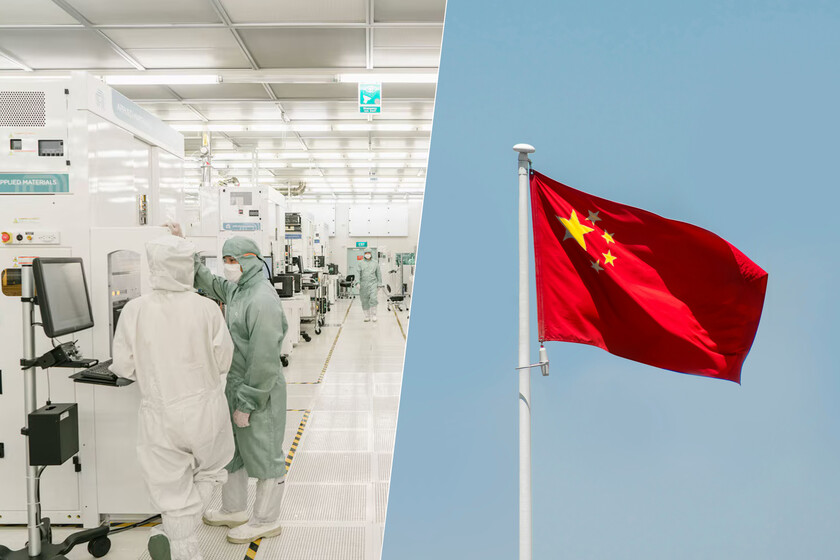
For years, the so-called Entity List of the United States has been interpreted as a geopolitical tool aimed at slowing Chinese technological advance. However, its scope does not remain symbolic or diplomatic rhetoric: it also has immediate economic consequences for companies that operate in the global chip chain. Applied Materials has just proven this with a civil penalty of $252 million linked to exports to SMIC, in an episode that illustrates the extent to which Washington’s controls can translate into tangible costs for the industry.
The sanction. The move follows an agreement with the US Department of Commerce to close allegations of irregular exports of semiconductor manufacturing equipment to subsidiaries of Semiconductor Manufacturing International Corp (SMIC). According to the Bureau of Industry and Security (BIS), between November 2020 and July 2022, there were 56 exports or attempted exports valued at around $126 million, carried out even though certain operations were already subject to licensing requirements. The agreed civil fine amounts to double that figure and, according to the Department of Commerce itself, represents the legal maximum applicable in this case.
behind the scenes. The regulatory sequence begins with a specific notification sent to Applied Materials on September 25, 2020, which warned that certain operations related to SMIC were subject to licensing control for reasons of possible military end uses. These types of communications, known as “is-informed” letters, informed the receiving company that it needed authorization for certain exports, re-exports or transfers.
What exports are in question. The US regulator’s research focuses on ion implantation systems and associated modules, tools used in the early phases of the semiconductor manufacturing process to modify, through doping, the electrical properties of silicon. Although it is not machinery as visible as advanced lithography, its role is essential in multiple technological nodes, both mature and cutting-edge.
The logistical scheme under analysis. The case documentation records a fragmented production and shipping model that involved several jurisdictions before final delivery in China. Part of the equipment originated in the United States, continued its process in South Korea and ended up in SMIC subsidiaries, while certain modules traveled from Singapore independently. BIS presents this journey as a central element to reconstruct the operations examined and evaluate whether the export control framework was respected throughout the chain.
Conditions beyond the fine. The agreement reached is not limited to financial payment. The order includes a denial of export privileges suspended for three years, which could be activated if the company fails to comply with established obligations, along with the requirement for periodic external audits and annual certifications of compliance.
The message. The resolution not only closes an administrative file, it also offers a broader reading about the moment the global technology industry is going through. The export control policies promoted by Washington are showing their ability to transfer strategic decisions to the operational terrain of companies, with measurable financial and regulatory consequences.
Images | Applied Materials | abode vesakaran
In WorldOfSoftware | US sanctions are collapsing China’s factories. It’s bad news for the rest of the world


