




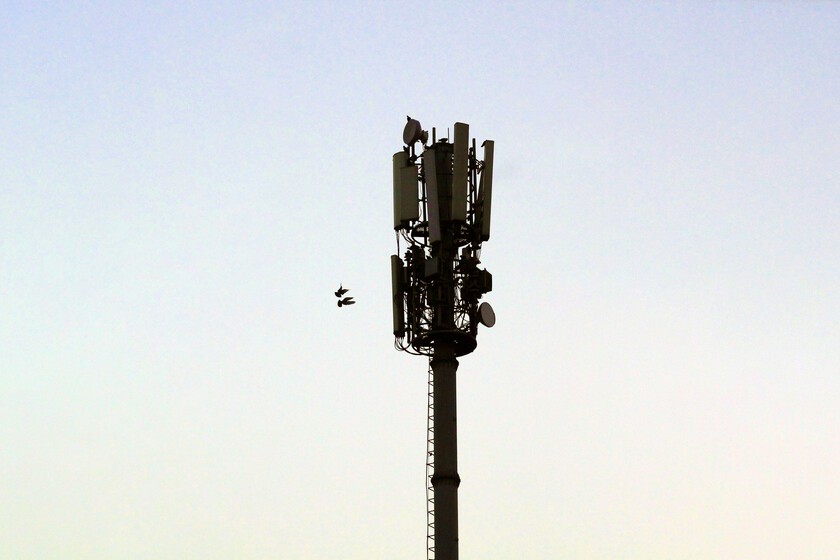
Mobile connectivity is advancing by leaps and bounds, but for it to continue its course, we must make room in the radio spectrum. And that means getting rid of the 2G and 3G networks in Spain once and for all. The Government has launched the official process to turn off these networks in the country, being a technology that has been active for more than two decades and its maintenance represents an operational, energy and security burden.
The problem is that millions of critical devices, from elevators to telecare systems, still depend on these networks to function.
The start of the countdown. The Ministry for Digital Transformation has opened a public consultation until January 20, 2026 to collect proposals from operators, administrations and affected sectors. The goal is to design a roadmap that allows these old networks to be disconnected without leaving anyone behind. According to the official document, it is about “ensuring service to end customers and guaranteeing an orderly transition.”
Why do you have to turn them off? Keeping 2G and 3G active is unsustainable. These networks occupy valuable radio spectrum in the 900 and 2,100 MHz bands that could be reused to expand 4G and 5G, much more efficient technologies. In addition, 2G and 3G consume more energy, have greater security vulnerabilities and offer limited capacity compared to current data traffic needs. In fact, all European countries are also immersed in this same dismantling process.
The drama of forgotten devices. Although our mobile phones have 4G and 5G technology, there is a huge fleet of devices that continue to use outdated mobile technology. The Government consultation identifies several sectors at critical risk:
- Elevators: Spain has more than 1.1 million elevators installed, being the European country with the largest number, according to the Spanish Elevator Business Federation (FEEDA). Approximately half a million are more than 20 years old, according to 2020 data. The regulations require that these devices maintain two-way communication with rescue centers through an automatic call every 72 hours. Many use 2G modules. If the network goes down and they cannot complete that verification, they are out of service. Even worse: if someone is trapped inside, they will not be able to call for help from the service offered by the elevator itself.


- eCall systems in vehicles: Mandatory since 2018, this mechanism makes automatic emergency calls in the event of an accident. The problem is that many cars sold between 2022 and 2024, when it was already known that 2G would disappear, retain 2G modules for these communications. Not all vehicles allow the system to be updated.
- Teleassistance: Devices used by elderly or dependent people to request urgent help. 2G became a standard due to its efficiency and coverage. Although the systems are being renewed, there are still many that have not been updated.
- Dataphones in rural areas: In areas with limited coverage, 2G remains the most viable option for processing electronic payments. Disconnecting the network without deploying new infrastructure would leave businesses in small towns without digital charging capacity.
Critical services in the balance. The official document of the Ministry dedicates special attention to the 112 emergency service and the eCall system. Both must migrate to IMS (IP Multimedia Subsystem) technologies over 4G networks through VoLTE (voice over LTE). In this case, the public consultation asks operators to detail how this migration process is going, what tests have been carried out and what minimum quality indicators they guarantee. This is important, since 112 has to always work.
The M2M and IoT puzzle. According to the CNMC, Spain has 20 million active machine-machine (M2M) lines. An important part of these devices (smart electricity, water and gas meters, fleet management systems, POS, industrial sensors) operate over 2G or 3G. The Ministry has asked operators to identify how many devices there are by sector, replacement plans and technical or economic barriers to migrating them to technologies such as NB-IoT, LTE-M or 4G.
OMVs are also affected. These mobile operators depend on the networks of large operators. If they turn off 2G and 3G without coordinating the opening of wholesale VoLTE, that is, allowing virtual companies to offer voice over 4G, the MVNOs could be left without the capacity to offer voice service to their customers. The public consultation insists that there must be “good contractual and technical practices” to ensure an orderly transition, with clear deadlines and joint testing.
The roaming problem. When a Spanish user travels abroad, or a foreigner comes to Spain, and their terminal does not have VoLTE enabled or compatible, they will not be able to make calls if the 2G/3G networks are turned off. In this sense, the Ministry also asks operators through the document about bilateral agreements, VoLTE roaming tests and problems pending resolution.

Uncertain calendar, but inevitable. Although there are no definitive dates, the shutdown will not be immediate. The official document mentions that operators must detail their calendars by technology and band, specifying whether the cessation will be progressive by area or generalized. The reality is that 3G is already practically disconnected in Spain, but 2G will continue to work until at least 2030 due to the number of critical services that depend on it.
And now what. Once the public consultation closes in January 2026, the Government will analyze the responses and decide the next steps. Among the options is the creation of a permanent working group to coordinate the transition with operators and affected sectors. Once the spectrum is fully released, 5G connections are expected to significantly improve in capacity and coverage. However, everything indicates that there is still a long way to go to finalize this transition definitively.
Cover image | Baatcheet Films
In WorldOfSoftware | How to request an eSIM from each operator in Spain: in which cases it is free and application methods


