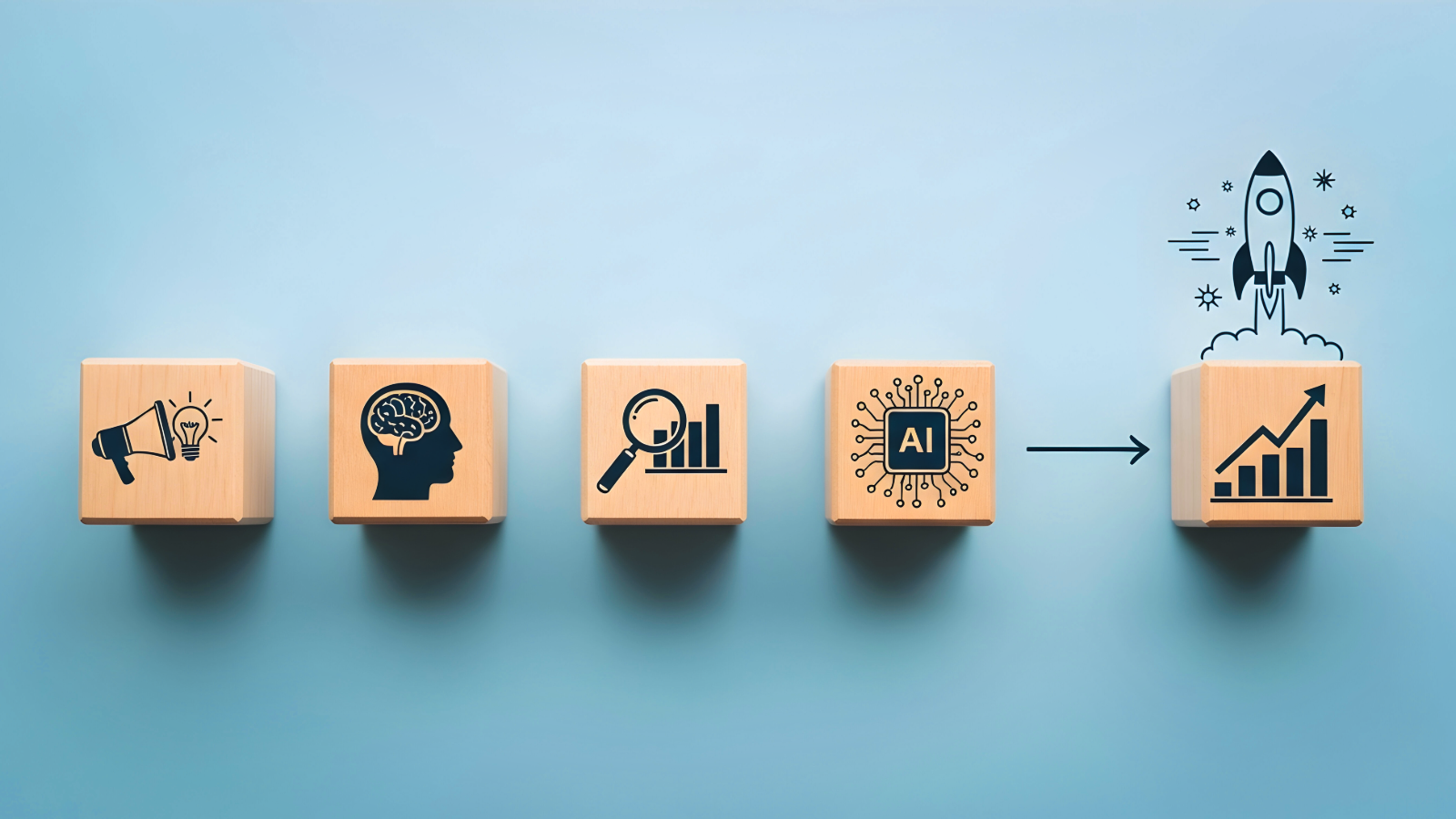
Las ten technological trends that aim to be the most notable for the entire IT sector during 2026 According to the consulting firm Seidor, AI is the central core in a growing number of companies, a technology that is accelerating a transversal transformation that goes from infrastructure and cybersecurity to business models.
Therefore, the consultancy sees 2026 marked, among other things, by the gradual deployment of agentic AI in real environments; more widespread access to high-density computing capabilities; the consolidation of risk-adaptive governance models with AI TRiSM as a framework for AI policies, controls, processes and management tools without losing control of security; the extension of approaches such as composable architecture, a modular architecture based on parts that can be easily combined and replaced; and GreenOps, cloud management thinking about economic costs and environmental impact. The list of the most notable technological trends for the IT sector in 2026 is as follows:
1 – Gradual consolidation of agentic AI
After the exploration phase of 2025, 2026 marks the turning point towards the operational reality of agentic AI. AI evolves and goes from being a reactive tool with chatbots to being in systems with the proactive capacity to act (agent AI).
These agents, in addition to suggesting actions, will execute complex end-to-end workflows and interact with databases, APIs or even with other agents through new protocols, such as A2A (Agent to Agent), a standard that allows different AI agents to communicate and collaborate with each other. Of course, autonomy will not be total or immediate.
There will be gradual adoption, with agents gaining independence in limited and repetitive tasks, while critical processes will have strict human supervision schemes to ensure accountability and compliance with standards.
2 – Active ERP: towards assisted management
Traditional ERP, understood as a passive registration system, will evolve towards an Active ERP model. Powered by agentic AI, this management software will dramatically reduce the need for manual input into backoffice processes, such as internal and repetitive administrative tasks. The goal is not to move towards a company without humans, but towards an organization in which talent is freed from transaction management to focus on strategic decision making and exception management.
3 – Supercomputing and massive computing cloud services
The adoption of AI highlights the limitations of legacy, almost always CPU-based infrastructure for new workloads. The move towards hybrid architectures with more prominence of accelerators, such as GPUs, which are chips specialized in AI calculations much faster than traditional processors, will be confirmed in 2025.
For most companies, this will not involve the development of their own supercomputers, but rather the management of access to massive computing cloud services, that is, to cloud data centers with high processing capacity. The modernization of the infrastructure, or its contracting as a service, becomes an essential requirement, since without sufficient and well-sized computing capacity, the planned software will not be able to execute efficiently.
4 – Adaptive governance and risk management (AI TRiSM)
Trust will be the absolute gatekeeper of AI adoption in 2026. Beyond the speed of implementation, success will be measured by the strength of the TRiSM strategy, based on trust, risk and security management. Companies will move from static compliance models towards dynamic governance capable of monitoring risks such as AI hallucinations or data protection in real time.
In the EU, furthermore, this point is critical, since a strategic tension is anticipated between innovation and compliance with regulations, with the AI Law as a background. This will open a debate on how to make adoption frameworks more flexible so as not to compromise competitiveness compared to other regions with less regulation. In this context, it is worth noting that organizations such as the Spanish AESIA, the Spanish AI Supervision Agency, have already begun to publish support guides to facilitate compliance with regulations, as well as to guide companies in this change.
5 – Preventive cybersecurity: when the defense also goes at machine speed
Cybersecurity accelerates its transition from a reactive paradigm to a preventive and predictive one. Given the advance towards the industrialization of cyberattacks, conventional manual human response is insufficient. The trend to solve this problem is the implementation of AI-assisted defense, which can detect and neutralize threats at “machine speed.”
Furthermore, this model elevates the role of humans rather than eliminating them. Thus, analysts will stop pursuing individual alerts to focus on the supervision of defense policies and the management of strategic incidents, which leaves immediate tactics to automation.
6 – Federated data governance and agent ecosystems
Market fragmentation and privacy regulations are driving Federated Governance, which in 2026 is emerging as the reference model for secure data collaboration. This approach facilitates the sharing of data between organizations without losing control over it, and without the need to physically centralize assets, respecting data sovereignty.
With this base, architectures oriented to the orchestration of agents appear. That is, environments where different AI agents work on distributed data in a coordinated manner. These ecosystems are designed so that multiple AI agents, regardless of their vendor or foundation model, can interact and access business data securely, with the goal of reducing silos and the risk of technological dependency.
7 – Specialized and domain-specific AI
2026 will be the year of consolidation of the coexistence between large generalist models and vertical AI based on smaller and more efficient models. Companies will massively adopt domain-specific models, perfected through efficiency techniques on proprietary data and sector terminology.
This approach seeks to reduce hallucinations and improve regulatory compliance. Also facilitate the reduction of the environmental impact and energy consumption of the LLMs. Likewise, this specialization goes beyond the corporate to industrialize R&D, with vertical models designed, for example, for science that will increasingly accelerate the discovery of materials and drugs.
8 – Hyperautomation and evolution towards “service as software”
The software consumption model will continue to evolve in 2026, and beyond the traditional “software as a service”, an approach is beginning to expand in which companies do not only pay for having the tool, but for the automated result it generates.
This change can be described as a “service as software” logic, which evolves from payment per user towards schemes oriented to payment by result, for each task or service completed, in high-value automatable tasks, such as document review, code generation or triage.
9 – Composable architecture as an enabler
The adoption of AI does not require abandoning current systems, but the evolution towards more modular architectures facilitates a qualitative change. It allows you to design an architecture of agents oriented towards Business Capabilities that collaborate with each other. By 2026, composable and modular architecture will have more strength, where each business capability is exposed as a well-defined functional block.
In practice, it involves developing the system into interchangeable business modules that connect to each other. This modularity is the technical prerequisite for agent ecosystems, and only if data and functions are exposed via APIs can AI agents flexibly orchestrate them.
10 – IT Sustainability: the paradox of AI and GreenOps
Sustainability is reinforced as a critical CIO operational KPI, thanks to strict regulations, such as the European CSRD regulation, and by the “AI paradox”, which indicates that the technology that optimizes corporate efficiency is in turn intensive in resource consumption.
In addition, in 2026 there will be a mature adoption of GreenOps practices, that is, cloud management both focused on finances and ecology. Companies will have to balance innovation with carbon footprint, and make hardware efficiency both a financial and corporate responsibility decision.