




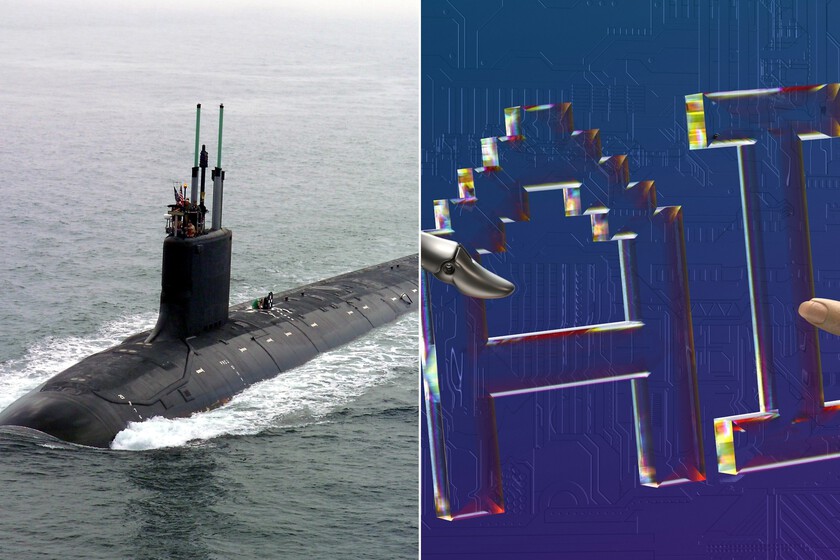
The artificial intelligence race is not only being fought in laboratories, chips or data centers, it is increasingly being played in the field of energy. In the United States, the accelerated growth in electricity demand associated with AI has exposed a barely visible fragility: the network is not expanding at the same pace as technological ambitions. This imbalance is forcing us to look beyond conventional solutions and reopen debates that seemed closed, including some that connect directly with the military sphere.
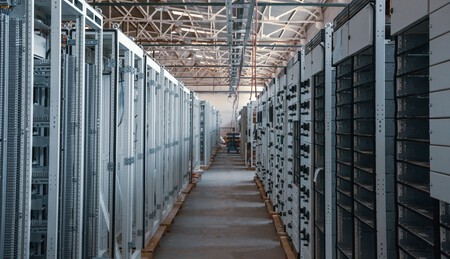
What has been put on the table. HGP has submitted a formal request to the US Department of Energy to redirect two nuclear reactors removed from Navy ships to a civil project tied to data centers in Oak Ridge, Tennessee. The request was channeled through a letter addressed to the Department’s own Office of Energy Dominance Financing, and is part of the so-called Genesis Mission promoted from the White House. According to the documentation, the installation could provide between 450 and 520 megawatts of continuous electricity, aimed at intensive and stable consumption.
The main argument in favor of this idea is time. Faced with the construction of new civil reactors, whether large plants or smaller designs, which tend to move on long schedules, or the start-up of large gas plants, also conditioned by permits and infrastructure, the reuse of existing reactors is proposed as a way to gain speed. The logic is simple: start from equipment that is already manufactured and tested, and convert it into a firm supply for the network. It is, at least on paper, a way to add base power while other solutions mature.
Behind the scenes of the proposal. The initiative does not come from a newly created startup or from an unknown actor in the energy sector. HGP Intelligent Energy is a recently created division, but it is presented as part of a developer with previous experience in the US market, supported, according to the company itself, in energy storage projects, electric mobility and development of network-scale assets. At the helm is Gregory Alvaro Forero, president of the division, who appears on his LinkedIn profile as president of HGP Storage since November 2013. This detail helps frame the approach outside the pattern of an improvised company.

What technology would be reused and at what Price. The reactors cited in the proposal come from the US naval nuclear fleet, where aircraft carriers operate with two reactors and submarines typically operate with one. Models A4W, manufactured by Westinghouse, and S8G, developed by General Electric, are mentioned. Adaptation for civil use would have an estimated cost of between one and four million dollars per megawatt, and the project would also require between 1.8 and 2.1 billion dollars in private capital for associated infrastructure. The proposal includes revenue sharing with the Government, a fund for future decommissioning and the intention to request a loan guarantee from the Department of Energy, with a first phase “as soon as 2029”.
Just because the idea sounds direct doesn’t mean the path is. Bloomberg points out that reusing military reactors for civilian use would be unexplored territory, and inevitable questions arise: how is it authorized, who operates, under what standards and with what responsibilities if something fails. Coordination between federal agencies and regulators also comes into play, as well as the logistics of moving and adapting equipment designed for ships, not a grid-connected plant. For now, everything remains at the proposal level.


Energy sovereignty as a security argument. HGP tries to support its approach with a framework that goes beyond electricity for data centers. In its materials, the company summarizes the idea with an explicit equation, “Energy Supply Chain Sovereignty = National Defense,” and links supply chain resilience to the country’s ability to secure strategic infrastructure, even noting how geopolitical events or social media posts by managers can affect operations and investments. It is the story with which it seeks political and institutional legitimacy.
To reinforce the idea that naval nuclear is not synonymous with improvisation, the context of the World Association of Nuclear Operators enters. According to WANO, the US Navy has accumulated more than 6,200 reactor-years of experience without radiological incidents, with 526 reactor cores, as of 2021. The association attributes that history to the standardization of systems, maintenance and quality of training. It is a relevant fact for the public debate, but it does not close it: a solid record in a military environment does not automatically imply that the jump to civilian use will be immediate or easy.
Imágenes | General Dynamics Electric Boat | Igor Omilaev | İsmail Enes Ayhan
In WorldOfSoftware | The race to bring data centers to space promises a lot. Physics says otherwise
Imágenes | General Dynamics Electric Boat | Igor Omilaev | İsmail Enes Ayhan
In WorldOfSoftware | The race to bring data centers to space promises a lot. Physics says otherwise


