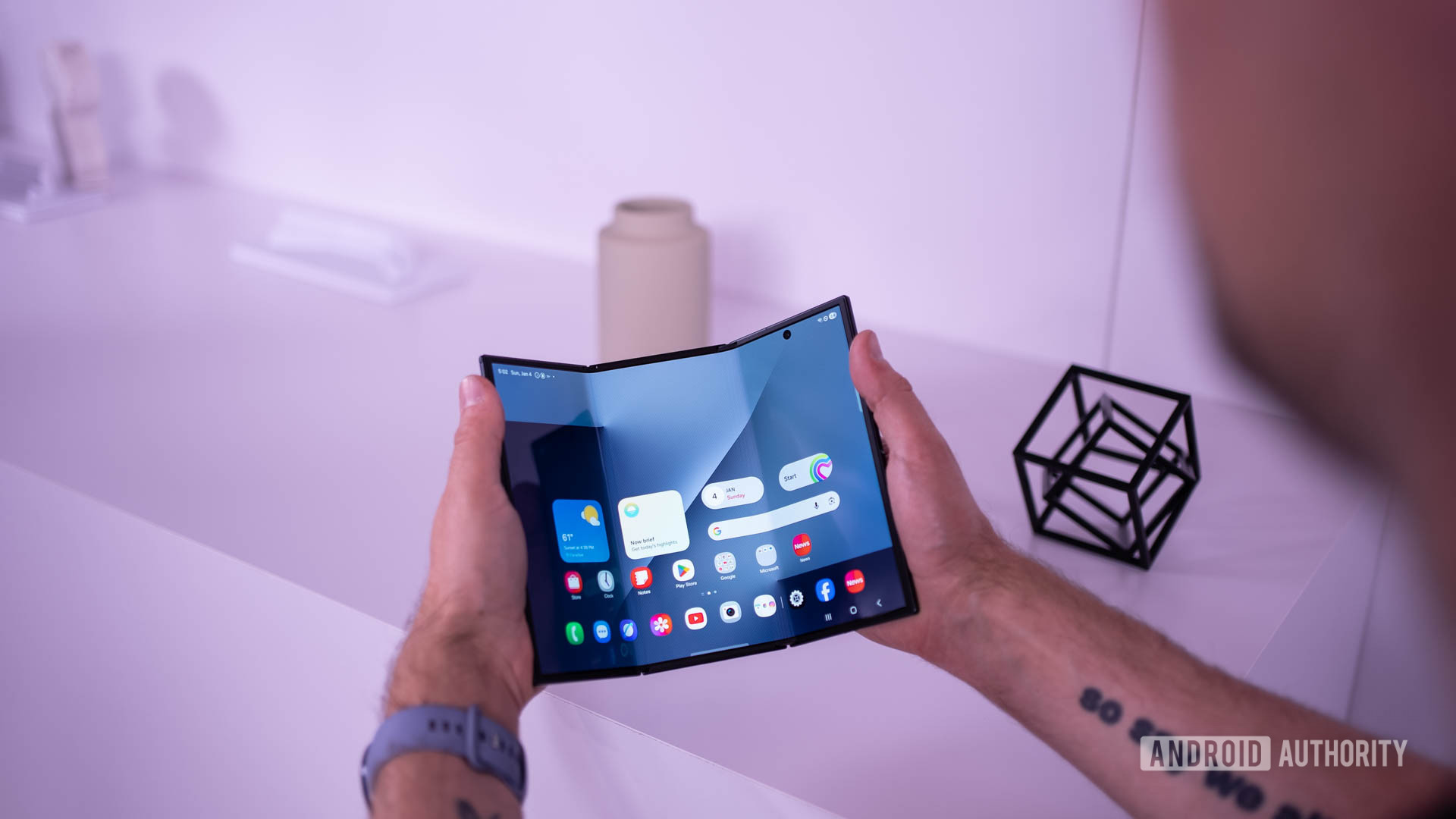
There’s something about foldable phones that reignites that childhood excitement within me. When I first set eyes on the original Galaxy Fold nearly a decade ago, I was awestruck that a tablet-sized screen could actually fold over and fit within my pocket. I didn’t quite believe that the technology would be so pervasive years later, and such is the speed of technology, a screen that folds just once isn’t enough anymore.
Before the end of the year, Samsung announced the Galaxy Z TriFold. It’s the latest phone to compress a small tablet into a candy-bar form factor, but while this larger, multifolding device is impressive as a technological achievement, in practice, Samsung could’ve and perhaps should’ve offered consumers more.
Do you plan on buying the Galaxy Z TriFold?
1075 votes
Impractical as a smartphone, genius as a tablet
Paul Jones / Android Authority
The Galaxy Z TriFold is arguably too large for daily use, at least as a smartphone. While our hands-on time with the device at launch and CES 2026 surprised us by being far lighter and more ergonomic than we expected, even when folded into its 6.5-inch form, it’s still 40% heavier than the Galaxy S25 Ultra and nearly 60% thicker in this guise. Considering that Samsung’s traditional flagship is already somewhat unwieldy, the Z TriFold would be a challenging everyday device even in the most accommodating hands and generous pockets. But these issues are only problems if you’re viewing it strictly as a smartphone.
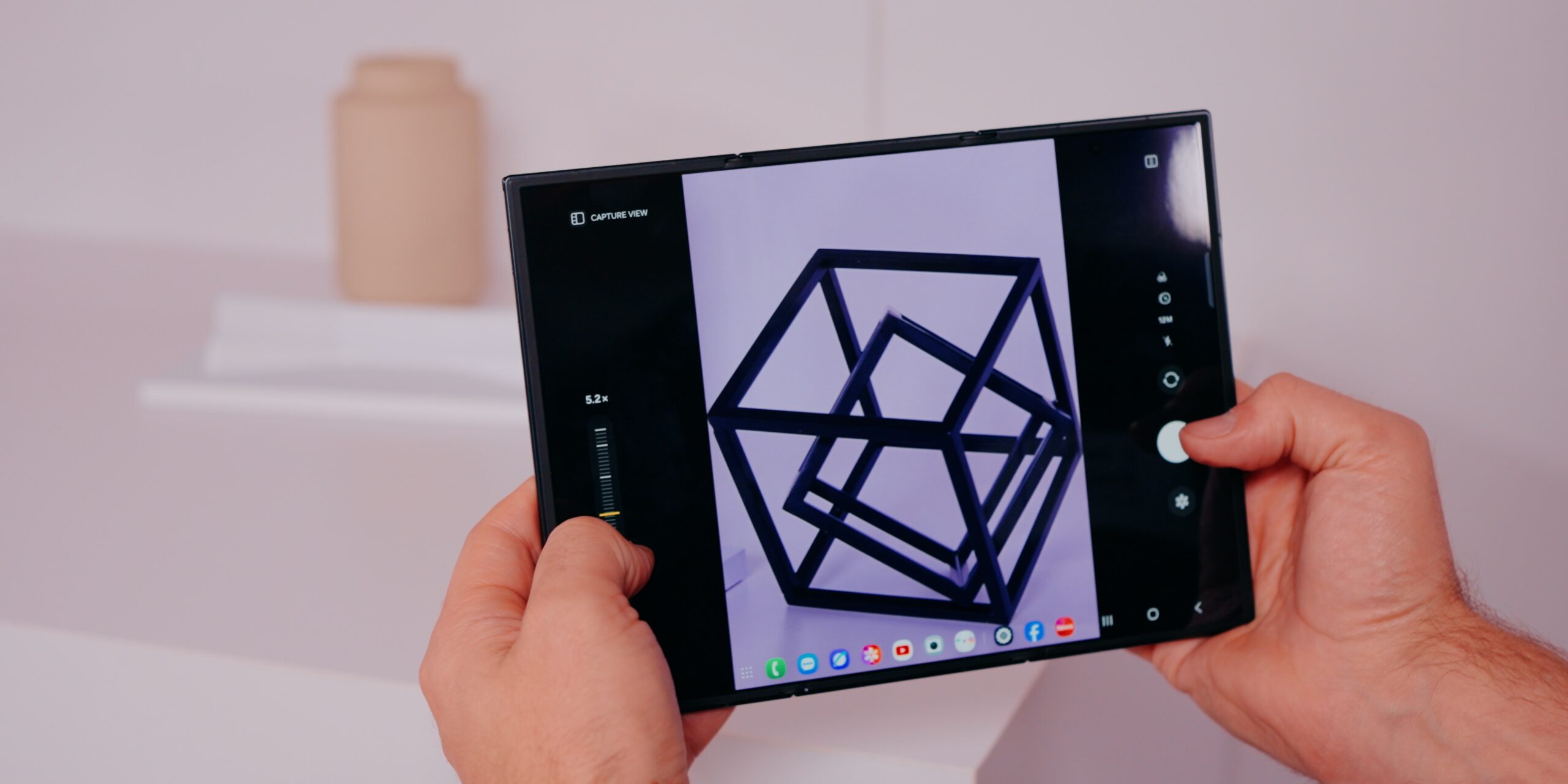
On a tablet, these weight and thickness penalties become practical advantages. It’s a device with a 10-inch screen that folds down into a more easily pocketable form, especially compared to Samsung’s much heavier but similarly-sized Galaxy Tab series. That exterior screen also allows users to employ the device as a smartphone — however unwieldy it might be — replacing two devices with one. And, since it’s larger than the traditional Galaxy Z Fold series and adopts a 4:3 aspect ratio, the TriFold is better equipped for viewing documents, reading, and taking notes. It’s more clearly geared towards multitaskers and those who value a compact productivity device.
The TriFold is too bulky as a smartphone, but too small to be a reliable, prolonged workspace. So who is it for?
The TriFold has the potential to be a compelling mobile workspace, with support for a fully-fledged Samsung DeX experience that forefronts its multitasking efforts, the power of the Snapdragon 8 Elite with plenty of RAM and storage, and input devices like a mouse and keyboard. But, there’s a problem — Samsung didn’t make the Z TriFold large enough for serious mobile workspace considerations.
What is the Galaxy Z TriFold’s best use case?
21 votes
10-inch screens are far too small for comfortable hours-long work use. I own an 11.6-inch Windows laptop, and while the keyboard is certainly comfortable and just large enough to hold a rhythm, the screen’s limited margins make multitasking painful. There simply isn’t enough room on screen to display readable text without massively increasing the DPI or lowering the resolution, or bringing the screen right up to one’s face. While legibility on the TriFold is likely oodles better than my dated laptop, I’d still have to crank my neck and strain my eyes to use it for extended periods.
Samsung should’ve made the TriFold even larger

Lanh Nguyen / Android Authority
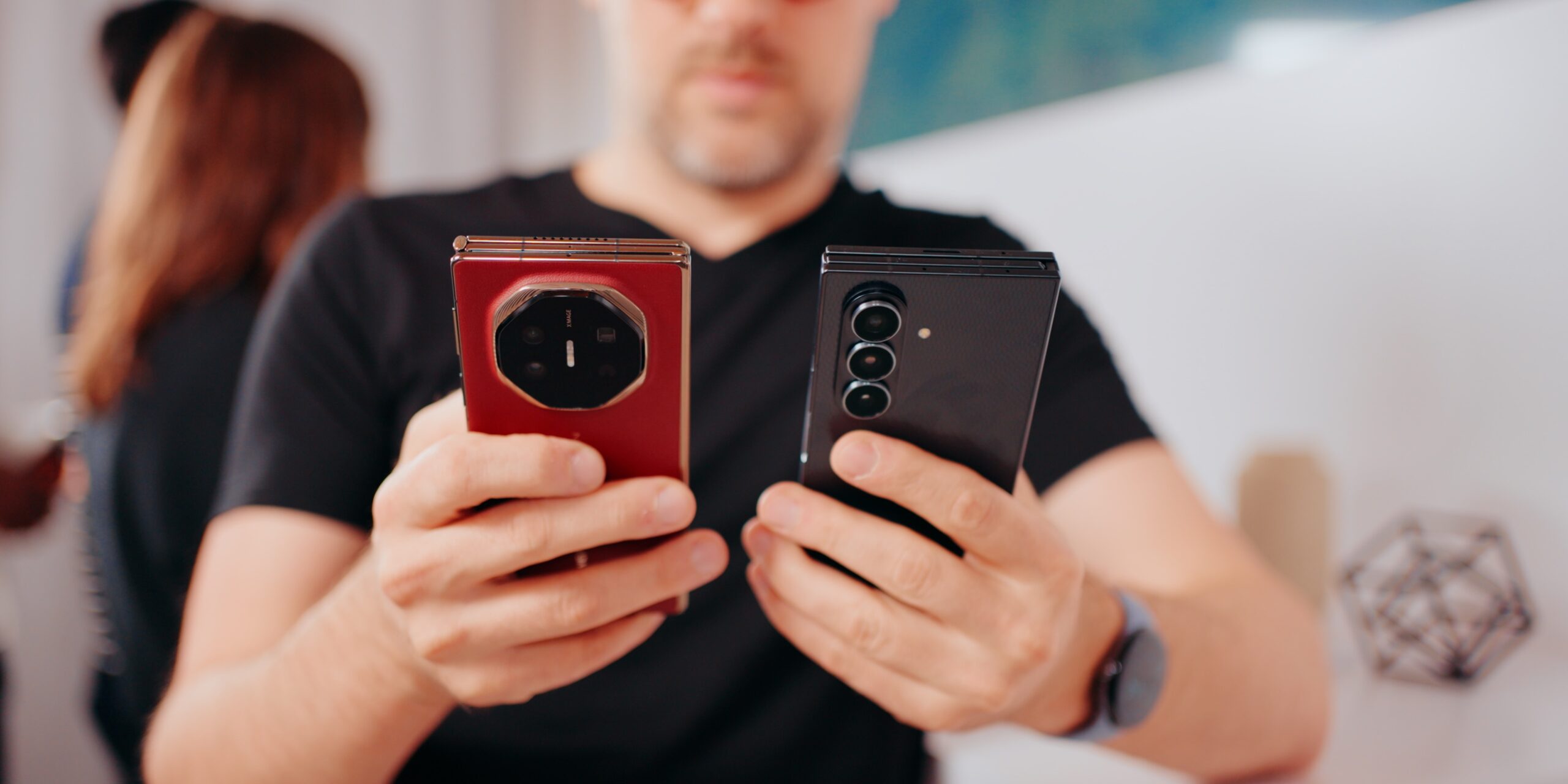
Since Samsung pigeonholes the TriFold as a smartphone first, tablet second, the device is too large as a phone but too small as an effective portable workstation. However, it makes far more sense for Samsung to target the latter use case, given it already has a compact tablet contender in the Z Fold line.
Thanks to its foldable tricks, a larger TriFold would still benefit from its form factor’s advantages. Granted, increasing its size would make it less effective as a smartphone, but a 13-inch foldable tablet that can concertina into a smaller device can still replace several devices while saving on valuable weight and space.
You can easily buy four Galaxy Tab S11 slates for the price of one Z TriFold.
At this point, I’d be remiss to not mention that the Galaxy Z TriFold is a ludicrously expensive product. At $3,000 in some markets, it costs more than 4 Galaxy Tab S11 slates, and you’d still have some change left over for tablet covers. But you can’t fold Samsung’s cheapest top-line tablet, and it weighs 50% more than the Z TriFold.
There’s also the laptop argument. I understand that consumers can purchase several ultrabooks for the price of a TriFold, but again, the latter offers intriguing benefits, including greater utility and flexibility. For frequent flyers who regularly travel with a single bag, reducing the size and weight penalties of their tech is a constant goal. In this regard, a larger TriFold seems like the perfect fit.
A foldable device made for no one?
Lanh Nguyen / Android Authority
Given that massive price tag and the TriFold in its current guise, I’m not completely sure who the device is made for. Sure, it’s presumably a demonstration of Samsung’s technological and developmental muscle, but it isn’t even the first device in this particular genre. HUAWEI beat Samsung to the punch many months ago with the Mate XT.
Ultimately, the success of the Galaxy Z TriFold depends on the lens through which you examine it. As a phone, it’s a thick, heavy, and bulky pocket weight that isn’t all that practical and far more cumbersome than the original Galaxy Z Fold series. However, as a laptop replacement, the Galaxy Z TriFold weighs a third as much as an ultrabook, folds into an area no larger than a flagship phone, and can easily power any Android app you throw at it. Throw in a compact keyboard and mouse, and you have yourself a mobile office that can fit in a fanny pack, let alone a laptop bag. If only Samsung had made it for the latter niche.
This would’ve set the TriFold apart and given it another purpose to exist, not as an enthusiast-only halo device but a genuinely useful pocketable productivity powerhouse that slips into a suit pocket with ease. As it stands, it’s just a device for early collectors, and that feels like a waste.
To be fair to Samsung, I do think the TriFold is an exciting development, but I can only hope that the Z TriFold 2 stretches out its limbs a little further than its predecessor.
Don’t want to miss the best from Android Authority?


Thank you for being part of our community. Read our Comment Policy before posting.