Even as one of the most vulgar, dark, and hilariously brutal shows on television, “The Boys” quickly dominated Prime Video after its 2019 debut. Giving the superhero genre the middle finger, the show was helmed by “Supernatural” creator Eric Kripke and adapted from the unfiltered, highly offensive comic book series of the same name by Garth Ennis and Darick Robertson. Initially published in 2012, it introduced us to a world not unlike our own, where superheroes exist and, much to our disappointment, are composed of vain, despicable, and often psychotic individuals. This is the main focus of a team that calls itself The Boys, an off-the-books CIA squad that does everything it can to blow the bleedin’ door off the conspiracy wrapped in a superhero cape.
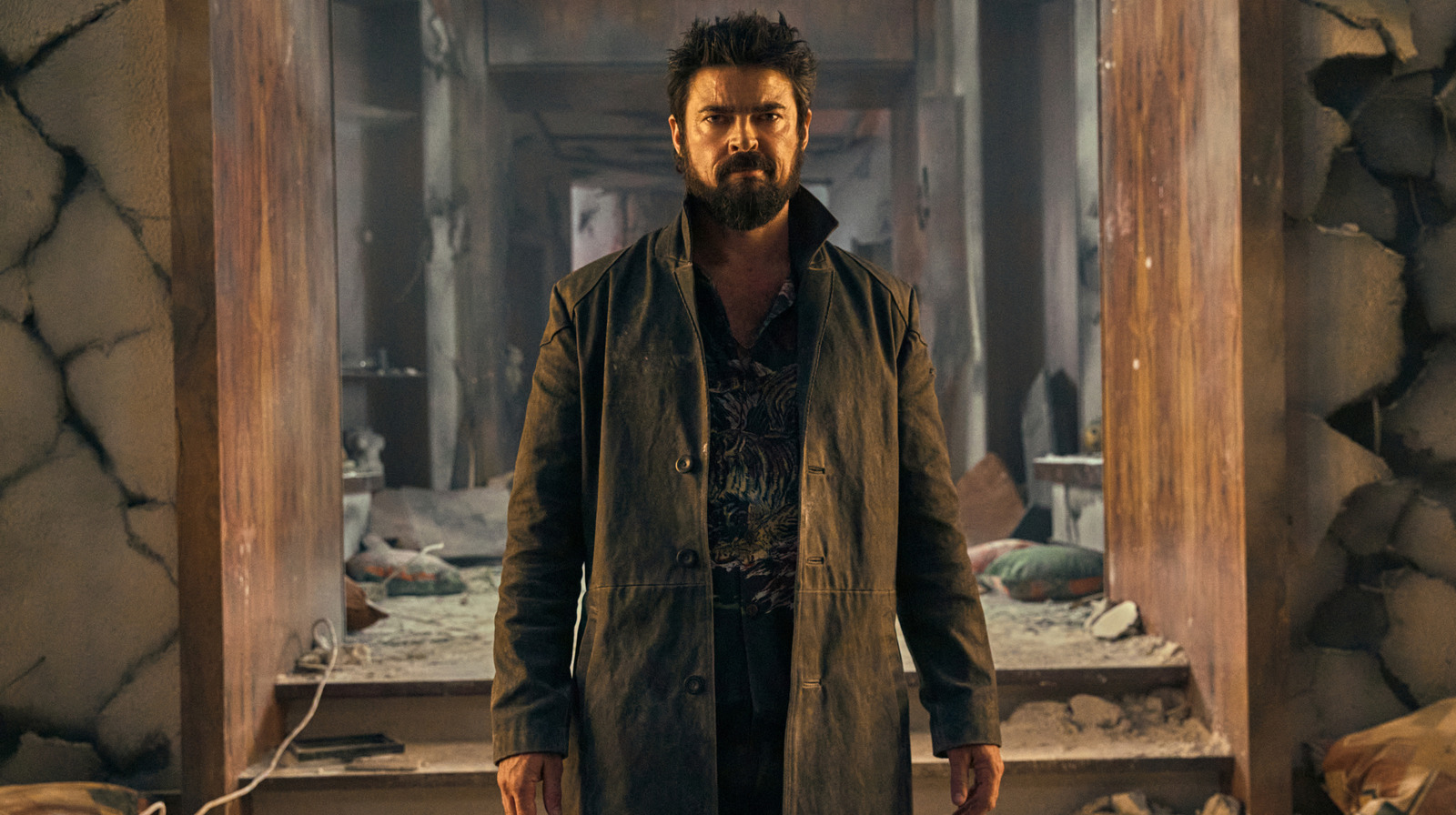
Now in its fourth season, the show has done an exceptional job of bringing Ennis’ often unbelievably vulgar world to life, with much of the credit going to the supe-hating antihero, Billy Butcher (Karl Urban), and his sworn star-spangled enemy, Homelander (Antony Starr, who appeared in the overlooked horror film “Cobweb”), who is this world’s unhinged answer to Superman. Even with all the violence and R-rated carnage that unfold in this superhero show, there are a handful of story beats from the original comic book that didn’t make the cut. Having compiled just such a collection, here are five plot points in particular that were too big to ignore.
The Boys are all using compound V

It took three seasons before Butcher and Hughie received a dose of Compound V (the man-made chemical that turned human babies into super ones). In Ennis and Robertson’s original version, though, The Boys already had it running through their veins. Besides being incredibly offensive on the page, the titular team also fought more offensively in their battle against Homelander and The Seven. Doing so demanded a little more kick in their step, of which there were many. However, by delaying its introduction into the show and redirecting its purpose, it provided a different kind of plot thread that became integral to the new take on The Boys and their universe.
In the adaptation, Compound V becomes more of an addictive affliction than a helpful upgrade to fight Vought’s “heroes.” In season 3, Butch goes head-to-head with Homelander and becomes dependent on the drug, which, by the end of season 4, has had a lasting effect on the leader of the Boys. The outcome also leads to a far more monstrous set of powers for Butcher, giving him a tentacle-filled chest cavity rather than just super-strength. It’s a horrific upgrade that also feels like the manifestation of Butcher’s darker nature becoming more prominent in his plans against Vought and its milk-obsessed frontman, Homelander. More importantly, it highlights that Hughie (Jack Quaid) and the rest of the Boys are determined to defeat the supes on their own terms.
The plane hijacking is this universe’s 9/11
In one of the show’s most pivotal scenes, which highlights just how inept and heartless Homelander can be, he abandons a terrorist attack on a commercial airliner mid-flight, leaving it to crash and kill everyone onboard. In a show that made a conscious effort to shock and appall viewers with what these supes were like, this was a standout moment, but one that could’ve been so much worse had it stuck to Ennis’s original story. In the comic version of “The Boys,” the failed attempt to save the flight is more of a team effort, with all members of The Seven present, not just Maeve (Dominique McElligott). Even with the extra help, the mission still ends in failure during what is this universe’s 9/11.
Indeed, to add a bit more realism to Ennis’ fantastic F-word-filled universe, the tragedy that occurs is not too dissimilar from the real one in 2001 — the difference being that the flight in “The Boys” comics crashes into the Brooklyn Bridge rather than the World Trade Center. On the page, it was certainly a shocking read in “The Boys” #21, and the altered version is just as impactful in the show. However, adhering to the event’s timeline in the comics would’ve set the show back almost two decades, thereby changing the kind of social commentary Kripke’s live-action iteration would’ve made.
Billy kills Ryan at childbirth
As much of a vengeful spirit Butcher has become, one of the few things that kept him clinging to his humanity was the super-powered son he never had. Since season 1, the future of Ryan Butcher (Cameron Crovetti), the son of Billy’s thought-to-be-dead wife, Becca (Shantel VanSanten), and Homelander, has been fought over by Vought’s frontman and his colorful-shirt-wearing rival. When it comes to the comics, however, Ryan barely took his first breath before he was brutally bludgeoned to death by Butcher in one of the most disturbing moments of the story.
Just like in the show, Becca was sexually assaulted by a then-unknown superhero during their honeymoon. Some time later, Billy returned home one night to find that his wife had given birth but had not survived. Instead, he was greeted by a super baby hovering above her body, which then shot him with its laser vision. His response was to beat it to death with a bedside lamp. It’s another incredibly dark moment in the comic that, even with the show’s many despicable sequences, it thankfully drew the line at killing a newborn baby on screen. At the same time, there’s no doubt that Billy’s short-tempered, traumatized nature carried over without this horrific act, and a child didn’t need to die to achieve that.
The origins of Mother’s Milk’s nickname is gross
In the live-action iteration of “The Boys,” the only superpowered person on the team, for the most part, was Kimiko — aka The Female (Karen Fukuhara). In the comic, though, The Female isn’t the only one packing extra firepower. Mother’s Milk, played in the show by Laz Alonso, had super-strength, speed, and durability, as well as heightened senses in Ennis’ comic book series. It’s just the source of his power that is somewhat alarming. While the show reveals that MM’s real name is Marvin T. Milk, his nickname in the comics is also where he gets his enhanced abilities.
It turns out that, to survive, MM was required to drink his mother’s breast milk far into his adult life. It’s an act that traumatized Mother’s Milk in his later years, particularly because his mother had been confined to the basement, having reached a monstrous size and developing tentacle-like nipples. It’s yet another example of Ennis applying a darkly grim spin on the superhero world that didn’t make it into the show. It’s likely that, like the delayed appearance of Compound V, including Mother’s Milk’s origin story in the adaptation would’ve given our Boys a fighting chance, which Kripke seemed set not to give them.
Black Noir is a Homelander clone that stole his identity
When Black Noir first appeared in “The Boys” comic book, fans probably thought they already had the inside track on where the story was going. More importantly, they had a good guess about who was under the mask of the muted member of The Seven, a figure just as terrifying as Homelander. That’s because in the comics, Black Noir is Homelander, or at least a clone of him. Near the end of Ennis’ epic, claret-covered tale, Homelander goes insane after being shown images of himself committing monstrous acts he doesn’t remember. It turns out, though, that these images aren’t of him but of his clone, who has been hiding in secret all this time and posing as Black Noir. Not only that, but he is also the real person behind the rape of Becca Butcher, and therefore the real cause of Billy’s pain and misery.
The big reveal leads to Noir killing Homelander, and shortly after, Butcher brutally kills Noir, pulling his skull apart with a crowbar and yanking out some of his brain with his bare hands. It’s unclear whether such brutality will make its way into the final season of “The Boys,” but it’s a safe bet that Black Noir won’t be as involved. The show made it clear it was veering from the original story by not only killing Black Noir in season 3 but also replacing him with a chattier version in season 4. We’ll just have to see who gets caught on the receiving end of Butcher’s crowbar when the final season of “The Boys” arrives on April 8, 2026. If you’ve not watched it yet, now is a great time to start.