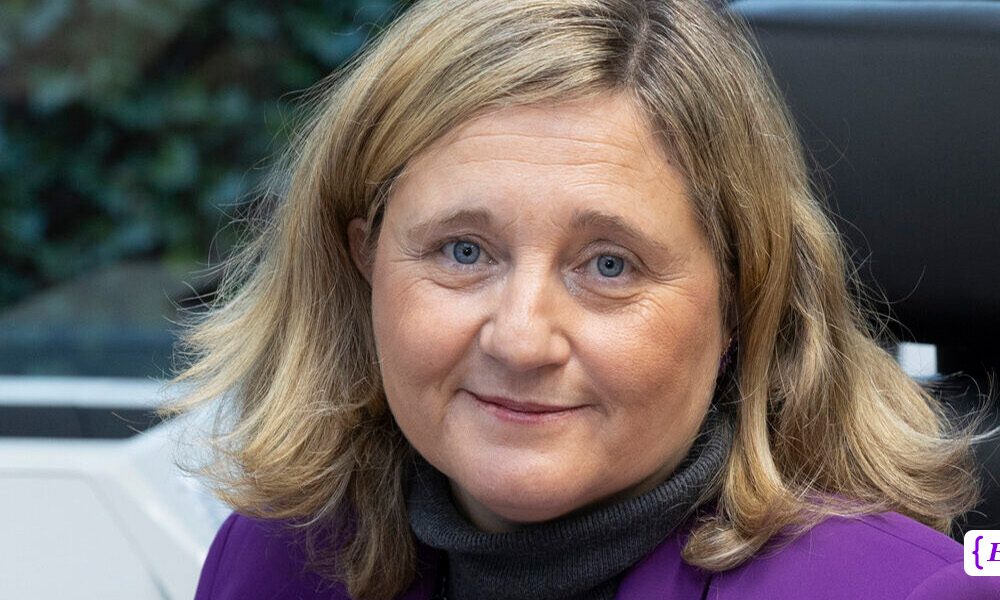
Malú Delicado has held the position of CIO for the Iberia region of Mapfre since 2023one of the main insurance companies in Spain. With more than two decades of experience in the company, Malú Delicado is currently focused on the evolution of the technological transformation that Mapfre is developing in Spain, with the aim of overcoming the dispersion and obsolescence of the IT systems it used.
This digital transformation process began with the approval of a specific plan, designed in 2024 that will be in force until 2030, and which is structured in two stages. Delicado was already recognized as the most influential CIO in Spain in 2024 for her role in its development, for which she has taken advantage of her experience at Mapfre in management and coordination of different projects related to technological transformation both nationally and internationally.
The manager, who graduated in Biological Sciences from the University of Alcalá, joined Mapfre in 2005 as head of the insurer’s Internet portal area, and her level of responsibility has been growing since then. When she was appointed CIO of the company’s Iberia, she held the position of Mapfre’s Technology Director for Eurasia.
In addition to betting on technology as a driving force for companies, Malú Delicado points out the importance of women having female role models in positions of high responsibility related to technology, as well as increasing the presence of women in STEM careers and building safe and inspiring spaces for women who want to advance in technology.
(MCPRO) What challenges do women who occupy positions of technological responsibility in companies that are not “pure” technological have to face today?
(Delicate Malú) In organizations whose main business is not technology, such as the insurance sector, the first great challenge is to demonstrate that technology is not only a support area, but an engine of transformation and value creation. In these environments, Technology leaders must combine a solid technical base with business vision, influence capacity and transversal leadership to integrate innovation in the company.
Added to this is a challenge that remains structural: the lack of visible female role models in highly responsible technological positions. It is necessary to have close models so that many professionals can project their career towards these positions. That is why it is key to give visibility to female talent in technology and create spaces to share experiences, learnings and opportunities.
Another relevant challenge is the constant evolution of digital skills. Technological transformation requires continuous updating in areas such as data, cybersecurity or artificial intelligence. Guaranteeing equitable access to training and strategic projects is essential so that female talent can develop in the same way.
(MCPRO) What are the main obstacles, in your opinion, to there not being more IT directives in large companies in Spain?
(Delicate Malú) The challenges are intrinsically related to the obstacles, which, in turn, explain the low presence of IT directives in large companies. Often, The first obstacle is invisible: it manifests itself through unconscious biases in the selection and promotion processes. The historically lower presence of women in STEM careers also plays a role, which reduces the volume of professionals who reach senior positions in technology.
Conciliation and co-responsibility continue to be determining factors. Senior technology management positions usually involve high demand and availability, and moving towards more flexible and inclusive organizational models is key so that talent is not lost.
From Mapfre’s corporate culture, diversity and equal opportunities are declarative principles, but of course also real commitments. Promoting active policies for the development, training, internal promotion and visibility of female talent is part of a vision that understands that diversity enriches decision-making and strengthens innovation. The challenge is not only that there are more women in technology, but that they can lead it under equal conditions and with the recognition they deserve.
(MCPRO) What is the role of a CIO in a company like yours? How has it evolved with the arrival of new technologies, and the growing importance of cybersecurity?
(Delicate Malú) The evolution of the role of the CIO at Mapfre in recent years has been profound. The CIO leads an area that has gone from being primarily operational and support to becoming a central strategic player, directly involved in business transformation and the implementation of key capabilities such as data, AI, platforms and talent.
We have gone from perceiving the CIO as “the systems person” to talking about a manager who understands the businesswhich is part of the strategic dialogue and understands its position as an enabler of transformation through technology. This is precisely the prism in which we position ourselves regarding the digital revolution and the challenges it poses, including those related to cybersecurity.
The arrival of technologies such as artificial intelligence, advanced analytics or automation, therefore, has expanded the scope of the role, it has gone from being eminently technical to becoming comprehensive leadership: innovation, resilience, data governance, technological sustainability and digital talent management are today part of its responsibilities.
Added to this is that the growing sophistication of digital threats has placed cybersecurity at the center of the agenda. In a company in the insurance sector, where trust and data protection are fundamental, security is not only a technical issue, but also a reputational and strategic one. The CIO must guarantee a security culture extended to the entire organization.
(MCPRO) What role does AI have in the short and medium term future of the insurance sector?
(Delicate Malú) Artificial Intelligence and, especially, AI agents will have a decisive role in the short and medium term of the insurance sectorpromoting a more efficient, predictive and personalized operation. Insurers already manage dozens of use cases that automate repetitive tasks, improve fraud detection, and enable more accurate underwriting thanks to advanced data analytics and predictive models.
In addition, AI is consolidating itself as a clear competitive advantage, capable of improving the customer experience, accelerating internal processes such as claims management and enabling new service models supported by self-service capabilities and specialized intelligent agents. At the operational level, AI agents already make it possible to anticipate extreme weather events, prepare assistance services and offer immediate support to commercial networks and contact centers with intelligent access to large volumes of information.
The development of AI in the insurance sector must be accompanied by a humanistic, ethical and responsible approach, as we propose at Mapfre through our AI Manifesto. Data protection, transparency in algorithms, ethics in the use of information and human supervision will continue to be fundamental.
In a business based on trust, technology must reinforce, not replace, the principles of rigor, solvency and closeness. AI will not replace the role of people, but it will enhance their capacity for analysis and decision-making. Insurers that integrate this technology in an ethically committed manner that is aligned with their purpose will be better positioned to compete in an increasingly digital and demanding environment.
(MCPRO) What changes do you hope to achieve with the application of the digital transformation plan with regard to the provision of customer services at Mapfre? And as for internal functioning?
(Delicate Malú) Mapfre Spain approved an ambitious Systems Transformation Plan in 2024, with a holistic approach that comprehensively addresses the evolution of the entire technological ecosystem. This plan is supported by strong design principles – such as a common reference architecture and security – the evolution of the operating model and the transformation of the capabilities of the Technology team.
As part of this transformation, we have organized the technological ecosystem into functional platforms, each one aimed at responding to a specific business domain. Among them, the Channels and Customers Platform stands out, one of its main objectives being to homogenize the customer experience in all contact channels.
We are evolving towards a true omnichannel model, supported by APIs and event-oriented architectures, which guarantee continuity in customer interaction and offer a coherent, integrated experience free of “service silos”. We are also investing decisively in improving our ability to know the client, their context and their relationship with Mapfre and thus offer more personalized attention.
At the internal level, the Systems Transformation Plan involves a profound change in the way Mapfre Spain organizes, governs and executes technology, moving from a fragmented and application-oriented model to a model based on platforms and products, with clear end-to-end responsibilities.
This will allow us to simplify the operation, reduce unnecessary dependencies, improve coordination between teams and have a common framework for decision making, prioritization and risk management. The result is a more predictable organization, with greater operational control and a better ability to anticipate and resolve incidents before they impact the business.
Additionally, the Plan promotes an evolution of the operating model and the capabilities of the Technology team, incorporating new roles, ways of working and governance mechanisms that reinforce collaboration between business, platforms and operations.
The standardization of practices, the use of a common engineering platform and the integration with operations centers allow us to accelerate the delivery of value, reduce rework and dedicate less effort to the “run” and more to the evolution. Altogether, this translates into a more agile, more efficient internal organization that is better aligned with the strategic priorities of the business.
(MCPRO) What message would you give to women in technology who aspire to occupy an IT-related management position in a large company in Spain?
(Delicate Malú) First of all, a clear message is not to limit your aspirations. Technology leadership is genderless; He has talent, preparation, vision and determination. Large companies need profiles capable of combining technical knowledge, strategic thinking and the ability to influence. It is important to trust your own judgment and listen to the team, dare to take on new challenges, accept high visibility projects is part of professional growth.
I would also encourage building safe, dynamic and inspiring spaces: seek references, rely on other professionals, share experiences and generate spaces for collaboration. Leadership is not an individual path, but a collective one. Visibility and mutual support are powerful tools to move forward.
Continuous training is another key element. Technology evolves at great speed and staying updated not only reinforces capacity, but also personal security for decision making. Future-oriented companies need diverse teams in their leadership positions. Therefore, female talent in IT not only has space: it is necessary. The message is clear: prepare, trust, take the step and do not give up your professional ambition.. The technology sector needs more women leading its transformation.