OpenAI Codex remains one of the most powerful AI models for code generation and development assistance in 2026. As AI-driven programming continues to revolutionize software engineering, understanding how to effectively set up, utilize, and optimize Codex is essential for developers seeking to accelerate workflows and produce high-quality code. This comprehensive guide covers everything from initial setup and API integration to advanced prompting techniques, debugging strategies, and production deployment best practices.
Getting Started with OpenAI Codex: Setup and API Access
Before you can harness the power of OpenAI Codex, you need to establish a proper development environment and gain API access. The setup process in 2026 remains streamlined, but certain updates and considerations have emerged with the latest iterations of the Codex API.
Creating an OpenAI Account and Obtaining API Keys
To start, developers must create an OpenAI account if they haven’t already. Visit the OpenAI platform signup page to register. Once registered, navigate to the API dashboard to generate your unique API key. This key is essential for all subsequent API calls and must be kept secure.
API Access Plans and Pricing in 2026
OpenAI offers several API plans tailored for different usage levels, including a free tier with limited monthly tokens and enterprise packages with advanced features and higher rate limits. The pricing model has evolved to accommodate higher throughput and specialized Codex capabilities. For large-scale projects, enterprises can leverage flexible pricing and dedicated support.
| Plan | Monthly Tokens | Rate Limit (RPM) | Support Level | Best For |
|---|---|---|---|---|
| Free Tier | 100,000 | 60 | Community | Small projects, experimentation |
| Pro Developer | 1,000,000 | 300 | Individual developers, startups | |
| Enterprise | Custom | Custom | Dedicated | Large-scale, mission-critical apps |
Setting Up Your Development Environment
Codex can be accessed through RESTful API calls, but developers benefit greatly from integrating Codex into their favorite IDEs and code editors. Popular integrations in 2026 include plugins for Visual Studio Code, JetBrains IDEs, and even cloud-based IDEs like GitHub Codespaces.
- Visual Studio Code: Install the official OpenAI Codex extension to enable inline code generation, completions, and refactoring suggestions.
- JetBrains IDEs: Use community-supported plugins or configure API calls via built-in HTTP client features.
- Command Line: For scripting and batch generation, use the OpenAI CLI or custom scripts invoking the Codex API.
Ensure your environment variables securely store the API key, avoiding hardcoding sensitive credentials in your source files.
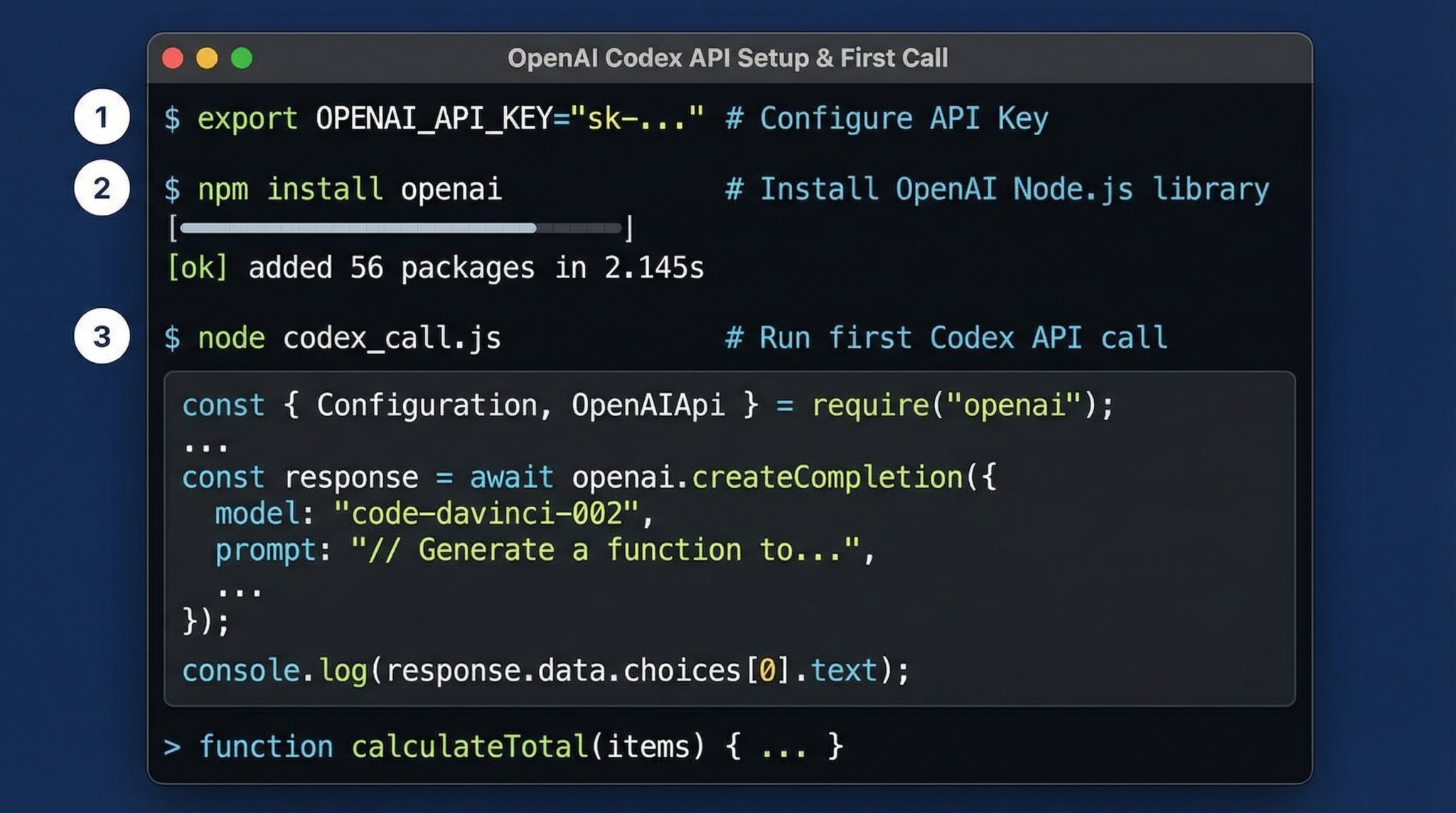
Once your API key and environment are ready, you can test basic prompts via cURL or Postman to confirm connectivity:
curl https://api.openai.com/v1/chat/completions
  -H "Authorization: Bearer YOUR_API_KEY"
  -H "Content-Type: application/json"
  -d '{
    "model": "codex-2026-001",
    "messages": [{"role": "user", "content": "Write a Python function that reverses a string"}],
    "temperature": 0
  }'
Exploring OpenAI Codex’s Code Generation Capabilities
Codex’s primary strength lies in its ability to generate, complete, and refactor code snippets in numerous programming languages. In 2026, Codex supports over 40 languages and frameworks, with improvements in contextual understanding and longer code context windows.
Supported Languages and Frameworks
Codex consistently expands its language understanding. Some of the top supported languages include:
- Python
- JavaScript / TypeScript
- Java
- C#
- Go
- Rust
- Ruby
- PHP
- SQL dialects
- Shell scripting (Bash, PowerShell)
It also recognizes popular frameworks and libraries, enabling it to generate idiomatic code and integrate with APIs like React, Django, Flask, Spring Boot, and more.
Prompting Strategies for Effective Code Generation
The quality of Codex outputs depends heavily on how prompts are structured. Here are best practices:
- Be explicit: Clearly define function signatures, expected inputs and outputs, and constraints.
- Use comments: Provide detailed comments or docstrings to guide Codex’s understanding.
- Iterative prompts: Start with a basic request, then refine with additional context or corrections.
- Specify style: Indicate coding style preferences, such as PEP8 compliance or naming conventions.
Example prompt for generating a sorting function in Python:
"""
Write a Python function called 'quick_sort' that takes a list of integers and returns the sorted list using the quicksort algorithm.
Include inline comments explaining each step.
"""
Code Completion and Refactoring
Beyond generating new code, Codex excels at completing partial code snippets and refactoring existing functions for readability and efficiency. Using the context window, it can understand surrounding code and generate consistent completions or improvements.
Advanced Use Cases: Test Generation and Documentation
Codex can automatically generate unit tests for provided functions, saving developers significant time. Additionally, it can produce detailed documentation strings and README content based on code context.
For example, prompt Codex with a function and request test cases in your preferred testing framework:
"""
Given the following Python function, generate pytest unit tests that cover edge cases and typical inputs.
def is_prime(n):
    if n <= 1:
        return False
    for i in range(2, int(n ** 0.5) + 1):
        if n % i == 0:
            return False
    return True
"""
Comparing Codex with Other AI Code Models in 2026
| Feature | OpenAI Codex 2026 | Claude Code Model | Other AI Code Models |
|---|---|---|---|
| Supported Languages | 40+ | 30+ | 20-40 |
| Context Window | 16,384 tokens | 12,000 tokens | 8,000 – 16,000 tokens |
| Fine-tuning Availability | Yes, with open fine-tuning API | Limited | Varies |
| Integration Ecosystem | Extensive (VS Code, JetBrains, CLI) | Growing | Basic to moderate |
| Specialized Features | Test generation, refactoring, docs | Conversational code generation | Basic completion |
These capabilities make Codex the preferred choice for developers who need a versatile and powerful AI coding assistant.
Integrating OpenAI Codex into Development Workflows
Using Codex in IDEs and Editors
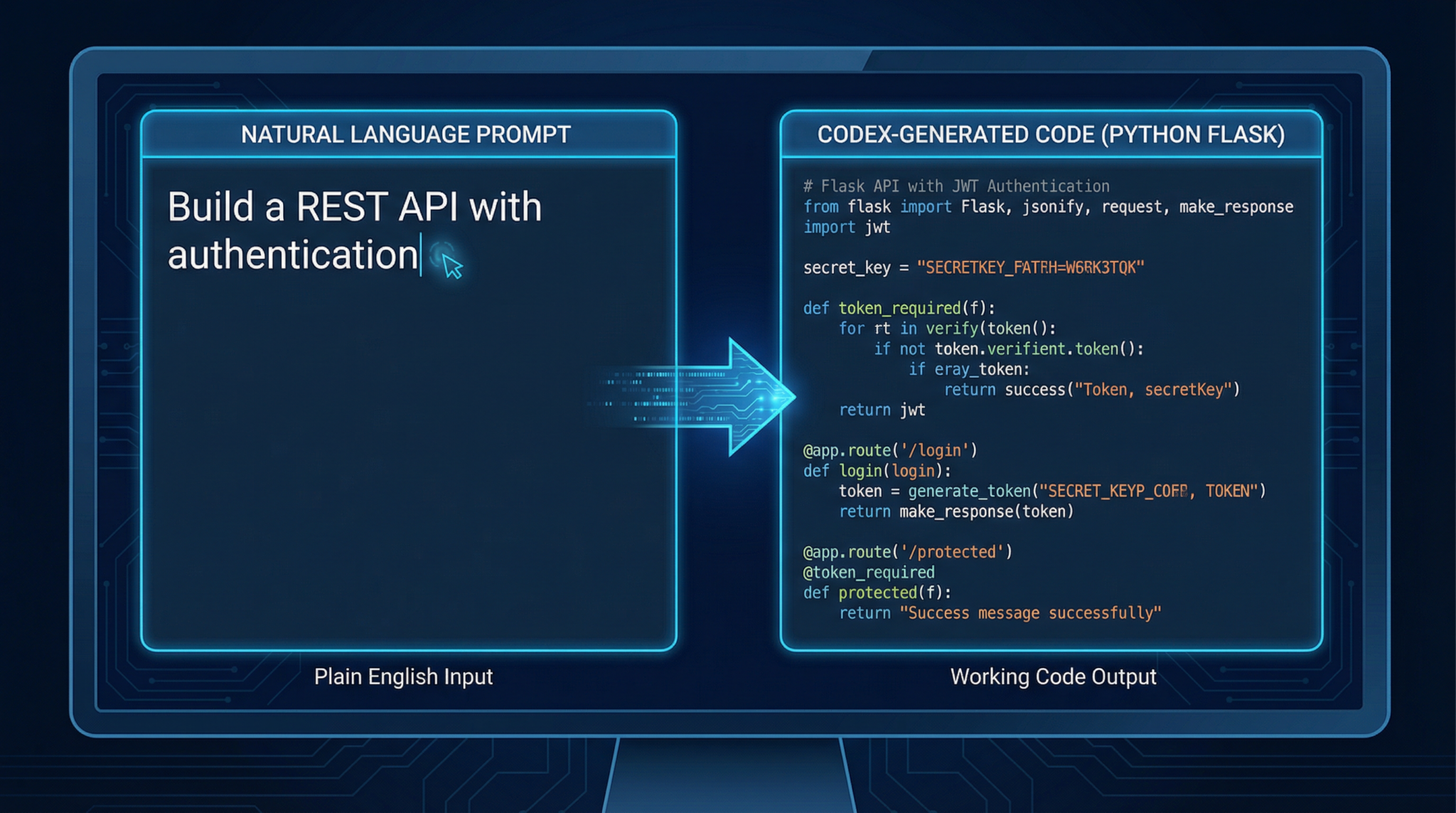
To maximize productivity, integrate Codex directly into your development environment. The official VS Code extension offers features such as:
- Inline code suggestions and completions
- Context-aware code generation based on open files
- Documentation and comment generation
- Refactoring suggestions triggered by commands
Other editors can connect through API calls or community plugins that allow Codex to assist with code generation and analysis.
Automating Code Generation with CI/CD Pipelines
Incorporating Codex into continuous integration and deployment pipelines can automate tasks like generating boilerplate code, scaffolding tests, or producing code documentation during build phases. Using the OpenAI API in serverless functions, Jenkins, GitHub Actions, or GitLab pipelines is increasingly common.
Best Practices for Prompting Codex in Production
Production environments require thoughtful prompt engineering to ensure reliability and maintainability:
- Use temperature=0 for deterministic outputs to reduce variability in generated code.
- Provide full context: Include all relevant code snippets and comments in prompts to guide Codex effectively.
- Implement validation checks: Automatically review generated code for syntax and security vulnerabilities before deployment.
- Cache frequent completions: To minimize API usage and latency, cache common code responses.
Debugging AI-Generated Code
While Codex produces high-quality code, errors and logical flaws can still occur. Follow these debugging strategies:
- Run automated unit tests: Ensure generated code passes comprehensive tests.
- Use static analysis tools: Tools like ESLint, Pylint, or SonarQube can identify common issues.
- Request explanations: Prompt Codex to explain generated code to better understand its logic.
- Iterate prompts: Refine the prompt with clarifications or constraints to fix issues.
Scaling Codex in Enterprise Environments
Enterprises deploying Codex at scale should consider:
- Rate limiting and quota management: Prevent API overuse by implementing request throttling.
- Security compliance: Ensure sensitive code and data comply with organizational policies.
- Fine-tuning models: Customize Codex for domain-specific codebases to improve accuracy.
- Monitoring and logging: Track API usage and generated output quality for continuous improvement.
For an in-depth look at enterprise scaling, refer to our detailed enterprise Codex scaling case study.
Real-world validation comes from examining how Notion, Ramp, and Braintrust scaled OpenAI Codex across their engineering teams, a case study that reveals the specific integration patterns, code review workflows, and quality gates these companies implemented.
that explores real-world implementations and challenges.
Access 40,000+ AI Prompts for ChatGPT, Claude & Codex — Free!
Subscribe to get instant access to our complete Notion Prompt Library — the largest curated collection of prompts for ChatGPT, Claude, OpenAI Codex, and other leading AI models. Optimized for real-world workflows across coding, research, content creation, and business.
Access Free Prompt Library
Best Practices for Production Deployment of Codex-Powered Applications
Security and Privacy Considerations
When deploying Codex-generated code in production, prioritize security by:
- Sanitizing all inputs to prevent injection attacks.
- Reviewing generated code for potential vulnerabilities such as unsafe deserialization or improper access control.
- Ensuring API keys and credentials are securely stored and access-controlled.
- Applying data anonymization if prompts include sensitive information.
Monitoring and Quality Assurance
Maintain high code quality by implementing monitoring tools that track runtime errors, performance bottlenecks, and unexpected behaviors in AI-generated code. Combine this with regular manual code reviews and audits.
Incremental Rollouts and Canary Deployments
To reduce risk, use incremental rollouts for new Codex-generated features or code paths. Canary deployments allow testing in production with limited user exposure, enabling quick rollback if issues arise.
Continuous Improvement Through Feedback Loops
Collect developer and user feedback on AI-generated code and incorporate it into prompt refinement and fine-tuning efforts. Automated logging of failed or suboptimal completions can also help identify areas for model improvement.
Developers transitioning from prototypes to production apps AI.
For teams focused on cost efficiency, the workflow of turning prototypes into production apps 20x cheaper using AutoBE and AI coding tools demonstrates how Codex-powered pipelines can dramatically reduce the time and expense between initial prototype and production deployment.
will find these practices essential for stable and scalable deployments.
Advanced Tips for Mastering Codex Prompting and Debugging
Prompt Engineering Techniques
Refining prompts is an art that improves with practice. Here are advanced tactics:
- Chain-of-thought prompts: Encourage Codex to reason step-by-step by asking it to explain its thought process before generating code.
- Few-shot prompting: Provide several examples of desired inputs and outputs to guide Codex’s style and logic.
- Use delimiters: Clearly separate code from instructions using triple backticks or markdown fences to avoid ambiguity.
- Control randomness: Adjust temperature and top_p parameters to balance creativity and precision.
Debugging Generated Code with Codex
Codex can assist in debugging itself by analyzing error messages and suggesting fixes. For example, you can prompt:
"""
Given this Python code that throws a TypeError, identify the problem and suggest a fix:

def add_numbers(a, b):
    return a + b

result = add_numbers(5, "10")
"""
Codex will typically explain the type mismatch and provide a corrected version. This interactive debugging approach accelerates troubleshooting.
Collaborative Coding with Codex
Leverage Codex as a collaborative pair programmer by:
- Using it to generate alternative implementations and compare performance or readability.
- Requesting code reviews or suggestions for improvements.
- Generating comments and documentation to enhance team communication.
Developers interested in optimizing collaborative workflows should consult our vibe coding guide 2026.
Codex fits naturally into the broader vibe coding movement — for a comprehensive overview of this methodology, the complete guide to vibe coding in 2026 and how AI tools are reshaping app development explains how developers are using natural language to build entire applications with minimal traditional coding.
for in-depth strategies.
Conclusion
OpenAI Codex in 2026 offers unprecedented capabilities for AI-assisted software development. By mastering setup, integration, prompting, and deployment best practices, developers can significantly enhance productivity and code quality. Whether generating new code, refactoring, or automating testing, Codex provides a versatile toolkit that adapts to modern development workflows.
Continued learning and experimentation with advanced prompting and debugging techniques will unlock even greater value from Codex, helping developers stay at the forefront of AI-driven programming innovation.