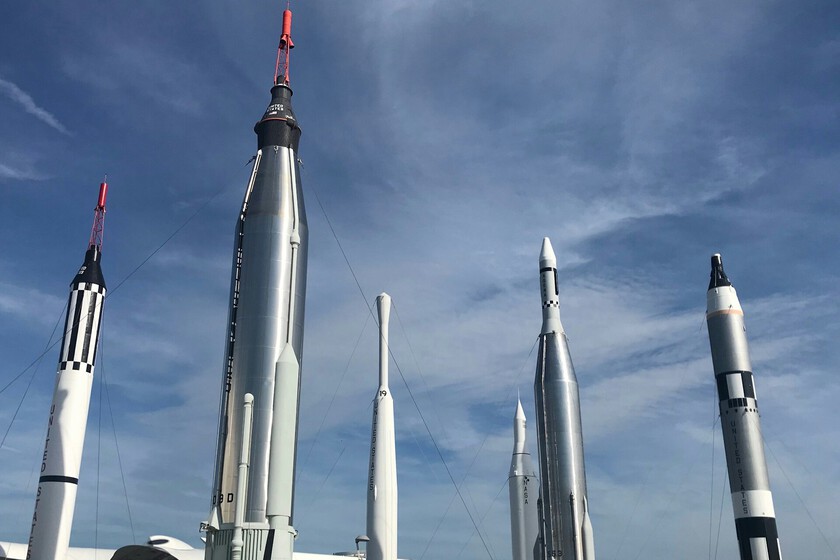
The Arctic is no longer just that vast ice desert at the end of the world, but it has become a strategic point for many countries that they do not want to waste. And Europe does not want to let it escape, now choosing to migrate the launch of part of its rockets from South America to this new location, something that has a great geopolitical strategy behind it.
An agreement. The European Space Agency (ESA) and Norway recently signed an agreement to promote the creation of a new research center in the north of our planet: the ESA Arctic Space Center in Tromsø.
But it is not just another research center, but rather Europe’s response to ensure its autonomy in observation, navigation and communications in a region where Russia and China are already deploying their own infrastructure.
The location. Choosing Tromsø as the city where to locate this new launch zone is not something chosen at random. If we go to a map, we can locate it far above the Arctic Circle, already being a city that has become a vibrant ecosystem of satellite data.
Looking back, Tromsø already hosts mission control Artic Weather Satellite, a satellite launched in 2024 that tried to demonstrate how a polar constellation can save lives through very accurate weather forecasts. But it also has a large number of institutions that make it a true Silicon Valley of the cold, housing the Secretariat of the Arctic Council and the Norwegian Polar Institute.
A greater amount of data. The agreement signed between ESA and the Norwegian agency NOSA establishes a working group that will define the details before the end of 2026. This center is defined as an opportunity to monitor the melting of the Arctic, which is warming four times faster than the global average, which gives us data on what will happen in the rest of the planet.
It also entails an important national security reason, since today maritime traffic in the Northeast Passage does not stop increasing, and this means that having Galileo signals allows for better control of everything that happens here. That is why, more than science, we are facing a critical center for civil security, search and rescue.
The change of location. Until now, our gateway to space was French Guiana for a reason of basic physics: its proximity to the equator allows us to take advantage of the “impulse” of the Earth’s rotation to launch heavy satellites. However, the center of Tromsø and the new Nordic ports respond to a different need: polar orbit. That is why while from South America it is ideal to launch television satellites that remain “fixed” on the equator, the Arctic is the perfect balcony for satellites that must monitor melting ice or borders.
Launching from the Pole, the satellite enters directly onto a North-South path that allows it to scan every corner of the planet as the Earth rotates below. In addition, being on the axis of rotation, rockets do not have to “fight” against the Earth’s lateral spin, which makes observation missions much more efficient and cheaper.

Geopolitics. Beyond science, in this case there is a reading of territorial sovereignty, since while China invests in the “Polar Silk Road” and Russia increases its infrastructure in Siberia, Europe needs its own eyes in the north. In this way, while from South America it is ideal to launch television satellites that remain “fixed” on the equator, the Arctic is the perfect balcony for satellites that must monitor melting ice or borders.
In this way, the Tromsø–Svalbard axis, added to the new spaceports of Andøya (Norway) and Kiruna (Sweden), consolidates northern Europe as the main gateway to space on the continent. This decision reduces dependence on external infrastructures as was the case in South America and obviously guarantees that all data remains in European territory.
What’s next now. Norway, a member of ESA since 1987, brings its network of polar stations and its unique experience in polar orbit operations that are undoubtedly crucial in the current situation. From now on, the working group that has been formed has two years to design the governance and calendar of a center that promises to be “the control tower” of the European future in the Arctic.
Imagenes | riya rohewal
In WorldOfSoftware | In January a SpaceX rocket exploded. Today we know the danger that an Iberia plane was in with 450 passengers in the air